

Ear Popping — Explained by Medical Evidence, Not Myths

Ear popping is commonly related to pressure changes in the middle ear rather than damage to the ear itself. Swallowing, yawning, chewing, and managing nasal congestion often help the ears equalize pressure.
Key Takeaways
- Ear popping is commonly related to pressure changes in the middle ear rather than damage to the ear itself.
- Swallowing, yawning, chewing, and managing nasal congestion often help the ears equalize pressure.
- Frequent or persistent ear popping may be linked to eustachian tube dysfunction, allergies, infection, or jaw problems.
- Ear popping with pain, hearing loss, fever, dizziness, or symptoms lasting more than a few days should be assessed by a doctor.
- Prevention focuses on pressure management during flying or diving and treating contributing nose or sinus problems.
Ear popping usually happens when pressure on either side of the eardrum is being equalized, most often through the eustachian tube. In many cases it is normal and temporary, but persistent popping can sometimes point to congestion, inflammation, or an ear condition that deserves medical evaluation.
What ear popping usually means
Ear popping is most often a normal pressure-adjustment process. The middle ear is a small air-filled space behind the eardrum, and it connects to the back of the nose through the eustachian tube. When this tube opens, air moves in or out and a person may feel or hear a pop.
This is why ear popping commonly happens during flying, driving in the mountains, diving, yawning, swallowing, or even chewing gum. In these moments, the body is simply trying to balance air pressure across the eardrum so it can move normally.
Medical evidence does not support many common myths, such as the idea that every popping sound means infection or permanent ear damage. In reality, occasional popping without other symptoms is usually harmless. The key question is not whether the ear pops once in a while, but whether popping is persistent, uncomfortable, or happening together with pain, blocked hearing, ringing, dizziness, or discharge.
How the ear balances pressure
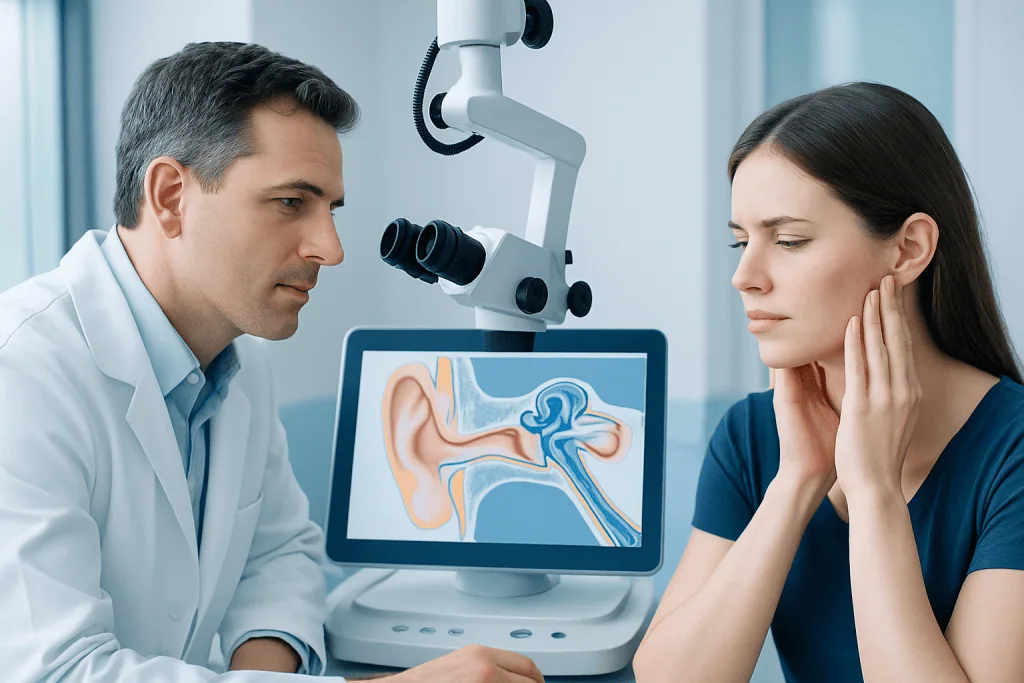
Understanding the mechanics helps explain why the symptom is so common. The outer ear collects sound, the eardrum vibrates, and the middle ear transmits those vibrations through tiny bones. For this system to work well, pressure inside the middle ear should be close to the pressure outside the body.
The eustachian tube acts like a pressure valve. It is usually closed and opens briefly during swallowing, yawning, or jaw movement. If pressure changes quickly, such as during takeoff and landing on an airplane, the tube may need to open more often. The popping sensation is often that moment of equalization.
If the tube does not open well, pressure can build up. The ear may then feel full, muffled, or as if it needs to pop but cannot. This is commonly called eustachian tube dysfunction. It can be temporary, especially during a cold or allergy flare, but if symptoms continue, an ENT evaluation may be useful.
Common causes of ear popping

Pressure change is the most familiar cause, but it is not the only one. Ear popping can also happen when the tissues around the eustachian tube are swollen or when fluid affects the middle ear. That is why the same symptom may occur with a simple flight, a head cold, or an underlying ear condition.
Common causes include:
- Altitude or pressure changes during flying, diving, elevators, or mountain travel
- Colds, flu, or upper respiratory infections
- Allergies causing nasal and throat swelling
- Sinus congestion or inflammation
- Eustachian tube dysfunction
- Fluid behind the eardrum, sometimes after infection
- Earwax blockage that changes how sounds and pressure are perceived
- Jaw joint problems, including teeth grinding or temporomandibular joint strain
Less commonly, people describe popping along with crackling, ringing, or intermittent hearing changes related to disorders of the middle ear or inner ear. If symptoms suggest infection, fluid buildup, or repeated inflammation, a doctor may consider conditions such as ear infection or other ENT causes. The symptom itself is not a diagnosis; it is a clue that must be interpreted in context.
Symptoms that suggest a simple pressure issue versus a medical problem
Ear popping by itself, especially during travel or congestion, is usually not concerning. A simple pressure-related pop often comes and goes quickly and may improve with swallowing, yawning, or chewing. Some people feel temporary fullness or mild muffled hearing that resolves soon after.
Symptoms deserve closer attention when they are stronger, last longer, or are accompanied by other changes. Warning features include ear pain, fever, notable hearing loss, spinning dizziness, balance problems, fluid or pus draining from the ear, or a feeling of blockage that does not improve. Recurrent symptoms in one ear only can also be worth evaluating.
In some cases, persistent ear pressure or popping may reflect fluid in the middle ear or chronic eustachian tube dysfunction. Inner ear disorders can also produce ear fullness, ringing, and hearing changes, though the sensation is often more complex than popping alone. If a clinician suspects a structural ear problem or chronic inflammation, assessment by an ENT specialist may help clarify the cause.
How doctors evaluate ear popping
Diagnosis starts with the history. A doctor will usually ask when the popping occurs, whether it is linked to flights, colds, allergies, diving, or jaw movement, and whether there is pain, fever, dizziness, or hearing loss. These details often narrow the possibilities quickly.
The ear is then examined with an otoscope to look at the ear canal and eardrum. The clinician may check for earwax, redness, swelling, fluid behind the eardrum, or changes in eardrum movement. The nose and throat may also be examined because congestion in those areas often contributes to ear symptoms.
If needed, additional tests can assess hearing and middle-ear pressure. These may include hearing tests or tympanometry, which helps show how the eardrum responds to pressure changes. When symptoms are frequent, severe, or difficult to explain, an ENT specialist may recommend more detailed evaluation and, if appropriate, ENT ear surgery or another targeted treatment based on the underlying diagnosis rather than the popping sensation alone.
Treatment and practical ways to relieve ear popping
Treatment depends on the cause. If ear popping is related to normal pressure change, simple measures are often enough. Swallowing, yawning, chewing gum, sipping water, or gently performing pressure-equalization techniques may help open the eustachian tube. These are most useful during airplane descent, after altitude change, or when mild congestion is present.
When congestion is the main trigger, managing the nose and sinuses can reduce symptoms. This may include saline nasal rinses, avoiding allergy triggers, and using clinician-recommended allergy or congestion treatment when appropriate. If earwax is blocking the canal, professional removal may help. If the problem stems from jaw tension, addressing teeth grinding or temporomandibular joint strain can also reduce popping sensations.
Infections or persistent middle-ear fluid may require more specific care. Some patients need treatment for sinus disease, allergies, or an active ear infection. Others may benefit from procedures that improve ventilation of the middle ear, such as ear tube surgery in selected cases. When hearing changes are part of the picture, formal hearing test assessment can help guide the next steps.
People should avoid forceful repeated attempts to pop the ears, especially if there is pain. Gentle techniques are usually safer than aggressive pressure. If symptoms are intense during diving or air travel, it is wise to stop the activity and seek medical advice before trying again.
Prevention and self-care
Preventing ear popping is not always possible, but reducing the triggers often helps. During flights, many people do better if they swallow frequently during descent, stay awake for landing, chew gum, or use other gentle equalizing methods. Planning travel carefully when a person has a cold or severe allergies can also reduce discomfort.
Daily self-care matters when symptoms are recurrent. Good allergy control, hydration, smoking avoidance, and prompt attention to nasal congestion may improve eustachian tube function. Children and adults with repeated infections or fluid buildup may need structured follow-up, because repeated pressure problems can affect comfort and hearing over time.
If symptoms persist despite these measures, specialist assessment can help identify a correctable cause. Near the end of the care pathway, if more advanced ENT evaluation is needed, Acibadem International’s multidisciplinary specialists in JCI-accredited hospitals evaluate and treat ear and sinus conditions for international patients.
When to seek medical care
A short-lived ear pop after altitude change is usually not an emergency. Medical care is more important when the symptom lasts, returns often, or interferes with hearing, sleep, travel, or daily comfort. This is especially true if one ear is affected much more than the other.
A person should arrange medical evaluation if ear popping is accompanied by moderate to severe pain, fever, drainage, significant hearing reduction, severe congestion that is not improving, ringing that is new or persistent, or dizziness. Care is also advisable after diving or flying if the ear remains blocked for hours or if symptoms worsen instead of settling.
Urgent medical attention is appropriate if there is sudden hearing loss, severe vertigo, facial weakness, head injury, bleeding from the ear, or intense pain after pressure exposure. These situations can reflect conditions that should not be managed with home remedies alone.
Frequently asked questions
Is ear popping normal?
Yes, occasional ear popping is often normal, especially during flying, altitude changes, swallowing, or yawning. It usually means the eustachian tube is equalizing pressure in the middle ear.
Why do my ears keep popping even when I am not on a plane?
Repeated ear popping away from travel is often related to congestion, allergies, a recent cold, or eustachian tube dysfunction. It can also happen with jaw tension or fluid behind the eardrum, so persistent symptoms should be assessed if they do not improve.
How can a person safely relieve ear popping at home?
Gentle swallowing, yawning, chewing gum, and sipping water are common ways to help the ears equalize pressure. If congestion is present, saline nasal care and managing allergies may also help, but forceful repeated attempts to pop the ears should be avoided.
Can ear popping mean an ear infection?
It can, but not always. Ear popping is more often related to pressure changes, while infection is more likely when popping is accompanied by pain, fever, drainage, or feeling unwell.
When should ear popping be checked by a doctor?
A doctor should evaluate ear popping if it lasts more than a few days, keeps returning, or comes with pain, hearing loss, dizziness, ringing, or discharge. It is also wise to seek care after diving or flying if symptoms are severe or do not settle.
Can allergies cause ear popping?
Yes, allergies can swell the tissues around the eustachian tube and make pressure equalization harder. This may lead to popping, fullness, muffled hearing, or a blocked sensation that improves when the allergy symptoms are treated.
This article is for general information only and is not a substitute for professional medical advice. Please consult a qualified doctor about your individual situation.
Explore treatments in Turkey — costs, top hospitals & a free quote
JCI-accredited · board-certified surgeons · reply within 24h
Add us as a Preferred Source to see more of our trusted health content across Google Search, AI Overviews and Discover.

More from the Health Library

Comedones: What Patients Need to Know

Tomosynthesis — Explained by Medical Evidence, Not Myths

Spurling’s Test — Explained by Medical Evidence, Not Myths

Prune Juice for Constipation: What Patients Need to Know

David Shaffer: What Patients Need to Know

Doxycycline — Explained by Medical Evidence, Not Myths
Otorhinolaryngology Specialists at Acibadem

Assoc. Prof. Dr. Ali Titiz
Otorhinolaryngology
Prof. Dr. Alp Demireller
Otorhinolaryngology
Asst. Prof. Dr. Alper Özdilek
Otorhinolaryngology
Asst. Prof. Dr. Altuğ Özagar
Otorhinolaryngology