Varicocele — Explained by Medical Evidence, Not Myths
A varicocele is an enlargement of veins in the scrotum, most often on the left side. Many varicoceles cause no symptoms and are found during a physical exam or fertility evaluation.
Key Takeaways
- A varicocele is an enlargement of veins in the scrotum, most often on the left side.
- Many varicoceles cause no symptoms and are found during a physical exam or fertility evaluation.
- When symptoms occur, they may include a dull ache, heaviness, or visible enlarged veins.
- Treatment is not always necessary; decisions depend on pain, fertility goals, and testicular changes.
- Ultrasound can help confirm the diagnosis and rule out other causes of scrotal symptoms.
- Medical review is important if there is sudden pain, swelling, or a new mass in the scrotum.
Varicocele is a widening of veins inside the scrotum, similar to varicose veins in the leg. It is often harmless, but in some people it can cause discomfort, affect testicular growth, or contribute to fertility problems, which is why proper evaluation matters more than myths.
What varicocele means
Varicocele is a condition in which the veins that drain blood from the testicle become enlarged. These veins are part of the spermatic cord, and when they widen, blood can pool instead of flowing efficiently back toward the heart. The result is similar in principle to varicose veins in the legs, but it occurs in the scrotum.
Many people with varicocele do not feel anything unusual and may only learn about it during a routine exam, an adolescent checkup, or a fertility assessment. In others, it can be linked with a dragging sensation, discomfort after standing, or changes in testicular size. A varicocele is not the same as infection, cancer, or a sexually transmitted infection, although those conditions can sometimes cause similar worry and should be ruled out when symptoms are unclear.
Varicoceles are common and usually develop gradually. They are seen more often on the left side because of differences in the way the left testicular vein drains. Understanding that a varicocele is a structural blood-flow issue, rather than a sign of poor hygiene or sexual activity, helps separate medical facts from common myths.
How varicocele may affect the body
The main medical concern with varicocele is not the appearance of the veins themselves but their possible effect on the testicle. When blood flow is sluggish, the temperature around the testicle may rise slightly, and oxygen exchange may be less efficient. Over time, this may affect sperm production in some men and adolescents, though not everyone with varicocele has fertility problems.
Varicocele can also be associated with reduced testicular size on the affected side, especially in teenagers whose bodies are still developing. In adults, some men notice a sense of heaviness or a dull ache that becomes more noticeable after exercise, standing for long periods, or at the end of the day. Lying down may ease symptoms because the pooled blood can drain more easily.
Importantly, varicocele does not automatically mean infertility. Many men with this condition father children without difficulty. Medical evidence supports a more individualized view: the significance of a varicocele depends on symptoms, physical findings, semen parameters when relevant, and the person’s age and reproductive goals.
Signs and symptoms

Some varicoceles are completely silent. Others cause symptoms that are noticeable but nonspecific, which is why a clinical exam matters. The discomfort is often described as dull rather than sharp, and it may fluctuate during the day.
- A dull ache or sense of heaviness in the scrotum
- Discomfort that worsens with standing, exercise, or prolonged activity
- Visible or palpable enlarged veins, sometimes described as a “bag of worms”
- Difference in testicular size, especially in adolescents
- Fertility concerns discovered during evaluation rather than from pain
Symptoms do not always match the size of the varicocele. A small varicocele can be bothersome, while a larger one may cause no complaint at all. Because scrotal pain and swelling can have other causes, such as testicular cancer, hernia, infection, or fluid around the testicle, a new or changing symptom should not be self-diagnosed.
Any sudden, severe scrotal pain deserves urgent medical attention because it may signal another problem, such as testicular torsion, which is a medical emergency and not a typical presentation of varicocele.
Causes and risk factors
Varicocele develops when valves inside the testicular veins do not work effectively or when the anatomy of the vein drainage encourages blood to collect. The exact reason is not always clear in an individual person. What is clear is that this is a circulatory issue inside the scrotum and not something caused by masturbation, sports participation, or sexual frequency.
The condition often becomes noticeable during puberty, when the testicles are growing and blood flow demands increase. Left-sided varicocele is more common because the left testicular vein drains into the left renal vein at a different angle and under different pressure conditions than the right side. Bilateral varicoceles can occur, and a right-sided varicocele can also occur, though isolated right-sided cases may prompt closer evaluation depending on the person’s age and presentation.
Risk factors are not as sharply defined as they are for many other conditions. Age during adolescence and young adulthood, individual vein anatomy, and standing-related pressure changes may play a role. In older adults, a newly developed varicocele, especially if it is only on the right side or appears suddenly, may need assessment to exclude a secondary cause involving abdominal or kidney blood flow.
How doctors diagnose varicocele
Diagnosis usually begins with a medical history and physical examination. The clinician may examine the scrotum while the person is standing and lying down, and may ask them to bear down gently, as if exhaling with the mouth closed. This can make enlarged veins easier to detect.
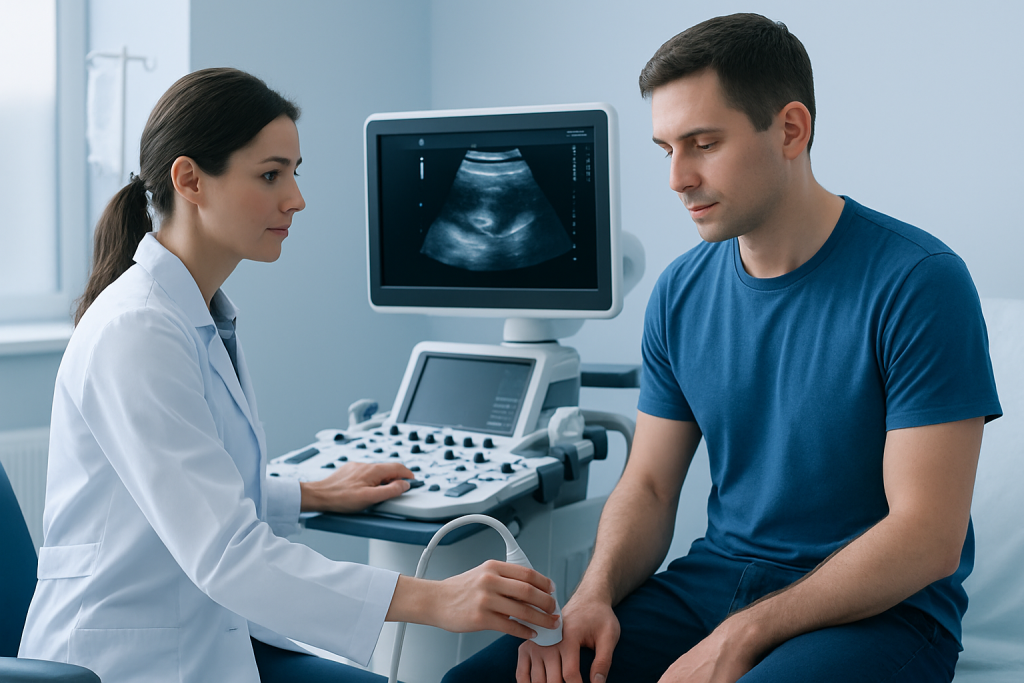
Scrotal ultrasound is the most common imaging test when the diagnosis needs confirmation or when the exam is not straightforward. Ultrasound can show enlarged veins and backward blood flow and can also help assess testicular size. It is also useful for distinguishing varicocele from other causes of scrotal symptoms, such as cysts, fluid collections, or masses.
If fertility is a concern, a doctor may recommend semen analysis and, in some cases, hormone testing. These tests do not diagnose varicocele by themselves, but they help determine whether the condition may be affecting sperm production or overall testicular function. In a person with pain, a semen analysis may not be necessary, while in someone being evaluated for infertility it can be central to planning treatment.
Because varicocele can overlap with broader male reproductive health concerns, assessment may naturally connect with male infertility evaluation when a couple is trying to conceive.
Treatment options and when treatment helps
Not every varicocele needs treatment. If it causes no pain, testicular growth is normal, and there are no fertility concerns, careful monitoring may be all that is needed. This approach is especially common when the varicocele is found incidentally and the person has no related symptoms.
Treatment may be considered when there is persistent discomfort, reduced testicular size in an adolescent, or abnormal semen parameters in a person with fertility goals. Supportive measures such as wearing supportive underwear and avoiding activities that clearly worsen discomfort may help some people, though they do not correct the underlying vein problem.
When intervention is appropriate, options include surgery and image-guided procedures that block the problematic veins. Surgical repair aims to redirect blood flow through healthier veins, and a common approach is varicocelectomy. In selected cases, minimally invasive interventional radiology techniques such as embolization may also be discussed, depending on local expertise and the person’s anatomy.
No treatment can promise fertility, but repair can improve symptoms in many patients and may improve semen quality in selected men. The best choice depends on age, symptoms, exam findings, ultrasound results, and reproductive plans. If surgery is being considered as part of a wider fertility workup, referral to specialists in fertility care may also be appropriate for couples who need a broader plan.
Self-care, monitoring, and common myths
A diagnosis of varicocele can create understandable anxiety, especially because the condition is often discussed online in absolute terms. Medical evidence supports a more balanced message: varicocele is common, many cases never cause harm, and treatment is tailored rather than automatic.
At home, people with mild symptoms may benefit from scrotal support, sensible activity modification, and keeping track of when discomfort appears. It can help to note whether symptoms worsen after exercise or long standing, and whether they improve when lying down. This information can be useful during a medical appointment.
Several myths are worth correcting. Varicocele does not mean cancer, it is not caused by sexual behavior, and it does not inevitably lead to infertility. Also, pain alone does not prove that a varicocele is the cause; doctors often consider other explanations before recommending treatment. Adolescents with varicocele may need periodic follow-up to monitor testicular growth rather than immediate intervention.
Near the end of the care pathway, some international patients seek coordinated evaluation in centers with urology, radiology, and fertility expertise. Acibadem International’s multidisciplinary specialists and JCI-accredited hospitals diagnose and treat varicocele for international patients when appropriate.
When to seek medical care
Medical review is appropriate for any new scrotal lump, ongoing discomfort, concern about fertility, or a noticeable difference in testicular size. An appointment is also sensible if a teenager appears to have one testicle that is smaller than the other, since growth patterns can influence follow-up decisions.
Urgent care is needed for sudden severe scrotal pain, rapid swelling, nausea with scrotal pain, fever, or a hard new mass. These symptoms are not typical of routine varicocele and can signal problems that should be assessed promptly. It is safer to have acute symptoms evaluated rather than assume they are due to a known varicocele.
People trying to conceive should consider medical advice if pregnancy has not occurred after a reasonable period of trying, particularly when a varicocele is already known or suspected. Early, evidence-based evaluation can clarify whether monitoring, treatment, or broader fertility testing is the most appropriate next step.
Frequently asked questions
Is varicocele dangerous?
Varicocele is usually not dangerous, and many people have it without major health effects. However, it can sometimes cause discomfort, affect testicular growth, or contribute to fertility problems, so proper medical assessment is still important.
Can a varicocele go away on its own?
A varicocele usually does not disappear completely on its own because it is related to vein structure and blood flow. If it causes no problems, doctors may simply monitor it rather than treat it.
Does varicocele always cause infertility?
No. Many men with varicocele have normal fertility and never need treatment. The condition is only one possible factor in infertility, and semen testing helps show whether it appears to be affecting sperm quality.
What does varicocele pain feel like?
When pain occurs, it is often described as a dull ache, heaviness, or dragging sensation in the scrotum. It commonly gets worse after standing for long periods or physical activity and may improve when lying down.
How is varicocele confirmed?
Doctors often suspect varicocele during a physical examination, especially when the person is standing. Scrotal ultrasound is commonly used to confirm the diagnosis and to look for other causes of swelling or pain.
When is surgery recommended for varicocele?
Surgery or another procedure may be recommended when there is persistent pain, testicular growth changes, or fertility-related concerns supported by evaluation. The decision depends on symptoms, exam findings, ultrasound results, and personal goals.
References
- American Urological Association
- European Association of Urology
- National Institute of Diabetes and Digestive and Kidney Diseases
- Urology Care Foundation
- Mayo Clinic
This article is for general information only and is not a substitute for professional medical advice. Please consult a qualified doctor about your individual situation.
Varicocele in Turkey — costs, top hospitals & a free quote
JCI-accredited · board-certified surgeons · reply within 24h
Add us as a Preferred Source to see more of our trusted health content across Google Search, AI Overviews and Discover.

More from the Health Library

Eyelid Exercises: What Patients Need to Know

Weight Loss Soup — Explained by Medical Evidence, Not Myths

Nose Piercings: What Patients Need to Know

Breathing Exercise: An Evidence-Based Guide for Patients

Foreskin Restoration — Explained by Medical Evidence, Not Myths