

Psoas Stretch: An Evidence-Based Guide for Patients
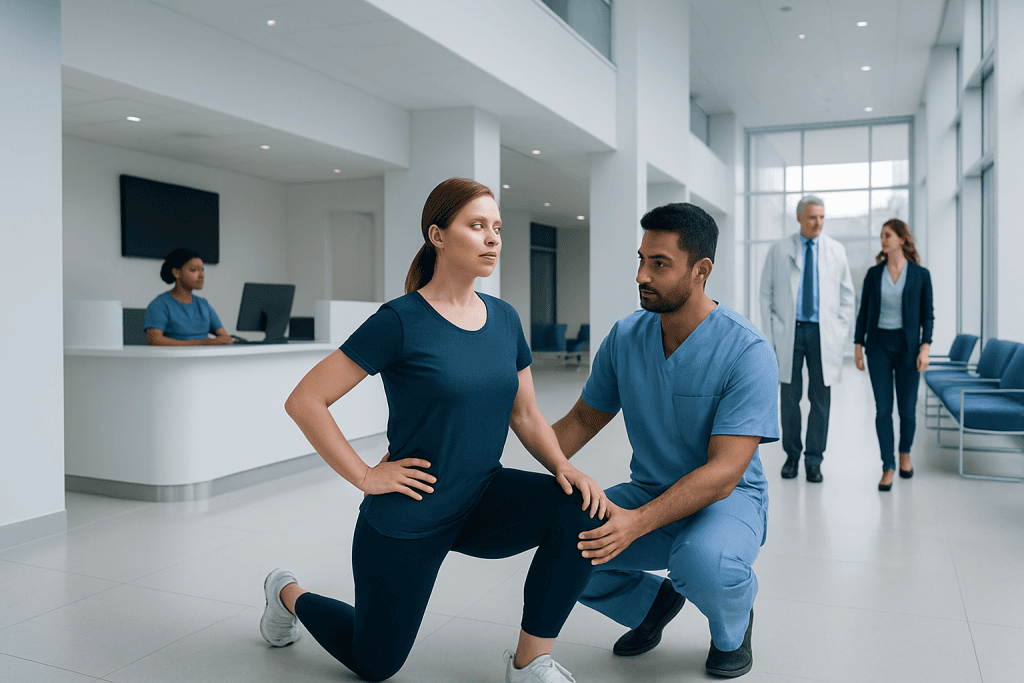
The psoas is a deep hip flexor muscle that affects posture, walking, and hip movement. A psoas stretch may help with tightness, but it should not cause sharp, shooting, or worsening pain.
Key Takeaways
- The psoas is a deep hip flexor muscle that affects posture, walking, and hip movement.
- A psoas stretch may help with tightness, but it should not cause sharp, shooting, or worsening pain.
- Good technique matters more than stretching deeply or for a long time.
- Persistent hip, groin, or back pain may have causes other than muscle tightness and should be assessed by a clinician.
- Stretching works best when combined with movement, strengthening, and activity changes when needed.
A psoas stretch is a gentle movement used to lengthen the deep hip flexor muscles at the front of the hip and pelvis. When done correctly, it may help reduce feelings of stiffness, improve mobility, and support more comfortable walking, standing, and exercise.
What Is a Psoas Stretch?
A psoas stretch is a position or movement designed to gently lengthen the psoas, a deep muscle that helps lift the thigh toward the body and supports the relationship between the lower back, pelvis, and hip. For many people, the term is used broadly to describe stretching the hip flexors, including the iliacus and nearby muscles at the front of the hip.
The psoas runs from the lower spine through the pelvis to the upper thigh bone. Because of this attachment pattern, it can influence posture, hip extension, stride length, and the feeling of tightness in the front of the hip. A person may notice this tightness after long periods of sitting, changes in exercise, or recovery from an injury.
A psoas stretch can be useful when the goal is to improve flexibility and reduce a sense of stiffness. However, it is not a cure for all hip or back discomfort. Pain in this area can also be related to joint irritation, tendon problems, muscle strain, or conditions such as lower back pain or hip pain, which may need a different approach.
How Tight Psoas Muscles May Feel
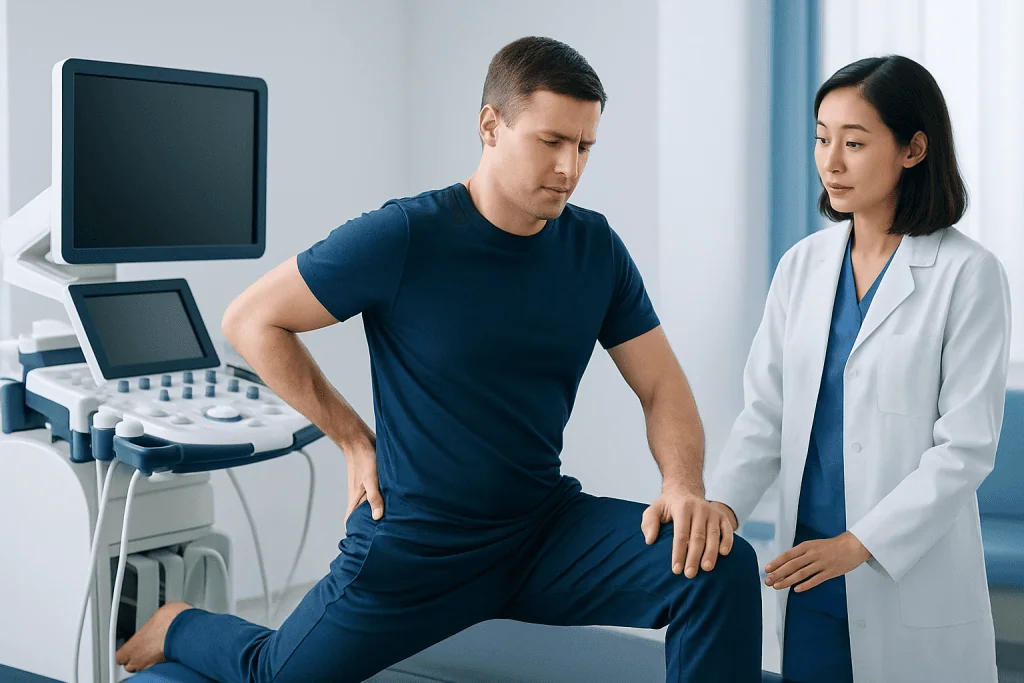
People often describe psoas tightness as a pulling sensation in the front of the hip, groin, or upper thigh, especially when standing up after sitting for a long time. Some also notice stiffness during walking, climbing stairs, lunging, or taking a long step backward.
In some cases, a person may feel associated discomfort in the lower back or pelvis. This does not always mean the psoas is the only cause, but it can be one contributing factor in how the body moves. Athletes, runners, cyclists, office workers, and people returning to exercise after inactivity may all notice symptoms related to reduced hip flexor flexibility.
Symptoms that may accompany hip flexor tightness include:
- Front-of-hip stiffness
- Reduced ability to fully straighten the hip
- Discomfort during lunges or kneeling stretches
- A sense of pulling in the groin or upper thigh
- Lower back tension during prolonged standing
True muscle tightness is only one possible explanation. Weakness, altered movement patterns, overuse, or irritation of nearby structures can create similar symptoms. This is why a careful assessment is important when symptoms continue or interfere with daily activities.
Common Causes and Risk Factors

Long periods of sitting are a common reason people seek a psoas stretch. When the hips stay bent for many hours, the hip flexors spend more time in a shortened position. Over time, this may contribute to a feeling of stiffness, particularly when transitioning to standing or walking.
Exercise habits can also play a role. Activities that involve repeated hip flexion, such as running, cycling, dancing, and some gym exercises, may overload the area if training volume increases quickly or recovery is limited. On the other hand, very low activity levels can reduce overall mobility and make the hips feel restricted.
Other factors that may contribute include poor movement mechanics, recent injury, muscular imbalance, or compensation from another area of the body. For example, weak gluteal or core muscles may change how the pelvis is controlled during movement. In some cases, discomfort thought to be simple tightness may actually reflect a strain, tendon irritation, or spine-related issue that benefits from formal evaluation and physical therapy and rehabilitation.
How to Do a Psoas Stretch Safely
The most important feature of a psoas stretch is control, not intensity. A gentle stretch should create mild tension in the front of the hip without pinching, numbness, or sharp pain. Breathing steadily and keeping the trunk upright usually improves comfort and reduces compensation through the lower back.
One common option is the half-kneeling hip flexor stretch. From a kneeling lunge position, the person gently shifts the pelvis forward while keeping the back tall and the lower ribs relaxed. A slight tuck of the pelvis can help direct the stretch toward the front of the hip rather than arching the low back. The stretch is usually held briefly and repeated on both sides as tolerated.
Another option is a supported standing lunge stretch for people who cannot kneel comfortably. The same principles apply: the back leg stays behind the body, the pelvis remains controlled, and the stretch should feel gradual. People with balance concerns may hold a wall or stable surface.
General safety tips include:
- Warm up first with a few minutes of walking or light movement
- Stop if pain becomes sharp, radiating, or causes limping
- Avoid bouncing or forcing the range of motion
- Keep the stretch gentle, especially after a recent strain
- Combine stretching with strengthening rather than stretching alone
What Stretching Can and Cannot Do
A psoas stretch may help improve comfort, flexibility, and awareness of hip position. Many people feel less stiff after regular, gentle stretching, especially if they also break up long sitting periods and stay physically active. For some, it can make everyday tasks such as walking, rising from a chair, or exercising feel easier.
At the same time, stretching has limits. It does not directly diagnose the cause of pain, and it may not solve symptoms caused by joint inflammation, labral irritation, nerve-related pain, or a muscle tear. If a stretch consistently causes more pain, that is a sign to stop and seek guidance rather than pushing further.
Evidence-informed care for front-of-hip discomfort often includes more than flexibility work. Strengthening the gluteal muscles, abdominal wall, and hip stabilizers may improve how the pelvis and trunk are controlled in motion. A clinician may also recommend a tailored program that includes orthopedic rehabilitation if symptoms are linked to an overuse injury or recovery after a musculoskeletal problem.
Diagnosis: When Tightness May Be Something Else
There is no single home test that can confirm whether the psoas is truly the main source of symptoms. A healthcare professional will usually ask about where the pain is felt, what movements bring it on, whether there was an injury, and how symptoms affect daily life. They may assess posture, walking, hip range of motion, strength, and movement control.
When symptoms are persistent, severe, or not improving, the clinician may evaluate for other causes. These can include hip joint conditions, groin strain, tendon irritation, lower back disorders, or less commonly inflammatory or neurological problems. Imaging is not always necessary, but it may be considered when the history or examination suggests a structural issue.
Specialist care can be helpful if pain is limiting function or if the diagnosis is unclear. Depending on the findings, management may involve rehabilitation, sports medicine, orthopedics, or imaging support such as MRI to look more closely at muscles, tendons, joints, or the lower spine.
Prevention, Self-Care, and Recovery Habits
For many people, the best approach is not more stretching alone but a balanced routine. Frequent movement during the day, especially standing up after prolonged sitting, may reduce the sense of hip stiffness. Light walking, mobility drills, and regular exercise can also help the hips move through a comfortable range more often.
Strengthening is often just as important as flexibility. Exercises that train the gluteal muscles, deep core, and hip stabilizers may support better pelvic control and reduce excessive strain on the hip flexors. Activity changes may also help, such as adjusting training volume, checking cycling or desk ergonomics, and gradually returning to sport after time off.
Simple self-care habits can support recovery:
- Change position regularly during desk work or travel
- Use a gradual warm-up before exercise
- Increase intensity or mileage step by step
- Allow time for recovery after demanding activity
- Seek guidance if self-care is not helping after several weeks
Near the end of the care pathway, some people benefit from a coordinated review by rehabilitation and orthopedic specialists. Acibadem International’s multidisciplinary specialists in JCI-accredited hospitals diagnose and treat musculoskeletal conditions for international patients when further evaluation is needed.
When to Seek Medical Care
It is reasonable to seek medical advice if front-of-hip or groin discomfort lasts more than a few weeks, keeps returning, or limits normal activities. A clinician can help determine whether stretching is appropriate or whether another diagnosis should be considered.
Prompt assessment is especially important if pain started suddenly during exercise, there is marked weakness, visible swelling, fever, unexplained weight loss, difficulty bearing weight, or pain that travels down the leg with numbness or tingling. These features suggest that the problem may be more than routine muscle tightness.
A person should also stop stretching and ask for medical advice if a psoas stretch causes sharp pain, catching in the hip, worsening back pain, or symptoms that steadily intensify afterward. Early evaluation can help guide safer treatment and avoid unnecessary aggravation.
Frequently asked questions
What does a psoas stretch help with?
A psoas stretch may help reduce a feeling of tightness at the front of the hip and improve hip extension during walking, standing, and exercise. It can be useful as part of a broader mobility and strengthening routine, but it does not treat every cause of hip or back pain.
How often should a person do a psoas stretch?
Frequency depends on the reason for stretching, overall activity level, and whether symptoms are present. Many people tolerate gentle stretching on most days, but the stretch should not increase pain. A clinician or physical therapist can suggest a plan that fits the individual situation.
Should a psoas stretch hurt?
No. A psoas stretch may create mild tension or pulling, but it should not cause sharp, burning, shooting, or worsening pain. If pain occurs, it is best to stop and seek professional advice rather than pushing deeper.
Can tight psoas muscles cause lower back pain?
They may contribute to lower back discomfort in some people by affecting posture and movement, but they are not the only possible cause. Lower back pain can also come from joints, discs, nerves, or other muscles, so an accurate assessment is important if symptoms persist.
Is the psoas the same as the hip flexors?
The psoas is one of the main hip flexor muscles, but it is not the only one. The term hip flexors usually includes the psoas, iliacus, rectus femoris, and other muscles that help lift the thigh and bend the hip.
Who should avoid psoas stretching without medical guidance?
People with recent injury, severe pain, significant balance problems, recent surgery, or known hip or spine disorders should be cautious. Medical guidance is also wise when symptoms include numbness, leg weakness, fever, or difficulty walking.
References
- American Academy of Orthopaedic Surgeons
- National Institute of Arthritis and Musculoskeletal and Skin Diseases
- American Physical Therapy Association
- MedlinePlus
- National Health Service
This article is for general information only and is not a substitute for professional medical advice. Please consult a qualified doctor about your individual situation.
Joint and spine care in Turkey — expert assessment & treatment
JCI-accredited · board-certified surgeons · reply within 24h
Add us as a Preferred Source to see more of our trusted health content across Google Search, AI Overviews and Discover.

More from the Health Library



Related Specialists

Fzt. Ömür Akgül
Physical Medicine & Rehabilitation
Prof. Dr. Sezgin Sarban
Orthopedic Surgery & Traumatology
Dr. Mehmet Tayfun Osmanağaoğlu
Gynecology & Obstetrics
Dr. Filiz Ağaçayak
Radiology