Reflexes: A Complete Medical Overview

Reflexes are involuntary responses that happen without conscious effort. A reflex exam helps assess the nervous system, especially the brain, spinal cord, and peripheral nerves.
Key Takeaways
- Reflexes are involuntary responses that happen without conscious effort.
- A reflex exam helps assess the nervous system, especially the brain, spinal cord, and peripheral nerves.
- Reflexes may be normal, reduced, absent, or overactive, and the meaning depends on the full clinical picture.
- Abnormal reflexes do not always mean serious disease, but they may need medical evaluation when paired with weakness, numbness, pain, or balance problems.
- Treatment focuses on the underlying cause rather than on the reflex change itself.
Reflexes are automatic, fast body responses that help protect the body and support normal movement. Doctors use reflex testing as part of a neurological exam because reflexes can offer useful clues about the brain, spinal cord, nerves, and muscles.
Overview: what reflexes are and why they matter
Reflexes are automatic responses to a stimulus. They happen quickly and without conscious control, helping the body protect itself and maintain normal function. Common examples include blinking when something approaches the eye, pulling a hand away from something hot, or the knee moving after a tap during a physical exam.
In medicine, reflexes are more than simple reactions. They are part of a carefully organized nerve pathway called a reflex arc, which usually involves a sensory nerve, the spinal cord or brainstem, and a motor nerve. Because this pathway depends on healthy communication between different parts of the nervous system, reflexes can give doctors useful information about how well that system is working.
A change in reflexes does not automatically point to one diagnosis. Some people naturally have brisk or mild reflexes, and reflexes can vary with age, anxiety, medications, and general health. What matters most is the overall pattern: whether reflexes are symmetric, whether they fit with symptoms, and whether other signs on examination suggest a problem affecting the brain, spinal cord, nerves, or muscles.
Types of reflexes doctors commonly assess
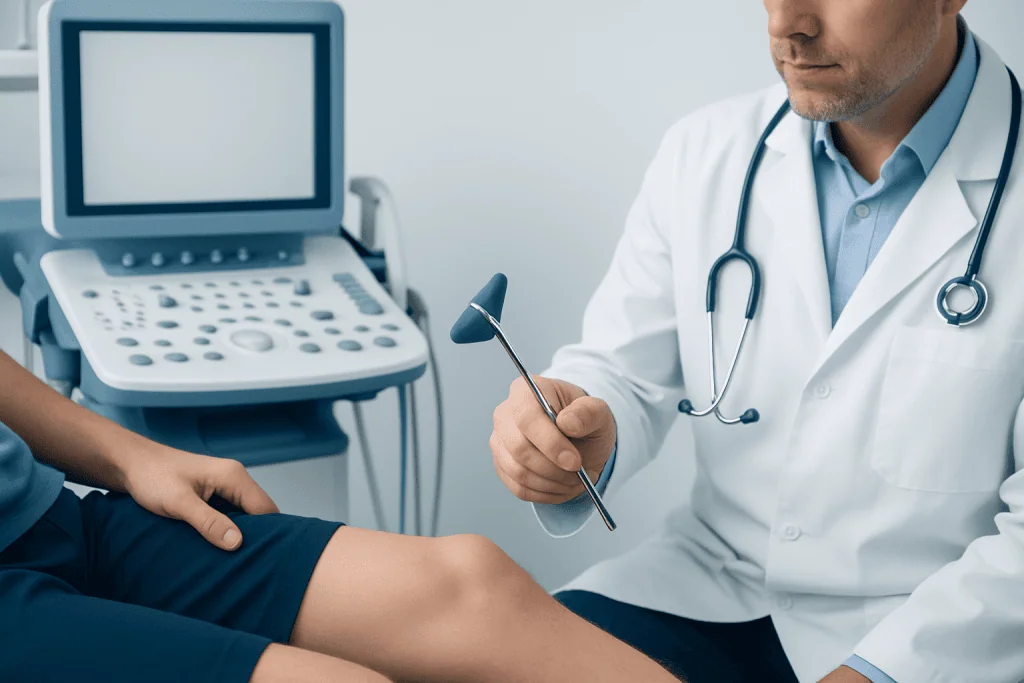
Several kinds of reflexes may be checked during a medical examination. The best-known are deep tendon reflexes, tested by gently tapping a tendon with a reflex hammer. Examples include the knee jerk, ankle jerk, biceps reflex, triceps reflex, and brachioradialis reflex. These help assess the function of specific nerve roots and segments of the spinal cord.
Doctors may also look at superficial reflexes, which are triggered by light stimulation of the skin or mucous membranes. These can include the abdominal reflex, corneal reflex, and plantar response. In adults, the plantar response is especially important because an unusual upward movement of the big toe can suggest an issue affecting upper motor neuron pathways.
Another group includes primitive reflexes, such as the Moro or grasp reflex, which are normal in infants but usually disappear as the nervous system matures. If primitive reflexes reappear later in life, they may indicate disease affecting the brain. Autonomic reflexes, such as pupil reactions or changes in heart rate and blood pressure, may also be relevant in some neurological or systemic conditions.
- Deep tendon reflexes: help assess nerve roots, spinal cord pathways, and muscles
- Superficial reflexes: give clues about brain and spinal cord function
- Primitive reflexes: mainly important in infants and in some adult neurological disorders
- Autonomic reflexes: involve involuntary body functions such as pupil size or sweating
What normal and abnormal reflexes can mean

Reflexes are often described as normal, reduced, absent, or brisk. Reduced or absent reflexes may happen when the reflex arc is interrupted, such as with peripheral nerve damage, nerve root compression, certain muscle diseases, or problems affecting the connection between nerves and muscles. A doctor interprets this finding together with strength, sensation, coordination, and medical history.
Brisk or exaggerated reflexes can occur when pathways in the brain or spinal cord that normally regulate reflex activity are disrupted. This may be seen in conditions affecting the central nervous system, including stroke, spinal cord disorders, or some neurodegenerative conditions. Clonus, which is a rhythmic series of involuntary muscle contractions after a quick stretch, may also point to increased reflex activity.
Some abnormal reflex findings are not dramatic and may not indicate disease on their own. For example, a person who is tense during an exam may appear to have more active reflexes, while an older adult may naturally have slightly diminished ankle reflexes. That is why doctors do not rely on one reflex in isolation. Instead, they use reflexes as one part of a complete neurological evaluation, which may also explore symptoms related to Parkinson's disease or multiple sclerosis when clinically appropriate.
Symptoms and situations that may accompany reflex changes
Many people learn about reflexes after a routine checkup, but others seek evaluation because they notice symptoms such as weakness, numbness, tingling, pain, stiffness, tremor, balance problems, or changes in walking. Reflex changes are not usually felt directly. Instead, they are detected during an exam and interpreted alongside these other symptoms.
Problems affecting the neck or back can sometimes alter reflexes if nerves or the spinal cord are involved. For example, a compressed nerve root may reduce a reflex in the arm or leg, while spinal cord compression can cause brisk reflexes below the affected level. Neuropathy related to diabetes, vitamin deficiencies, alcohol use, autoimmune disease, infection, or certain medicines may also lead to decreased reflexes.
Reflex abnormalities may be temporary or chronic. They can appear after injury, during illness, or as part of a long-term neurological condition. In children, the interpretation differs because some reflexes are expected at certain developmental stages and disappear at others. If reflex changes occur together with bowel or bladder changes, sudden weakness, severe headache, or new difficulty speaking, prompt medical assessment is important because these symptoms may suggest a more urgent neurological problem.
How reflexes are tested and how doctors make a diagnosis
A reflex exam is usually quick, painless, and done in the clinic. The doctor asks the patient to relax while specific tendons are tapped with a small reflex hammer. The response is compared on both sides of the body. In some cases, the doctor may use positioning techniques or ask the patient to perform a brief distracting maneuver to help the muscles relax and make the response easier to assess.
Reflex findings are interpreted as part of a broader neurological exam. This may include testing muscle strength, muscle tone, sensation, coordination, balance, cranial nerves, and gait. Doctors also consider age, medications, recent illness, chronic medical conditions, alcohol use, family history, and whether symptoms started suddenly or gradually.
If the exam suggests an underlying problem, additional tests may be recommended. These can include blood tests, imaging such as MRI scan or CT scan, and nerve studies such as electromyography and nerve conduction testing when peripheral nerve or muscle disease is suspected. In selected cases, referral to neurology evaluation or spinal imaging may be needed to clarify whether the issue involves the brain, spinal cord, nerve roots, or peripheral nerves.
Treatment options and management
There is no treatment aimed at changing reflexes alone. Management focuses on the cause behind the reflex finding. For example, treating a vitamin deficiency, improving blood sugar control, relieving pressure on a compressed nerve, adjusting a medication, or addressing inflammation in the nervous system may help improve related symptoms and sometimes normalize reflex patterns over time.
When reflex changes are linked to a neurological condition, treatment depends on the diagnosis and severity. This may involve medication, physical therapy, occupational therapy, rehabilitation, pain management, or treatment for an underlying disease. If the cause is a structural problem, such as significant spinal cord or nerve compression, specialists may consider targeted interventions after careful evaluation.
Recovery varies. Some causes of altered reflexes are temporary and improve with treatment, while others may persist if nerve or spinal cord damage is longstanding. Regular follow-up can help track changes in strength, sensation, mobility, and function. Near the end of the care pathway, patients who need coordinated evaluation may also benefit from multidisciplinary services; Acibadem International’s JCI-accredited hospitals provide diagnosis and treatment for international patients through teams that include neurologists, radiologists, and rehabilitation specialists.
Self-care, prevention, and when to seek medical care
Not all causes of abnormal reflexes can be prevented, but general nerve and brain health measures are still helpful. Managing long-term conditions such as diabetes, avoiding excessive alcohol use, treating vitamin deficiencies, staying physically active, and seeking care for persistent neck or back pain may reduce the risk of some nerve-related problems. People should also use medicines only as prescribed and discuss side effects with a clinician if they notice new weakness, numbness, or coordination changes.
At home, it is most useful to pay attention to the symptoms that accompany possible reflex changes rather than trying to test reflexes independently. Any pattern of progressive weakness, repeated falls, persistent tingling, loss of hand function, or trouble walking deserves medical attention. A clinician can determine whether these symptoms are linked to reflex abnormalities or another cause.
Medical care should be sought promptly if symptoms begin suddenly or are severe. Warning signs include sudden one-sided weakness, facial drooping, trouble speaking, severe new headache, loss of bladder or bowel control, numbness in the saddle area, or rapid worsening of balance. These symptoms may require urgent evaluation. For non-emergency but persistent concerns, a doctor may recommend examination and, when needed, tests such as EMG and nerve conduction studies to investigate nerve or muscle disorders.
Frequently asked questions
What are reflexes in simple terms?
Reflexes are automatic body responses that happen without conscious thought. They help protect the body and help doctors understand how the nervous system is working.
Is it normal to have strong or weak reflexes?
Yes, reflex strength can vary from person to person. A finding matters most when it is clearly different from expected patterns, occurs on one side, or appears along with symptoms such as weakness, numbness, or balance problems.
What does it mean if reflexes are absent?
Absent reflexes can sometimes suggest a problem in the peripheral nerves, nerve roots, muscles, or the connection between nerves and muscles. However, the meaning depends on the person's age, overall health, and the rest of the neurological examination.
Can anxiety affect reflex testing?
Yes, anxiety or muscle tension can influence a reflex exam. If a person cannot fully relax, reflexes may appear more active, which is why clinicians often use techniques to help the body relax during testing.
Do abnormal reflexes always mean a serious neurological disease?
No, abnormal reflexes do not always indicate a serious disorder. Sometimes they are mild, temporary, or related to factors such as medications, anxiety, age, or a localized nerve issue, but they should still be interpreted by a qualified clinician.
When should someone see a doctor about possible reflex problems?
A doctor should be consulted if there is persistent weakness, numbness, tingling, pain, trouble walking, tremor, or repeated falls. Urgent care is needed for sudden weakness, trouble speaking, severe headache, or loss of bladder or bowel control.
This article is for general information only and is not a substitute for professional medical advice. Please consult a qualified doctor about your individual situation.
Joint and spine care in Turkey — expert assessment & treatment
JCI-accredited · board-certified surgeons · reply within 24h
Add us as a Preferred Source to see more of our trusted health content across Google Search, AI Overviews and Discover.
Check your numbers in seconds
BMI, calories, due date, blood pressure and 30+ more clinical calculators — free, instant, doctor-reviewed ranges.

More from the Health Library
Coracobrachialis: An Evidence-Based Guide for Patients
Seizure: An Evidence-Based Guide for Patients

Swayback: An Evidence-Based Guide for Patients

Weight Loss for Idiopathic Intracranial Hypertension: An Evidence-Based Guide for Patients

Foaming at the Mouth: What Patients Need to Know