Receding Hairline — Explained by Medical Evidence, Not Myths

A receding hairline is a pattern, not a diagnosis; several different conditions can cause it. Genetic hair loss is the most common cause, but traction, inflammation, hormones, and nutritional or medical issues may also play a role.
Key Takeaways
- A receding hairline is a pattern, not a diagnosis; several different conditions can cause it.
- Genetic hair loss is the most common cause, but traction, inflammation, hormones, and nutritional or medical issues may also play a role.
- Early evaluation matters because some causes are treatable and some forms of hair loss can become permanent if delayed.
- Diagnosis usually relies on medical history, scalp examination, and sometimes blood tests or dermoscopy.
- Treatment may include lifestyle changes, medications, or procedures depending on the underlying cause.
A receding hairline is a gradual backward movement of the front hairline, most commonly linked to genetic hair loss but sometimes caused by traction, hormonal changes, inflammation, or medical conditions. The most helpful next step is not guessing from myths, but identifying the pattern, speed, and associated symptoms so treatment can match the cause.
Overview: what a receding hairline really means
A receding hairline means the front or temple area of the hairline is moving backward over time. In many adults, especially men, this happens gradually as part of androgenetic alopecia, also called pattern hair loss. However, a receding hairline is not always a simple sign of aging, and it should not automatically be blamed on stress, hats, or shampoo alone.
From a medical perspective, the key question is not just whether the hairline looks different, but why it is changing. Doctors look at the shape of the recession, how quickly it developed, whether there is thinning elsewhere on the scalp, and whether there are symptoms such as itching, scaling, pain, or broken hairs. These details help separate common hereditary hair loss from inflammatory or traction-related causes.
Hairline changes can occur in men and women, though the patterns often differ. Men may notice temple recession or an “M-shaped” hairline. Women may see diffuse thinning near the part, widening at the frontal scalp, or loss around the edges. Because treatment options and long-term outcomes depend on the cause, a careful evaluation is more useful than relying on myths or online self-diagnosis.
How to recognize the signs
The most common early sign is gradual thinning at the temples or a forehead that appears broader than before. Some people notice that styling the front hair becomes harder, baby hairs look finer, or old photos show a slow but steady change. In genetic hair loss, the process is usually painless and progressive rather than sudden.
Not all hairline loss looks the same. In traction-related loss, thinning often appears along the edges where hair is pulled tightly. In inflammatory conditions, the scalp may feel tender or itchy and may show redness, scale, or small bumps. In some cases, hairs break rather than fully shed, creating a shorter, uneven look around the front.
Features that may suggest a medical cause needing closer review include:
- Rapid or patchy hair loss
- Redness, burning, itching, or scalp pain
- Noticeable flaking, crusting, or pustules
- Broken hairs along the hairline
- Thinning of eyebrows or body hair
- Hair loss starting after a new medication, illness, childbirth, or major stress
Because several conditions can affect the frontal scalp, a receding hairline may overlap with alopecia patterns that need different treatment approaches.
Common causes and risk factors

The leading cause of a receding hairline is androgenetic alopecia. This inherited condition makes certain hair follicles more sensitive to hormones called androgens, particularly dihydrotestosterone. Over time, affected follicles become smaller, the growth phase shortens, and the hair becomes finer and shorter until some follicles stop producing visible hair.
Traction alopecia is another important cause. It develops when hairstyles repeatedly pull on the hairline, such as tight braids, buns, weaves, extensions, or head coverings fastened with tension. Early on, traction alopecia may improve if the pulling stops. If it continues for a long time, hair loss can become permanent.
Less commonly, frontal hair loss may be related to inflammatory or scarring conditions, thyroid disease, nutritional deficiencies, hormonal shifts, or medication effects. In women, postpartum changes, menopause, or disorders involving androgen excess can contribute to visible thinning. Some scalp disorders can mimic a receding hairline, including forms of dermatitis or scarring alopecia.
Risk factors depend on the cause but often include:
- Family history of pattern hair loss
- Increasing age
- Tight hairstyles or repeated tension on the scalp
- Inflammatory scalp disease
- Hormonal changes
- Certain medical conditions or medications
- Iron deficiency or other nutritional problems in selected cases
Myths, facts, and what the evidence supports
Many people first search for a simple explanation, but hairline recession is rarely caused by a single everyday habit. Wearing hats does not usually cause a receding hairline, and ordinary shampooing does not make healthy follicles disappear. Likewise, dandruff alone does not typically cause permanent frontal recession, although scalp inflammation can worsen shedding and deserves treatment.
Stress can contribute to some forms of hair shedding, especially diffuse shedding called telogen effluvium, but it does not fully explain the classic pattern of temple recession seen in hereditary hair loss. Smoking, poor sleep, and overall health may influence hair quality and scalp health, yet they are usually contributing factors rather than the sole cause.
Another common myth is that all hairline recession is permanent. That is not always true. Some causes, such as traction-related damage caught early or temporary shedding after illness, may improve. On the other hand, delaying care for inflammatory or scarring hair disorders can reduce the chance of regrowth. That is why evidence-based assessment matters more than trying multiple unproven remedies first.
People considering cosmetic or medical solutions may benefit from specialist evaluation before choosing products or procedures. Depending on the cause, management may range from observation to medications or hair transplant planning.
How doctors diagnose a receding hairline
Diagnosis begins with a detailed history. A doctor may ask when the hairline started changing, whether the loss is gradual or sudden, what hairstyles are used, whether there is itching or pain, and whether there is a family history of hair loss. Medical history is also important, including recent illness, childbirth, weight changes, medications, thyroid disease, or symptoms that might suggest hormonal or nutritional issues.
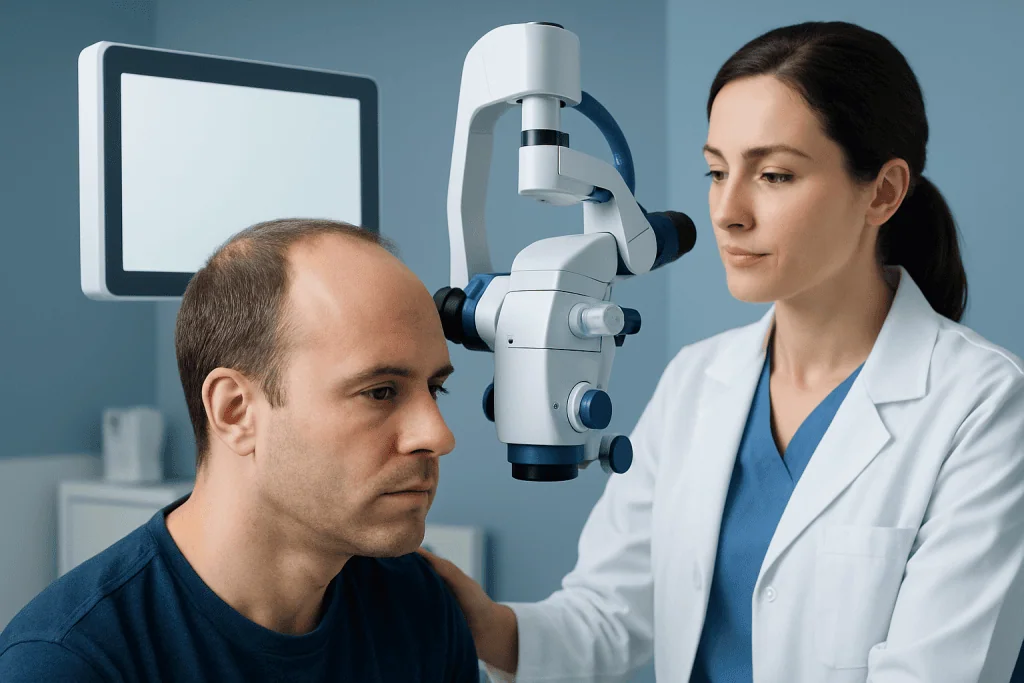
The scalp examination is often very informative. Doctors assess the pattern of recession, hair shaft thickness, signs of miniaturization, broken hairs, scalp inflammation, and whether the follicles appear preserved. A handheld dermoscope may be used to examine the scalp more closely and distinguish between hereditary thinning, traction damage, and scarring disorders.
Some people may need additional testing. Blood tests can be considered when symptoms or examination suggest an underlying medical issue, such as thyroid dysfunction, iron deficiency, or other deficiencies. If a scarring or inflammatory disorder is suspected, a dermatologist may recommend a scalp biopsy to confirm the diagnosis. Imaging is not usually needed for routine hair loss assessment.
When the pattern is not straightforward, the doctor may also look for related conditions such as seborrheic dermatitis or hormonal imbalances that can affect the scalp environment and hair density.
Treatment options based on the cause
Treatment depends on why the hairline is receding. For androgenetic alopecia, the main goal is usually to slow progression, preserve existing hair, and improve density where possible. Doctors may discuss evidence-based medical therapies, but the best plan varies by age, sex, medical history, pregnancy considerations, and the pattern and stage of hair loss. Results usually take time, and ongoing treatment is often needed to maintain benefit.
If traction is contributing, the first treatment is to reduce or stop hairstyles that pull on the hairline. Gentle hair care, looser styling, and avoiding repeated tension can help protect remaining follicles. If inflammation is present, medical treatment may be needed to calm the scalp and reduce further damage.
When hair loss is linked to an underlying condition, treatment focuses on that cause. Examples include addressing thyroid problems, correcting documented deficiencies, managing scalp inflammation, or reviewing medications with a doctor. Cosmetic options such as strategic styling, fibers, or camouflage products may also help confidence while treatment is underway.
For selected people with stable hair loss and adequate donor hair, procedural options may be discussed. These can include specialist medical therapies or platelet-rich plasma (PRP) in appropriate settings, and for some patients hair restoration procedures may be considered. A treatment plan should be individualized rather than based on trend-driven advice.
Self-care and prevention
Self-care cannot change genetic risk, but it can reduce avoidable damage and support overall scalp health. The most practical preventive step is minimizing repeated traction on the hairline. Hairstyles should feel comfortable, not tight, and any style that causes scalp soreness, bumps, or broken edge hairs should be reconsidered. Heat, harsh chemicals, and excessive friction can also worsen fragility in already-thinning hair.
General health habits matter as well. A balanced diet with enough protein and micronutrients supports normal hair growth, although supplements should not be taken indiscriminately without medical advice. Managing stress, sleeping well, and treating scalp conditions promptly may help reduce shedding and improve the scalp environment.
Good self-care steps include:
- Choosing looser hairstyles and taking breaks from tension styles
- Using gentle cleansing and avoiding overly harsh products
- Seeking care for persistent dandruff, itching, or scalp inflammation
- Avoiding self-prescribed supplements unless a deficiency is confirmed or a doctor recommends them
- Tracking changes with monthly photos rather than day-to-day checking
For people with ongoing concerns, a dermatologist or hair specialist can help distinguish normal maturation of the hairline from active hair loss that may benefit from treatment.
When to seek medical care
Medical care is appropriate when a receding hairline is progressing, causing concern, or accompanied by scalp symptoms. It is especially important to seek evaluation if hair loss is sudden, patchy, painful, itchy, or associated with redness, scale, pustules, or scarring. Early review can help identify causes that are treatable and may prevent further loss.
A person should also consider seeing a doctor if hair loss begins after a new medication, major illness, childbirth, significant weight change, or if there are signs of hormonal imbalance such as menstrual changes, acne, or new facial hair growth. Children and teenagers with hairline loss should always be assessed by a qualified clinician rather than managed with over-the-counter products alone.
If specialist care is needed, multidisciplinary teams can coordinate dermatology, endocrinology, and procedural assessment where appropriate. Acibadem International’s JCI-accredited hospitals care for international patients with hair and scalp concerns, including evaluation of hair loss disorders and treatment planning when indicated.
Frequently asked questions
Is a receding hairline always a sign of male pattern baldness?
No. Male pattern hair loss is a common cause, but a receding hairline can also result from traction, inflammation, hormonal changes, or other medical conditions. The pattern, speed, and associated scalp symptoms help doctors tell these causes apart.
Can a receding hairline grow back?
Sometimes, depending on the cause and how early it is addressed. Hairline loss from temporary shedding or early traction may improve, while long-standing hereditary or scarring loss may be harder to reverse. Early medical evaluation offers the best chance of protecting remaining hair.
Do hats cause a receding hairline?
Routine hat wearing is not considered a usual cause of permanent hairline recession. Problems are more likely to come from repeated tension, friction, or underlying scalp disease than from normal hat use. A hat that is extremely tight or causes irritation may worsen discomfort but is not a typical primary cause.
What is the difference between a mature hairline and a receding hairline?
A mature hairline is a mild, gradual change in hairline position that can occur with age and does not always progress to major hair loss. A receding hairline usually refers to ongoing backward movement or thinning, especially at the temples or frontal scalp. A doctor can help determine whether the change is stable or part of active hair loss.
Should women worry about a receding hairline?
Women should not panic, but they should pay attention to persistent or progressive frontal thinning. In women, causes may include traction, hormonal shifts, female pattern hair loss, or inflammatory scalp disorders. Assessment is especially important if symptoms include itching, scaling, eyebrow loss, or menstrual changes.
When should someone see a dermatologist for a receding hairline?
A dermatologist should be seen if the hairline is clearly changing over time, if the loss is sudden, or if there are scalp symptoms such as redness, pain, scaling, or pustules. Evaluation is also important when over-the-counter measures are not helping or when there may be a medical or hormonal trigger. Early diagnosis can make treatment more effective.
This article is for general information only and is not a substitute for professional medical advice. Please consult a qualified doctor about your individual situation.
Hair transplant in Turkey — costs, graft counts & a free assessment
JCI-accredited · board-certified surgeons · reply within 24h
Add us as a Preferred Source to see more of our trusted health content across Google Search, AI Overviews and Discover.

More from the Health Library

Lip Discoloration: What Patients Need to Know

Subarachnoid Hemorrhage: A Complete Medical Overview

Uvelby: What Patients Need to Know

Flanks: What Patients Need to Know

Good Skin Mask — Explained by Medical Evidence, Not Myths