Puppp Rash: Possible Causes and When to Seek Care
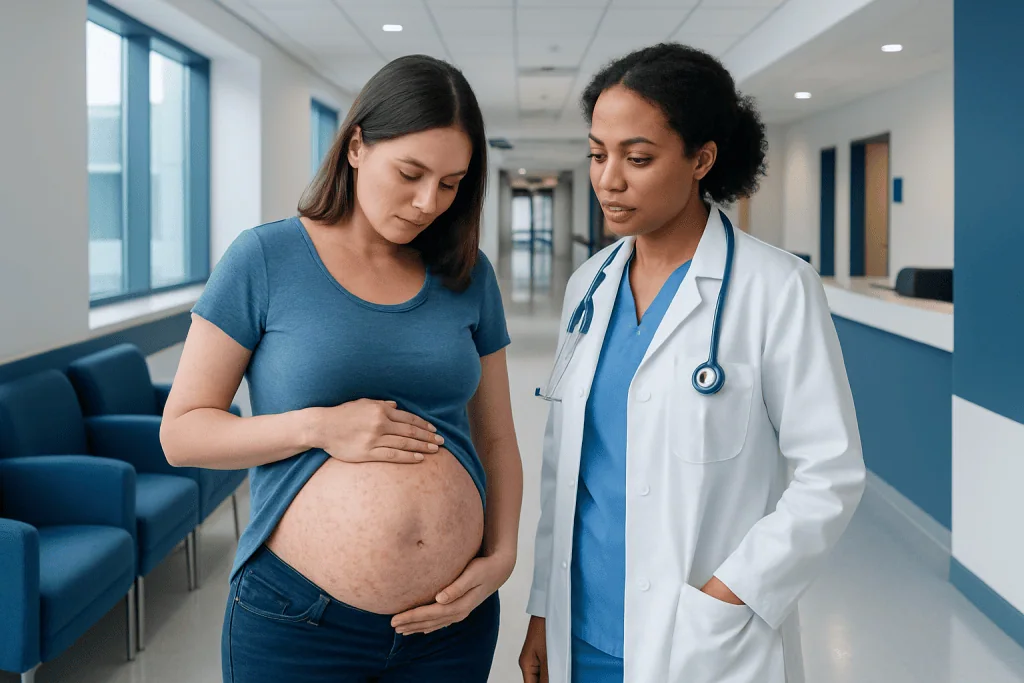
PUPPP rash usually starts in stretch marks on the abdomen during the third trimester. The main symptom is significant itching, often with raised red bumps or plaques.
Key Takeaways
- PUPPP rash usually starts in stretch marks on the abdomen during the third trimester.
- The main symptom is significant itching, often with raised red bumps or plaques.
- PUPPP is uncomfortable but is not usually dangerous and often improves after birth.
- Doctors diagnose PUPPP mainly by examining the rash and ruling out other causes.
- Medical review is important if itching is severe, widespread, or occurs without a visible rash.
PUPPP rash is a common, intensely itchy rash that usually develops in late pregnancy and is generally harmless to the pregnant person and baby. It still deserves medical attention because other pregnancy-related causes of itching and rash may need different evaluation or treatment.
What Is PUPPP Rash?
PUPPP rash is a pregnancy-related skin eruption that causes intense itching and a bumpy or patchy red rash. The name stands for pruritic urticarial papules and plaques of pregnancy. It most often appears in the third trimester, especially during a first pregnancy, and commonly begins within abdominal stretch marks before spreading to the thighs, buttocks, or arms.
Although the itching can be very distressing, PUPPP is usually considered a benign condition. In most cases, it does not harm the baby and tends to settle after delivery. The main goals of care are to confirm the diagnosis, relieve symptoms, and make sure the itching is not due to another condition that needs specific treatment.
PUPPP can look similar to other pregnancy rashes or allergic skin reactions, so it is understandable if a person is unsure what they are seeing. A careful medical evaluation helps distinguish it from problems such as eczema, hives, drug reactions, or other pregnancy-related conditions that can cause itching.
How PUPPP Rash Usually Looks and Feels
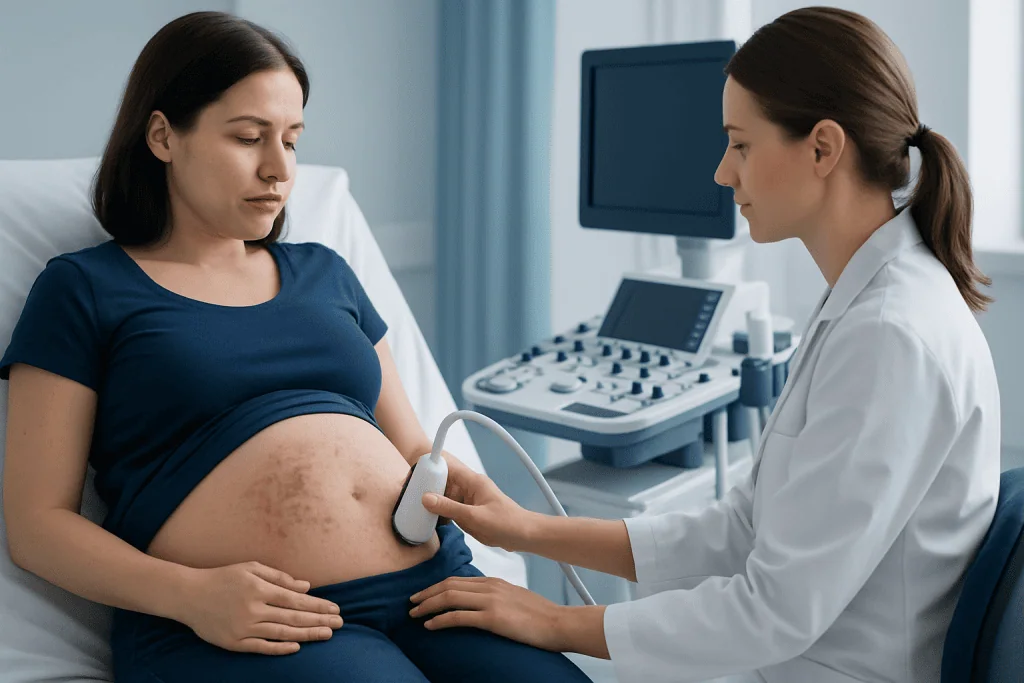
The hallmark symptom of PUPPP is itching that can range from bothersome to severe. The rash often starts as small, red, raised bumps within the stretch marks on the belly. Over time, these bumps may join together into larger itchy patches or plaques.
A helpful clue is where the rash begins and where it does not. PUPPP often affects the abdomen, thighs, buttocks, and sometimes the arms. It usually spares the area around the belly button, which may help doctors distinguish it from some other skin conditions of pregnancy.
Some people notice that the itching is worse at night, after a warm shower, or when wearing tight clothing. The skin may become more irritated from scratching, which can lead to broken skin, sleep disruption, and significant discomfort even though the condition itself is not usually dangerous.
- Raised red bumps or hive-like spots
- Larger itchy plaques that form as spots merge
- Rash starting in abdominal stretch marks
- Spread to thighs, buttocks, breasts, or arms
- Intense itching with little or no fever or illness symptoms
Possible Causes and Who Is More Likely to Get It
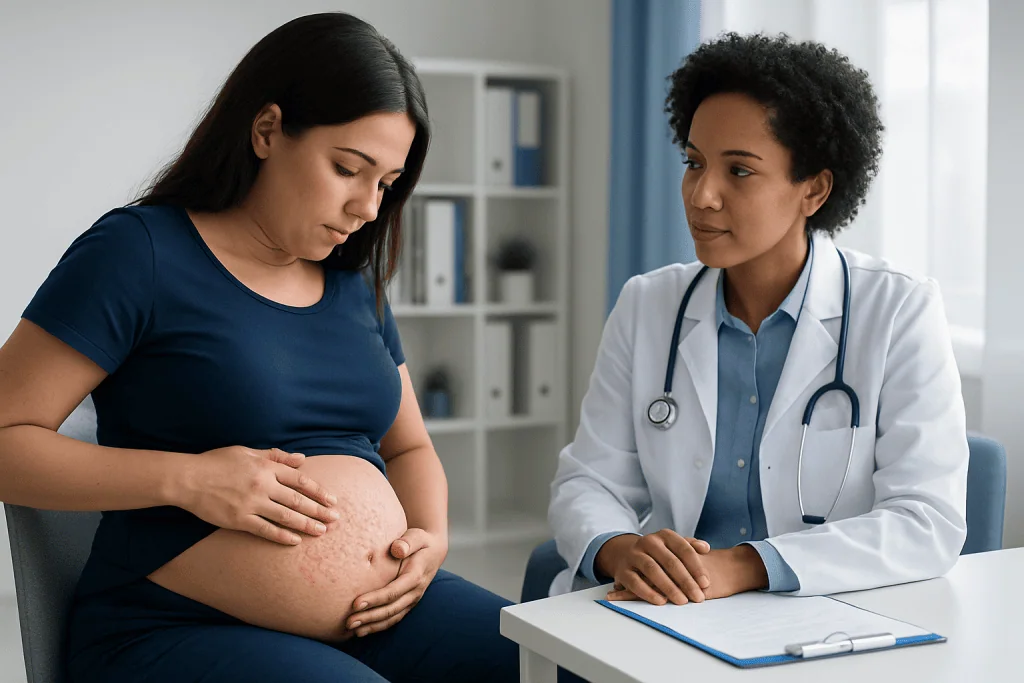
The exact cause of PUPPP rash is not fully understood. One leading idea is that rapid stretching of the skin in late pregnancy may trigger inflammation in susceptible individuals. This may help explain why the rash often starts in stretch marks and is more common when the abdomen expands quickly.
PUPPP is seen more often in first pregnancies and may also be more likely in multiple pregnancy, such as twins or triplets, where skin stretching can be greater. It has also been reported in pregnancies with more pronounced abdominal enlargement, but having these risk factors does not mean a person will definitely develop the rash.
PUPPP is not thought to be contagious, and it is not caused by poor hygiene. It is also different from a simple allergy, although the appearance can resemble hives. Because several skin and liver-related conditions can cause itching in pregnancy, a doctor may need to rule out problems such as eczema, contact dermatitis, or dermatitis before confirming PUPPP.
How Doctors Diagnose PUPPP
Doctors usually diagnose PUPPP based on the timing of the rash, where it started, what it looks like, and whether there are other symptoms. A physical examination is often the most important step. The classic pattern of an intensely itchy rash arising in abdominal stretch marks late in pregnancy can strongly suggest the diagnosis.
There is no single test that proves PUPPP in every case. Instead, testing may be used to exclude other causes, especially if the pattern is not typical. Blood tests might be considered if there is severe itching without much visible rash, because some pregnancy-related liver conditions can cause itching and need prompt attention.
If the diagnosis is uncertain, a dermatologist or obstetric specialist may become involved. In select situations, clinicians may also assess whether a person could benefit from dermatology evaluation or other specialist input. The aim is to make sure the rash is treated appropriately and that more serious causes are not missed.
Treatment Options and Symptom Relief
Treatment for PUPPP focuses on easing itching and helping the skin heal. Doctors commonly recommend gentle skin care, moisturizers, and anti-itch treatments that are considered appropriate in pregnancy. Depending on symptom severity, this may include topical medications, soothing lotions, or oral medicines chosen by a clinician.
For many people, cooling measures are also helpful. Short lukewarm showers, fragrance-free cleansers, soft cotton clothing, and avoiding overheating may reduce irritation. Scratching can worsen inflammation and break the skin, so keeping nails short and using soothing products can help protect the skin barrier.
When symptoms are more intense, doctors may prescribe stronger topical treatment or other therapies after weighing pregnancy safety. If a rash is severe or the diagnosis is not straightforward, referral for obstetric assessment may be appropriate, especially to confirm that symptoms fit a benign pregnancy rash rather than another condition.
Most cases improve after delivery, sometimes within days to a few weeks. While this can be reassuring, it is still important not to self-diagnose persistent or severe itching during pregnancy, since effective treatment depends on confirming the cause.
Self-Care Tips During Pregnancy
Self-care can make day-to-day symptoms more manageable, although it does not replace medical advice. Many people find it useful to keep the skin cool, moisturized, and protected from further irritation. Fragrance-free products are often best because perfumes and harsh additives can increase stinging or dryness.
Loose, breathable clothing may reduce rubbing against sensitive areas, especially the abdomen and thighs. Some people also feel more comfortable sleeping in a cooler room or using light bedding if heat makes itching worse at night. Hydration and gentle skin care support overall comfort, even though they do not directly cure the rash.
- Use bland, fragrance-free moisturizers regularly
- Choose lukewarm rather than hot showers
- Wear soft cotton or breathable fabrics
- Avoid scratching as much as possible
- Ask a clinician before using over-the-counter anti-itch products in pregnancy
If symptoms are disrupting sleep, causing distress, or spreading rapidly, it is sensible to speak with a healthcare professional rather than relying only on home remedies. In some cases, coordinated care with pregnancy follow-up services can help monitor both symptom control and overall maternal well-being.
When to Seek Medical Care
Medical care is appropriate for any new or intense rash in pregnancy, especially when the diagnosis is uncertain. PUPPP is usually harmless, but other conditions can look similar or cause itching without an obvious rash. A clinician can determine whether symptoms fit a typical benign pattern or need further testing.
Prompt assessment is particularly important if itching is severe on the palms or soles, if there is yellowing of the skin or eyes, dark urine, fever, blisters, painful skin, or a generally unwell feeling. These features are not typical of straightforward PUPPP and may point to another diagnosis that requires different care.
It is also wise to seek medical attention if the rash appears very early in pregnancy, involves the face or mouth, becomes infected from scratching, or does not improve with simple measures. Near the end of care planning, some international patients may choose centers such as Acibadem International, where multidisciplinary specialists in JCI-accredited hospitals evaluate and treat pregnancy-related skin concerns.
Outlook After Delivery and Future Pregnancies
The outlook for PUPPP is generally very good. In most cases, the rash fades after childbirth and does not leave long-term skin damage, although temporary discoloration from scratching or irritation can take longer to settle. The most challenging part is often the discomfort and sleep disruption while symptoms are active.
Recurrence in future pregnancies is possible but not guaranteed. Some people never experience it again, while others may notice a similar rash in later pregnancies. If a person has had PUPPP before, mentioning it early in prenatal care can help clinicians recognize symptoms quickly if they return.
Because itching in pregnancy has several possible causes, any new episode should still be assessed on its own merits rather than assumed to be the same condition. Early review can speed symptom relief and ensure that care is tailored to both skin health and pregnancy safety.
Frequently asked questions
Is PUPPP rash dangerous for the baby?
PUPPP rash is usually not dangerous for the baby. It is mainly a comfort and quality-of-life issue for the pregnant person because the itching can be intense. A doctor should still confirm the diagnosis, since other causes of itching in pregnancy may need different evaluation.
When does PUPPP rash usually start?
PUPPP most often starts in the third trimester, especially in the last weeks of pregnancy. It commonly begins on the abdomen within stretch marks and may spread to nearby areas. In some cases, it can also appear shortly after delivery.
How can someone tell PUPPP apart from other pregnancy rashes?
PUPPP often starts in abdominal stretch marks and usually spares the belly button area. It causes very itchy red bumps or larger raised patches without typically causing fever or major illness symptoms. Because several pregnancy conditions can resemble it, a medical examination is the safest way to tell the difference.
Does PUPPP rash go away on its own?
Yes, PUPPP often improves after delivery and may resolve within days to weeks. However, the itching can be severe enough to need treatment before then. Symptom relief and confirmation of the diagnosis are both important.
Can over-the-counter creams be used for PUPPP rash?
Some over-the-counter products may help, but pregnancy is a time to be careful with skin treatments and medicines. Fragrance-free moisturizers are often a gentle first step, but anti-itch creams should be discussed with a clinician or pharmacist. This helps make sure the product is appropriate and the rash has been correctly identified.
When should a pregnant person worry about itching?
Itching deserves medical advice if it is severe, keeps someone awake, or occurs without a clear rash. It is especially important to seek care if itching affects the palms or soles, or if there are symptoms such as jaundice, dark urine, fever, blisters, or feeling unwell. These are not typical features of uncomplicated PUPPP.
References
- American College of Obstetricians and Gynecologists
- American Academy of Dermatology
- National Health Service
- Mayo Clinic
- Society for Maternal-Fetal Medicine
This article is for general information only and is not a substitute for professional medical advice. Please consult a qualified doctor about your individual situation.
Explore treatments in Turkey — costs, top hospitals & a free quote
JCI-accredited · board-certified surgeons · reply within 24h
Add us as a Preferred Source to see more of our trusted health content across Google Search, AI Overviews and Discover.