Baby Led Weaning — Explained by Medical Evidence, Not Myths

Baby led weaning can be a safe way to introduce solids when a baby is around 6 months old and shows readiness signs. The main goals are safe self-feeding, exposure to different textures, and meeting nutrition needs such as iron, zinc, and healthy fats.
Key Takeaways
- Baby led weaning can be a safe way to introduce solids when a baby is around 6 months old and shows readiness signs.
- The main goals are safe self-feeding, exposure to different textures, and meeting nutrition needs such as iron, zinc, and healthy fats.
- Choking risk relates more to food shape and texture than to the feeding method alone, so food preparation matters greatly.
- Gagging is common and different from choking; parents should still learn infant first aid and supervise every meal.
- Some babies benefit from a mixed approach that combines self-feeding with spoon-fed foods.
- Medical advice is especially important for babies born prematurely or those with poor growth, swallowing concerns, or developmental issues.
Baby led weaning is an approach to starting solids in which a baby self-feeds appropriately prepared foods instead of being spoon-fed most purees. Medical evidence suggests it can be a reasonable option for many families when started around 6 months, with attention to developmental readiness, choking prevention, and adequate nutrition.
What Baby Led Weaning Means
Baby led weaning is a method of introducing solid foods in which the baby takes the lead in self-feeding soft, graspable foods, usually beginning at about 6 months of age. Despite the name, it does not mean stopping breast milk or formula; those remain the main source of nutrition during the first year while solids are gradually added.
From a medical point of view, baby led weaning is not a single strict program. It is better understood as a feeding style that encourages responsive feeding, oral-motor practice, and shared family meals. In practice, many families use a mixed approach, offering finger foods while also spoon-feeding yogurt, oatmeal, mashed beans, or other soft foods.
The main evidence-based question is not whether one style is universally best, but whether the baby is developmentally ready, receives enough key nutrients, and is protected from choking hazards. When these points are addressed, baby led weaning can fit within healthy infant feeding.
When a Baby Is Ready to Start Solids
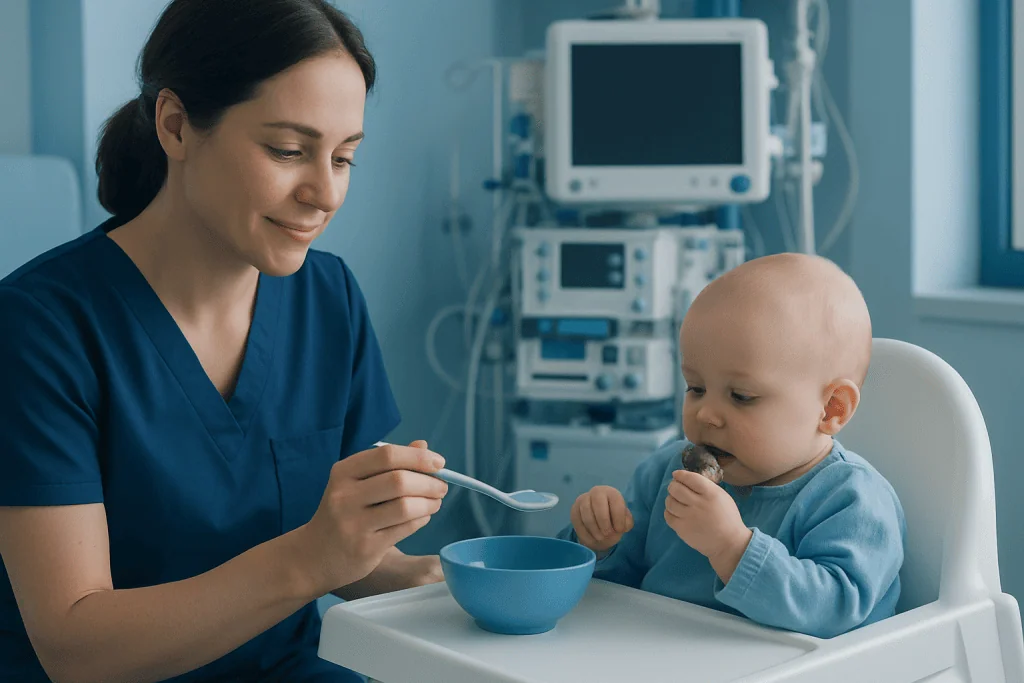
Most healthy babies are ready for solids at around 6 months, not earlier than 4 months. Readiness is based more on development than on age alone. A baby should be able to sit upright with minimal support, hold the head steady, show interest in food, and bring objects to the mouth with coordination.
Another useful sign is a reduced tongue-thrust reflex, which means the baby is less likely to automatically push food back out of the mouth. Babies should also be able to open the mouth for food and manage it in the mouth rather than letting it spill out immediately.
Not every child follows the same timetable. Babies born early, babies with growth concerns, or those with conditions affecting muscle tone, swallowing, or development may need an individualized plan. In these situations, a pediatrician may recommend a feeding assessment and, if needed, evaluation for related issues such as swallowing difficulties in children.
- Usually ready at around 6 months
- Can sit upright with good head control
- Shows interest in family food
- Can grasp and bring food to the mouth
- Still continues breast milk or formula
What the Evidence Says About Benefits and Limits

Research on baby led weaning suggests several possible advantages. These include more opportunities for self-regulation of appetite, experience with a variety of textures, participation in family meals, and practice with hand-to-mouth coordination. Some parents also find that self-feeding reduces mealtime pressure and allows the child to explore food at an individual pace.
At the same time, the evidence does not show that baby led weaning is automatically superior to spoon-feeding for all families. Studies vary in quality, and outcomes such as growth, eating behavior, and food acceptance depend on many factors beyond feeding style alone. A calm, responsive feeding environment matters in both methods.
One common concern is whether babies get enough iron and energy if they mostly handle food themselves. This is a valid concern, especially because iron stores begin to fall in later infancy. Baby led weaning works best when caregivers intentionally offer iron-rich foods, energy-dense foods, and repeated exposure to a range of tastes and textures rather than relying only on low-calorie fruits or vegetables.
Safety: Choking, Gagging, and Food Preparation
Safety is the issue parents ask about most often. The key point is that gagging and choking are not the same. Gagging is common when babies learn to handle textures; it is noisy, reflexive, and often helps move food forward. Choking is far more serious and may involve difficulty breathing, weak or silent coughing, color change, or inability to make sounds.
Current medical guidance focuses on reducing choking hazards rather than avoiding self-feeding entirely. Hard, round, sticky, or slippery foods are the main problem. Whole grapes, nuts, popcorn, chunks of raw apple or carrot, spoonfuls of nut butter, and pieces of sausage or hot dog are examples of foods that should be avoided or modified carefully.
Safer choices are soft foods that can be squashed easily between fingers, offered in shapes a baby can grasp at first, such as a soft-cooked vegetable spear or a strip of tender meat. Babies should always eat sitting upright, fully supervised, and never while walking, playing, or riding in a car seat. Learning infant choking first aid is strongly recommended for all caregivers.
- Avoid whole nuts, popcorn, and hard raw vegetables
- Cut round foods appropriately and avoid coin-shaped slices
- Offer soft textures that mash easily
- Do not put food directly into a distracted or reclining baby’s mouth
- Supervise every meal from start to finish
Nutrition Priorities: Iron, Allergens, and Balanced First Foods
Whether a baby is spoon-fed or self-fed, nutrition needs remain the same. Iron is especially important after about 6 months. Good options include soft strips of meat, shredded chicken, salmon, beans, lentils, eggs, tofu, and iron-fortified infant cereal that may be offered on a preloaded spoon or as a thicker mixture the baby can scoop with hands.
Healthy fats and adequate calories also matter because babies grow quickly. Foods such as full-fat yogurt, avocado, egg, oily fish, beans, and soft-cooked vegetables served with a little healthy fat can help. Fruits and vegetables are valuable, but they should not crowd out more nutrient-dense foods.
Modern allergy guidance also supports introducing common allergens in age-appropriate forms rather than delaying them without a medical reason. This may include well-cooked egg, smooth peanut thinned into yogurt or puree, dairy products such as yogurt, wheat, soy, sesame, fish, and other foods, unless a doctor advises otherwise. Families with strong allergy histories, severe eczema, or prior reactions should discuss an individualized plan with a clinician, especially if there is concern about food allergy.
Water can be offered in small amounts with meals after solids begin, but breast milk or formula should still provide most nutrition during the first year. Cow’s milk should not replace breast milk or formula as the main drink before 12 months.
How to Start Baby Led Weaning in Practice
Starting can be simple. Families can begin with one meal a day when the baby is alert and not overly hungry or tired. The goal at first is practice and exploration, not large amounts eaten. Offering one or two foods at a time can make it easier to observe how the baby manages textures and to notice any possible reactions.
A practical starting menu might include soft avocado slices rolled lightly for grip, a tender strip of omelet, flaky fish, steamed broccoli, ripe pear, mashed beans on a preloaded spoon, or oatmeal thick enough to cling. Texture should progress gradually as skills improve. Babies often move from a palmar grasp to a pincer grasp over time, so food size and shape can change as development advances.
Responsive feeding remains important throughout. Caregivers decide what foods are offered, when meals happen, and how they are prepared safely; the baby decides whether to eat and how much. If growth, intake, or feeding skills become a concern, pediatric assessment may be helpful, and some children may benefit from nutritional support or targeted evaluation such as pediatric check-up.
Who May Need a Different Feeding Plan
Baby led weaning is not the best starting point for every child. Babies with poor head control, significant prematurity, known neuromuscular conditions, structural airway or swallowing problems, delayed oral-motor skills, or faltering growth may need a modified approach. In these cases, safety and adequate intake take priority over following any one feeding philosophy.
Some infants do better with a combination of spoon-feeding and self-feeding so they can receive nutrient-rich foods while still practicing independence. A feeding specialist, pediatrician, or pediatric dietitian can help tailor textures, portion expectations, and meal routines to the child’s needs.
If a baby coughs persistently with feeds, has frequent vomiting, recurrent chest infections, poor weight gain, or distress during meals, a medical assessment is appropriate. Depending on the concern, evaluation may involve pediatric gastroenterology or a swallowing and feeding review. For international patients who need coordinated care, Acibadem International’s multidisciplinary specialists in JCI-accredited hospitals diagnose and treat pediatric feeding concerns.
When to Seek Medical Care
Medical advice is recommended if a baby is not showing readiness for solids by around 6 months, refuses most textures persistently, or seems unable to manage food safely in the mouth. Parents should also seek guidance if there are signs of inadequate intake such as poor weight gain, unusual tiredness, dehydration, or very limited acceptance of iron-rich foods.
Urgent medical care is needed if a baby has a choking episode that does not resolve promptly, trouble breathing, blue or gray color change, or reduced responsiveness. Emergency care is also important after a significant aspiration event or if breathing seems abnormal after eating.
Non-urgent review can also help when mealtimes become highly stressful, suspected allergic reactions occur, constipation becomes persistent after solids start, or reflux symptoms worsen. In some cases, doctors may consider related evaluations, including pediatric allergy support when food reactions are a concern.
Frequently asked questions
Is baby led weaning safe?
Baby led weaning can be safe for many babies when started at about 6 months and when foods are prepared to reduce choking risk. Safety depends on developmental readiness, upright supervised feeding, and avoiding high-risk foods. Caregivers should also know the difference between gagging and choking and learn infant first aid.
Do babies still need breast milk or formula during baby led weaning?
Yes. Breast milk or formula remains the main source of nutrition throughout most of the first year. Solid foods are added gradually for learning, texture experience, and extra nutrients such as iron.
What are the best first foods for baby led weaning?
Good first foods are soft, easy to grasp, and nutrient-dense. Examples include strips of omelet, soft-cooked vegetables, ripe avocado, flaky fish, tender meat, beans, lentils, yogurt, and oatmeal served in a safe texture. Iron-rich foods are especially important.
What is the difference between gagging and choking?
Gagging is a common protective reflex and is usually noisy, with coughing, sputtering, or tongue movements. Choking is more dangerous and may look quiet, with trouble breathing, weak coughing, or inability to make sounds. If choking is suspected, emergency action is needed.
Can baby led weaning cause iron deficiency?
It can contribute if solids are not planned carefully and iron-rich foods are not offered regularly. This is why medical guidance emphasizes meats, beans, lentils, eggs, fortified cereals, and other iron-containing foods from the start. A pediatrician can advise if there are concerns about growth or anemia.
Is a mixed approach better than strict baby led weaning?
For many families, a mixed approach is practical and evidence-based. Babies may self-feed some foods while also receiving spoon-fed items such as yogurt, cereal, or mashed legumes. The most important points are safe textures, responsive feeding, and meeting nutritional needs.
References
- American Academy of Pediatrics
- Centers for Disease Control and Prevention
- World Health Organization
- National Institute of Allergy and Infectious Diseases
- European Society for Paediatric Gastroenterology Hepatology and Nutrition
This article is for general information only and is not a substitute for professional medical advice. Please consult a qualified doctor about your individual situation.
Explore treatments in Turkey — costs, top hospitals & a free quote
JCI-accredited · board-certified surgeons · reply within 24h
Add us as a Preferred Source to see more of our trusted health content across Google Search, AI Overviews and Discover.
Check your numbers in seconds
BMI, calories, due date, blood pressure and 30+ more clinical calculators — free, instant, doctor-reviewed ranges.

More from the Health Library

Foot Cramps — Explained by Medical Evidence, Not Myths

Ebglyss — Explained by Medical Evidence, Not Myths

Aching Lungs and Back — Explained by Medical Evidence, Not Myths

Dupixent: An Evidence-Based Guide for Patients

Tan Lines — Explained by Medical Evidence, Not Myths