Calcification: What Patients Need to Know

Calcification is a description of calcium buildup, not a single disease. It can occur in blood vessels, breasts, kidneys, joints, tendons, heart valves, and other tissues.
Key Takeaways
- Calcification is a description of calcium buildup, not a single disease.
- It can occur in blood vessels, breasts, kidneys, joints, tendons, heart valves, and other tissues.
- Some calcifications cause no symptoms and are found on imaging tests done for another reason.
- Treatment depends on the location, cause, and whether the calcification is affecting organ function.
- New pain, swelling, breathing symptoms, chest symptoms, or abnormal test results should be assessed by a doctor.
Calcification means calcium salts have built up in body tissue where they are not normally expected in large amounts. Sometimes this is a harmless finding linked to aging or prior healing, but in other cases it can affect how an organ works and may need medical evaluation.
Overview: What calcification means
Calcification is the buildup of calcium in body tissue. In simple terms, calcium that is meant to support normal functions such as bone strength becomes deposited in places where it may not belong or may collect in unusually large amounts. This can happen in soft tissues, blood vessels, heart valves, kidneys, breasts, joints, tendons, and even areas of prior injury or inflammation.
Calcification itself is not one single illness. It is a finding or process that can have different meanings depending on where it occurs. In some people, it is an incidental imaging finding that does not cause harm. In others, it may be linked to inflammation, aging, tissue damage, kidney disease, metabolic imbalance, or vascular disease.
Doctors usually interpret calcification by looking at the whole clinical picture: the person’s symptoms, medical history, age, blood tests, and imaging results. This is important because a tiny calcified spot in one tissue may be routine, while calcification in another place may affect blood flow, movement, or organ function.
Understanding the location is often the key first step. For example, calcification in arteries may relate to cardiovascular risk, while calcification in a tendon may help explain pain and limited motion. A careful evaluation helps separate harmless calcium deposits from those that need monitoring or treatment.
Where calcification can happen and how it may feel
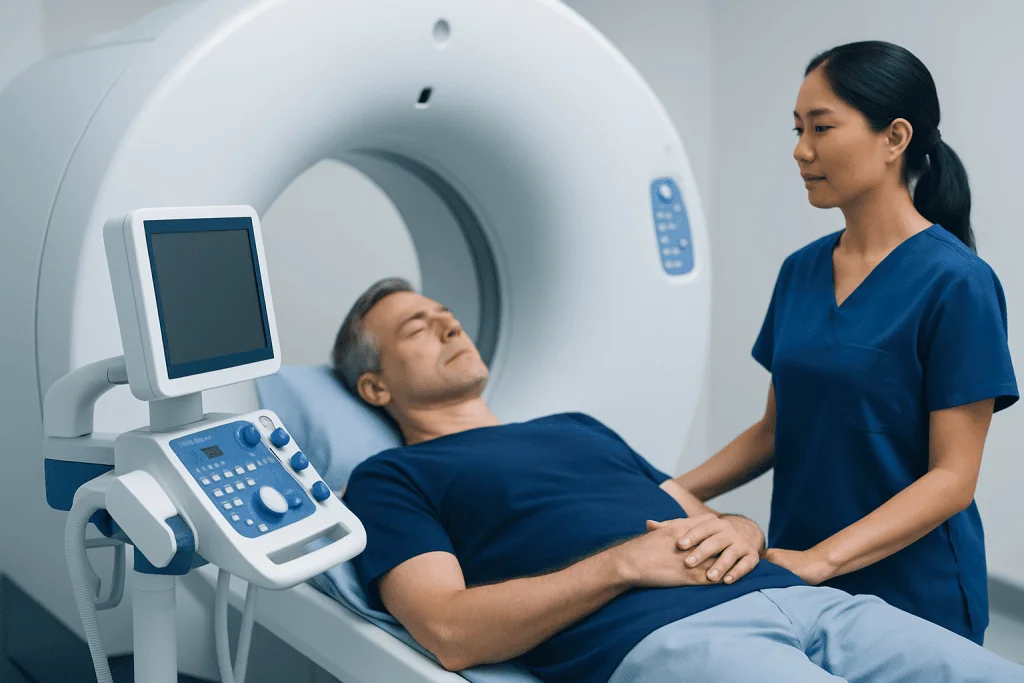
Many people with calcification have no symptoms at all. The finding may appear on an X-ray, ultrasound, mammogram, CT scan, or echocardiogram done for another reason. When symptoms do occur, they usually come from the organ or tissue involved rather than from the calcium itself.
For example, calcification in tendons or around joints can cause localized pain, stiffness, tenderness, swelling, and reduced range of motion. Calcification in the kidneys may be associated with kidney stones or impaired kidney function. Calcification in heart valves can contribute to shortness of breath, fatigue, chest discomfort, dizziness, or a heart murmur if the valve becomes narrowed or stiff.
Arterial calcification often develops silently over time, but it may be associated with conditions that reduce blood flow. Depending on which vessels are affected, a person might notice chest symptoms with exertion, leg pain while walking, or signs of circulatory disease. Breast calcifications usually cannot be felt and are most often seen only on a mammogram, where they help radiologists judge whether the pattern looks benign or needs further assessment.
- Joint or tendon calcification: pain, stiffness, limited movement
- Kidney-related calcification: flank pain, urinary symptoms, stone-related symptoms
- Heart valve calcification: breathlessness, fatigue, faintness, reduced exercise tolerance
- Arterial calcification: often no symptoms at first, sometimes circulation-related complaints
- Breast calcification: usually no symptoms, seen on screening imaging
Why calcification happens

There is no single cause of calcification. One common pattern is called dystrophic calcification, which happens in tissue that has already been damaged or inflamed. In this setting, calcium can collect in scars, old injuries, inflamed tendons, or areas of previous infection even when blood calcium levels are normal.
Another pattern is related to changes in calcium and phosphate balance in the body. This may occur with chronic kidney disease, parathyroid disorders, vitamin D abnormalities, or other metabolic problems. When the body has difficulty regulating minerals, calcium may deposit more easily in blood vessels or soft tissues.
Age is also an important factor. Over time, structures such as arteries and heart valves can gradually stiffen and calcify. Lifestyle and long-term health conditions may add to this process. Smoking, diabetes, high blood pressure, high cholesterol, and chronic inflammation are often associated with vascular calcification and may overlap with broader atherosclerosis risk.
Sometimes calcification follows repetitive strain or local tissue stress, as can happen with calcific tendinitis in the shoulder. In other cases, the exact reason remains unclear. A medical assessment helps determine whether the finding is isolated and benign or part of an underlying condition that needs treatment.
Risk factors and related conditions
Risk factors vary by type and location, but some patterns are seen often. Older age is one of the strongest general risk factors because tissues and blood vessels naturally change over time. Long-standing inflammation, prior injury, and chronic disease can also make calcium deposits more likely.
People with kidney disease deserve special attention because kidney function plays a major role in balancing calcium and phosphate. Disorders of the parathyroid glands, certain autoimmune conditions, and metabolic disease can also contribute. If calcification is seen in blood vessels or the heart, doctors may look closely for high blood pressure, diabetes, high cholesterol, smoking history, and family history of cardiovascular disease.
Calcification may also coexist with other structural conditions. For instance, calcium deposits can be part of degenerative joint changes or appear in and around tendons. In the heart and circulation, the finding may lead a doctor to evaluate for valve disease or coronary artery disease, sometimes using tests that connect with broader coronary artery disease assessment.
Not every person with a risk factor develops symptoms. Even so, understanding associated conditions helps guide next steps, including whether monitoring, blood tests, imaging follow-up, or specialist input may be helpful.
How doctors diagnose calcification
Diagnosis usually begins with the medical history and physical examination. The doctor asks where symptoms are felt, how long they have been present, and whether there are related conditions such as kidney disease, cardiovascular disease, endocrine problems, or previous injuries. This background helps determine whether calcification is likely to be incidental or clinically important.
Imaging is often the main way calcification is identified. Plain X-rays can show calcified deposits in joints, tendons, lungs, or other tissues. Mammography is especially useful for detecting breast calcifications. Ultrasound may help evaluate soft tissue and some organ-related calcifications, while CT scans can show calcium very clearly in blood vessels, organs, and deeper structures. An echocardiogram may be used if valve calcification is suspected.
Blood tests may be recommended to look at kidney function, calcium, phosphate, parathyroid hormone, inflammatory markers, or other clues to an underlying cause. If the calcification is affecting the heart or circulation, doctors may expand the workup with tests related to cardiology evaluation or more detailed vascular imaging.
Most calcifications do not need a biopsy. However, if imaging shows an unusual pattern or there is concern about another process, a doctor may advise further testing. The goal is not simply to name the finding, but to understand whether it is stable, causing symptoms, or related to a treatable condition.
Treatment options depend on the location
There is no single treatment that removes every type of calcification. Care depends on where the calcium is located, what is causing it, and whether it is producing symptoms or affecting organ function. Many incidental calcifications need only observation and management of general health risks rather than direct intervention.
When calcification causes pain in a joint or tendon, treatment may include rest, physical therapy, anti-inflammatory measures, and guided rehabilitation. In selected cases, image-guided procedures or other orthopedic approaches may be considered if symptoms persist. If the issue is in the kidneys, treatment focuses on the underlying mineral imbalance, stone prevention, and preserving kidney function.
For vascular or heart-related calcification, treatment usually targets the condition linked to the deposits rather than the calcium alone. This may involve improving blood pressure, cholesterol, blood sugar, and smoking cessation, as well as evaluating whether procedures are needed for narrowed arteries or a calcified valve. Depending on findings, the care pathway may include coronary angiography or specialist review in structural heart disease. If a heart valve is significantly affected, a doctor may discuss options related to heart valve treatment.
Breast calcifications often require no treatment at all when their pattern is benign. Some simply need routine screening follow-up, while others may need short-interval imaging or a biopsy to clarify the diagnosis. Across all types, the most effective treatment plan is individualized and guided by a qualified clinician.
Prevention and self-care
Not all calcification can be prevented, especially age-related or healing-related changes. Still, people can lower the chance of clinically significant calcification in some tissues by managing long-term health conditions and reducing inflammation and vascular risk. This is especially relevant for arterial and heart-related calcification.
Helpful steps include not smoking, staying physically active, eating a balanced diet, maintaining a healthy weight, and keeping blood pressure, cholesterol, and blood sugar under control. People with kidney disease or endocrine disorders should follow their clinician’s advice carefully, because mineral balance matters in these conditions.
Self-care also means avoiding assumptions. Calcium deposits are not a reason to stop eating all calcium-rich foods unless a doctor specifically advises this. The body needs calcium for normal function, and the relationship between dietary calcium and tissue calcification is more complex than many people think. Unsupervised supplement use, however, should be reviewed with a clinician, especially in people with kidney disease or a history of stones.
Regular follow-up can be an important part of prevention. If imaging has already shown calcification, monitoring helps identify whether it is stable or changing over time. Early review of new symptoms may prevent complications and support timely care.
When to seek medical care
Medical advice is appropriate whenever calcification is newly discovered and its meaning is unclear, especially if it involves the heart, blood vessels, kidneys, or breast tissue. A doctor can explain whether the finding is likely benign, whether it needs follow-up, and what underlying conditions should be checked.
Prompt assessment is especially important if there is chest discomfort, shortness of breath, fainting, sudden weakness, significant leg pain with walking, persistent joint swelling, severe localized pain, urinary symptoms, or blood in the urine. These symptoms do not always mean the calcification is dangerous, but they should not be ignored.
People should also seek medical review if they have chronic kidney disease, parathyroid disease, or repeated abnormal calcium-related blood tests. These conditions can change how the body handles minerals and may increase the need for monitoring.
For international patients who need coordinated evaluation, Acibadem International’s multidisciplinary specialists in JCI-accredited hospitals diagnose and treat conditions related to calcification, from cardiovascular causes to orthopedic and kidney-related problems. The right specialist depends on the site involved, so a clear diagnosis is the best place to start.
Frequently asked questions
Is calcification always dangerous?
No. Calcification can be a harmless incidental finding, especially when it is small, stable, or related to prior tissue healing. Its importance depends mainly on where it is located and whether it is affecting organ function or linked to another disease.
Can calcification go away on its own?
Some calcium deposits remain stable for years, while others may change slowly over time. In certain painful tendon conditions, symptoms can improve and the deposit may partially resolve, but many calcifications do not simply disappear. A doctor can advise whether monitoring or treatment is appropriate.
Does eating too much calcium cause calcification?
Usually not in a simple direct way. Most tissue calcification is related to local tissue damage, aging, inflammation, vascular disease, or problems with calcium and phosphate regulation rather than normal dietary calcium alone. People should not restrict calcium unnecessarily unless their clinician recommends it.
How is calcification found?
It is often found on imaging tests such as X-rays, mammograms, ultrasound, CT scans, or echocardiograms. Many people learn about it incidentally during testing for another issue. Additional blood tests or follow-up imaging may be used to understand the cause.
What doctor treats calcification?
The right specialist depends on the location. A cardiologist may assess vascular or valve calcification, an orthopedist may treat tendon or joint calcification, a nephrologist may manage kidney-related causes, and a breast specialist may review breast calcifications. A primary care doctor often helps coordinate the first evaluation.
Can calcification cause pain?
Yes, especially when it affects tendons, joints, or nearby soft tissues. In those cases, the deposit may trigger inflammation, stiffness, and limited movement. In other locations, calcification may cause no pain at all and be found only on imaging.
This article is for general information only and is not a substitute for professional medical advice. Please consult a qualified doctor about your individual situation.
Explore treatments in Turkey — costs, top hospitals & a free quote
JCI-accredited · board-certified surgeons · reply within 24h
Add us as a Preferred Source to see more of our trusted health content across Google Search, AI Overviews and Discover.
Check your numbers in seconds
BMI, calories, due date, blood pressure and 30+ more clinical calculators — free, instant, doctor-reviewed ranges.

More from the Health Library

Ventolin: An Evidence-Based Guide for Patients
Osteophytes: A Complete Medical Overview

Indomethacin: What Patients Need to Know

Prebiotic Fiber: What Patients Need to Know

Pre Menopausal: What Patients Need to Know