Discoid Lupus: A Complete Medical Overview

Discoid lupus is a form of cutaneous lupus that primarily affects the skin rather than internal organs. Common signs include red or violet, round or disc-shaped scaly patches, often on the face, scalp, and ears.
Key Takeaways
- Discoid lupus is a form of cutaneous lupus that primarily affects the skin rather than internal organs.
- Common signs include red or violet, round or disc-shaped scaly patches, often on the face, scalp, and ears.
- Early treatment is important because lesions can leave permanent scars, hair loss, or skin color changes.
- Sun exposure is a major trigger, so daily sun protection is a central part of care.
- Diagnosis may involve a skin examination, skin biopsy, and tests to look for signs of systemic lupus when needed.
- Many people manage discoid lupus well with dermatology follow-up and individualized treatment.
Discoid lupus is a chronic autoimmune skin condition that mainly affects the skin, causing well-defined, inflamed patches that can lead to scarring and pigment changes. It is usually manageable with sun protection, topical treatments, and specialist care, especially when diagnosed early.
Overview: what discoid lupus is
Discoid lupus is a chronic autoimmune skin disease that causes inflamed, coin-shaped or disc-shaped lesions, most often on areas exposed to sunlight. It belongs to a group of conditions called cutaneous lupus erythematosus, meaning lupus that mainly affects the skin. In many people, discoid lupus remains limited to the skin, although a smaller number may also have or later develop systemic lupus.
The condition often appears as sharply defined red, pink, or violet patches with scale. Over time, these lesions may become thicker, leave scars, or cause lighter or darker skin color changes. When the scalp is involved, permanent hair loss can occur if inflammation damages the hair follicles.
Discoid lupus is not contagious, and it does not develop because of poor hygiene. It reflects an immune system response in which the body attacks healthy skin tissue, especially after triggers such as ultraviolet light. Because the rash can resemble other skin disorders, medical evaluation is important for an accurate diagnosis.
Some patients with discoid lupus may also need assessment for related autoimmune conditions, including lupus. A careful evaluation helps clarify whether the disease is limited to the skin or part of a broader autoimmune picture.
How discoid lupus appears on the skin
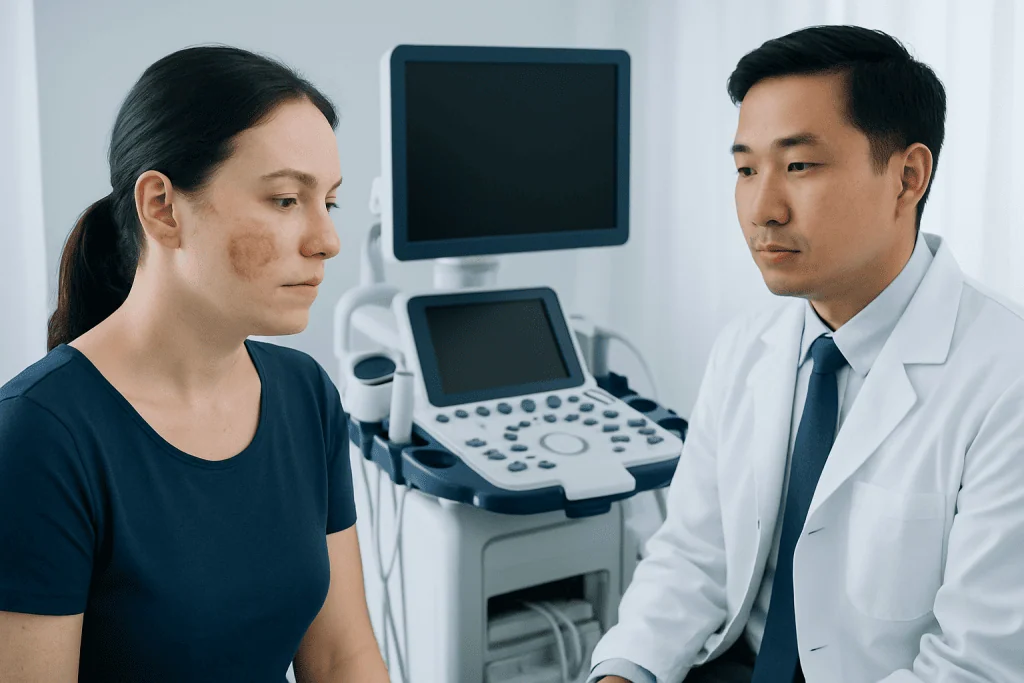
Discoid lupus lesions usually develop gradually. They often start as small, inflamed patches that enlarge and become more clearly defined. The surface may look dry, scaly, or rough, and the edges are often darker or more raised than the center.
As lesions heal, they can leave long-lasting marks. Some people develop scarring, thinning of the skin, widened blood vessels, or changes in skin color. On the scalp, inflammation may destroy hair follicles, leading to scarring alopecia, which means hair may not grow back in the affected areas.
Typical features can include:
- Round or disc-shaped red or purple plaques
- Scale or crust on the surface
- Lesions on the cheeks, nose, ears, scalp, lips, or neck
- Skin sensitivity to sunlight
- Scarring or pigment changes after healing
- Patchy hair loss when the scalp is involved
Symptoms such as itching, tenderness, or burning can occur, but some lesions are not painful. Because these skin changes may overlap with eczema, psoriasis, fungal infections, or other inflammatory conditions, a specialist skin examination is often needed. In some cases, doctors may compare it with other skin diseases before confirming the diagnosis.
Causes and risk factors

The exact cause of discoid lupus is not fully understood. It is considered an autoimmune condition, meaning the immune system becomes overactive and attacks the skin. This process likely involves a combination of genetic tendency, immune system signaling, and environmental triggers.
Sunlight is one of the best-known triggers. Ultraviolet radiation can worsen existing lesions and may help trigger new ones. Even brief exposure can sometimes lead to flare-ups, which is why regular sun protection is one of the most important parts of management.
Other factors that may contribute include smoking, skin injury, certain medications in susceptible people, and hormonal or immune influences. The condition can affect adults of many ages and backgrounds, and women are affected more often than men. A personal or family history of autoimmune disease may also increase risk.
Not everyone with discoid lupus has systemic lupus, and having skin-limited disease does not automatically mean internal organs will become involved. Still, doctors may ask about joint pain, mouth ulcers, fatigue, or other symptoms to determine whether broader autoimmune evaluation is appropriate.
Diagnosis and medical evaluation
Diagnosis begins with a detailed medical history and a careful skin examination. A dermatologist looks at the shape, location, and texture of lesions, asks about sun sensitivity and symptom timing, and reviews any history of autoimmune illness. Photos taken over time may also help assess disease activity and response to treatment.
A skin biopsy is often the most useful test when the diagnosis is uncertain. In this procedure, a small sample of skin is examined under a microscope to look for patterns typical of discoid lupus. Additional laboratory tests may be ordered to check for signs of systemic lupus or other autoimmune conditions, but blood tests alone cannot diagnose discoid lupus.
Because scalp involvement can lead to permanent hair loss, early specialist assessment is especially important when patches develop on the hair-bearing scalp. Some patients may also benefit from imaging or other tests if symptoms suggest disease beyond the skin, though this is not needed for everyone.
When care is coordinated between dermatology and other specialties, the evaluation can be more complete. If systemic features are suspected, doctors may also consider consultation through services related to rheumatology care to assess the broader immune picture.
Treatment options and long-term management
Discoid lupus treatment aims to reduce inflammation, prevent new lesions, limit scarring, and control symptoms. The treatment plan depends on how extensive the rash is, whether the scalp or face is involved, how active the disease is, and whether there are signs of systemic lupus. Early treatment offers the best chance of minimizing permanent skin changes.
For localized disease, doctors often start with topical therapies such as corticosteroid creams or ointments, or other anti-inflammatory prescription medicines applied directly to the skin. In some cases, medication may be injected into thicker lesions to reduce inflammation. If the disease is more widespread or resistant, systemic medicines may be considered under specialist supervision.
Supportive care is also essential. This may include scar management, gentle skin care, treatment of secondary irritation, and advice on camouflage cosmetics if desired. When scalp disease leads to significant hair changes, patients may also need assessment through dermatology services focused on inflammatory scalp conditions.
People whose disease does not respond to first-line therapies may need more advanced evaluation and monitoring. Because discoid lupus can overlap with broader autoimmune disease, some patients benefit from multidisciplinary follow-up. At the appropriate stage, clinicians may also coordinate care with specialists experienced in immune system diseases treatment.
Daily prevention and self-care
Self-care plays a major role in controlling discoid lupus. The most important step is strict sun protection every day, even when the weather is cloudy. Broad-spectrum sunscreen, wide-brimmed hats, protective clothing, and avoiding peak sunlight hours can reduce flares and help protect healing skin.
Patients are usually advised to stop smoking if they smoke, as smoking may worsen disease activity and reduce response to treatment. Gentle skin care is also helpful. This includes using mild cleansers, avoiding harsh scrubs, and following treatment instructions carefully rather than overusing over-the-counter products that may irritate the skin.
Practical self-care tips include:
- Use broad-spectrum sunscreen regularly on exposed skin
- Wear hats and sun-protective clothing outdoors
- Avoid picking at scales or crusts
- Follow prescription treatment exactly as directed
- Keep regular follow-up visits, especially if lesions are active on the scalp or face
- Report new symptoms such as joint pain, mouth ulcers, or unusual fatigue
Many people find it useful to note triggers, flare timing, and response to treatment in a simple symptom diary. This can help clinicians adjust management and identify patterns such as seasonal worsening or irritation from specific products.
When to seek medical care
Medical attention is appropriate whenever a persistent rash develops on the face, scalp, ears, or other sun-exposed areas, especially if it is scaly, leaves marks, or causes hair loss. Early assessment matters because discoid lupus can scar the skin, and scalp involvement may lead to permanent loss of hair if inflammation is not controlled in time.
People already diagnosed with discoid lupus should seek review if lesions spread, become more inflamed, stop responding to treatment, or show signs of infection such as increasing pain, warmth, swelling, or drainage. New symptoms outside the skin, including unexplained fever, joint pain, chest discomfort, marked fatigue, or mouth sores, should also be discussed with a doctor.
Although discoid lupus is often managed in outpatient care, regular follow-up helps monitor for complications and check whether the disease remains skin-limited. Patients should not stop prescribed medicines on their own without guidance, even if lesions seem to improve.
Near the end of the care pathway, some patients may prefer evaluation in a center that brings together dermatology, rheumatology, and pathology expertise. Acibadem International’s multidisciplinary specialists and JCI-accredited hospitals diagnose and treat discoid lupus for international patients when coordinated specialist care is needed.
Frequently asked questions
Is discoid lupus the same as systemic lupus?
No. Discoid lupus mainly affects the skin, while systemic lupus can affect multiple organs such as the joints, kidneys, lungs, or heart. Some people with discoid lupus may later develop systemic lupus, but many do not.
What does discoid lupus look like?
It usually appears as round or disc-shaped red, pink, or purple scaly patches with clear borders. These lesions often occur on the face, scalp, and ears and may heal with scarring or changes in skin color.
Can discoid lupus cause permanent hair loss?
Yes, it can if the scalp is involved and inflammation damages the hair follicles. Early diagnosis and treatment are important because hair loss from scarring may be permanent.
Is discoid lupus contagious?
No. Discoid lupus cannot be passed from one person to another through contact, sharing items, or close personal interaction. It is an autoimmune condition, not an infection.
Does sunlight make discoid lupus worse?
Yes, sunlight is a common trigger and can worsen existing lesions or cause new ones to appear. Daily sun protection is one of the most effective ways to help reduce flares.
How is discoid lupus diagnosed?
Doctors diagnose it through a medical history, skin examination, and often a skin biopsy. Blood tests may also be used to look for signs of systemic lupus or related autoimmune conditions, but they do not replace a clinical evaluation.
Can discoid lupus be treated successfully?
Many people control discoid lupus well with a combination of prescription treatment, sun protection, and regular follow-up. The outcome is often better when treatment begins early, before significant scarring develops.
References
- American Academy of Dermatology
- National Institute of Arthritis and Musculoskeletal and Skin Diseases
- Mayo Clinic
- DermNet
- British Association of Dermatologists
This article is for general information only and is not a substitute for professional medical advice. Please consult a qualified doctor about your individual situation.
Lupus in Turkey — costs, top hospitals & a free quote
JCI-accredited · board-certified surgeons · reply within 24h
Add us as a Preferred Source to see more of our trusted health content across Google Search, AI Overviews and Discover.

More from the Health Library

Cumin Substitute: An Evidence-Based Guide for Patients

Kerendia Uses for Kidney and Heart Risk Reduction

Homeostasis — Explained by Medical Evidence, Not Myths

Lung Biopsy: What Patients Need to Know

Linaza — Explained by Medical Evidence, Not Myths