Varicose Socks Women — Explained by Medical Evidence, Not Myths

Compression socks may reduce leg discomfort, swelling, and tiredness in women with varicose veins. They support circulation but do not remove existing varicose veins.
Key Takeaways
- Compression socks may reduce leg discomfort, swelling, and tiredness in women with varicose veins.
- They support circulation but do not remove existing varicose veins.
- The right fit, pressure level, and wearing routine matter for comfort and benefit.
- Not everyone should use compression garments without guidance, especially people with certain artery or skin problems.
- Persistent symptoms, skin changes, or one-sided leg swelling should be assessed by a doctor.
Varicose socks women usually refers to compression socks or stockings designed to support blood flow in the legs. Medical evidence suggests they can help relieve symptoms such as heaviness, swelling, and aching, but they do not cure or erase varicose veins.
Overview: what “varicose socks women” really means
When people search for “varicose socks women,” they are usually looking for compression socks or compression stockings that may help with varicose vein symptoms. The evidence-based answer is straightforward: these garments can improve comfort and reduce swelling in some women, but they do not make bulging veins disappear.
Varicose veins develop when vein valves in the legs do not work as effectively as they should, allowing blood to pool. This can lead to enlarged, twisted veins, along with symptoms such as aching, heaviness, throbbing, or ankle swelling. Compression garments apply graduated pressure, typically firmer at the ankle and lighter higher up the leg, to encourage blood to move upward toward the heart.
Women may look for these products during pregnancy, after long hours of standing, while traveling, or when they notice visible veins and leg discomfort. Compression socks can be a useful part of symptom management, but they are only one piece of care. If symptoms are ongoing or veins are worsening, medical evaluation may help identify whether additional treatment is needed for varicose veins.
How compression socks may help women with varicose vein symptoms
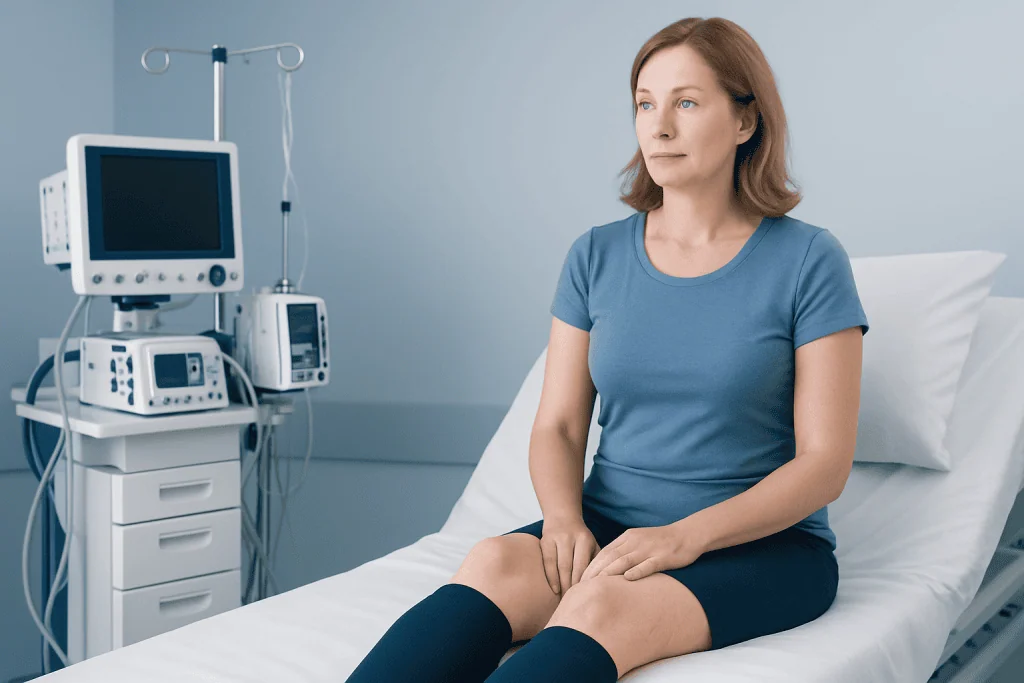
Compression socks are designed to support venous return, which means helping blood flow back from the lower legs toward the heart. For some women, this reduces the sensation of heaviness or fatigue in the legs, especially later in the day or after prolonged sitting or standing. They may also help limit mild swelling around the ankles and lower calves.
Medical guidance generally views compression as a conservative, non-surgical option for symptom relief. It may be recommended while someone is waiting for a vascular assessment, during pregnancy when treatment options may be more limited, or after certain vein procedures. Some women also prefer compression garments because they are simple to use and can fit into a daily routine without major disruption.
Still, expectations matter. Compression socks do not repair damaged vein valves, shrink large surface veins permanently, or prevent every future vein problem. Their main role is symptom control and support. If visible veins are prominent, painful, or linked to skin changes, a doctor may discuss further options such as varicose veins treatment based on the person’s symptoms, vein pattern, and overall health.
What symptoms they can and cannot improve
Compression socks may help several common symptoms linked to venous insufficiency and varicose veins. These include aching, a feeling of leg heaviness, mild swelling, throbbing, and tired legs after long periods of standing. Some women also find that compression reduces discomfort during travel or by the end of the workday.
However, these garments are less likely to change the visible appearance of established varicose veins in a meaningful way. They do not “dissolve” veins, remove spider veins, or reverse the underlying valve problem. Marketing language can sometimes suggest otherwise, but current medical understanding does not support compression socks as a cure.
It is also important to know that not every leg symptom comes from varicose veins. Cramps, burning, tingling, or sudden swelling can have other causes. A medical review may be useful if symptoms are severe, happen in one leg only, or occur together with skin discoloration, wounds, or increasing pain.
- More likely to help: heaviness, mild swelling, aching, tired legs
- Less likely to help: large bulging vein appearance, longstanding skin changes, advanced vein disease
- Not a substitute for urgent care: sudden one-sided swelling, chest symptoms, or severe calf pain
Who may benefit most and what increases risk in women
Varicose veins are common in women because several factors can raise pressure in the leg veins or affect vein wall and valve function. Pregnancy is a well-known contributor because blood volume rises, the growing uterus can increase pressure in pelvic and leg veins, and hormonal changes may relax vein walls. Family history also plays an important role.
Other risk factors include age, long periods of standing or sitting, excess weight, and previous vein problems. Some women notice symptoms around hormonal changes, although hormones are not the only cause. Jobs that involve standing for much of the day can make leg symptoms more noticeable, even if visible veins are still mild.
Compression socks may be especially helpful for women whose symptoms are brought on by posture, travel, or daily activity. They can also be useful in pregnancy when recommended by a clinician. Yet if symptoms are more than occasional, or if there is a history of ulcers, skin darkening, or a previous blood clot, a vascular assessment is more important than relying on socks alone.
Choosing and using compression socks safely
Not all compression garments are the same. They vary in length, fabric, fit, and compression level. A knee-high style may be enough for many women with lower-leg symptoms, while others may be advised to use a different type. The best choice depends on where symptoms occur, how severe they are, whether swelling is present, and whether a clinician has recommended a specific pressure range.
Proper fit matters. Socks that are too loose may do very little, while socks that are too tight can be uncomfortable and may leave marks, bunch up, or be difficult to put on. Measurements are usually taken around the ankle and calf, sometimes also the thigh, ideally when swelling is minimal. They are often easier to put on first thing in the morning.
Compression socks are not suitable for everyone without medical advice. People with significant peripheral artery disease, certain nerve conditions, fragile skin, open wounds, or severe swelling from other causes may need a different plan. A doctor may also evaluate whether another condition such as deep vein thrombosis needs to be ruled out before compression is used.
- Check fit carefully and replace worn-out garments when they lose elasticity.
- Wear them as advised, often during the day and remove them at night unless instructed otherwise.
- Stop and seek advice if there is numbness, color change, increasing pain, or skin irritation.
Diagnosis and when socks are not enough
A doctor often begins with a symptom review and physical examination. They may ask when discomfort happens, whether swelling improves with elevation, if there is a family history, and whether pregnancy or work posture seems to worsen symptoms. The pattern of visible veins and any skin changes around the ankle can also offer clues about how advanced the vein problem may be.
If needed, duplex ultrasound is commonly used to assess blood flow and check how the leg veins and their valves are functioning. This test can help confirm venous reflux, map the affected veins, and rule out other problems such as clotting. The results help guide whether conservative management is enough or whether a procedure may be more effective.
Socks are usually not enough when symptoms persist despite regular use, when varicose veins are large and painful, or when there are complications such as skin thickening, eczema-like irritation, discoloration, bleeding, or ulcers. In these situations, treatment aimed at the abnormal veins themselves may be discussed. Options may include sclerotherapy or endovenous laser ablation depending on the vein type and ultrasound findings.
Treatment options beyond compression and daily self-care
Compression is often part of a broader plan rather than the entire solution. Conservative care may also include regular walking, leg elevation when resting, avoiding long periods in one position, and maintaining a healthy body weight where appropriate. These steps can help reduce venous pressure and improve day-to-day comfort, even though they may not remove visible veins.
When symptoms are troublesome or the vein pattern is more advanced, minimally invasive treatments may be considered. These are selected based on the size and location of the affected veins, symptom burden, and ultrasound results. The goal is usually to close or remove veins that are not working properly so blood can be redirected through healthier veins.
Treatment decisions should be individualized. Some women prioritize symptom relief, while others are also concerned about cosmetic appearance or future skin complications. Near the end of the care pathway, patients who need specialist evaluation may consider centers such as Acibadem International, where multidisciplinary specialists in JCI-accredited hospitals diagnose and treat vein conditions for international patients.
When to seek medical care
Medical care is recommended if varicose vein symptoms are frequent, worsening, or interfering with daily life despite using compression socks and self-care. It is also sensible to seek evaluation if there is skin darkening, rash-like irritation near the ankles, bleeding from a vein, or a sore that is slow to heal.
Urgent medical attention is important for sudden swelling in one leg, marked calf pain, redness, warmth, or shortness of breath, because these symptoms can have causes other than simple varicose veins and may require prompt assessment. Compression socks should not delay urgent evaluation when symptoms are sudden or severe.
Even when symptoms are mild, a planned consultation can be helpful if there is uncertainty about fit, whether compression is appropriate, or whether another diagnosis should be considered. A qualified doctor can recommend the safest and most effective next step.
Frequently asked questions
Do varicose socks work for women with visible veins?
They can help some women feel better by reducing heaviness, mild swelling, and aching. However, they do not remove visible varicose veins or fix the underlying valve problem inside the vein.
Are compression socks the same as regular tight socks?
No. Compression socks are made to apply graduated pressure, usually strongest at the ankle and lighter higher up the leg. Regular tight socks may not support circulation in the same controlled way and can sometimes be uncomfortable.
Can women wear compression socks during pregnancy?
Many pregnant women use compression socks for leg discomfort and swelling, and they may be helpful when recommended by a clinician. Because pregnancy changes circulation and swelling can have different causes, it is wise to discuss symptoms with an obstetric clinician or doctor.
How long should compression socks be worn each day?
This depends on the person, the reason for use, and the type of garment. Many people wear them during the day and remove them at night, but the best routine should follow medical advice, especially if symptoms are persistent or there are other circulation problems.
Can compression socks prevent varicose veins from getting worse?
They may help control symptoms and reduce day-to-day strain on the leg veins, but they do not guarantee that varicose veins will stop progressing. Vein disease can still change over time, particularly with pregnancy, age, standing work, or family history.
Who should not use compression socks without medical advice?
People with poor arterial circulation, certain nerve disorders, fragile or damaged skin, or unexplained leg swelling should speak with a doctor first. A clinician can check whether compression is safe and whether another condition needs attention.
This article is for general information only and is not a substitute for professional medical advice. Please consult a qualified doctor about your individual situation.
Explore treatments in Turkey — costs, top hospitals & a free quote
JCI-accredited · board-certified surgeons · reply within 24h
Add us as a Preferred Source to see more of our trusted health content across Google Search, AI Overviews and Discover.

More from the Health Library

Ranula: Symptoms, Causes, and Treatment — Complete Patient Guide

How many miles is 10000 steps? The Numbers, Explained by Clinicians

Nateglinide — Explained by Medical Evidence, Not Myths

Brittle Hair: What Patients Need to Know
Skin Tags on Vigina: An Evidence-Based Guide for Patients