Does Rice Go Bad? Here Is What the Evidence Says

Both uncooked and cooked rice can become unsafe over time or if stored incorrectly. Cooked rice is more likely to cause illness when left at room temperature for too long.
Key Takeaways
- Both uncooked and cooked rice can become unsafe over time or if stored incorrectly.
- Cooked rice is more likely to cause illness when left at room temperature for too long.
- A bad smell, mold, unusual texture, insects, or discoloration are signs rice should be discarded.
- Food poisoning from rice often causes nausea, vomiting, diarrhea, or stomach cramps.
- Medical care is important for severe symptoms, dehydration, fever, blood in stool, or symptoms in vulnerable people.
Yes, rice can go bad, but in many cases the issue is preventable with proper storage and prompt refrigeration after cooking. Most concerns are harmless if caught early, while certain warning signs—such as severe vomiting, dehydration, blood in stool, or symptoms in a high-risk person—deserve medical advice.
Overview: Can Rice Really Go Bad?
Yes, rice can go bad. In many situations this is straightforward and harmless: uncooked rice may lose quality, develop pests, or absorb moisture, while cooked rice may spoil if it is left out too long or not refrigerated promptly. Most people can avoid problems by checking rice before eating it and following basic food-safety habits.
The main health concern is not just that rice may taste stale. Rice, especially cooked rice, can sometimes carry bacteria or bacterial toxins if it has been handled or stored improperly. This means that even a food that looks familiar and low-risk can occasionally lead to nausea, vomiting, diarrhea, or stomach cramps.
Rice safety depends on the type of rice, whether it is raw or cooked, how much moisture it contains, and how long it has been stored. Dry white rice often lasts much longer than brown rice because brown rice contains more natural oils, which can turn rancid over time.
For most people, the answer to “does rice go bad?” is yes—but the risk is usually manageable. Knowing what spoiled rice looks like, how to store it, and when symptoms suggest a medical problem can help people make safe choices without unnecessary worry.
How Rice Goes Bad: Quality Loss vs Safety Risk

Rice can “go bad” in two different ways. First, it can lose quality. This may mean a stale smell, changes in flavor, dryness, or rancidity, especially with brown rice. Quality changes do not always mean the rice will cause illness, but they are a sign that it is no longer at its best.
Second, rice can become unsafe. This is more important from a medical standpoint. Uncooked rice may be contaminated before cooking, and cooked rice can become a problem if bacteria survive cooking or multiply afterward while the rice sits at room temperature. Some bacteria can produce toxins that are not fully removed by reheating.
Cooked rice is the more common source of concern because moisture and warmth allow germs to multiply. Rice that is prepared, served, then left out for several hours is at greater risk than rice that is cooled quickly and refrigerated.
In short, spoiled rice is not only about taste. A person deciding whether to eat leftover rice should think about smell and appearance, but also how long the rice has been out, whether it was chilled promptly, and whether it was reheated safely. If gastrointestinal illness develops, a doctor may evaluate for gastroenteritis or another foodborne infection.
Signs That Rice Has Gone Bad
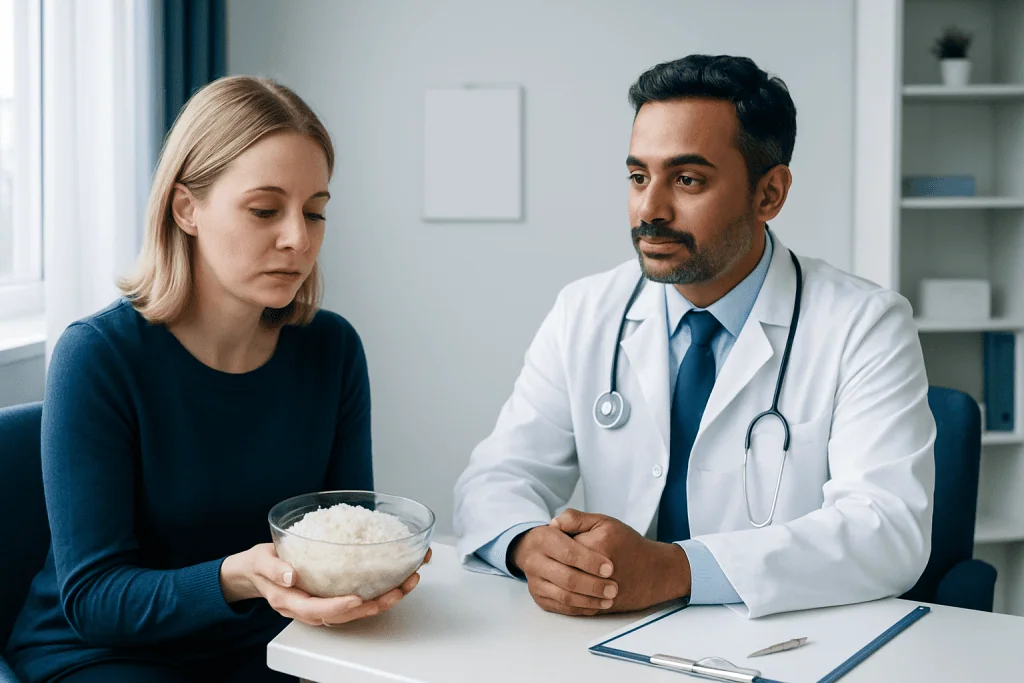
There are several practical clues that rice should be thrown away. For uncooked rice, warning signs include a musty odor, visible mold, insects, clumping from moisture exposure, or changes in color. Brown rice may also develop an oily or paint-like smell when it turns rancid.
For cooked rice, the signs are often easier to notice. Rice that smells sour, looks slimy, feels unusually sticky in a way that is different from its normal texture, or shows mold should not be eaten. If the storage history is uncertain, it is safer to discard it.
Common signs of spoiled rice include:
- Bad, sour, musty, or rancid odor
- Visible mold or unusual spots
- Insects or pantry pests in uncooked rice
- Clumps caused by moisture in dry rice
- Slime, excessive wetness, or odd texture in cooked rice
- Rice left at room temperature for too long
It is important to remember that food can sometimes be unsafe even if it looks normal. If a person has eaten rice and then develops vomiting, diarrhea, or abdominal pain, the timeline and symptoms may matter more than appearance alone.
Symptoms After Eating Bad Rice
If spoiled or contaminated rice causes illness, symptoms usually affect the digestive system. A person may experience nausea, vomiting, stomach cramps, diarrhea, bloating, or a general sense of feeling unwell. In many mild cases, symptoms improve with rest and hydration.
The exact symptoms can vary depending on the germ involved and whether the problem is due to bacterial growth, a toxin, or another type of contamination. Some people mainly develop vomiting soon after eating, while others develop diarrhea and abdominal discomfort several hours later.
Symptoms can overlap with many other digestive conditions, including food poisoning and viral stomach illness. That is why doctors usually ask about recent meals, when symptoms started, whether other people became sick, and whether there are any warning signs such as dehydration or fever.
Most otherwise healthy adults recover without complications. However, infants, older adults, pregnant people, and those with weakened immune systems may become ill more easily or be more affected by fluid loss from vomiting or diarrhea.
Why Cooked Rice Can Be Risky
Rice can naturally carry bacterial spores from the environment before it is ever cooked. Cooking can kill many bacteria, but some spores may survive. If cooked rice is then left out at room temperature, those spores can grow into bacteria and produce toxins.
This is the reason food-safety guidance focuses so strongly on time and temperature. Rice should not sit out for long after cooking. Cooling it promptly, storing it in the refrigerator, and reheating it thoroughly reduce the chance of foodborne illness.
Risk tends to be higher when rice is prepared in large batches, used for meal prep without quick cooling, taken to buffets or parties, or reheated several times. Fried rice dishes can also be risky if previously cooked rice was not stored safely before being stir-fried.
Anyone with persistent vomiting or diarrhea after eating rice may need medical evaluation and supportive care, particularly if oral fluids are hard to keep down. In some cases, clinicians may recommend IV therapy to treat dehydration when symptoms are more severe.
How Doctors Evaluate Illness Linked to Rice
Most people do not need tests after one mild episode of suspected food poisoning. Doctors often diagnose this type of illness based on symptoms, recent food history, timing, and a physical exam. They may ask when the rice was cooked, how it was stored, and whether anyone else who ate it became sick.
If symptoms are significant, prolonged, or unusual, the evaluation may be more detailed. A doctor may check for dehydration by reviewing urine output, thirst, dizziness, heart rate, and blood pressure. Severe abdominal pain, blood in stool, high fever, or ongoing symptoms may suggest a need to look for another cause.
Testing is not always necessary, but it can include stool tests, blood tests, or other assessments depending on the situation. When dehydration is suspected, lab tests may help check electrolyte balance and kidney function. If symptoms are severe or a person cannot drink enough, hospital-based emergency medicine services may be appropriate.
This stepwise approach is reassuring for most patients. Doctors do not usually need complex investigations for short-lived, mild digestive symptoms, but they do look more closely when symptoms are intense, persistent, or occur in someone at higher risk of complications.
Safe Storage, Reheating, and Prevention
The best way to prevent problems is to handle rice carefully from the start. Uncooked rice should be stored in a cool, dry place in a sealed container. This helps protect it from moisture, pests, and odor absorption. Brown rice generally has a shorter shelf life than white rice because of its higher oil content.
Cooked rice should be cooled and refrigerated soon after cooking rather than left on the counter for long periods. Storing leftovers in shallow containers can help them cool more quickly. When reheating, the rice should be heated thoroughly and ideally only reheated once.
Helpful habits include:
- Check package dates and storage conditions
- Discard rice with mold, insects, sour odor, or unusual texture
- Refrigerate cooked rice promptly after the meal
- Use clean utensils and containers
- Avoid repeated reheating and cooling cycles
- When in doubt, throw it out
These simple measures are usually enough to keep rice safe. If a person has repeated digestive upset after meals or ongoing concern about contamination, a specialist in gastroenterology can help assess whether the issue is food-related or due to another digestive condition.
When to Seek Medical Care
Many mild cases of stomach upset after eating rice improve within a short time with rest and fluids. Medical advice is more important if symptoms are severe, do not improve, or affect someone who may be more vulnerable to dehydration or infection.
It is sensible to contact a doctor if there is repeated vomiting, inability to keep fluids down, signs of dehydration, high fever, severe abdominal pain, blood in the stool, or diarrhea that lasts longer than expected. Infants, older adults, pregnant people, and people with weakened immune systems should seek medical advice sooner.
Emergency care may be needed for fainting, confusion, very little urine, trouble breathing, or severe weakness. These symptoms can point to significant dehydration or another urgent problem that should not be managed at home.
For international patients who need further evaluation, Acibadem International’s multidisciplinary specialists and JCI-accredited hospitals diagnose and treat digestive and dehydration-related conditions with an individualized approach.
Frequently asked questions
Does uncooked rice go bad?
Yes. Uncooked rice can lose quality over time and may also become contaminated by moisture, insects, or mold. Brown rice usually spoils sooner than white rice because its natural oils can turn rancid.
How can someone tell if cooked rice is no longer safe to eat?
Cooked rice should be discarded if it smells sour, looks moldy, feels slimy, or has an unusual texture. Even if it looks normal, it may still be unsafe if it was left at room temperature for too long.
Can reheating rice make it safe again?
Reheating can kill some bacteria, but it may not remove toxins that formed while the rice was sitting out. That is why proper cooling and refrigeration are just as important as reheating.
What symptoms can bad rice cause?
Spoiled or contaminated rice can cause nausea, vomiting, diarrhea, stomach cramps, and general digestive discomfort. In mild cases symptoms often pass on their own, but dehydration can become a concern if vomiting or diarrhea is severe.
Is leftover rice safe to eat?
Leftover rice can be safe if it was refrigerated promptly, stored properly, and reheated thoroughly. If there is any doubt about how long it sat out or whether it was stored correctly, it is safer not to eat it.
When should a person see a doctor after eating bad rice?
A doctor should be contacted for severe vomiting, signs of dehydration, blood in the stool, high fever, severe abdominal pain, or symptoms that do not improve. Medical advice is also important sooner for infants, older adults, pregnant people, and anyone with a weakened immune system.
References
- U.S. Food and Drug Administration
- Centers for Disease Control and Prevention
- U.S. Department of Agriculture
- World Health Organization
- National Health Service
This article is for general information only and is not a substitute for professional medical advice. Please consult a qualified doctor about your individual situation.
Explore treatments in Turkey — costs, top hospitals & a free quote
JCI-accredited · board-certified surgeons · reply within 24h
Add us as a Preferred Source to see more of our trusted health content across Google Search, AI Overviews and Discover.

More from the Health Library



Related Specialists

Assoc. Prof. Dr. Elif Şenocak Taşçı
Medical Oncology
Prof. Dr. Mehmet Akif Sargin
Gynecology & Obstetrics
Assoc. Prof. Dr. Levent Aydemir
Otorhinolaryngology
Prof. Dr. Sinan Dağdelen
Cardiology