Audiologist: A Complete Medical Overview

An audiologist evaluates hearing, tinnitus, and some balance-related symptoms using specialized tests. They help people of all ages, from newborns and children to older adults.
Key Takeaways
- An audiologist evaluates hearing, tinnitus, and some balance-related symptoms using specialized tests.
- They help people of all ages, from newborns and children to older adults.
- Common reasons to see an audiologist include hearing loss, ringing in the ears, trouble understanding speech, and dizziness.
- Assessment may include hearing tests, middle ear testing, speech testing, and hearing aid evaluation.
- Early evaluation can support communication, safety, learning, and quality of life.
An audiologist is a healthcare professional trained to evaluate hearing and balance, identify the cause of symptoms, and recommend appropriate management. They play an important role for children and adults with hearing loss, tinnitus, dizziness, communication difficulties, or concerns about ear-related function.
Overview: What an Audiologist Does
An audiologist is a licensed healthcare professional who specializes in hearing, listening, and balance. In practical terms, an audiologist assesses how well a person hears, looks for patterns that suggest the cause of symptoms, and helps plan the next steps for treatment, rehabilitation, or monitoring. Many people see an audiologist for hearing loss, tinnitus, sound sensitivity, ear fullness, or difficulty understanding speech, especially in noisy places.
Audiologists work with people across the lifespan. They may screen a newborn’s hearing, assess a child with speech delay, evaluate an adult with work-related noise exposure, or help an older person who is finding conversations harder to follow. Their work focuses on function and quality of life: hearing clearly, communicating well, staying safe, and maintaining social participation.
Although audiologists are experts in hearing and balance, they are different from ear surgeons or general doctors. They do not usually perform surgery, but they often work closely with ear, nose, and throat specialists, pediatricians, neurologists, and primary care doctors. If a test suggests a medical problem in the ear or nervous system, the audiologist may recommend further evaluation by the appropriate specialist.
Common Reasons Someone May Need an Audiologist
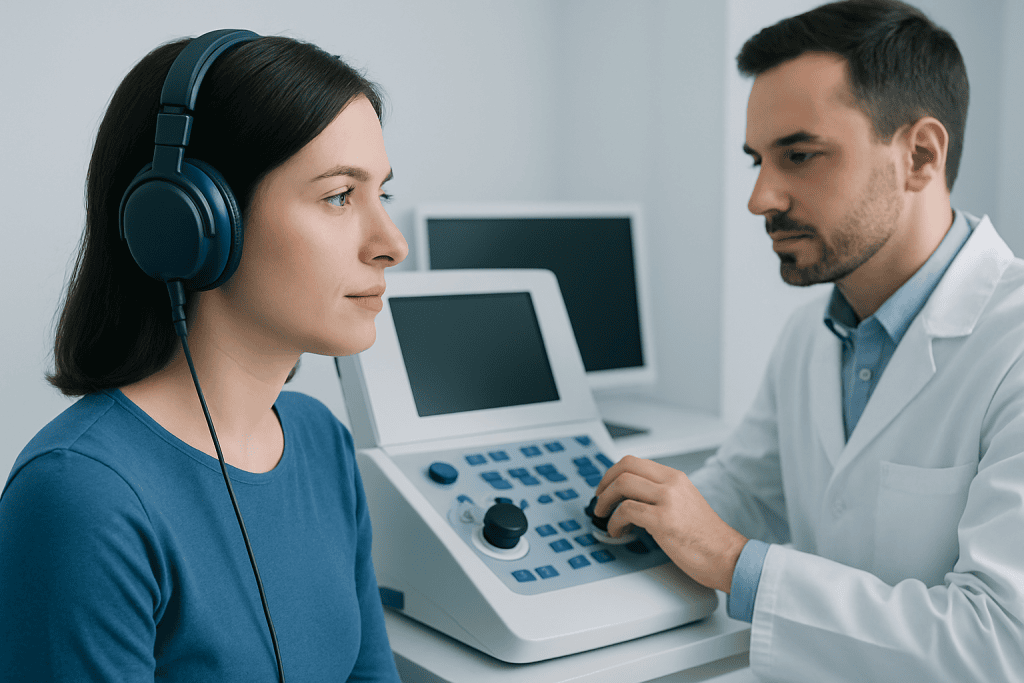
People often think of an audiologist only when hearing becomes noticeably reduced, but the reasons to seek care are broader. A person may benefit from audiology assessment if they need the television volume turned up, frequently ask others to repeat themselves, struggle to follow group conversations, or feel that speech sounds unclear rather than simply quiet.
Other common symptoms include ringing, buzzing, or humming in the ears, known as tinnitus. Some people also experience dizziness, imbalance, or a spinning sensation. In selected cases, an audiologist may be part of the team evaluating these symptoms, particularly when the inner ear may be involved. They may also assess people exposed to loud noise at work, after a sudden change in hearing, or before and after certain medical treatments that can affect hearing.
Children may need evaluation if they do not respond consistently to sounds, seem delayed in speech and language, have frequent ear infections, or are having trouble at school. Adults may present more subtly, such as avoiding social situations because listening feels tiring. Early assessment can help identify whether hearing, auditory processing, or another issue may be contributing.
- Difficulty hearing conversations, especially in background noise
- Ringing or noise in one or both ears
- Sudden or gradual hearing changes
- Dizziness, imbalance, or vertigo symptoms
- Speech or language concerns in children
- Need for hearing protection, hearing aids, or follow-up testing
How Audiologists Evaluate Hearing and Balance

Audiologists use a range of tests to understand hearing and related symptoms. A standard hearing evaluation often includes pure-tone audiometry, which measures the softest sounds a person can hear at different pitches, and speech testing, which checks how clearly words are heard and understood. These tests help show whether hearing is normal, reduced, or uneven between the ears.
Middle ear function may be assessed with tympanometry and related measures. These tests can suggest fluid behind the eardrum, pressure problems, or reduced eardrum movement. For babies, young children, or people who cannot respond reliably to conventional testing, objective tests such as otoacoustic emissions or auditory brainstem response may be used. These can provide important information without requiring spoken answers.
If symptoms suggest balance involvement, the audiologist may perform or arrange vestibular testing. This can help assess how the inner ear balance system is working. In some settings, people who need support for hearing devices may also discuss hearing aid options, fitting, and follow-up care. When symptoms raise concern for structural ear disease, the audiologist may coordinate with ENT specialists and, if needed, ear surgery evaluation.
Conditions an Audiologist May Help Identify
Audiologists do not treat every underlying ear disease themselves, but they are often the first professionals to detect patterns that point toward a diagnosis. The most common issue is hearing loss, which may be conductive, sensorineural, or mixed. Conductive loss can arise from problems in the outer or middle ear, while sensorineural loss affects the inner ear or hearing nerve. The test pattern helps direct further care.
They may also help identify concerns such as unilateral hearing loss, noise-induced hearing damage, age-related hearing decline, tinnitus, sound intolerance, and some vestibular disorders. If a person has recurrent dizziness, spinning sensations, or balance symptoms, the audiologist may work alongside specialists managing vertigo or other inner ear conditions.
In children, audiologists are important in detecting hearing issues that may affect speech, language, and learning. In adults, they may identify problems linked to chronic noise exposure, certain infections, medications that affect hearing, or medical conditions involving the ear and nervous system. When a hearing pattern is unusual or rapidly changing, additional medical evaluation may be recommended without delay.
Treatment and Support Options After Diagnosis
The next steps depend on what testing shows. Some people need monitoring only, while others benefit from medical treatment, hearing technology, communication strategies, or rehabilitation. If a middle ear problem or another treatable ear condition is suspected, referral to an ENT doctor may be appropriate. If hearing loss is present and stable, the audiologist may discuss ways to improve everyday listening.
Management may include counseling about listening environments, devices that improve hearing, tinnitus support, and protection from further noise damage. For many people, careful fitting and follow-up of hearing devices can make a meaningful difference in communication. Some people with more significant hearing loss may be referred for advanced options such as cochlear implant assessment, depending on their hearing profile and communication needs.
Support is not limited to devices. Audiologists also educate patients and families about realistic expectations, strategies for phone calls and meetings, classroom or workplace accommodations, and how to reduce listening fatigue. This practical guidance is an important part of care because hearing changes can affect confidence, relationships, and participation in daily life.
Prevention and Self-Care for Hearing Health
Good hearing care includes prevention. Repeated exposure to loud sound is a common and preventable cause of hearing damage. Using hearing protection in noisy workplaces, concerts, or while using power tools can reduce risk. Personal listening devices should be used at a comfortable volume, and regular listening breaks are helpful during long periods of headphone use.
It is also wise to pay attention to early warning signs. If sounds seem muffled after noise exposure, if the ears ring often, or if conversations become harder to follow, a hearing check may be worthwhile. Prompt attention is especially important when there is a sudden change, symptoms in one ear only, or combined hearing and balance complaints.
Families can support children’s hearing health by following recommended screening schedules and seeking assessment if there are concerns about speech, school performance, or response to sound. Older adults may benefit from routine hearing evaluation because hearing decline can develop gradually and be easy to overlook. Protecting hearing and seeking timely care can support communication and overall well-being over the long term.
When to Seek Medical Care
A person should arrange medical care if hearing loss is affecting communication, work, school, or daily activities, or if tinnitus, dizziness, or imbalance is persistent or bothersome. It is also sensible to seek evaluation when there is concern about a child’s speech development, responsiveness to sound, or school listening difficulties. Early assessment can help clarify whether the cause is temporary, chronic, or needs more urgent attention.
More prompt medical evaluation is important for sudden hearing loss, rapid worsening of hearing, hearing loss in one ear, ear pain with fever or drainage, severe vertigo, or new neurologic symptoms such as facial weakness or marked imbalance. These symptoms do not always indicate a serious problem, but they should be assessed by a qualified doctor without delay.
Care is often multidisciplinary. An audiologist may be the right first step for hearing and listening concerns, while medical treatment may involve ENT or other specialists depending on the cause. For international patients, Acibadem International’s multidisciplinary specialists and JCI-accredited hospitals diagnose and treat hearing and ear-related conditions with coordinated evaluation and follow-up.
Frequently asked questions
What is an audiologist?
An audiologist is a healthcare professional who evaluates hearing, listening, and balance. They perform tests, explain results, and help plan treatment, rehabilitation, or monitoring when hearing-related symptoms are present.
Do you need a referral to see an audiologist?
This depends on the healthcare system, insurance rules, and the reason for the visit. Some people can book directly, while others may be referred by a primary care doctor, pediatrician, or ENT specialist.
What happens during a hearing test?
A typical hearing test may include listening for tones through headphones, repeating words, and checking middle ear function. The tests are generally painless and help show how well a person hears different sounds and speech.
Can an audiologist help with tinnitus?
Yes. An audiologist can assess hearing, look for patterns linked to tinnitus, and suggest management options such as counseling, sound-based strategies, and hearing support when appropriate. If needed, they may also recommend medical evaluation to look for an underlying cause.
Is an audiologist the same as an ENT doctor?
No. An audiologist specializes in testing and managing hearing and balance function, while an ENT doctor is a physician who diagnoses and medically or surgically treats ear, nose, and throat conditions. They often work together.
When should a child see an audiologist?
A child should be assessed if there are concerns about hearing, speech and language development, frequent ear infections, or inconsistent responses to sound. Early evaluation can support communication, learning, and timely treatment when needed.
This article is for general information only and is not a substitute for professional medical advice. Please consult a qualified doctor about your individual situation.
Explore treatments in Turkey — costs, top hospitals & a free quote
JCI-accredited · board-certified surgeons · reply within 24h
Add us as a Preferred Source to see more of our trusted health content across Google Search, AI Overviews and Discover.

More from the Health Library

The Whole Poop Won’t Come Out: What Patients Need to Know

Teeth Names: An Evidence-Based Guide for Patients

Type 3 Diabetes: What Patients Need to Know

Retinol: What Patients Need to Know

Abo Rh: What Patients Need to Know