Tummy Band Pregnancy: A Complete Clinical Guide for Patients

A tummy band in pregnancy is a support garment designed to help lift the abdomen and reduce strain on the back, pelvis, and hips. It may be helpful for round ligament discomfort, posture-related back pain, pelvic pressure, and activity-related soreness.
Key Takeaways
- A tummy band in pregnancy is a support garment designed to help lift the abdomen and reduce strain on the back, pelvis, and hips.
- It may be helpful for round ligament discomfort, posture-related back pain, pelvic pressure, and activity-related soreness.
- A pregnancy band should fit snugly but not tightly, and it should not cause numbness, breathing difficulty, skin irritation, or worsening pain.
- Support bands do not treat preterm labor, placental problems, high blood pressure, or other pregnancy complications.
- Persistent pain, contractions, vaginal bleeding, leakage of fluid, or reduced fetal movement need prompt medical assessment.
Tummy band pregnancy support refers to elastic or structured garments worn around the lower abdomen and pelvis to improve comfort as the uterus grows. For many pregnant people, a well-fitted band may ease pressure, improve mobility, and reduce mild back or pelvic discomfort, but it should be used thoughtfully and not as a substitute for medical care.
Overview: what tummy band pregnancy support means
Tummy band pregnancy support usually means a stretchable wrap, belt, or panel worn under or around the abdomen to help support the weight of a growing pregnancy. These garments are commonly used to reduce day-to-day discomfort, especially in the lower back, pelvis, hips, or lower abdomen. They are a comfort aid, not a treatment for pregnancy complications.
As pregnancy progresses, the abdominal wall stretches and the body’s center of gravity shifts forward. This can increase strain on muscles and ligaments, especially during standing, walking, exercise, or work activities. A support band may help distribute some of that load more evenly and encourage a more comfortable posture.
There is no single product that works for everyone. Some people do well with a soft seamless band, while others prefer a more structured maternity support belt with adjustable straps. The best choice depends on symptoms, body shape, activity level, and whether the discomfort is mostly in the abdomen, lower back, or pelvic region.
It is also important to separate normal discomfort from conditions that need medical review. Mild soreness and pressure are common in pregnancy, but severe or sudden pain is not something a band should be used to mask. If symptoms raise concern, an obstetrician or midwife can assess whether support wear is appropriate and whether another cause should be checked.
How a pregnancy support band may help
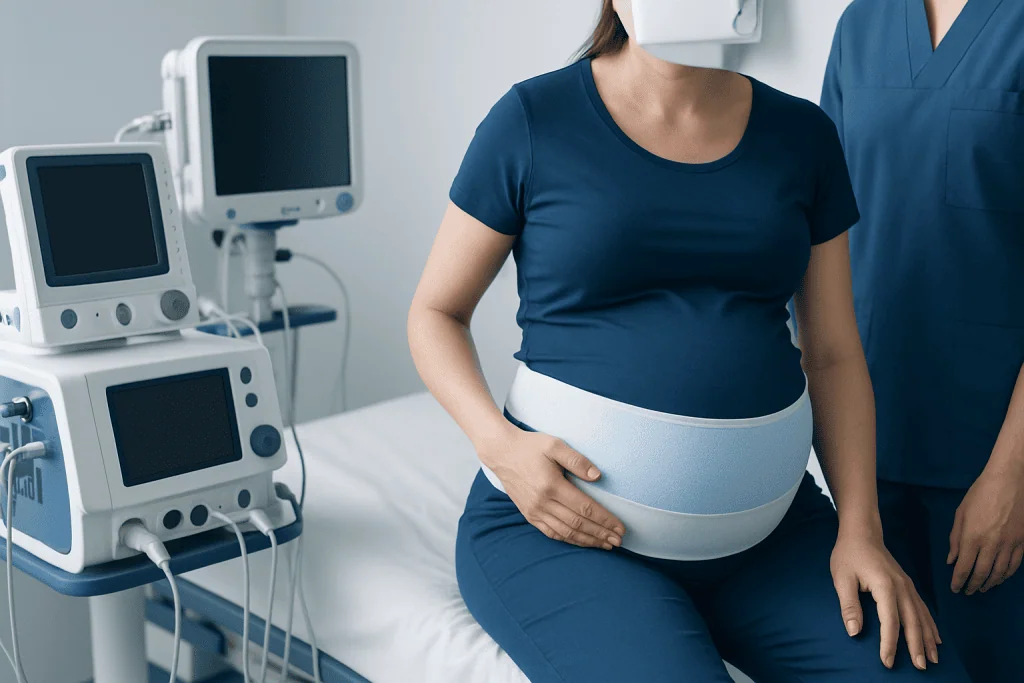
A tummy band may provide gentle upward support to the abdomen, which can reduce pulling on the lower back and abdominal ligaments. This can be especially helpful later in pregnancy, when the uterus becomes heavier and daily movement feels more tiring. Many people use one during walking, household tasks, commuting, or light exercise.
Some patients find that a support band helps with posture by limiting excessive forward tilt of the pelvis and lower spine. Better support may make standing for longer periods more comfortable. It may also lessen the sense of heaviness in the lower abdomen or pelvis, particularly at the end of the day.
Common situations where support may be useful include:
- Mild low back discomfort related to posture or prolonged standing
- Round ligament discomfort or a pulling sensation in the lower abdomen
- Pelvic pressure that worsens with walking or activity
- Hip or sacroiliac discomfort during daily movement
- Support during gentle exercise approved in pregnancy
Even when a band helps, it works best as one part of a wider comfort plan. Rest breaks, supportive footwear, pregnancy-safe exercise, posture adjustments, and advice from a clinician or physiotherapist are often just as important. When pain is ongoing or more severe, a medical evaluation may be needed to rule out issues such as high-risk pregnancy concerns or musculoskeletal conditions.
Who may benefit most and who should be cautious

People who may benefit most from tummy band pregnancy support are those with mild to moderate mechanical discomfort that gets worse with movement and improves with rest. This often includes back strain from standing, abdominal heaviness, and pressure-related discomfort in the pelvis. A band may also be helpful in a second or later pregnancy, when abdominal muscles can feel less supportive.
Patients carrying twins or more may sometimes feel increased abdominal strain and ask about support garments. In these situations, fit and comfort become especially important, and clinical guidance may help because symptoms can overlap with conditions that deserve closer monitoring. Support wear should never be used to delay evaluation of new, intense, or rapidly worsening symptoms.
Caution is sensible for anyone with skin sensitivity, breathing discomfort, severe swelling, marked heartburn worsened by compression, or pain that is not clearly activity-related. A band that is too tight may irritate the skin, feel restrictive, or create pressure that makes movement less comfortable rather than more comfortable.
Pregnant patients with persistent pelvic pain, difficulty walking, or symptoms suggestive of pelvic girdle dysfunction may benefit from assessment by specialists rather than self-managing alone. Depending on the situation, a doctor may recommend tailored rehabilitation or physical therapy and rehabilitation to improve strength, stability, and movement patterns safely during pregnancy.
Choosing the right band and using it safely
The safest and most useful tummy band is one that fits securely without squeezing. It should feel supportive, not restrictive. In most cases, the lower edge sits under the abdomen and the band lifts gently from below rather than compressing the belly from the front. Adjustable fasteners can be helpful because body shape changes throughout pregnancy.
Most patients do best when they wear the band during activities that trigger discomfort rather than all day without a break. Putting it on before a walk, during work that involves standing, or while doing errands may be more helpful than continuous use. Short breaks allow the skin to breathe and help avoid overreliance on the garment for support.
General tips for safe use include:
- Choose a size based on current pregnancy measurements, not pre-pregnancy size alone
- Check that breathing remains comfortable and the band does not roll or dig in
- Wear it over a thin layer of clothing if skin irritation occurs
- Remove it if pain worsens, numbness develops, or the baby’s movements seem different
- Ask a clinician for advice if there is uncertainty about fit or symptom cause
Support garments should not replace core awareness, posture changes, or activity modification. If a person needs tighter and tighter support just to get through the day, that is a sign to discuss symptoms with an obstetric clinician. In some cases, evaluation may include imaging or other tests if the diagnosis is unclear, using pregnancy-appropriate approaches such as radiology when clinically needed.
Symptoms a tummy band may ease—and symptoms it should not be used to ignore
A support band may ease symptoms that are mild, positional, and related to movement. These typically include aching in the lower back after standing, a pulling sensation in the sides of the lower abdomen, pressure in the pelvis with walking, or fatigue in the hips and trunk during daily tasks. The key pattern is that symptoms are mechanical and often improve with rest, repositioning, or support.
However, some symptoms should not be explained away as routine pregnancy discomfort. A band is not a treatment for contractions, bleeding, leaking amniotic fluid, fever, severe headache, chest pain, shortness of breath, or pain associated with fainting. It also should not be used to hide severe abdominal pain or one-sided pain that is unusual for the individual.
Changes in fetal movement deserve attention as well. If the baby seems to be moving less than usual, the band should be removed and the patient should follow the advice of their maternity team promptly. Reduced movement is not something a support garment can address.
If pain is persistent, burning, shooting, or associated with weakness, it may point to a nerve or joint problem rather than simple strain. Similarly, worsening swelling, high blood pressure symptoms, or significant pelvic pain may require medical review. In some pregnancies, clinicians may investigate broader maternal or fetal factors, especially when there is concern for pregnancy complications.
When to seek medical care
Medical advice is appropriate any time pregnancy discomfort is severe, unusual, or interfering with walking, sleep, or normal function. A tummy band may improve comfort, but it should not delay assessment if symptoms are changing quickly or do not match prior pregnancy aches and pains. It is always reasonable to contact an obstetrician or midwife for guidance.
Prompt medical care is especially important for vaginal bleeding, regular contractions, leakage of fluid, fever, severe abdominal pain, significant shortness of breath, chest pain, fainting, or a marked decrease in fetal movement. These symptoms need medical assessment rather than self-treatment. A new severe headache, visual changes, or sudden swelling also needs attention.
Patients should also seek care if the band itself causes numbness, tingling, skin breakdown, dizziness, or worsening pressure. These can be signs that the garment is poorly fitted or that another condition is contributing to discomfort. Ongoing severe back or pelvic pain may need a more detailed musculoskeletal evaluation.
Where specialist input is needed, care may involve obstetrics, physiotherapy, pain management, or imaging tailored to pregnancy. Acibadem International’s multidisciplinary specialists in JCI-accredited hospitals evaluate and treat pregnancy-related discomfort and underlying conditions for international patients when appropriate.
Complementary self-care: what else can improve comfort
A support band usually works best alongside simple self-care strategies. Regular position changes, avoiding long periods of standing, and using pillows for sleep support can all make a meaningful difference. Small adjustments, such as placing one foot on a low step while standing or sitting down to dress, may reduce strain on the back and pelvis.
Pregnancy-safe movement often helps more than complete rest. Gentle walking, stretching approved by a clinician, and exercises that improve posture and hip stability may reduce discomfort over time. If symptoms are recurring, referral for obstetrics and gynecology assessment and individualized exercise advice can be helpful.
Footwear also matters. Supportive shoes with good grip and cushioning may improve alignment and decrease lower back stress. Hydration, bowel regularity, and pacing of physical tasks can help because constipation, fatigue, and overexertion may amplify abdominal and pelvic discomfort.
Finally, expectations should stay realistic. A tummy band may reduce symptoms, but it rarely removes them completely. If it helps the patient move more comfortably and safely through the day, it is serving its purpose; if it does not help, causes irritation, or feels restrictive, another approach may be better.
Frequently asked questions
Is a tummy band safe during pregnancy?
For many pregnant people, a properly fitted tummy band is generally safe when used for comfort and support. It should feel snug but not tight, and it should not cause pain, numbness, shortness of breath, or skin irritation. If there is any uncertainty, a doctor or midwife can advise on whether it is suitable.
When should someone start using a pregnancy support band?
There is no single correct week to start. Many people consider a band in the second or third trimester, especially when abdominal heaviness, back strain, or pelvic pressure becomes more noticeable. The right time depends on symptoms rather than a set schedule.
Can a tummy band help with back pain?
It may help with mild mechanical back pain by supporting the abdomen and reducing strain on the lower back. It is most useful when pain is related to posture, standing, or activity. Severe, constant, or radiating back pain should be assessed by a clinician.
Should a pregnancy band be worn all day?
Most people do better wearing it during activities that trigger discomfort rather than continuously all day. Breaks can reduce skin irritation and prevent the garment from feeling restrictive. If symptoms return immediately whenever the band is removed, medical advice may be helpful.
Can a tummy band prevent pregnancy complications?
No. A tummy band can improve comfort, but it does not prevent or treat complications such as preterm labor, bleeding, preeclampsia, or problems with the placenta. Any concerning symptom should be discussed with a maternity professional.
How tight should a maternity support belt be?
It should be firm enough to provide lift and support but loose enough for comfortable breathing and normal movement. The abdomen should not feel compressed, and the skin should not show painful pressure marks. If the band rolls, digs in, or worsens discomfort, the fit may be wrong.
References
- American College of Obstetricians and Gynecologists
- Royal College of Obstetricians and Gynaecologists
- National Institute for Health and Care Excellence
- Mayo Clinic
- World Health Organization
This article is for general information only and is not a substitute for professional medical advice. Please consult a qualified doctor about your individual situation.
Explore treatments in Turkey — costs, top hospitals & a free quote
JCI-accredited · board-certified surgeons · reply within 24h
Add us as a Preferred Source to see more of our trusted health content across Google Search, AI Overviews and Discover.