10 Minute Gout Cure: What Patients Need to Know

A true 10 minute gout cure does not exist, even though symptoms may start to improve soon after treatment begins. Gout is a form of inflammatory arthritis caused by uric acid crystal buildup in a joint.
Key Takeaways
- A true 10 minute gout cure does not exist, even though symptoms may start to improve soon after treatment begins.
- Gout is a form of inflammatory arthritis caused by uric acid crystal buildup in a joint.
- Early diagnosis and treatment can shorten attacks, reduce pain, and help prevent joint damage over time.
- Self-care measures such as rest, hydration, and avoiding alcohol may help during a flare, but they do not replace medical treatment.
- Repeated gout attacks may need long-term uric acid-lowering treatment and evaluation for related health conditions.
There is no proven 10 minute gout cure, but the pain and inflammation of a gout attack can sometimes begin to improve quickly with appropriate medical treatment. The safest approach is to understand what gout is, what can trigger it, and when to seek professional care rather than relying on rapid-fix claims.
What the term “10 minute gout cure” really means
Patients searching for a 10 minute gout cure are usually looking for one thing: fast relief from sudden, severe joint pain. It is understandable, because a gout flare often starts abruptly and can become intense within hours. However, there is no medically proven cure that removes gout completely in 10 minutes.
What can happen is that some people begin to feel symptom relief relatively quickly after starting the right treatment. Anti-inflammatory medicines, rest, ice, and fluids may reduce pain and swelling, but the attack itself still needs time to settle. In other words, fast improvement is possible, but an instant cure is not.
This distinction matters because online advice can blur the line between temporary symptom relief and true treatment. Gout is a real inflammatory condition caused by uric acid crystals in a joint. It deserves proper diagnosis, especially when the pain is severe, the diagnosis is uncertain, or attacks keep coming back.
Overview: what gout is and why it happens

Gout is a common type of inflammatory arthritis. It develops when uric acid levels in the body become high enough for needle-like crystals to form and collect in a joint. The immune system reacts strongly to these crystals, causing sudden pain, swelling, warmth, and redness.
The big toe is a classic site, but gout can also affect the ankle, foot, knee, wrist, fingers, or elbow. Some patients have one isolated flare, while others experience repeated attacks over time. Without treatment, recurrent gout may lead to chronic joint problems and deposits of uric acid crystals called tophi.
Gout is part of a broader picture of health for many patients. It may occur alongside kidney disease, high blood pressure, obesity, diabetes, or metabolic syndrome. Because of this, evaluating gout often includes looking at overall health and possible underlying causes, not just treating one painful episode.
People who want to understand related joint conditions may also read about gout and other causes of painful joints such as arthritis.
Symptoms of a gout attack
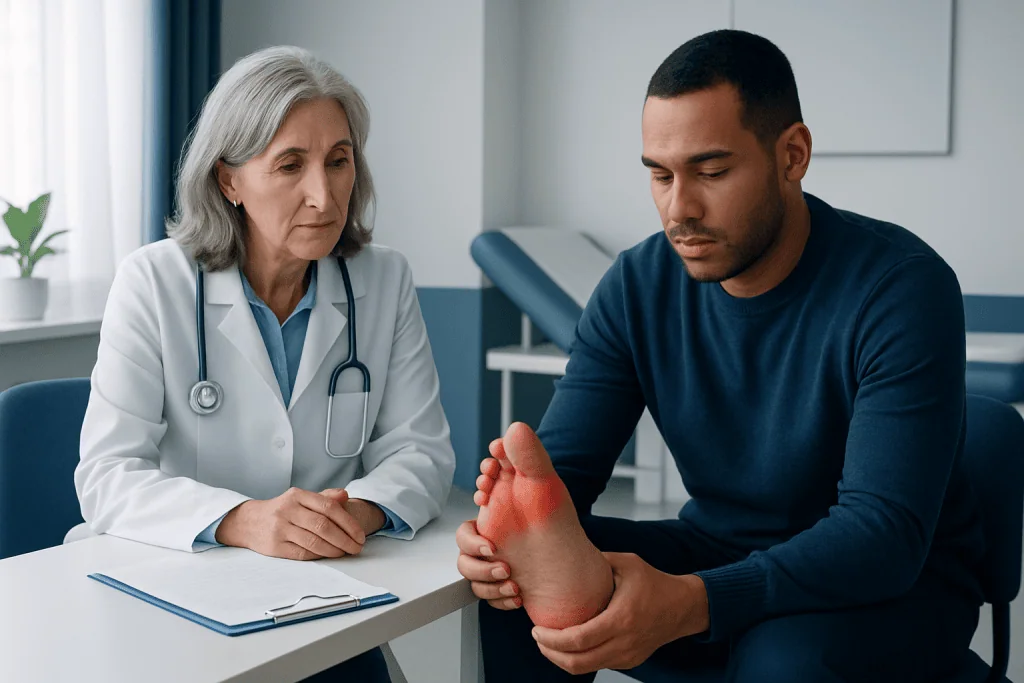
The typical gout attack begins suddenly, often at night or in the early morning. The affected joint may become extremely painful, swollen, red, shiny, and warm to the touch. Even light pressure from a bedsheet can feel unbearable during a flare.
Symptoms usually reach their worst within several hours. Some attacks improve over a few days, while others can last longer, especially if they are not treated early. After the most intense phase passes, the joint may remain tender or stiff for days to weeks.
Common features of gout include:
- Sudden, severe joint pain
- Swelling and warmth in one joint
- Red or discolored skin over the joint
- Limited movement because of pain
- Repeated attacks in the same or different joints
Not every painful swollen joint is gout. Joint infection, injury, pseudogout, and other inflammatory conditions can look similar. That is one reason why a new or unusually severe flare should not be self-diagnosed without medical advice.
Why quick-fix claims can be misleading
Claims about a “10 minute gout cure” often refer to home remedies, supplements, or foods said to dissolve crystals instantly. Current medical evidence does not support the idea that any drink, vitamin, or household remedy can reliably stop a gout attack within minutes. Some measures may help comfort, but they are not substitutes for evidence-based treatment.
One challenge is that gout attacks sometimes improve on their own over time, which can make a remedy seem more effective than it truly is. In addition, different patients improve at different speeds depending on how severe the flare is, how early treatment starts, and whether another condition is involved.
Natural approaches such as drinking water, resting the joint, and avoiding alcohol may support recovery, but they do not remove crystals immediately. Patients should be especially cautious with unverified internet advice if they have fever, kidney disease, stomach ulcers, diabetes, are taking blood thinners, or are unsure that the diagnosis is gout.
If severe or repeated attacks are affecting mobility and quality of life, assessment by specialists in joint disease may be appropriate. In some cases, care may involve rheumatology evaluation to confirm the diagnosis and guide long-term management.
Causes, triggers, and risk factors
Gout happens when uric acid builds up in the blood and forms crystals in joints. Uric acid is produced when the body breaks down purines, substances found naturally in the body and in many foods. Some people make too much uric acid, while others do not remove enough of it through the kidneys.
Several triggers can increase the chance of a flare. These include dehydration, alcohol, large meals rich in purines, physical stress, illness, and certain medicines such as some diuretics. A recent injury or surgery may also trigger an attack in some patients.
Risk factors for gout include:
- Family history of gout
- Male sex and older age
- Obesity or excess body weight
- High blood pressure
- Kidney disease
- Diabetes or metabolic syndrome
- Regular alcohol intake
- A diet high in red meat, organ meats, or some seafoods
Because uric acid handling is closely linked to kidney function, doctors may also consider whether additional assessment is needed. When there is concern about stone formation or urinary problems, tests related to urology care can sometimes be part of the broader evaluation.
How gout is diagnosed
Doctors diagnose gout using symptoms, medical history, examination findings, and sometimes laboratory or imaging tests. A sudden red, swollen, painful joint in a person with known high uric acid strongly suggests gout, but confirmation may still be needed because infection and other crystal arthropathies can look very similar.
The most specific test is joint fluid analysis, in which a clinician removes a small sample of fluid from the affected joint and looks for uric acid crystals under a microscope. Blood tests for uric acid may be helpful, but they cannot diagnose or exclude gout on their own because uric acid can be normal during an acute attack.
Additional tests may include kidney function tests and imaging such as ultrasound or other scans when the diagnosis is uncertain or when repeated attacks have caused concern about joint damage. Patients with recurrent episodes, tophi, kidney stones, or other complications may need a more complete evaluation and personalized treatment plan.
Treatment options and what may help fast
The goal of treatment during an acute gout attack is to reduce inflammation and relieve pain as early as possible. Evidence-based options commonly include nonsteroidal anti-inflammatory drugs, colchicine, or corticosteroids, depending on the patient’s health history and what is safest for them. These medicines can start helping within hours, but that is different from an instant cure.
During a flare, practical self-care can also support comfort. Resting the affected joint, applying ice for short periods, drinking enough fluids, and avoiding alcohol may help some patients feel better. It is also wise to avoid starting unproven remedies that could interact with prescribed medicines or worsen another condition.
For patients who have repeated attacks, visible tophi, kidney stones, or high uric acid over time, doctors may recommend long-term urate-lowering therapy. This type of treatment does not stop a flare in 10 minutes, but it can reduce future attacks and protect joints when used consistently and monitored properly.
If joint pain is severe or recurrent, coordinated care may involve orthopedic assessment when joint function is affected, along with specialist input for long-term disease control. Near the end of the care pathway, patients may also seek help from centers such as Acibadem International, where multidisciplinary specialists in JCI-accredited hospitals diagnose and treat gout for international patients.
Prevention and self-care between attacks
Preventing future gout flares usually requires more than treating pain when it appears. Long-term control focuses on lowering uric acid when indicated and reducing triggers that increase the chance of crystal formation. A doctor can advise whether medication is needed based on attack frequency, uric acid levels, kidney health, and complications.
Lifestyle steps can play a useful supporting role. Many patients benefit from staying well hydrated, limiting alcohol, maintaining a healthy body weight, and avoiding crash diets or prolonged fasting. A balanced eating pattern with less excess red meat, organ meat, and high-sugar beverages may also help lower flare risk.
It is important to review medicines and other health conditions as well. Blood pressure treatment, kidney disease management, and diabetes care can all influence gout control. Patients should not stop prescribed medication on their own, but they can ask whether any drugs may be contributing to high uric acid.
When to seek medical care
A patient should seek medical care promptly if this is the first episode of sudden severe joint pain, if the diagnosis of gout has never been confirmed, or if the pain is unusually intense. Medical review is especially important if there is fever, chills, widespread illness, an open wound near the joint, or inability to bear weight, because these can suggest joint infection or another urgent problem.
Medical advice is also important if attacks are becoming more frequent, if symptoms are not improving with treatment, or if there are signs of complications such as joint deformity, lumps under the skin, or kidney stone symptoms. People with kidney disease, stomach ulcers, heart disease, pregnancy, or complex medication use should be cautious about self-treating.
Even when symptoms improve quickly, follow-up may still be worthwhile. Recurrent gout is often manageable, but it usually responds best when the diagnosis is clear and long-term prevention is addressed rather than focusing only on short-term pain relief.
Frequently asked questions
Is there really a 10 minute gout cure?
No. There is no proven medical cure that completely stops gout in 10 minutes. Some treatments can begin to reduce pain and inflammation fairly quickly, but the attack still needs time to improve and the underlying condition may require ongoing management.
What can help gout pain as fast as possible?
The fastest evidence-based relief usually comes from prompt medical treatment with anti-inflammatory medicines that a doctor recommends based on the patient’s health history. Rest, ice, hydration, and avoiding alcohol may also help, but they are supportive measures rather than a cure.
Can drinking water flush out gout immediately?
Drinking water can support hydration and may help the body handle uric acid more effectively, but it does not flush away a gout attack immediately. It is a sensible self-care step, not a rapid stand-alone treatment.
Should a person keep taking uric acid-lowering medicine during a gout flare?
In many cases, long-term uric acid-lowering medicine is continued during a flare, but patients should follow their own doctor’s instructions. Stopping or starting medication without guidance can sometimes make management more difficult.
How is gout different from other kinds of arthritis?
Gout is caused by uric acid crystal buildup in a joint, which triggers sudden inflammation. Other forms of arthritis, such as osteoarthritis or rheumatoid arthritis, have different causes and patterns, so diagnosis matters before treatment is chosen.
When is gout an emergency?
A painful swollen joint needs urgent assessment if there is fever, severe illness, inability to move the joint, or concern for infection. A first attack or an unusually intense episode also deserves prompt medical review because not every red, swollen joint is gout.
This article is for general information only and is not a substitute for professional medical advice. Please consult a qualified doctor about your individual situation.
Gout in Turkey — costs, top hospitals & a free quote
JCI-accredited · board-certified surgeons · reply within 24h
Add us as a Preferred Source to see more of our trusted health content across Google Search, AI Overviews and Discover.
Check your numbers in seconds
BMI, calories, due date, blood pressure and 30+ more clinical calculators — free, instant, doctor-reviewed ranges.

More from the Health Library

Extenze Pills: An Evidence-Based Guide for Patients

Fever Blisters in Corner of Mouth: An Evidence-Based Guide for Patients

High Fiber Cereal: An Evidence-Based Guide for Patients

Arnold Press: A Complete Medical Overview

Masterbating: A Complete Medical Overview