Spasticity: A Complete Medical Overview

Spasticity happens when nerve signals that normally regulate muscle tone are disrupted. It commonly occurs after stroke, cerebral palsy, multiple sclerosis, spinal cord injury, or brain injury.
Key Takeaways
- Spasticity happens when nerve signals that normally regulate muscle tone are disrupted.
- It commonly occurs after stroke, cerebral palsy, multiple sclerosis, spinal cord injury, or brain injury.
- Symptoms can range from mild tightness to painful spasms, abnormal postures, and contractures.
- Treatment usually combines physical rehabilitation, stretching, splints or braces, medicines, and sometimes targeted procedures.
- Early assessment can help preserve mobility, reduce pain, and prevent complications.
Spasticity is a movement problem in which certain muscles become unusually tight, stiff, or overactive because of damage to the brain or spinal cord pathways that control movement. It is not a disease itself, but a symptom that can affect comfort, mobility, sleep, daily activities, and long-term joint health.
Overview
Spasticity is a condition in which muscles become abnormally tight or overactive because the nervous system can no longer regulate muscle tone in the usual way. It often causes stiffness, resistance to movement, sudden spasms, or abnormal limb positions. In many people, it develops after an injury or disorder affecting the brain or spinal cord.
Rather than being a single disease, spasticity is a sign of damage in the pathways that carry movement signals. These pathways normally help muscles contract and relax in a coordinated balance. When this balance is disrupted, the muscles may remain too active, especially during movement or stretching.
The condition may affect one part of the body, such as a hand, arm, or leg, or it may involve several muscle groups. Its effects can be mild and manageable, or more significant, interfering with walking, hand use, posture, hygiene, dressing, sleep, and comfort. Because of this wide range, treatment is individualized and focuses on function as well as symptom relief.
How spasticity feels and what symptoms it can cause
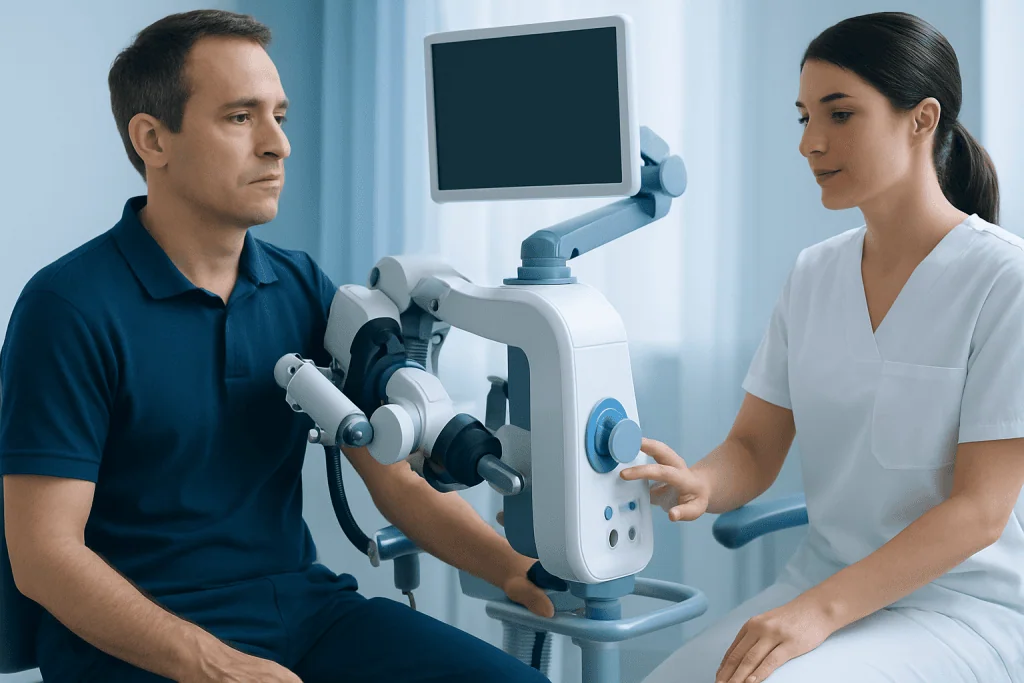
The most common symptom is muscle stiffness that makes a limb feel hard to move. Some people describe heaviness, dragging of the foot, curling of the toes, a clenched fist, or a limb that wants to pull into one position. Others notice that movement becomes more difficult when they are tired, stressed, in pain, or exposed to cold.
Spasticity can also cause sudden involuntary muscle contractions, often called spasms. These may be brief or prolonged, uncomfortable or painful, and can happen during transfers, walking, changing position, or even during sleep. In some cases, the muscles tighten more when they are stretched quickly, which clinicians call a velocity-dependent increase in tone.
Symptoms vary depending on which muscles are involved. People may experience:
- Tight muscles and reduced flexibility
- Jerking movements or muscle spasms
- Pain or discomfort in the affected muscles or joints
- Abnormal posture of the arm, hand, hip, knee, ankle, or foot
- Difficulty with walking, balance, or fine motor tasks
- Problems with hygiene, dressing, bathing, or positioning
- Disturbed sleep due to spasms or discomfort
If spasticity remains untreated over time, muscles and soft tissues can shorten. This may lead to contractures, which are fixed limitations in joint movement. Contractures can make daily care harder and may contribute to skin problems, pain, and reduced independence.
Causes and risk factors

Spasticity develops when there is damage to the parts of the central nervous system that control voluntary movement and regulate muscle tone. The most common causes include stroke, multiple sclerosis, cerebral palsy, spinal cord injury, traumatic brain injury, brain tumors, infections affecting the nervous system, and some neurodegenerative conditions.
After a neurological injury, normal inhibitory signals that help keep muscle activity balanced may be reduced. Without those signals, the reflexes that make muscles contract can become exaggerated. This is why a muscle may tighten too much when a person tries to move or when someone else tries to stretch the limb.
Not everyone with a neurological condition develops spasticity in the same way. Risk can be influenced by the location and extent of nervous system damage, immobility, muscle shortening, untreated pain, bladder or bowel problems, infections, pressure sores, and poor positioning. Sometimes seemingly small triggers, such as tight clothing, constipation, or a urinary tract infection, can temporarily worsen symptoms.
Because spasticity is linked to neurological disease, it may appear alongside weakness, balance problems, sensory changes, fatigue, or speech and swallowing difficulties. For example, it can occur after stroke or with multiple sclerosis, and the broader treatment plan usually addresses these related issues as well.
Diagnosis and clinical assessment
Diagnosis begins with a careful medical history and physical examination. A doctor will ask when the stiffness began, whether it is changing over time, what activities it affects, and whether there are triggers such as pain, infection, constipation, or skin irritation. They will also look at the underlying neurological condition and any previous rehabilitation.
During the examination, the clinician assesses muscle tone, joint range of motion, reflexes, posture, walking pattern, and the ability to use the affected limb. An important part of assessment is distinguishing spasticity from other causes of stiffness, such as contracture, rigidity, joint disease, or muscle shortening alone. This helps guide treatment choices.
Functional goals are central to the evaluation. For one person, the main priority may be easier walking; for another, it may be opening the hand for hygiene, reducing pain, improving sleep, or making transfers safer. Standardized scales may be used to describe the severity of tone, but practical impact on daily life is often just as important as the examination findings.
Additional tests are not always needed for spasticity itself, but they may be used to assess the underlying cause or complications. Imaging, neurological studies, or rehabilitation assessments can be part of a broader workup when symptoms are new, worsening, or difficult to explain.
Treatment options and rehabilitation planning
Treatment for spasticity is usually multimodal, meaning it combines different approaches rather than relying on one option alone. The best plan depends on which muscles are involved, how severe the symptoms are, the underlying condition, and the person’s goals. In many cases, the aim is not to eliminate all muscle tone, but to improve comfort, movement, positioning, and daily function while preserving useful strength.
Physical and occupational therapy are often the foundation of care. These therapies may include guided stretching, strengthening of opposing muscles, positioning strategies, gait training, task-specific exercises, and home programs designed to maintain range of motion. Splints, braces, casts, or seating adjustments may also help prevent shortening and improve alignment.
Medications may be considered when stiffness or spasms interfere with comfort or function. Some are taken by mouth and affect muscle tone more generally, while others can be delivered in a more targeted way. For focal spasticity affecting specific muscles, injections such as botulinum toxin treatment may help reduce overactivity so therapy and stretching work better. In selected cases with more widespread or severe symptoms, specialist options such as intrathecal baclofen pump therapy may be discussed.
If joint deformity, severe contracture, or long-standing positioning problems are present, orthopedic or neurosurgical input may sometimes be needed. Rehabilitation remains important before and after any procedure. Some people also benefit from coordinated care in a structured physical therapy and rehabilitation program, particularly when spasticity is part of recovery after brain or spinal cord injury.
Prevention, self-care, and daily management
Spasticity cannot always be prevented, especially when it follows a neurological condition, but early rehabilitation can reduce its impact. Regular movement, proper positioning, and range-of-motion exercises may help maintain flexibility and lower the risk of contracture. A clinician or therapist can show safe techniques that fit the person’s strength, balance, and mobility level.
Daily self-care often focuses on recognizing and reducing triggers. Pain, infections, pressure on the skin, bladder or bowel problems, fatigue, anxiety, and poor seating or bed positioning can all make symptoms worse. Addressing these factors may improve comfort even before any medication changes are made.
Helpful strategies can include:
- Following a stretching or exercise routine recommended by a therapist
- Using splints, braces, or positioning equipment correctly
- Maintaining skin care and pressure relief if mobility is limited
- Managing constipation and seeking care for possible urinary symptoms
- Choosing clothing and footwear that do not create unnecessary pressure
- Keeping follow-up appointments to adjust the treatment plan over time
Families and caregivers also play an important role. They may assist with transfers, positioning, hygiene, and home exercises, and they often notice early changes in pain, posture, or function. Clear guidance from the care team can help support safe, realistic daily management.
When to seek medical care
Medical assessment is important if new muscle stiffness develops, especially after a stroke, spinal injury, brain injury, or another neurological event. A doctor should also be consulted if existing spasticity becomes more painful, interferes with sleep, affects walking or hand use more than before, or starts causing difficulty with hygiene, dressing, or transfers.
Prompt review is also wise when there are signs of a possible trigger or complication, such as fever, urinary symptoms, constipation, pressure sores, sudden worsening of spasms, or a limb that can no longer be stretched as before. Severe pain, rapid changes in function, or concern about a new neurological problem should not be ignored.
Specialist evaluation can help clarify whether the issue is true spasticity, a fixed contracture, weakness, or another movement disorder. Near the end of the care pathway, some patients may benefit from multidisciplinary assessment by neurology, rehabilitation, orthopedics, and pain specialists. Acibadem International’s multidisciplinary specialists in JCI-accredited hospitals diagnose and treat spasticity and related neurological conditions for international patients when advanced evaluation or coordinated rehabilitation is needed.
Frequently asked questions
Is spasticity the same as muscle tightness after exercise?
No. Spasticity is caused by damage to the brain or spinal cord pathways that regulate muscle tone, while ordinary post-exercise tightness is usually temporary and related to muscle use. Spasticity often comes with abnormal reflexes, involuntary spasms, and difficulty moving a limb smoothly.
Can spasticity go away completely?
It depends on the cause and severity. In some people, symptoms improve significantly with recovery and rehabilitation, while in others spasticity becomes a long-term condition that needs ongoing management. Even when it does not fully disappear, treatment can often improve comfort, mobility, and daily function.
Does spasticity always mean the muscles are strong?
No. A muscle can feel very stiff and still be weak. In fact, many people with spasticity also have weakness, reduced coordination, or poor control of movement, which is why treatment plans need to balance tone reduction with preserving useful function.
What can make spasticity worse?
Common triggers include pain, infections, constipation, bladder irritation, skin pressure, poor positioning, emotional stress, and fatigue. Sometimes symptoms also feel worse with sudden movement or cold temperatures. Identifying and treating these triggers can be an important part of care.
How is spasticity different from a contracture?
Spasticity refers to overactive muscle tone caused by nervous system dysfunction. A contracture is a fixed shortening of muscles, tendons, or surrounding tissues that limits joint movement. Long-standing spasticity can contribute to contractures, but they are not the same problem.
When are injections or advanced treatments considered?
These treatments are usually considered when spasticity remains troublesome despite therapy, stretching, and routine medical care, or when only certain muscles are causing major problems. Doctors may suggest targeted injections, more specialized rehabilitation, or implanted therapies based on the pattern of symptoms and the person's goals.
This article is for general information only and is not a substitute for professional medical advice. Please consult a qualified doctor about your individual situation.
Joint and spine care in Turkey — expert assessment & treatment
JCI-accredited · board-certified surgeons · reply within 24h
Add us as a Preferred Source to see more of our trusted health content across Google Search, AI Overviews and Discover.

More from the Health Library

Qulipta Uses for Preventing Migraine in Adults
CT scan with contrast: Symptoms, Causes, and Treatment — Complete Patient Guide

Fruits: What Patients Need to Know

Nateglinide — Explained by Medical Evidence, Not Myths

Tagamet: What Patients Need to Know