CT scan with contrast: Symptoms, Causes, and Treatment — Complete Patient Guide
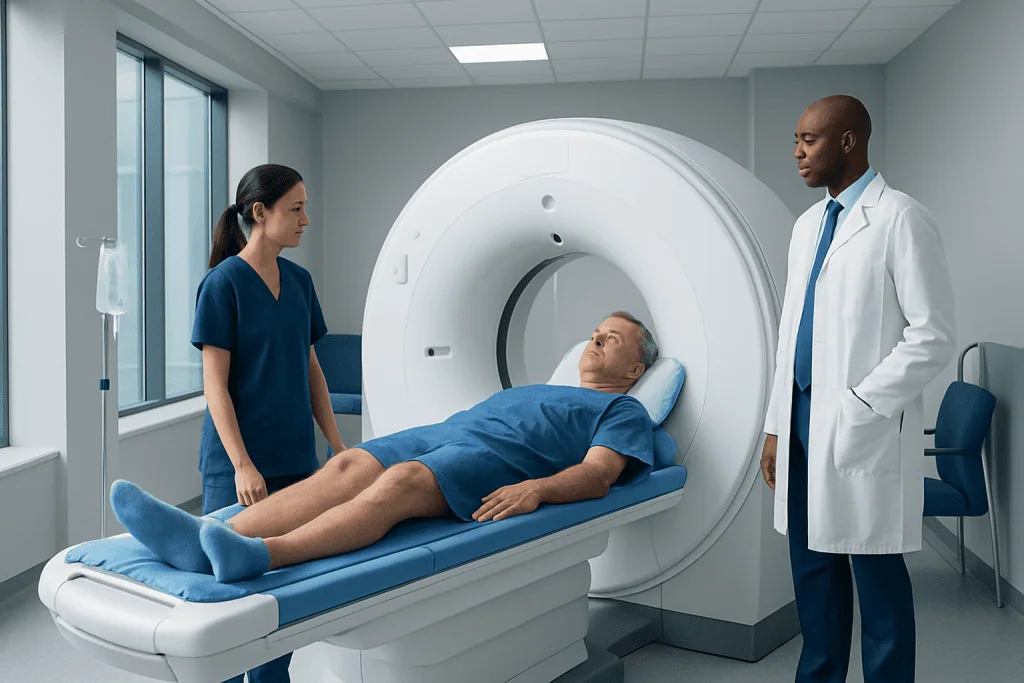
A ct scan with contrast helps doctors see certain structures more clearly than a standard CT scan. Contrast may be swallowed, injected into a vein, or given by another route depending on the body area being examined.
Key Takeaways
- A ct scan with contrast helps doctors see certain structures more clearly than a standard CT scan.
- Contrast may be swallowed, injected into a vein, or given by another route depending on the body area being examined.
- Most side effects are mild and short-lived, but allergies, kidney concerns, and certain medications require review beforehand.
- Preparation may include fasting, hydration, and blood tests if kidney function needs to be checked.
- Patients should seek prompt medical help after the scan for breathing difficulty, facial swelling, or worsening rash.
A ct scan with contrast is an imaging test that uses a special dye to highlight organs, blood vessels, and tissues so they appear more clearly on CT images. It can improve diagnostic accuracy, and for most people it is a routine, well-tolerated procedure when proper screening and preparation are done.
Overview: What a CT Scan With Contrast Does
A ct scan with contrast is a computed tomography scan performed with a contrast material, sometimes called contrast dye, that helps certain parts of the body stand out more clearly on the images. Doctors use it to improve visibility of blood vessels, organs, inflammation, tumors, bleeding, infections, or blockages that may be harder to assess on a non-contrast scan.
CT scanning itself uses X-rays and computer processing to create detailed cross-sectional pictures of the body. When contrast is added, differences between normal and abnormal tissues often become easier to recognize. Depending on the purpose of the scan, contrast may be injected into a vein, swallowed as a liquid, or less commonly given by another route.
Many people have this test as part of the evaluation of pain, injury, unexplained symptoms, or chronic disease monitoring. A ct scan with contrast is not a treatment on its own, but it is an important diagnostic tool that can help guide decisions about medicine, surgery, or follow-up care.
Why Contrast Is Used and Which Symptoms It Can Help Evaluate
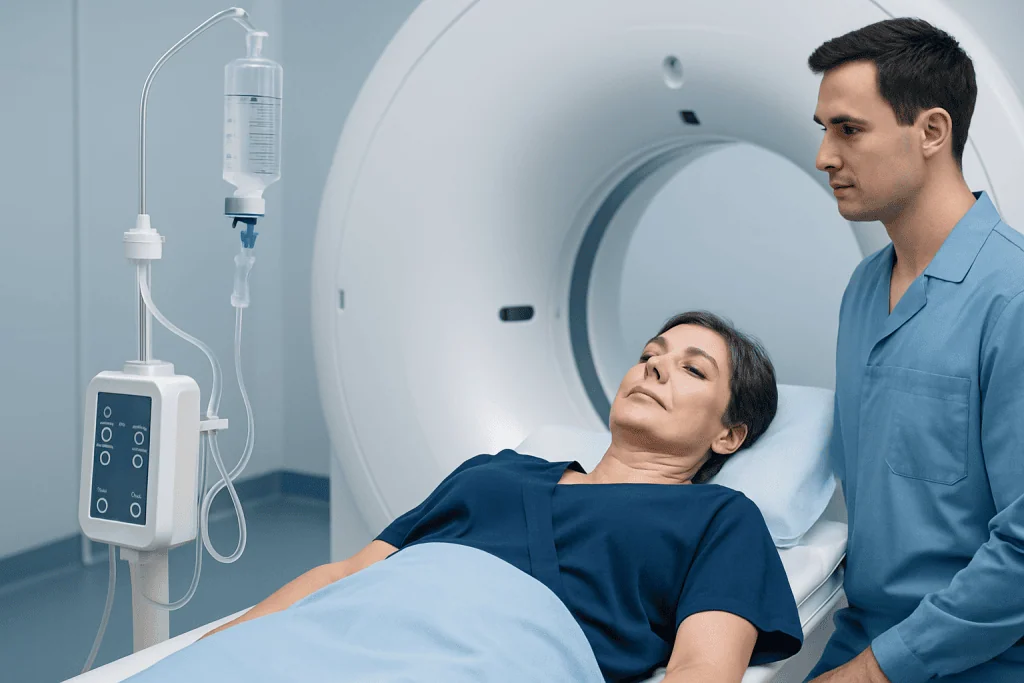
Doctors request a ct scan with contrast when they need more detail than a plain CT scan may provide. Contrast can make blood flow patterns, organ structure, and areas of inflammation easier to interpret. This can be especially helpful when symptoms are not specific and several possible causes need to be considered.
Common symptoms and situations that may lead to this test include:
- Persistent or severe abdominal pain
- Chest pain or shortness of breath when certain causes are suspected
- Headache, weakness, or neurological symptoms in selected cases
- Fever of unclear origin or concern for infection
- Blood in the urine or suspected urinary tract obstruction
- Evaluation after trauma or internal injury
- Unexplained weight loss, swelling, or a possible mass
The exact body area matters. For example, a contrast-enhanced CT may be used to examine the abdomen and pelvis for inflammation or abscess, the chest for blood vessel problems or masses, or the brain in selected emergency and follow-up settings. In some cases, it is used alongside the assessment of conditions such as lung cancer or kidney stones when detailed imaging is clinically appropriate.
How the Test Works and What Patients Can Expect
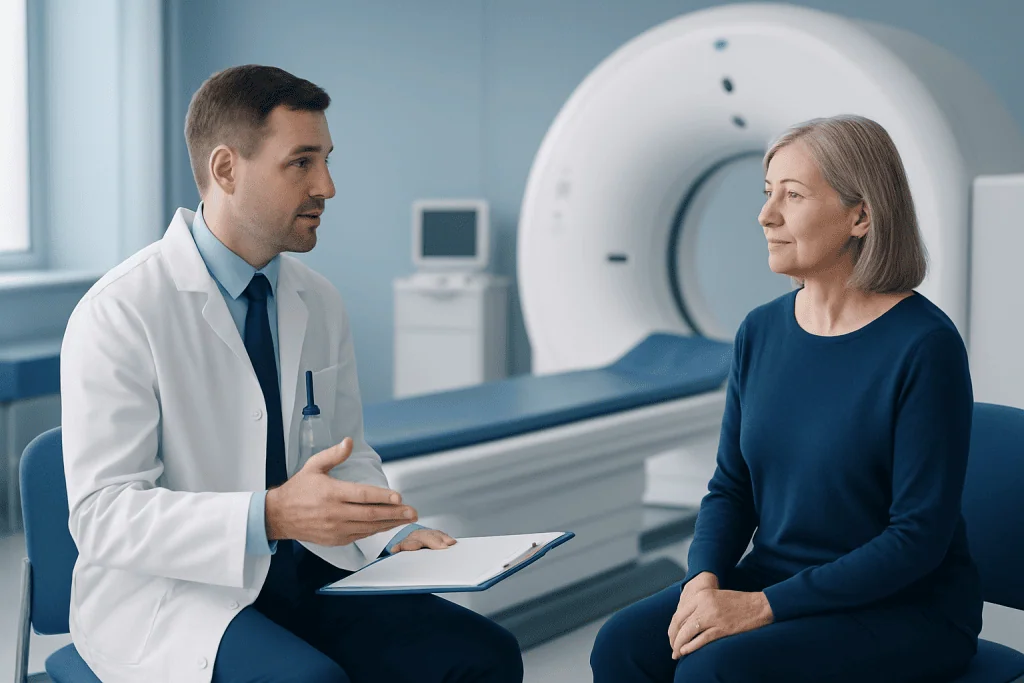
Before the scan, a healthcare professional confirms the reason for the test and reviews important safety information, including allergies, kidney disease, pregnancy status, and current medicines. If intravenous contrast is planned, a small cannula is placed into a vein, usually in the arm. Some patients are also asked to drink oral contrast ahead of abdominal or pelvic imaging.
During the scan, the patient lies still on a moving table that passes through the CT scanner. If contrast is injected, it may cause a brief warm sensation, a metallic taste in the mouth, or the feeling of needing to urinate. These sensations are common and usually pass quickly.
The scan itself is usually short, often only a few minutes, although preparation can take longer. Afterward, many patients can return to normal activities the same day unless their doctor advises otherwise. If follow-up imaging or treatment is needed, results may help determine whether procedures such as angiography or PET-CT would add useful information in a specific clinical context.
Causes of Side Effects and Who May Be at Higher Risk
Although most people tolerate contrast well, side effects and complications can occur. Mild reactions may include nausea, a temporary rash, flushing, itching, or discomfort at the injection site. These effects are often brief and manageable, but the imaging team should always be informed about any symptoms that arise during or after the scan.
More significant concerns are uncommon but important to understand. A person may be at higher risk if they have had a prior contrast reaction, asthma, certain allergies, reduced kidney function, dehydration, or are taking medicines that need review around the time of the scan. Kidney-related risk is particularly relevant in people with chronic kidney disease, diabetes with kidney involvement, or serious illness.
Contrast leaking outside the vein, called extravasation, can also cause local pain or swelling near the injection site. In rare cases, severe allergic-type reactions can happen and require immediate medical attention. For this reason, CT contrast is given in a setting where trained staff can recognize and manage reactions promptly.
Diagnosis Planning, Safety Checks, and Preparation
A ct scan with contrast is most useful when it is matched carefully to the patient’s symptoms and medical history. The referring doctor and radiology team decide whether contrast is necessary based on the question being asked. Sometimes a non-contrast CT, ultrasound, or MRI may be more suitable, depending on the body region and the suspected condition.
Preparation often includes a review of medical history and medications. Patients may be asked whether they have kidney disease, thyroid problems, diabetes, or a previous contrast allergy. In some situations, blood tests are done before the scan to assess kidney function. Fasting may be advised for a few hours, especially if intravenous contrast is planned.
Hydration is commonly encouraged unless a doctor has advised fluid restriction for another medical reason. Patients should also tell the team if they are pregnant, breastfeeding, or have difficulty lying flat. These details help the team tailor the imaging plan safely and effectively.
For some conditions, CT findings may contribute to planning other care pathways, including interventional radiology procedures or specialist evaluation. The goal is not simply to produce images, but to answer a focused clinical question with the safest appropriate test.
Understanding Results and Treatment Options After the Scan
The ct scan with contrast itself does not treat symptoms, but the results can strongly influence the next step in care. A radiologist interprets the images and sends a report to the doctor who ordered the test. That doctor then explains the findings and how they relate to the patient’s symptoms, examination, and any lab results.
Treatment depends entirely on what the scan shows. For example, antibiotics may be used for an infection, surgery may be considered for appendicitis or certain injuries, and blood vessel problems may need urgent vascular or cardiac assessment. In cancer care, contrast-enhanced CT may help with staging, treatment planning, or monitoring response over time.
Sometimes the scan confirms that no serious structural problem is present, which can be reassuring and may help avoid unnecessary procedures. In other cases, it identifies a condition that needs more specialized management, such as chemotherapy in selected oncology settings. At Acibadem International, multidisciplinary specialists in JCI-accredited hospitals evaluate imaging results and provide diagnosis and treatment planning for international patients.
Self-Care After the Scan and Ways to Reduce Risk
After a ct scan with contrast, many people are advised to drink fluids unless they have been told otherwise for medical reasons. This may help support normal kidney function, although individual advice can vary. Patients should follow any post-scan instructions given by the imaging center, especially if they had sedation or have other health conditions.
Reducing risk starts before the test. Patients can help by sharing a complete medication list, mentioning any previous contrast reaction, and reporting kidney problems, asthma, or severe allergies. Taking medicines exactly as instructed before and after the scan is important, especially if a doctor has advised temporary changes for safety.
It is also helpful to understand that not every scan requires contrast. Asking why it is being used, what alternatives exist, and how the result may change management can support informed decision-making. In most cases, when the test is appropriately chosen and precautions are followed, the benefits of clearer diagnostic information outweigh the risks.
When to Seek Medical Care
Patients should contact a doctor promptly if they develop symptoms after the scan such as a spreading rash, persistent vomiting, worsening pain or swelling at the injection site, reduced urination, or new weakness. These symptoms do not always mean a serious problem, but they should be assessed by a qualified clinician.
Emergency medical care is needed right away for breathing difficulty, wheezing, fainting, severe dizziness, swelling of the lips or throat, chest pain, or sudden confusion. These symptoms may signal a severe allergic-type reaction or another urgent condition.
It is also reasonable to seek medical advice if questions remain about the results, if symptoms continue despite a normal scan, or if the person feels too unwell to wait for a routine follow-up. Imaging is only one part of diagnosis, and ongoing or worsening symptoms always deserve medical attention.
Frequently asked questions
What is a ct scan with contrast?
A ct scan with contrast is a CT imaging test that uses a special contrast material to make certain organs, blood vessels, and tissues easier to see. The contrast can improve the clarity of the images and help doctors diagnose many conditions more accurately.
Is a ct scan with contrast safe?
For most people, a ct scan with contrast is safe when appropriate screening is done beforehand. The imaging team checks for kidney problems, previous reactions, allergies, and other risk factors to reduce the chance of complications.
What does contrast feel like during the scan?
When contrast is injected into a vein, some people notice warmth spreading through the body, a metallic taste, or a brief sensation like needing to urinate. These feelings are usually temporary and pass within a short time.
Do patients need to fast before a ct scan with contrast?
Sometimes yes, depending on the area being scanned and the type of contrast used. The imaging center or doctor will provide instructions, which may include not eating for a few hours and drinking fluids unless told otherwise.
Can people with kidney disease have contrast dye?
They may still be able to, but the decision needs careful review. Doctors often assess kidney function beforehand and weigh the benefit of the scan against the potential risk, sometimes choosing a different test if needed.
How long does a ct scan with contrast take?
The actual scan is often completed within minutes, but the full visit may take longer because of registration, preparation, contrast administration, and observation if needed. The exact timing depends on the body area and the imaging protocol.
When should someone worry after the scan?
They should seek urgent help for trouble breathing, facial or throat swelling, fainting, or severe chest symptoms. They should also contact a doctor if they develop a worsening rash, persistent vomiting, significant injection-site swelling, or reduced urination.
References
- Radiological Society of North America
- American College of Radiology
- National Institute of Biomedical Imaging and Bioengineering
- U.S. Food and Drug Administration
- National Kidney Foundation
This article is for general information only and is not a substitute for professional medical advice. Please consult a qualified doctor about your individual situation.
Explore treatments in Turkey — costs, top hospitals & a free quote
JCI-accredited · board-certified surgeons · reply within 24h
Add us as a Preferred Source to see more of our trusted health content across Google Search, AI Overviews and Discover.