

Pimple in Ear: What Patients Need to Know

Most cases of a pimple in ear are caused by a blocked pore, irritated hair follicle, or minor skin infection. Trying to squeeze a pimple inside the ear can worsen pain, push infection deeper, and irritate the delicate ear canal.
Key Takeaways
- Most cases of a pimple in ear are caused by a blocked pore, irritated hair follicle, or minor skin infection.
- Trying to squeeze a pimple inside the ear can worsen pain, push infection deeper, and irritate the delicate ear canal.
- Warm compresses and avoiding cotton swabs, earbuds, or scratching often help mild cases improve.
- Severe pain, spreading redness, discharge, fever, or hearing changes need medical assessment.
- Not every bump in the ear is acne; cysts, boils, eczema, and outer ear infections can look similar.
A pimple in ear is usually a small inflamed pore or hair follicle on the outer ear or near the ear canal. Most are minor and settle with gentle care, but increasing pain, swelling, hearing changes, fever, or drainage can signal a problem that should be checked by a doctor.
Overview: what a pimple in ear usually means
A pimple in ear is commonly a small inflamed bump caused by a clogged skin pore, trapped oil, dead skin cells, or an irritated hair follicle. It can appear on the outer ear, the earlobe, or just inside the entrance to the ear canal. In many people, it is uncomfortable but not serious and improves on its own with simple skin care.
The ear is different from areas such as the face because the skin is thinner in some places and the ear canal is narrow and sensitive. This means even a very small spot may feel disproportionately painful, especially when a person sleeps on that side, uses earphones, or touches the area. A bump deeper in the canal may also feel more like pressure than a visible pimple.
It is also important to know that not every bump is acne. Some lumps are boils, cysts, areas of eczema, or inflammation linked to outer ear infection. Distinguishing these conditions matters because treatment can range from watchful waiting to prescription drops or drainage by an ear specialist.
Signs and symptoms to look for
A pimple in ear may look like a small red bump, a whitehead, or a tender swollen spot. If it is near the ear opening, a person may see it in a mirror or feel it while cleaning the ear. If it sits deeper in the canal, it may not be visible but can cause soreness, pressure, or pain when the jaw moves.
Common symptoms include tenderness to touch, mild swelling, itchiness, and a feeling of blockage. Some people notice a small amount of drainage if the spot opens on its own. When a hair follicle or nearby gland becomes more inflamed, the area may become warm, more painful, or develop a yellow or white center.
Symptoms that suggest the problem may be more than a simple pimple include:
- Increasing redness or swelling around the ear
- Moderate to severe pain, especially at night
- Pus or foul-smelling discharge
- Reduced hearing or a blocked-ear sensation
- Fever or feeling unwell
- Swollen lymph nodes near the jaw or neck
These features can point to a boil, abscess, or infection of the outer ear canal rather than ordinary acne.
Why pimples develop in or around the ear

The skin of the outer ear contains oil glands and hair follicles, so it can develop acne-like bumps in the same way as other body areas. When oil, sweat, dead skin cells, or debris collect in a pore, the opening can become blocked. Bacteria on the skin may then trigger inflammation, producing a red or painful pimple.
Several everyday factors can make this more likely. Earbuds, hearing devices, helmets, hats, and phones can trap moisture and friction against the skin. Hair products, sunscreen, makeup, and heavy skin creams may also contribute if they build up around the ear. In some people, frequent touching of the ears or using cotton swabs pushes material deeper and irritates the skin.
Sometimes the bump is actually a localized infection of a hair follicle, often called folliculitis or a boil. This may happen after scratching, shaving hair near the ear, or minor skin trauma. People with eczema, oily skin, diabetes, or weakened immune defenses may be more prone to skin infections and should be more cautious about painful or persistent ear bumps.
What else can look like a pimple in ear?
One reason ear bumps deserve careful attention is that several different conditions can look similar at first. A boil may begin as a pimple-like spot but becomes larger, deeper, and much more tender. An epidermoid or sebaceous cyst may feel firmer and persist for weeks or months rather than resolving quickly.
Inflammatory skin conditions can also mimic acne. Eczema or contact dermatitis may cause red, itchy, flaky skin around the outer ear, often triggered by hair products, jewelry, or headphone materials. In contrast, acne usually produces a more defined bump related to a blocked pore.
If the main problem is ear pain, discharge, and tenderness when the outer ear is moved, a doctor may consider ear infection or inflammation of the ear canal rather than a simple pimple. A small growth, wart, or persistent non-healing sore is less common but should be checked, particularly if it bleeds easily or does not improve over time.
How doctors diagnose the cause
Diagnosis usually starts with a simple history and physical examination. A doctor will ask when the bump appeared, whether it is painful or draining, and whether there has been recent scratching, use of earbuds, skin products, or prior ear problems. Medical conditions such as diabetes, skin disease, or immune suppression may also be relevant.
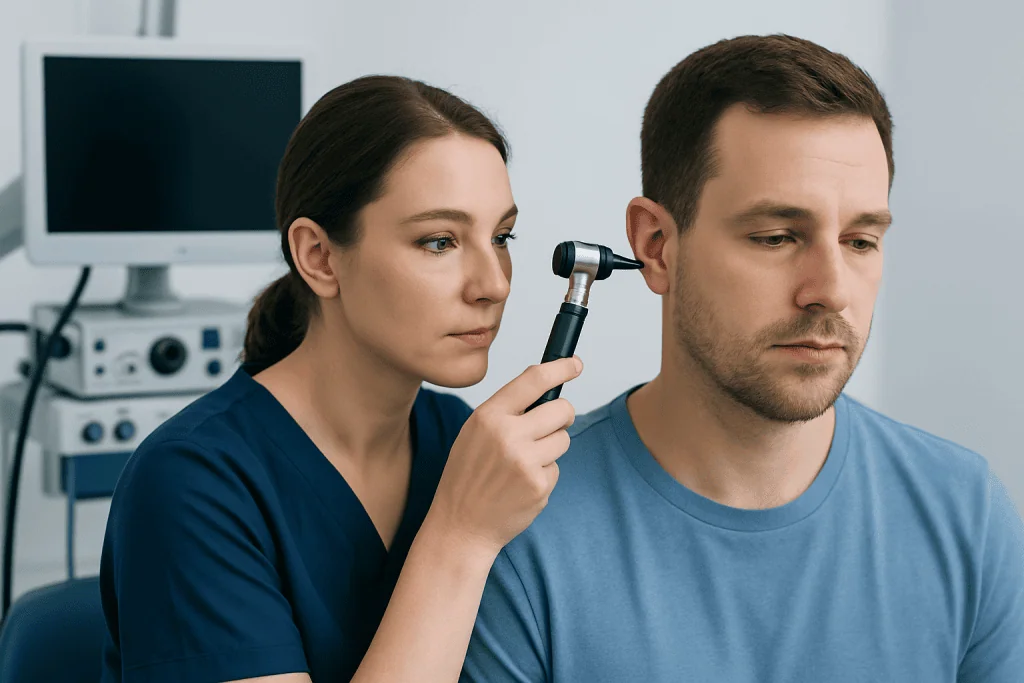
The ear is then examined carefully, often with a lighted instrument to look at the outer ear and ear canal. This helps determine whether the lesion is a superficial pimple, a boil, a cyst, or part of a broader ear canal infection. If hearing symptoms are present, the doctor may also look for wax blockage or eardrum problems.
Most people do not need scans or laboratory tests. However, if infection is severe, recurrent, or not improving, a clinician may consider sampling drainage or arranging specialist evaluation. In selected cases, an ENT specialist may recommend procedures such as ear examination or further hearing test if symptoms suggest deeper ear involvement.
Treatment options and safe home care
For a mild pimple in ear, the safest approach is usually conservative care. A warm compress placed against the outer ear for short periods may help reduce discomfort and encourage natural drainage. Keeping the area clean and dry, avoiding picking, and pausing the use of irritating products often allow the skin to heal on its own.
It is best not to squeeze or puncture a pimple inside the ear. The ear canal is delicate, and pressure can worsen inflammation, cause bleeding, or push infection deeper. Cotton swabs, hairpins, and other objects should not be used to try to clear the bump. Over-the-counter acne products may irritate the ear canal, so they should only be used on the outer ear and with caution.
If the bump is more painful, persistent, or clearly infected, a doctor may prescribe treatment based on the cause. This can include antibiotic drops for ear canal infection, oral antibiotics for spreading skin infection, or treatment for eczema if inflammation is the main issue. A larger boil or abscess sometimes needs professional drainage, and some patients benefit from specialist ear surgery for recurrent cysts or structural problems, depending on the diagnosis.
When symptoms are linked to repeated outer ear infections or prolonged canal irritation, ENT-led care becomes especially useful. Management may include careful cleaning, medication, and advice on moisture control and device hygiene. The goal is not only to treat the current bump but also to prevent it from returning.
Prevention and daily habits that help
Good daily ear care can lower the chance of future pimples and irritation. The skin around the ears should be washed gently, especially after exercise or using hair products. Earbuds, hearing aids, and phone screens should be cleaned regularly according to manufacturer guidance, since oil, sweat, and bacteria can accumulate on surfaces that touch the ear.
It also helps to reduce friction and moisture. People who wear tight helmets, ear protection, or in-ear devices for long periods may benefit from taking breaks when possible and keeping equipment clean and dry. After swimming or sweating, drying the outer ear gently with a towel is often enough. Cotton swabs should not be inserted into the ear canal.
For those prone to acne or sensitive skin, choosing non-comedogenic skin and hair products may reduce blocked pores near the ears. Anyone with recurrent itchy, flaky, or inflamed ears may need assessment for eczema, dermatitis, or chronic ear canal irritation rather than repeated self-treatment as if every bump were a pimple.
When to seek medical care
A doctor should assess a pimple in ear if it causes significant pain, keeps returning, lasts more than a week or two, or seems to be getting larger rather than smaller. Medical care is also appropriate if there is drainage, reduced hearing, fever, spreading redness, or swelling that extends beyond the original spot.
Prompt assessment is particularly important for people with diabetes, immune system problems, severe skin disease, or a history of recurrent ear infections. In these situations, infections may progress more easily and need earlier treatment. Children with ear pain should also be evaluated carefully because they may not be able to describe whether the discomfort is from the skin, the ear canal, or the middle ear.
If specialist care is needed, Acibadem International’s multidisciplinary specialists and JCI-accredited hospitals diagnose and treat ear and skin conditions for international patients. Evaluation by an ENT doctor can help confirm whether the problem is a simple pimple, a cyst, or an infection that requires targeted treatment.
Frequently asked questions
Is a pimple in ear dangerous?
Usually not. Most ear pimples are minor and caused by a blocked pore or irritated hair follicle, but they can feel quite painful because the ear canal is sensitive. It is wise to seek medical advice if pain is severe, the area is swollen, or there is discharge or hearing change.
Should a person pop a pimple inside the ear?
No. Squeezing or puncturing a pimple in the ear can irritate delicate tissue, increase the risk of infection, and make pain worse. It is safer to leave it alone and use gentle care until a doctor can assess it if needed.
How long does a pimple in ear last?
A small uncomplicated pimple may improve within several days and often settles within one to two weeks. If it persists, enlarges, or repeatedly comes back, the bump may be a boil, cyst, or another condition rather than a simple pimple.
Can earbuds or headphones cause a pimple in ear?
They can contribute. Earbuds and headphones may trap sweat, oil, and bacteria against the skin and create friction, which can irritate follicles or clog pores. Regular cleaning and limiting prolonged use when the ear is irritated may help.
What home care is safe for an ear pimple?
A warm compress on the outer ear, gentle washing, and avoiding touching or scratching are generally safe. Do not insert cotton swabs, acne tools, or creams deep into the ear canal. If symptoms are worsening, a medical review is the safest next step.
Can a pimple in ear affect hearing?
It can, especially if swelling is near the ear canal opening and creates a blocked sensation. However, hearing change can also happen with wax buildup or ear infection, so persistent blockage or reduced hearing should be evaluated by a doctor.
This article is for general information only and is not a substitute for professional medical advice. Please consult a qualified doctor about your individual situation.
Hair transplant in Turkey — costs, graft counts & a free assessment
JCI-accredited · board-certified surgeons · reply within 24h
Add us as a Preferred Source to see more of our trusted health content across Google Search, AI Overviews and Discover.

More from the Health Library

Epi Squamous: A Complete Medical Overview

Fasciculation Muscle Twitch: What Patients Need to Know

Tart Cherry Juice for Gout: A Complete Medical Overview

Circles on Arms: A Complete Medical Overview

Lingam Massage: A Complete Medical Overview

Tingling Sensation in Head and Back: An Evidence-Based Guide for Patients
Otorhinolaryngology Specialists at Acibadem

Assoc. Prof. Dr. Akif İşlek
Ear Nose & Throat
Dr. Alaaddin Zirek
Otorhinolaryngology
Assoc. Prof. Dr. Ali Titiz
Otorhinolaryngology
Prof. Dr. Alp Demireller
Otorhinolaryngology