Broke the Arm: What Patients Need to Know

A broken arm can affect the upper arm, forearm, or elbow area and may range from a small crack to a displaced fracture. Pain, swelling, bruising, and difficulty moving the arm are common signs, but imaging is needed to confirm the injury.
Key Takeaways
- A broken arm can affect the upper arm, forearm, or elbow area and may range from a small crack to a displaced fracture.
- Pain, swelling, bruising, and difficulty moving the arm are common signs, but imaging is needed to confirm the injury.
- Treatment depends on the type and position of the fracture and may include immobilization, pain relief, and rehabilitation.
- Urgent medical care is important if there is severe deformity, numbness, an open wound, or reduced blood flow to the hand.
- Most people recover well, but healing time varies by age, fracture type, and whether surgery is needed.
Broke the arm usually refers to a fracture in one of the arm bones, such as the humerus, radius, or ulna. Most arm fractures heal well with timely diagnosis and the right treatment, which may include a splint, cast, sling, or sometimes surgery.
Overview: What it means to break an arm
If someone says they “broke the arm,” it usually means one of the bones in the arm has fractured. This can involve the upper arm bone (humerus) or one of the two forearm bones (radius and ulna). Some fractures are small cracks that stay in place, while others cause the bone to shift out of alignment.
Arm fractures are common after falls, sports injuries, traffic accidents, or direct blows. They can happen at any age, but the exact pattern often differs between children, active adults, and older people with more fragile bones. Injuries near the wrist or elbow may also be described as a broken arm because they affect the arm’s movement and function.
Many people worry that a broken arm always means surgery. In fact, many fractures heal with a splint, cast, or sling if the bone position is stable. The main goals are to control pain, protect the injury, allow the bone to heal in the right position, and restore strength and movement over time.
Signs and symptoms of a broken arm
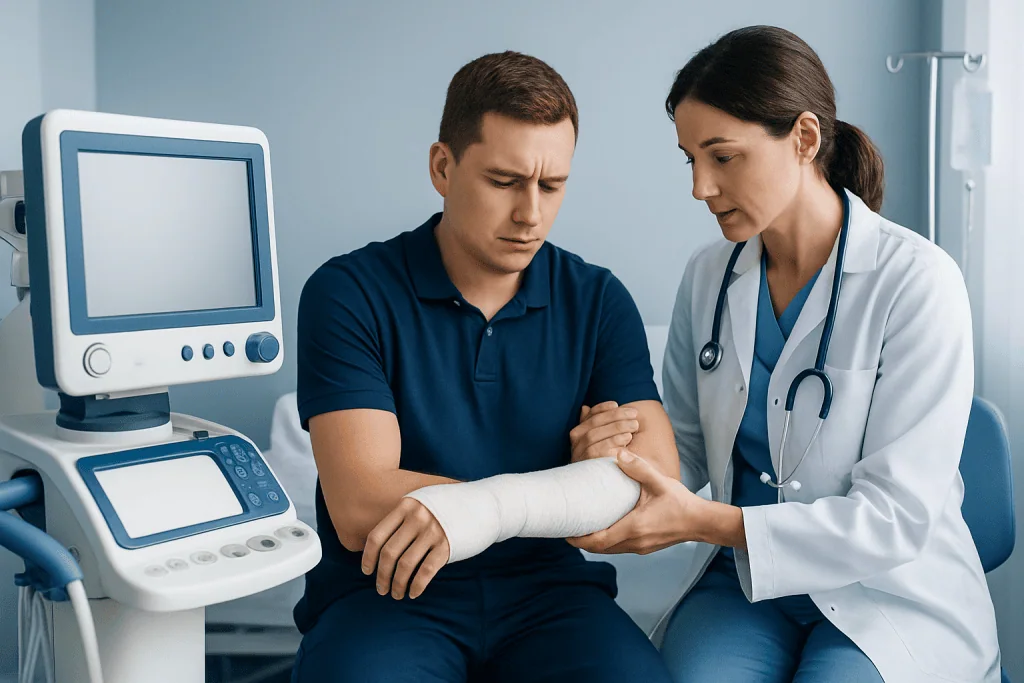
The most common symptoms are sudden pain, swelling, and trouble using the arm after an injury. The pain usually gets worse with movement or pressure. Bruising may appear over the next several hours, and the person may avoid moving the arm because of discomfort.
Other signs can include tenderness, a visible change in shape, or a feeling that the arm is unstable. Sometimes there is a popping or snapping sensation at the time of injury. A child with an arm fracture may simply refuse to use the arm or become upset when it is touched.
Some symptoms suggest a more serious injury and should be treated urgently. These include an open wound over the fracture, severe deformity, numbness, tingling, a pale or cold hand, or inability to move the fingers. These signs can point to nerve or blood vessel involvement and need prompt medical evaluation.
- Pain that starts suddenly after a fall or impact
- Swelling and bruising
- Limited range of motion
- Visible bending or abnormal shape
- Numbness, weakness, or color change in the hand
Common causes and risk factors

A broken arm most often happens when a person falls onto an outstretched hand, lands directly on the arm, or experiences a strong blow. Sports, cycling, contact activities, and vehicle accidents are frequent causes. In children, playground falls are common, while in older adults, simple falls at home can be enough to cause a fracture.
Bone strength plays an important role. Weaker bones are more likely to break even with relatively minor trauma. This is one reason fractures become more common with aging and conditions that reduce bone density. If the injury occurred after a low-impact fall, a doctor may consider whether osteoporosis could be a contributing factor.
Certain factors increase fracture risk, including previous fractures, balance problems, poor vision, and medications that make falls more likely. High-impact sports and physically demanding jobs can also raise risk. Good protective equipment, strength, and fall prevention strategies may help lower the chance of injury.
How doctors diagnose an arm fracture
Diagnosis starts with a physical examination and a careful review of how the injury happened. A doctor checks for swelling, tenderness, deformity, and the ability to move the shoulder, elbow, wrist, and fingers. Just as importantly, they assess circulation and nerve function by checking pulses, skin color, temperature, and sensation in the hand.
X-rays are the standard first imaging test and are often enough to confirm the fracture and show whether the bone pieces are aligned. In some cases, more detailed imaging may be recommended, especially if the fracture involves a joint, is difficult to see, or is part of a more complex injury. This may include MRI or CT imaging when clinically appropriate.
Accurate diagnosis matters because treatment depends on the exact location and pattern of the break. A fracture in the shaft of the humerus is managed differently from a break near the elbow or wrist. Identifying associated soft tissue, nerve, or vascular injury also helps guide safe treatment planning.
Treatment options and what healing may involve
Treatment depends on which bone is broken, whether the fracture is stable, and whether the pieces are displaced. Initial care often includes rest, supporting the arm, ice, elevation, and pain relief under medical guidance. A splint may be used first to allow swelling to settle before a cast or brace is applied.
Many simple fractures heal without surgery if the bone remains in a good position. A sling may be used for some upper arm injuries, while forearm fractures may need a cast to keep the bones aligned. If the bone has shifted, a doctor may need to realign it, a process called reduction, before immobilization.
Surgery is considered when a fracture is unstable, open, badly displaced, involves a joint, or is unlikely to heal well with casting alone. Procedures may use plates, screws, rods, or pins to hold the bone in place. In some patients, surgical repair is part of broader orthopedic and traumatology care aimed at restoring function and reducing complications.
Healing continues after the bone begins to unite. Stiffness is common, especially around the elbow, wrist, or shoulder, so rehabilitation can be important. Guided exercises or physical therapy and rehabilitation may help restore movement, strength, and confidence in using the arm again.
Recovery, self-care, and preventing complications
Recovery time varies widely. Children often heal faster than adults, and a small stable fracture usually heals sooner than a complex break. Following the treatment plan closely is one of the best ways to support healing. This includes keeping casts or splints dry and intact, attending follow-up visits, and avoiding activities that could disrupt the bone position.
At home, elevating the arm, moving the fingers regularly if advised, and using pain medicine exactly as directed can help manage discomfort and swelling. Patients should not insert objects inside a cast or try to adjust a splint themselves. If swelling worsens or the cast feels too tight, medical advice should be sought promptly.
Possible complications include poor bone alignment, delayed healing, stiffness, weakness, and, less commonly, nerve or circulation problems. After healing, a gradual return to normal activity is usually safest. For those with repeated fractures or fractures after minor trauma, doctors may evaluate bone health and discuss steps to reduce future risk.
When to seek medical care
Any suspected broken arm should be assessed by a medical professional, especially if pain and swelling begin right after an injury. Prompt care helps confirm the diagnosis, relieve pain, and prevent the bone from healing in the wrong position. Even if the arm does not look obviously deformed, a fracture can still be present.
Emergency care is especially important if there is severe deformity, heavy swelling, exposed bone, bleeding, numbness, weakness, or a hand that looks pale, blue, or cold. These can be signs of a complicated fracture or damage to nerves and blood vessels. Fever, increasing redness, or worsening pain after treatment also need medical review.
If symptoms do not improve as expected, follow-up is important. At Acibadem International, multidisciplinary specialists in JCI-accredited hospitals diagnose and treat arm fractures for international patients, including imaging, orthopedic care, and rehabilitation when needed.
Frequently asked questions
How do I know if I broke the arm or just bruised it?
Pain, swelling, and bruising can happen with both a bruise and a fracture, so symptoms alone are not always enough to tell the difference. A broken arm is more likely if there is marked tenderness, difficulty moving the arm, deformity, or pain that worsens with any use. An X-ray is usually needed to confirm the diagnosis.
Can a broken arm heal without surgery?
Yes, many arm fractures heal well without surgery if the bone is stable and well aligned. Treatment may include a splint, cast, brace, or sling, along with follow-up imaging to make sure healing stays on track. Surgery is mainly used for fractures that are displaced, unstable, open, or involve a joint.
How long does it take for a broken arm to heal?
Healing time depends on the person’s age, overall health, and the type of fracture. Some simple fractures improve within several weeks, while more complex injuries can take much longer and may need rehabilitation afterward. A doctor can give a more accurate estimate after reviewing the imaging.
What should someone do right after breaking an arm?
The arm should be kept as still as possible and supported in a comfortable position while waiting for medical evaluation. Ice wrapped in cloth may help reduce swelling, but it should not be placed directly on the skin. The person should avoid eating or drinking if surgery might be needed and should seek urgent care if there is deformity, numbness, or an open wound.
Is it safe to move the fingers after an arm fracture?
In many cases, gentle finger movement is encouraged to help limit swelling and stiffness, unless a doctor advises otherwise. However, the injured part of the arm should not be forced or tested. Patients should follow the specific instructions given for their type of fracture and splint or cast.
Can children and adults have different kinds of arm fractures?
Yes, children’s bones are still developing, so they can have fracture patterns that differ from those seen in adults. Children often heal faster, but growth plates may need careful attention because they affect future bone growth. Adults, especially older adults, may be more likely to have fractures related to bone fragility.
This article is for general information only and is not a substitute for professional medical advice. Please consult a qualified doctor about your individual situation.
Joint and spine care in Turkey — expert assessment & treatment
JCI-accredited · board-certified surgeons · reply within 24h
Add us as a Preferred Source to see more of our trusted health content across Google Search, AI Overviews and Discover.

More from the Health Library
EGFR Test: What Patients Need to Know

Trench Mouth: What Patients Need to Know

Leg Shaking — Explained by Medical Evidence, Not Myths

Eczema on Elbows: A Complete Medical Overview

Ferulic Acid: A Complete Medical Overview