Mandible: What Patients Need to Know

The mandible is the lower jawbone and is essential for eating, speech, and facial structure. Mandible symptoms may include pain, swelling, clicking, bite changes, numbness, or trouble opening the mouth.
Key Takeaways
- The mandible is the lower jawbone and is essential for eating, speech, and facial structure.
- Mandible symptoms may include pain, swelling, clicking, bite changes, numbness, or trouble opening the mouth.
- Common causes include injury, teeth grinding, temporomandibular joint disorders, dental infection, and arthritis.
- Diagnosis may involve a physical exam, dental assessment, and imaging such as X-ray, CT, or MRI.
- Treatment depends on the cause and can include self-care, medications, dental care, splints, or surgery.
- Urgent medical attention is needed after significant trauma or if breathing, swallowing, or severe infection symptoms develop.
The mandible is the lower jawbone and plays a central role in chewing, speaking, facial shape, and holding the lower teeth. Problems affecting the mandible can range from muscle strain and joint disorders to fractures, infection, and less commonly tumors, so persistent pain, swelling, or difficulty opening the mouth should be medically assessed.
Overview: what the mandible is and why it matters
The mandible is the lower jawbone. It is the largest and strongest bone of the face, and it helps a person chew, speak, yawn, and make facial expressions. It also holds the lower teeth in place and connects to the skull through the temporomandibular joints, often called the TMJs.
Because the mandible moves many times each day, even small problems can become noticeable. Pain when chewing, clicking near the ear, swelling along the jawline, or a feeling that the teeth no longer meet properly may all point to a mandibular problem. Some issues come from the joint or muscles around the jaw, while others begin in the teeth, bone, or soft tissues.
Patients often use the word “jaw” for several different structures at once, including the mandible, the jaw joint, the chewing muscles, and the teeth. Understanding that distinction can help make symptoms easier to describe. In practical terms, a doctor or dentist will usually look at all of these areas together because they work as one system.
How the mandible works
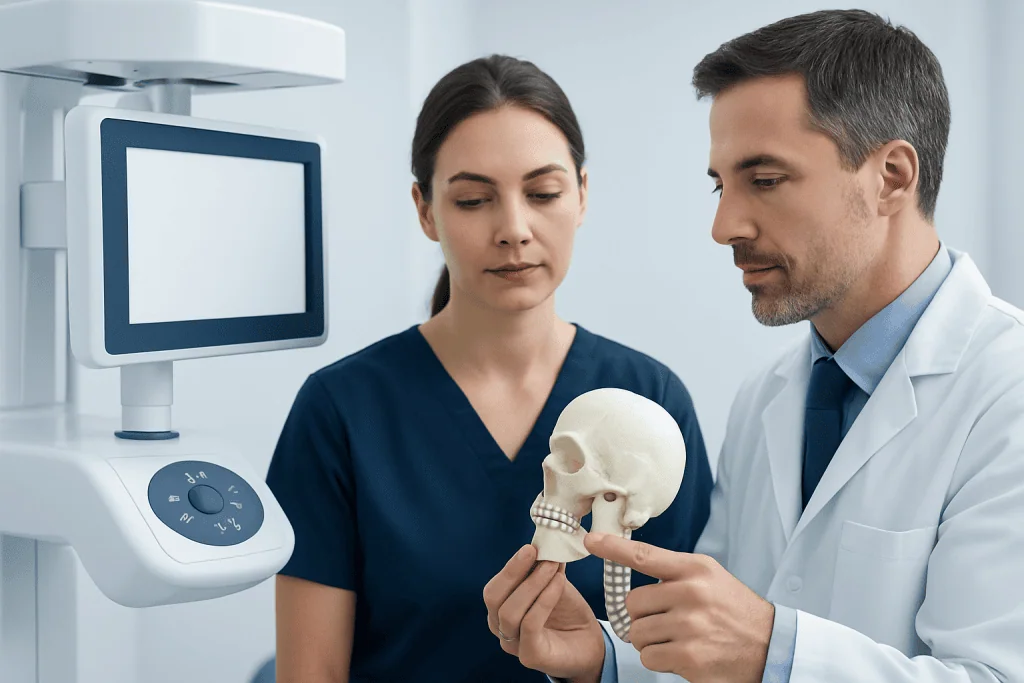
The mandible has a horizontal body, which forms the chin and supports the lower teeth, and two vertical sides called rami. At the upper end of each ramus are bony areas that help the jaw move and anchor muscles. The mandible meets the skull on each side in front of the ears, forming the temporomandibular joints.
These joints allow the mouth to open and close, but they also let the jaw slide and move side to side. This combination is necessary for biting and grinding food. Strong muscles attached to the mandible power these movements, while ligaments and a small cushioning disc in the joint help guide motion smoothly.
Nerves and blood vessels also pass through the mandible. The inferior alveolar nerve travels inside the bone and supplies feeling to the lower teeth, chin, and lower lip. For that reason, numbness of the lip or chin can sometimes suggest a mandibular problem, especially after injury, dental procedures, or pressure from swelling or a lesion.
Symptoms of mandible problems

Mandible-related symptoms can vary depending on whether the issue involves bone, joint, muscle, teeth, or nearby soft tissue. A person may feel a dull ache, sharp pain with chewing, stiffness in the morning, or tenderness along the jawline. Some notice a popping or clicking sound near the ear, while others find it hard to open their mouth fully.
Swelling is another common sign. It may occur after an injury, with a dental abscess, or as part of inflammation around the jaw joint. Changes in the way the upper and lower teeth fit together, trouble biting comfortably, or a jaw that seems to shift to one side should also be evaluated.
Other symptoms can include headache, ear discomfort, facial asymmetry, bruising, loose teeth, bad taste in the mouth, or numbness in the lower lip or chin. In children and teenagers, jaw growth problems may affect facial development or bite alignment. Less commonly, persistent swelling or unexplained numbness can signal a more serious underlying condition and should not be ignored.
- Jaw pain or tenderness
- Clicking, popping, or locking
- Difficulty chewing or opening the mouth
- Swelling, bruising, or facial asymmetry
- Bite changes or loose teeth
- Numbness of the lower lip or chin
Common causes and risk factors
One of the most common reasons for mandibular symptoms is dysfunction around the jaw joint and chewing muscles, often grouped under TMJ disorders. Teeth grinding or clenching, stress-related muscle tension, poor bite alignment, and arthritis can all contribute. These problems often cause pain near the ear, jaw fatigue, headaches, and clicking.
Dental disease is another frequent cause. Tooth decay, gum disease, impacted teeth, and dental abscesses can trigger pain that seems to come from the jawbone itself. Infections may spread into nearby tissues and lead to swelling, fever, or difficulty opening the mouth. Trauma, including sports injuries, falls, and road accidents, can cause bruising, dislocation, or a jaw fracture.
Other possible causes include osteomyelitis of the jawbone, benign cysts, salivary gland problems, inflammatory conditions, and less commonly tumors affecting the bone or oral tissues. Risk factors depend on the cause but may include contact sports without facial protection, untreated dental disease, smoking, autoimmune arthritis, previous radiation treatment, osteoporosis, and chronic clenching. In some patients, the source of pain may be nearby rather than in the mandible itself, such as sinus disease or referred pain from the neck muscles.
How doctors diagnose mandible conditions
Diagnosis begins with a careful history. The clinician will ask when the symptoms started, whether there was trauma, if pain is constant or linked to chewing, and whether there are dental symptoms, fever, locking, or numbness. They may also ask about teeth grinding, recent dental work, arthritis, and general health conditions that could affect bone healing or infection risk.
A physical examination usually includes looking at facial symmetry, checking how wide the mouth opens, feeling for tenderness along the mandible and TMJ, and assessing the bite. The teeth, gums, oral lining, and nearby glands may be examined as well. If a nerve issue is suspected, sensation in the lower lip and chin may be tested.
Imaging is often important when symptoms are persistent, severe, or linked to injury. Depending on the concern, tests may include dental X-rays, panoramic jaw imaging, CT for fractures or bone detail, or MRI for joint discs and soft tissues. In selected cases, blood tests, biopsy, or referral to oral and maxillofacial surgery, dentistry, ENT, or orthopedics may be recommended. Imaging such as MRI or CT scan can help clarify complex cases and guide treatment planning.
Treatment options for mandible problems
Treatment depends entirely on the cause. For muscle strain or mild TMJ-related symptoms, doctors often recommend a period of jaw rest, soft foods, warm compresses, posture awareness, and avoiding habits such as gum chewing or wide yawning. Some patients benefit from physical therapy, stress reduction, or a custom dental splint if clenching or grinding is a factor.
When dental disease is the source, treatment focuses on the tooth or gum problem itself. This may include fillings, root canal therapy, drainage of an abscess, or tooth removal when necessary. If infection is present, a clinician may prescribe antibiotics when appropriate, but treating the source of the infection is usually just as important as medication.
Fractures, dislocations, severe bite changes, tumors, or structural abnormalities may require specialist procedures. This can involve immobilization, surgical repair, or reconstruction depending on the location and severity of the problem. Patients with advanced joint disease or selected structural issues may be referred for maxillofacial surgery. When cancer is suspected, multidisciplinary assessment is essential, and some patients may also need biopsy or additional imaging before treatment decisions are made.
Follow-up care matters because the jaw is used constantly throughout the day. Recovery plans may include nutrition advice, oral hygiene support, exercises, and monitoring of bite function. Near the end of the care pathway, some international patients choose centers such as Acibadem International, where multidisciplinary specialists in JCI-accredited hospitals diagnose and treat complex mandible conditions.
Self-care, prevention, and daily habits
Not every mandibular symptom can be prevented, but many everyday habits can lower the risk of strain and dental complications. Good oral hygiene, regular dental checkups, and early treatment of cavities or gum disease can help prevent infections that may spread into the jaw area. Wearing a properly fitted mouthguard during contact sports also reduces the chance of traumatic injury.
For patients prone to jaw tension, practical steps can make a difference. Eating softer foods during flare-ups, keeping the lips together but teeth slightly apart at rest, and avoiding chewing gum or biting hard objects may reduce stress on the joint and muscles. People who clench during the day can benefit from becoming aware of the habit and relaxing the jaw consciously.
General health also affects jaw comfort and healing. Adequate sleep, stress management, smoking cessation, and following treatment for arthritis or other chronic conditions may support better outcomes. If symptoms last more than a few weeks, come back frequently, or interfere with eating and speaking, self-care alone is usually not enough and professional assessment is sensible.
When to seek medical care
Medical or dental evaluation is appropriate if jaw pain persists, swelling develops, the bite suddenly changes, or the mouth cannot open normally. Care should also be sought when there is tooth pain with facial swelling, pus, fever, or a bad taste in the mouth, since these may suggest infection.
Urgent care is especially important after trauma to the face, particularly if there is bleeding, loose teeth, facial deformity, numbness, or suspected fracture. Emergency attention is needed if swelling affects breathing or swallowing, if there is severe uncontrolled pain, or if a person cannot close or open the jaw after a dislocation. Prompt assessment helps protect breathing, nutrition, and long-term jaw function.
Frequently asked questions
What is the mandible?
The mandible is the lower jawbone. It supports the lower teeth and helps with chewing, speaking, and shaping the lower face.
Is jaw pain always a mandible problem?
No. Jaw pain can come from the mandible itself, the TMJ joints, chewing muscles, teeth, gums, salivary glands, or even nearby structures such as the neck. A proper exam helps identify the true source.
Can a mandible problem cause ear pain or headaches?
Yes. The jaw joints and chewing muscles are close to the ears and can refer pain to the temples, face, or head. TMJ disorders and clenching are common reasons for this pattern.
How do doctors check for a mandible fracture?
They usually start with a physical examination and questions about the injury. Imaging such as X-ray or CT is often used to confirm whether the jawbone is broken and to assess alignment.
What helps mild mandible or TMJ discomfort at home?
Short-term self-care may include eating soft foods, avoiding gum chewing, using warm compresses, and resting the jaw from wide opening. However, persistent or worsening symptoms should be assessed by a qualified clinician.
When is jaw swelling an emergency?
Jaw swelling needs urgent attention if it follows trauma, spreads quickly, or comes with fever, difficulty swallowing, or trouble breathing. These features may suggest serious injury or infection.
This article is for general information only and is not a substitute for professional medical advice. Please consult a qualified doctor about your individual situation.
Joint and spine care in Turkey — expert assessment & treatment
JCI-accredited · board-certified surgeons · reply within 24h
Add us as a Preferred Source to see more of our trusted health content across Google Search, AI Overviews and Discover.

More from the Health Library
Automatonophobia — Explained by Medical Evidence, Not Myths

Citric Acid: An Evidence-Based Guide for Patients

Tnf Inhibitors: An Evidence-Based Guide for Patients

Onion Health Benefits: An Evidence-Based Guide for Patients

Candesartan: What Patients Need to Know