Brachioradialis: What Patients Need to Know
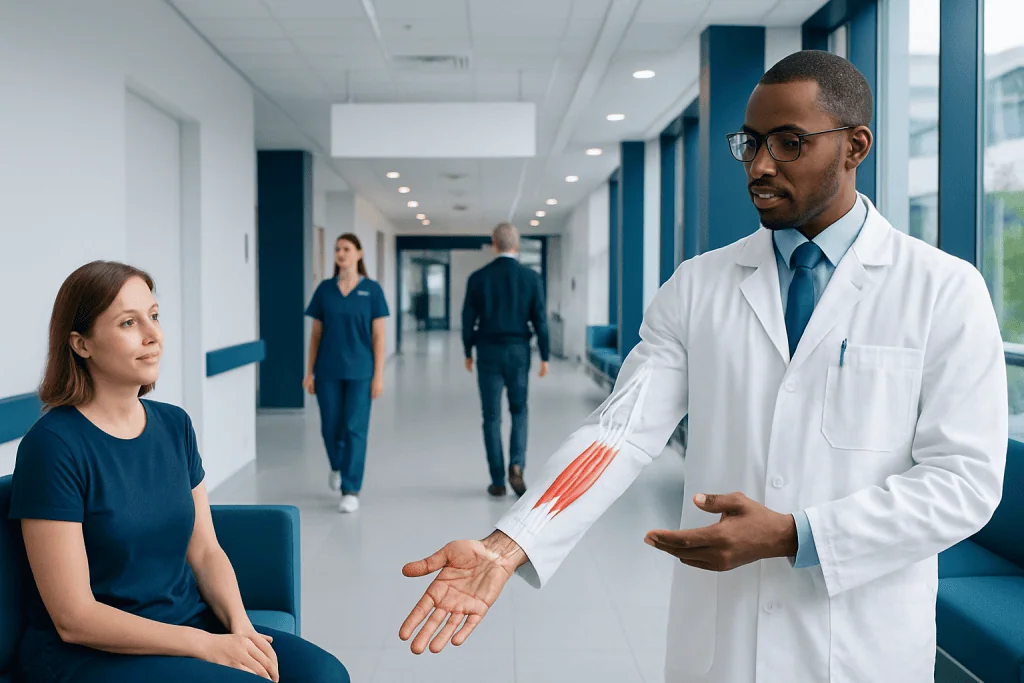
The brachioradialis is a forearm muscle involved in elbow bending and forearm movement. Pain in this area often relates to overuse, sports, repetitive work, or lifting strain.
Key Takeaways
- The brachioradialis is a forearm muscle involved in elbow bending and forearm movement.
- Pain in this area often relates to overuse, sports, repetitive work, or lifting strain.
- Symptoms can overlap with tennis elbow, nerve irritation, and other causes of forearm pain.
- Most cases improve with rest, activity changes, targeted exercises, and medical guidance.
- Persistent pain, weakness, numbness, or swelling should be assessed by a doctor.
The brachioradialis is a forearm muscle that helps bend the elbow, especially when the hand is in a neutral "thumbs-up" position. When patients notice pain near the outer forearm or elbow, the cause may be muscle strain, tendon irritation, or another nearby condition, so a careful evaluation helps guide the right treatment.
Overview: What the Brachioradialis Is
The brachioradialis is a long muscle on the thumb side of the forearm. It starts near the outer part of the upper arm and attaches near the wrist end of the radius bone. Its main job is to help bend the elbow, particularly when the hand is in a neutral position, such as during a handshake or when holding a cup.
Although it is not always widely recognized by name, the brachioradialis becomes important in everyday tasks. It helps when lifting objects, carrying bags, using tools, opening doors, and performing many sports or exercise movements. Because it works together with other muscles around the elbow and forearm, pain in this area can sometimes be difficult for patients to identify on their own.
When people search for “brachioradialis,” they are often trying to understand forearm pain, tenderness near the outer elbow, or discomfort after repetitive activity. In many cases, symptoms are linked to overuse, mild strain, or tendon irritation. However, similar pain can also come from nearby structures such as tendons, joints, or nerves, so it is helpful to look at the whole arm rather than focusing on one muscle alone.
Where It Hurts and What Symptoms Can Feel Like
Brachioradialis-related pain is usually felt along the upper forearm on the thumb side, often close to the outer elbow. Some patients describe it as aching, soreness, tightness, or a pulling sensation. It may be most noticeable during gripping, lifting, twisting, or repeated bending of the elbow.
Symptoms can begin suddenly after a strain, or gradually after repeated movements over days or weeks. For example, racquet sports, weight training, manual work, prolonged computer mouse use, or carrying heavy items may bring on symptoms. Patients may notice tenderness when pressing on the muscle, stiffness after activity, or fatigue in the forearm.
Depending on the cause, symptoms may include:
- Pain near the outer elbow or upper forearm
- Tenderness along the muscle belly
- Discomfort when lifting with the palm turned inward
- Pain with gripping or twisting motions
- Mild swelling or tightness after overuse
- Weakness or reduced endurance in the arm
Because the brachioradialis lies close to other important structures, symptoms are not always due to the muscle itself. Conditions such as tennis elbow or nerve compression may feel similar. Numbness, tingling, marked weakness, or pain that travels from the neck may point to another explanation and deserve medical review.
Common Causes and Risk Factors

The most common reason for brachioradialis pain is overuse. Repetitive elbow flexion, gripping, lifting, or forearm rotation can overload the muscle or its tendon attachment. This is especially true when an activity is new, intense, or done without enough rest. Small strains may develop when muscle fibers are overstretched, while chronic irritation can build up slowly over time.
Sports and occupations often play a role. Racquet sports, rowing, climbing, weightlifting, and certain gym exercises can stress the forearm. So can manual labor, assembly work, hairdressing, painting, gardening, and frequent tool use. Even less obvious habits, such as prolonged mouse use or awkward workstation setup, may contribute if the forearm stays tense for long periods.
Several factors increase the chance of symptoms:
- Sudden increase in training or workload
- Poor lifting technique or repetitive movement patterns
- Weakness or imbalance in the forearm, shoulder, or upper back
- Inadequate warm-up and recovery
- Previous elbow or forearm injury
- Age-related tendon changes
Not all pain in this region is a simple strain. Tendon problems, referred pain from the neck, inflammation around the elbow joint, and nerve-related conditions can mimic brachioradialis discomfort. In some cases, imaging or specialist assessment may be needed to separate a muscle issue from problems involving the tendon, bones, or nearby nerves.
How Doctors Diagnose Brachioradialis Problems
Diagnosis usually begins with a detailed history and physical examination. A doctor will ask when the pain started, what movements trigger it, whether there was an injury, and whether symptoms include numbness, weakness, swelling, or loss of function. These details help distinguish a straightforward overuse problem from a more complex condition.
During the examination, the clinician may press along the forearm to locate tenderness, assess elbow and wrist motion, and test strength with different hand positions. Pain that appears with resisted elbow flexion in a neutral forearm position can suggest brachioradialis involvement. The doctor will also check for signs of tendon injury, joint problems, or nerve irritation.
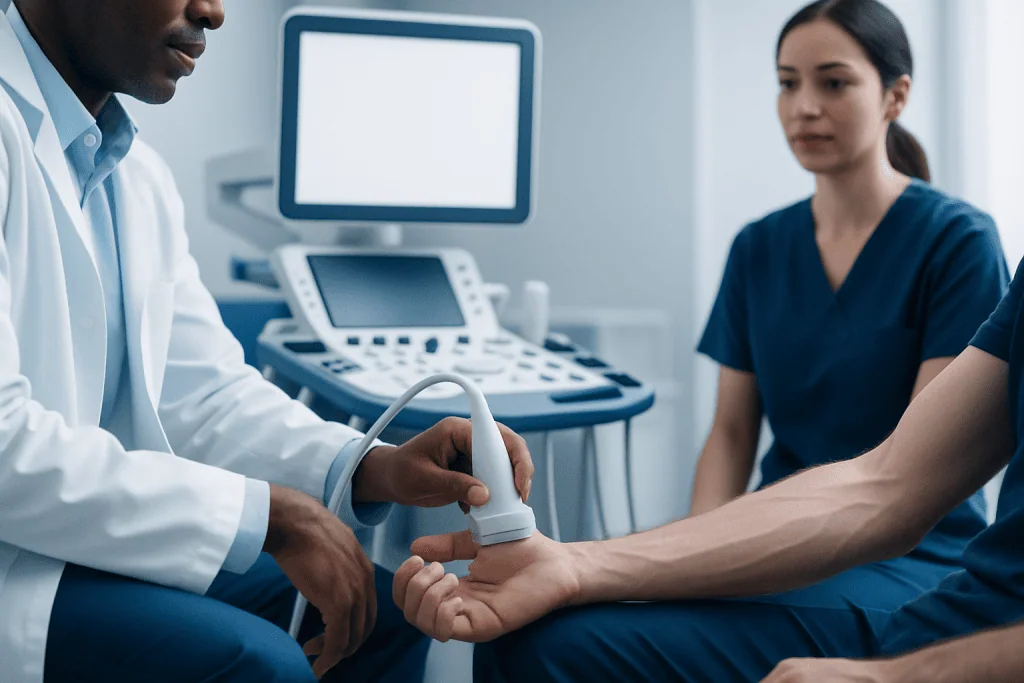
Imaging is not always needed, especially for mild symptoms that fit a typical overuse pattern. However, tests may be useful if pain is severe, lasts longer than expected, or follows a significant injury. Depending on the situation, evaluation may include MRI scan or musculoskeletal ultrasound to look at muscles, tendons, and other soft tissues.
If symptoms suggest a broader elbow problem, doctors may also consider related conditions such as elbow pain causes that involve tendons, ligaments, joints, or nerves. The goal is not only to name the painful structure, but also to identify why the area is being overloaded so treatment can be more effective.
Treatment Options and Recovery
Most brachioradialis problems improve with conservative treatment. Early care usually focuses on reducing strain and allowing the tissue to recover. This often includes short-term rest from the movement that triggered symptoms, adjusting activities rather than stopping all movement, and using cold packs for comfort in the first phase after a flare-up.
Doctors may recommend pain-relieving or anti-inflammatory medicines when appropriate, but treatment is usually more successful when it also addresses mechanics and muscle function. A guided exercise plan can help restore flexibility, strength, and endurance in the forearm while also improving shoulder and upper-arm support. Gradual return to work, sport, or exercise is important to avoid restarting the cycle of irritation.
Supportive treatment may include:
- Temporary reduction of aggravating activity
- Gentle stretching and range-of-motion work
- Progressive strengthening of the forearm and surrounding muscles
- Technique correction for sport, lifting, or work tasks
- Ergonomic changes to tools or workstation setup
- Manual therapy or structured rehabilitation
When symptoms are persistent, rehabilitation may be helpful through physical therapy and rehabilitation. If another condition is found, treatment is directed to that cause rather than the brachioradialis alone. Near the end of the care pathway, Acibadem International’s multidisciplinary specialists in JCI-accredited hospitals can evaluate forearm and elbow pain for international patients and guide diagnosis and treatment planning.
Self-Care, Prevention, and Safe Exercise Habits
Self-care is often an important part of recovery. Many patients improve by reducing the specific movement that causes pain, then reintroducing it slowly once symptoms settle. Complete immobilization is rarely necessary for mild overuse problems, and gentle movement is often encouraged so the arm does not become stiff.
Prevention focuses on load management. It helps to warm up before exercise, increase training gradually, take breaks during repetitive tasks, and vary movements when possible. Proper technique matters in sports and gym activities, especially with gripping, curling, pulling, and rowing motions. Strengthening the forearm, shoulder, and upper back together may reduce excess strain on one small area.
At home, patients may find these strategies useful:
- Use lighter loads or shorter sessions during recovery
- Avoid repeating painful movements for long periods without breaks
- Check desk, keyboard, and mouse positioning
- Stretch gently after activity if advised by a clinician
- Return to sport or exercise step by step rather than all at once
If pain keeps returning, the issue may not be simple overuse. Recurrent symptoms can reflect an untreated tendon disorder, ongoing technique problem, or another condition affecting the elbow or forearm. In that situation, a medical assessment can help prevent a longer recovery.
When to Seek Medical Care
Many mild cases settle with rest, activity changes, and time, but some symptoms should not be ignored. Medical care is appropriate if pain is severe, if the arm cannot be used normally, or if symptoms continue beyond a couple of weeks despite self-care. A doctor can help confirm whether the brachioradialis is involved or whether another cause is more likely.
Prompt assessment is especially important after a fall, sudden lifting injury, or direct blow to the arm. It is also wise to seek care if there is visible deformity, major swelling, bruising, increasing redness, fever, or pain at night that does not improve with simple measures. These features may suggest a more significant injury or a different medical problem.
Patients should also arrange medical review if they notice:
- Numbness or tingling in the hand or forearm
- Weak grip or difficulty lifting everyday objects
- Pain spreading from the neck or shoulder
- Repeated flare-ups that affect work, sport, or sleep
- Loss of elbow motion or ongoing stiffness
Early evaluation can help avoid prolonged irritation and guide a safer return to normal activity. If symptoms are uncertain or persistent, a qualified clinician can decide whether examination, rehabilitation, or imaging is the best next step.
Frequently asked questions
What does the brachioradialis do?
The brachioradialis is a forearm muscle that helps bend the elbow. It works especially well when the hand is in a neutral position, such as when shaking hands or holding a glass.
Where is brachioradialis pain usually felt?
Pain is often felt on the thumb side of the upper forearm, close to the outer elbow. Some people also notice tenderness along the muscle or discomfort with gripping, lifting, or twisting motions.
Can brachioradialis pain be confused with tennis elbow?
Yes. The symptoms can overlap because both conditions can cause pain near the outer elbow and forearm. A medical examination helps tell whether the main problem is the muscle, a tendon, or another nearby structure.
How long does a brachioradialis strain take to heal?
Recovery time varies depending on how severe the strain is and whether the arm keeps being overloaded. Mild cases may improve within days to a few weeks, while ongoing or more significant injuries can take longer and may benefit from rehabilitation.
Should patients exercise when the brachioradialis hurts?
It is usually best to avoid movements that clearly worsen pain, especially early on. Gentle motion and a gradual, guided strengthening plan are often helpful, but the right approach depends on the cause of symptoms.
When is brachioradialis pain a reason to see a doctor?
A doctor should assess pain that is severe, follows an injury, lasts more than a couple of weeks, or causes weakness, numbness, or loss of function. Medical review is also important if swelling, redness, fever, or repeated flare-ups occur.
References
- American Academy of Orthopaedic Surgeons
- National Institute of Arthritis and Musculoskeletal and Skin Diseases
- MedlinePlus
- National Health Service
- American Society for Surgery of the Hand
This article is for general information only and is not a substitute for professional medical advice. Please consult a qualified doctor about your individual situation.
Joint and spine care in Turkey — expert assessment & treatment
JCI-accredited · board-certified surgeons · reply within 24h
Add us as a Preferred Source to see more of our trusted health content across Google Search, AI Overviews and Discover.

More from the Health Library
Insulin Pen Needles: A Complete Medical Overview

Carbs in Popcorn — Explained by Medical Evidence, Not Myths

Celestone Injection: An Evidence-Based Guide for Patients

Scarring Alopecia: What Patients Need to Know

Peach: What Patients Need to Know