Training for Biceps: An Evidence-Based Guide for Patients

Training for biceps works best with controlled form, full range of motion, and gradual increases in resistance. The biceps help bend the elbow and assist with forearm rotation, so balanced training matters more than isolation alone.
Key Takeaways
- Training for biceps works best with controlled form, full range of motion, and gradual increases in resistance.
- The biceps help bend the elbow and assist with forearm rotation, so balanced training matters more than isolation alone.
- Pain in the front of the shoulder, elbow, or upper arm during curls may signal overuse or tendon irritation rather than normal muscle fatigue.
- Rest, sleep, protein intake, and spacing hard sessions are important parts of muscle recovery.
- Persistent weakness, bruising, sudden sharp pain, or loss of arm function should be assessed by a doctor.
Training for biceps is most effective when it combines good technique, gradual progression, and enough recovery time. For most people, the goal is not simply bigger arms, but stronger pulling movements, better elbow function, and lower risk of overuse pain.
Overview: what training for biceps involves
Training for biceps means strengthening the biceps muscles in the front of the upper arm through resistance-based exercise. In practical terms, this usually includes curl variations, pulling movements such as rows, and a gradual plan that matches a person’s current fitness, age, joint health, and goals.
Although many people think of the biceps mainly as a cosmetic muscle, they also support everyday actions such as lifting, carrying, turning a doorknob, and bringing objects toward the body. The biceps work together with the shoulder, forearm, and upper back, so safe progress depends on training the whole movement pattern rather than repeatedly doing heavy curls alone.
An evidence-based approach focuses on technique, manageable training volume, and recovery. For patients returning to exercise after inactivity, discomfort, or minor injury, the most helpful program is often simple and consistent: a few well-performed exercises done regularly, with load increased slowly over time.
How the biceps work and why this matters
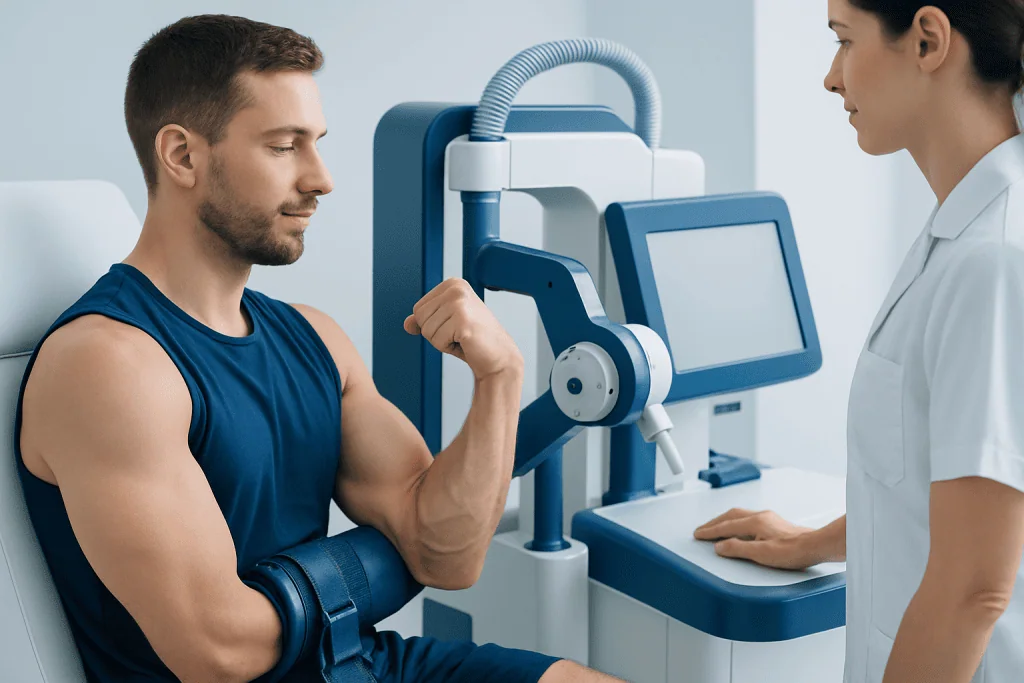
The biceps brachii has two heads at the shoulder and attaches lower down to the forearm. Its main actions are elbow flexion, which bends the arm, and forearm supination, which turns the palm upward. Because one end of the muscle crosses the shoulder, it can also contribute modestly to shoulder movement and stability.
This anatomy helps explain why biceps symptoms are not always felt only in the middle of the upper arm. Some people notice front-of-shoulder pain, while others feel discomfort near the elbow crease or upper forearm. Problems in nearby structures, including the rotator cuff or the tendons around the elbow, can also mimic biceps strain. Related conditions such as rotator cuff tear or tennis elbow may need to be considered when pain persists.
For patients, the key lesson is that stronger biceps do not come only from isolated curls. Rows, pulldowns, and other pulling exercises can train the biceps while also supporting the shoulder blades and upper back. This more balanced approach may improve function and lower the chance of overuse symptoms.
Symptoms during biceps training: normal fatigue vs warning signs

Normal training sensations include muscle effort, temporary burning during a set, and mild soreness that appears later and settles within a few days. These symptoms usually affect the muscle belly, occur after unaccustomed exercise, and improve with light movement and rest.
Warning signs are different. Sharp pain, a popping sensation, sudden weakness, visible bruising, swelling, or a change in the shape of the upper arm can suggest a strain or tendon injury. Pain at the front of the shoulder during curls or pulling may point to tendon irritation, especially if it worsens with lifting or overhead activity.
Patients should also pay attention to joint-related symptoms. Elbow pain that is pinpoint and worsens with gripping, wrist movement, or lifting may indicate irritation around the tendons rather than the biceps itself. Numbness, tingling, neck pain, or symptoms radiating down the arm deserve medical evaluation because they may reflect nerve involvement rather than a simple exercise issue.
- Usually expected: temporary muscle fatigue, mild delayed soreness, reduced performance for 24 to 72 hours
- Needs caution: pain that changes technique, pain that increases with each repetition, or soreness that lasts longer than several days
- Needs medical assessment: sudden tear-like pain, bruising, deformity, marked weakness, or persistent shoulder/elbow pain
Common causes of biceps pain and risk factors
The most common reasons training for biceps leads to pain are doing too much too soon, using poor technique, and not allowing enough recovery. Rapidly increasing weight, training to failure too often, and performing many repetitive curl variations in one session can overload the muscle-tendon unit. Grip position and wrist posture also matter, because awkward mechanics may shift stress to the elbow or forearm.
Previous shoulder or elbow problems increase risk. Tendon irritation may be more likely in people with weak shoulder stabilizers, poor posture during pulling movements, limited mobility, or jobs and sports that already involve repetitive lifting. Age-related tendon changes can also reduce tissue tolerance, meaning that a routine that once felt easy may need adjustment.
Certain training choices are linked with higher strain. Examples include swinging the body to lift momentum-based curls, lowering the weight too quickly, and exercising through pain. People recovering from a recent injury, surgery, or prolonged inactivity should be especially careful and may benefit from a structured rehabilitation plan such as physical therapy and rehabilitation.
Diagnosis: when assessment is needed
Many mild overuse symptoms improve with rest, reduced load, and correction of form. However, if pain continues, a clinician will usually begin with a detailed history and physical examination. Important questions include where the pain is felt, whether there was a sudden injury, what movements trigger symptoms, and whether there is weakness, bruising, or loss of motion.
Examination may assess tenderness along the biceps tendon, elbow and shoulder range of motion, strength, and related muscles of the rotator cuff and forearm. This helps separate simple delayed-onset soreness from tendon irritation, strain, partial tear, or another source of pain. If symptoms involve deeper shoulder structures, patients may also need evaluation for conditions such as shoulder impingement syndrome.
Imaging is not always necessary for mild cases, but it may be used when a tear is suspected or symptoms do not improve. Ultrasound and MRI can help visualize tendon and soft-tissue injury. In some cases, clinicians also assess the cervical spine or nerves if symptoms include numbness, tingling, or pain radiating beyond the biceps area.
Treatment options and a safe return to exercise
Treatment depends on the cause. For uncomplicated overload or mild tendon irritation, first-line care often includes temporary reduction in aggravating exercise, relative rest rather than full immobility, ice or heat based on comfort, and a gradual return to activity. A doctor may discuss pain relief options if appropriate, but self-medicating should not replace proper assessment when symptoms are significant.
Exercise-based rehabilitation is central to recovery. This may start with pain-free range-of-motion work, isometric exercises, and light strengthening before progressing to curls, rows, and functional pulling tasks. Attention is usually given to the shoulder blade muscles, rotator cuff, wrist extensors, and grip, because better kinetic-chain support often reduces repeated stress on the biceps.
If there is a significant tendon tear, marked weakness, or failure of conservative care, specialist treatment may be needed. In selected cases, evaluation by orthopedic surgery may be appropriate, especially when there is loss of function or a complete rupture. Acibadem International’s multidisciplinary specialists in JCI-accredited hospitals diagnose and treat muscle, tendon, and joint conditions for international patients.
Practical guidance for building biceps safely
A patient-friendly biceps plan is usually built around two principles: enough stimulus to encourage adaptation and enough recovery to let tissue repair. For most recreational exercisers, training the biceps directly one to three times per week is sufficient when combined with back and pulling exercises. More is not always better, especially if elbow or shoulder symptoms are already present.
Technique should come before heavier loading. A controlled curl typically begins with the elbows close to the body, wrists in a comfortable neutral position, and minimal swinging. The lowering phase should be deliberate rather than dropped quickly, because tendons often become irritated when eccentric loading is excessive or poorly controlled.
Simple strategies can help reduce risk:
- Warm up with light pulling or mobility work before heavy sets
- Increase resistance or total repetitions gradually rather than all at once
- Use a variety of grips only if they are comfortable and pain-free
- Leave time between hard sessions for recovery
- Support training with adequate sleep, balanced nutrition, and hydration
- Stop and reassess if pain changes movement quality
People with diabetes, inflammatory joint disease, previous tendon injury, or a history of shoulder problems should be especially cautious with sudden increases in load. For these patients, slower progression and professional guidance are often the safest approach.
When to seek medical care
Medical advice is appropriate if biceps pain lasts more than a few days despite reducing activity, or if it repeatedly returns with exercise. Evaluation is also sensible when symptoms limit daily tasks such as carrying, lifting, dressing, or reaching overhead.
Prompt assessment is more important after a sudden injury. A pop during lifting, new bruising, visible change in arm contour, pronounced weakness, or inability to rotate the forearm or bend the elbow normally can suggest a significant muscle or tendon injury. Shoulder pain that is severe, night pain that disturbs sleep, or symptoms with numbness and tingling should also be checked.
Patients who are unsure whether the problem is simple soreness or something more serious should avoid pushing through pain. Early assessment can clarify the diagnosis, guide safe return to activity, and help prevent a short-term problem from becoming chronic.
Frequently asked questions
How often should someone do training for biceps?
For many healthy adults, direct biceps work one to three times per week is enough, especially when combined with rows or pulldowns. The best frequency depends on training age, exercise intensity, recovery, and whether any shoulder or elbow symptoms are present.
Is muscle soreness after biceps training normal?
Mild soreness after an unfamiliar or harder workout is common and often settles within a few days. Pain that is sharp, worsening, or associated with bruising, weakness, or swelling is not typical and should be assessed.
What is better for biceps strength: curls or pulling exercises?
Both can help. Curls isolate the biceps more directly, while rows and pulldowns train the biceps together with the back and shoulder stabilizers, which may support better function and joint mechanics.
Can training for biceps cause shoulder pain?
Yes, especially if the long head of the biceps tendon is irritated or if shoulder mechanics are poor during exercise. Pain at the front of the shoulder during curls or pulling movements should not be ignored if it persists.
Should a person train through biceps pain?
Training through mild effort-related discomfort is different from training through pain that alters movement or becomes sharper with each repetition. If pain changes technique, reduces strength, or lingers after exercise, load should be reduced and medical advice considered.
How long does it take to return to exercise after a biceps strain?
Recovery time varies with the severity and location of the injury. Mild strains may improve within days to a few weeks, while tendon injuries or tears can require longer rehabilitation and, in some cases, specialist treatment.
This article is for general information only and is not a substitute for professional medical advice. Please consult a qualified doctor about your individual situation.
Explore treatments in Turkey — costs, top hospitals & a free quote
JCI-accredited · board-certified surgeons · reply within 24h
Add us as a Preferred Source to see more of our trusted health content across Google Search, AI Overviews and Discover.

More from the Health Library

Topiramate Weight Loss: What Patients Need to Know

Rinne and Weber Test — Explained by Medical Evidence, Not Myths

Wide Feet: What Patients Need to Know

Mosquito Bite on Lip: An Evidence-Based Guide for Patients

Dry Scalp — Explained by Medical Evidence, Not Myths