Finger Joints: What Patients Need to Know

Finger joints are small but essential joints that support grip, pinch, and fine hand movements. Pain, swelling, stiffness, clicking, or reduced motion in finger joints can have many causes, including injury, overuse, and arthritis.
Key Takeaways
- Finger joints are small but essential joints that support grip, pinch, and fine hand movements.
- Pain, swelling, stiffness, clicking, or reduced motion in finger joints can have many causes, including injury, overuse, and arthritis.
- Early assessment can help identify whether symptoms are coming from the joint, surrounding tendons, or nearby soft tissues.
- Treatment depends on the cause and may include rest, splinting, hand therapy, medication, injections, or surgery in selected cases.
- Medical care is important sooner if symptoms follow trauma, involve deformity, infection signs, numbness, or loss of function.
Finger joints allow precise movement, grip, and daily hand function. When finger joints become painful, swollen, stiff, or unstable, the cause may range from minor strain to arthritis or injury, and evaluation can help guide the right treatment.
Overview: why finger joints matter
Finger joints are the small connecting structures that allow the fingers and thumb to bend, straighten, pinch, and grip. Although they are small, they play a major role in everyday tasks such as writing, buttoning clothes, typing, cooking, and opening containers. When a finger joint becomes painful or stiff, hand function can be affected more than many people expect.
Each finger contains several joints lined with cartilage and supported by ligaments, tendons, and a joint capsule. These structures work together to provide both mobility and stability. Problems can develop in the joint itself, in the tendons that move the finger, or in the ligaments that hold the joint in place, which is why symptoms can sometimes feel similar even when the causes are different.
Finger joint symptoms are common and are not always a sign of a serious condition. Temporary soreness may follow overuse or a mild sprain, while persistent pain, swelling, morning stiffness, or deformity may point to arthritis or another underlying disorder. Understanding the pattern of symptoms often helps guide diagnosis and treatment.
How finger joints are built and what they do
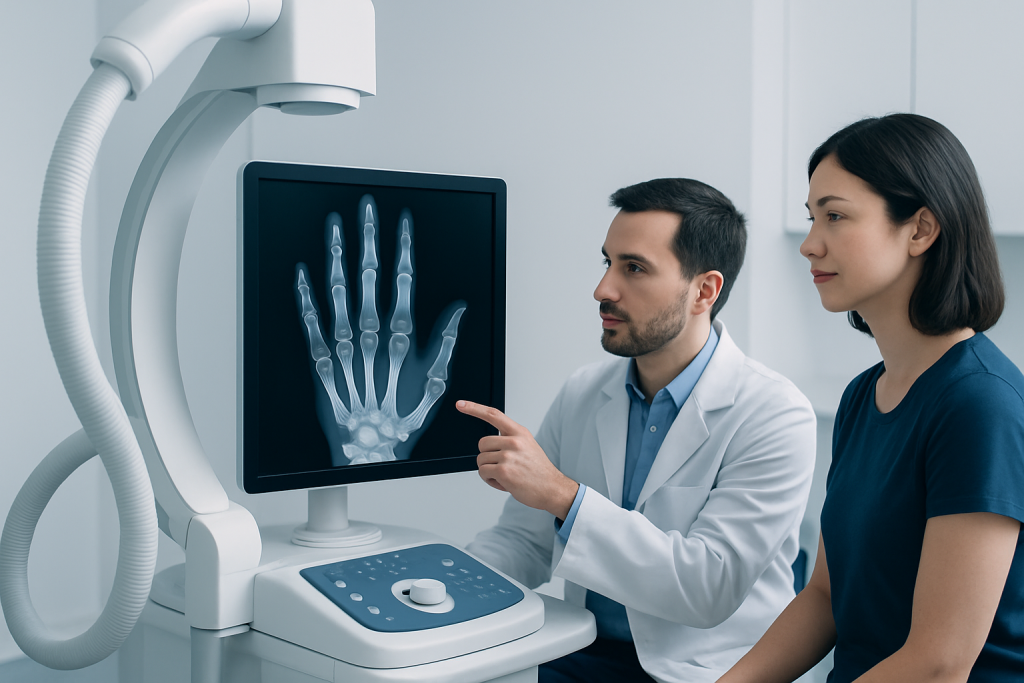
Most fingers have three bones called phalanges and two main bending joints: the proximal interphalangeal joint in the middle of the finger and the distal interphalangeal joint near the fingertip. Where the finger meets the hand is the metacarpophalangeal joint, often called the knuckle. The thumb has a different structure, with fewer bones but highly specialized joints that make pinching possible.
The surfaces of these joints are covered with smooth cartilage, which helps the bones glide with minimal friction. Ligaments on each side of the joint add stability, while flexor and extensor tendons control bending and straightening. Because the hand performs repetitive, precise movements, these tissues are exposed to frequent stress throughout daily life.
Symptoms do not always come from a damaged joint surface alone. A tendon problem, inflammation around the joint, or even irritation from nearby structures can cause pain or swelling that feels like a joint disorder. This is one reason a careful clinical assessment is useful when symptoms do not settle or keep returning.
Common symptoms and what they may suggest

Symptoms involving finger joints can appear suddenly after an injury or develop gradually over time. Common concerns include pain, swelling, stiffness, tenderness, warmth, reduced range of motion, clicking, locking, weakness of grip, or a visible change in finger shape. Some people notice symptoms mainly in the morning, while others feel worse after activity.
Short-lived soreness after heavy use may suggest strain or irritation. Swelling and bruising after a fall, twist, or direct blow may indicate a sprain, dislocation, or fracture. Morning stiffness that improves with movement can be seen in inflammatory joint conditions, while stiffness that worsens later in the day may be more consistent with wear-related joint changes.
Certain symptom patterns are especially important. A finger that locks during movement can be related to tendon irritation rather than the joint itself. Redness, marked warmth, fever, or severe tenderness may raise concern for infection or crystal-related inflammation. Progressive crookedness, bony enlargement, or loss of hand function may be seen with different forms of arthritis, including rheumatoid arthritis.
- Pain with movement or grip
- Swollen finger joints or puffiness around the knuckles
- Morning stiffness or stiffness after rest
- Clicking, catching, or locking
- Deformity, instability, or reduced ability to straighten or bend
Causes and risk factors
There are several possible causes of finger joint symptoms. Minor injuries such as sprains and jammed fingers are common, especially after sports, falls, or sudden twisting. Repetitive activities can also irritate the small joints and surrounding tendons. In some cases, the symptoms are due to inflammation or degeneration that develops over time rather than a single event.
Osteoarthritis is a frequent cause of pain and stiffness in the finger joints, particularly near the fingertips or at the base of the thumb. It tends to become more common with age and may lead to bony enlargement and reduced flexibility. Inflammatory conditions such as rheumatoid arthritis can affect the finger joints in a more symmetrical way and may be associated with fatigue or prolonged morning stiffness. Other possible causes include psoriatic arthritis, gout, infection, and less commonly autoimmune disorders.
Risk factors depend on the underlying condition but may include older age, previous hand injury, repetitive hand use, family history of arthritis, smoking, and certain metabolic or inflammatory diseases. Some people also develop symptoms because of tendon disorders that mimic joint pain, such as trigger finger, or because of nearby nerve compression such as carpal tunnel syndrome, which can alter hand function and comfort.
How doctors diagnose finger joint problems
Diagnosis begins with a detailed history and physical examination. A doctor will usually ask when the symptoms started, whether there was an injury, which joints are involved, and whether the pain is worse in the morning, after activity, or at night. They may also ask about numbness, fever, skin changes, other joint symptoms, or a family history of arthritis.
During the examination, the hand is assessed for swelling, warmth, tenderness, deformity, instability, range of motion, grip strength, and signs that the tendons or nerves may also be involved. Comparing both hands can be helpful, especially when the pattern suggests inflammatory arthritis. The location of swelling and pain often gives useful clues about whether the problem is in the joint, tendon sheath, or surrounding soft tissues.
Imaging and laboratory tests may be recommended depending on the suspected cause. X-rays can show fractures, alignment problems, and signs of joint wear. Ultrasound or MRI may help assess tendons, ligaments, and inflammation in selected cases. Blood tests may be used if inflammatory arthritis, infection, or crystal-related disease is suspected. When hand symptoms are persistent or complex, referral to specialists in orthopedics, rheumatology, or rehabilitation may be appropriate.
Treatment options for painful or stiff finger joints
Treatment depends on the cause, severity, and effect on daily life. For mild strain or overuse, early measures often include relative rest, activity modification, cold packs, and short-term support with taping or a splint if recommended by a clinician. Many people also benefit from guided hand exercises once acute pain starts to settle, because prolonged immobilization can worsen stiffness.
When inflammation or arthritis is involved, treatment may include pain-relieving or anti-inflammatory medicines, hand therapy, splints, and strategies to protect the joints during daily activities. In selected cases, doctors may recommend injections into or around the affected area to reduce inflammation. If symptoms relate more to tendons than the joint surface, treatment may be directed accordingly, such as with hand surgery for specific structural problems when non-surgical care is not enough.
Surgery is usually considered only when there is significant instability, deformity, severe arthritis, a fracture that needs repair, or ongoing loss of function despite appropriate conservative treatment. Depending on the problem, procedures may involve ligament repair, fracture fixation, release of a constricting tendon sheath, or joint reconstruction. Comprehensive care may also involve physical therapy and rehabilitation to improve strength, dexterity, and everyday hand use after injury or surgery.
When arthritis is the main cause, broader management of the condition may also be needed. Some patients benefit from evaluation in programs focused on orthopedics and traumatology or inflammatory joint disease, especially if symptoms affect several joints or interfere with work and self-care.
Self-care and prevention in daily life
Not all finger joint problems can be prevented, but simple habits may reduce strain and support hand health. Using larger grips on tools, pens, or kitchen utensils can lessen stress on small joints. Taking short breaks during repetitive hand tasks may also help, especially for people who type, sew, perform manual work, or use handheld devices for long periods.
Gentle movement is often helpful for stiff joints, while forceful stretching during a painful flare can make symptoms worse. A clinician or hand therapist may suggest exercises that maintain motion without overloading the joint. Attention to overall health also matters, since smoking cessation, weight management, and treatment of inflammatory conditions can support musculoskeletal health more broadly.
People with arthritis often find it useful to pace activities and alternate heavier tasks with lighter ones. Supportive splints may help in specific situations, but they should be used as directed so that finger stiffness does not increase. If self-care measures do not improve symptoms, it is sensible to seek medical advice rather than continuing activities that may aggravate the problem.
When to seek medical care
Medical assessment is advisable if finger joint pain, swelling, or stiffness lasts more than a short time, keeps returning, or begins to limit normal hand use. Evaluation is also important if there is visible deformity, an inability to bend or straighten the finger, or symptoms that interfere with work, sleep, or personal care. Early review can help identify problems that respond best to prompt treatment.
Urgent care is needed after significant trauma, especially if there is severe swelling, bruising, a finger that looks out of place, open injury, or suspected fracture. Immediate attention is also important for signs of infection such as redness, warmth, fever, pus, or rapidly increasing pain. Numbness, color change, or a cold finger should also be assessed promptly because these symptoms may suggest impaired circulation or nerve involvement.
For people with known arthritis or recurring hand symptoms, regular follow-up can help prevent avoidable stiffness and loss of function. Acibadem International’s multidisciplinary specialists and JCI-accredited hospitals diagnose and treat hand, joint, and musculoskeletal conditions for international patients, with care plans tailored to the underlying cause.
Frequently asked questions
What are the main joints in the fingers?
Each finger has a knuckle joint where it meets the hand and two smaller bending joints along the finger. The thumb is built differently but also has specialized joints that allow pinching and grasping. These joints work together with tendons and ligaments to create precise hand movement.
Why do finger joints hurt without an obvious injury?
Finger joints can hurt because of overuse, osteoarthritis, inflammatory arthritis, tendon irritation, or less commonly infection or crystal-related disease. Symptoms may appear gradually and may not be linked to one clear event. A doctor can help distinguish between joint-related pain and problems coming from nearby tendons or nerves.
Are swollen finger joints always caused by arthritis?
No. Swollen finger joints can also result from sprains, fractures, overuse, tendon inflammation, infection, or other inflammatory conditions. The timing, location, and pattern of swelling help guide the diagnosis.
Can finger joint stiffness improve?
Yes, depending on the cause. Mild stiffness related to overuse or a minor injury often improves with rest, gentle motion, and time, while arthritis-related stiffness may improve with medication, splinting, exercises, and joint protection strategies. Persistent stiffness should be evaluated to avoid long-term loss of motion.
When is finger joint pain an emergency?
Urgent care is needed if pain follows significant trauma, if the finger looks deformed, or if there is severe swelling, numbness, or inability to move it. Redness, warmth, fever, or pus also need prompt medical attention because infection can affect hand function quickly. A cold or pale finger should be assessed immediately as well.
Do all finger joint problems need surgery?
No. Many finger joint problems are treated successfully with non-surgical care such as rest, splints, medication, hand therapy, and activity changes. Surgery is usually reserved for certain fractures, severe arthritis, instability, deformity, or symptoms that do not improve with appropriate conservative treatment.
References
- American Academy of Orthopaedic Surgeons
- Arthritis Foundation
- National Institute of Arthritis and Musculoskeletal and Skin Diseases
- American Society for Surgery of the Hand
This article is for general information only and is not a substitute for professional medical advice. Please consult a qualified doctor about your individual situation.
Joint and spine care in Turkey — expert assessment & treatment
JCI-accredited · board-certified surgeons · reply within 24h
Add us as a Preferred Source to see more of our trusted health content across Google Search, AI Overviews and Discover.

More from the Health Library

Heart stent: Symptoms, Causes, and Treatment — Complete Patient Guide

Tonsil stones vs strep: Symptoms, Causes, and Treatment — Complete Patient Guide

Vinegar Water Cleanse — Explained by Medical Evidence, Not Myths

Postnatal Weight Loss Tips — Explained by Medical Evidence, Not Myths

Smoked Ham Hock: A Complete Medical Overview

Types of Water: What Patients Need to Know
Physical Medicine & Rehabilitation Specialists at Acibadem

Assoc. Prof. Dr. Burak Özturan
Orthopedic Surgery & Traumatology
Burcu Kocabey
Physical Medicine & Rehabilitation
Fzt. Busenur Sezer
Physical Medicine & Rehabilitation
Büşra Zeybek
Physical Medicine & Rehabilitation