Excised: What Patients Need to Know

Excised means surgically removed, often for treatment, diagnosis, or both. The term itself does not say whether the tissue was cancerous, benign, or infected.
Key Takeaways
- Excised means surgically removed, often for treatment, diagnosis, or both.
- The term itself does not say whether the tissue was cancerous, benign, or infected.
- A pathology report explains what the excised tissue was and whether margins were clear when relevant.
- Recovery depends on the body area, size of removal, and whether stitches or further treatment are needed.
- Medical follow-up is important if there is redness, fever, worsening pain, drainage, or questions about results.
Excised means that tissue, such as a skin lesion, cyst, polyp, or small mass, has been surgically removed. Patients usually see this word in a pathology report or after a procedure, and its meaning depends on what was removed, why it was removed, and what the laboratory found.
Overview: what “excised” means
Excised means that a doctor has removed tissue from the body using a surgical technique. The word may appear in procedure notes, discharge papers, or pathology reports. In simple terms, it tells patients that something was cut out and sent for examination, treated by removal, or both.
Many different things can be excised. Common examples include skin moles, cysts, polyps, inflamed tissue, small tumors, or a sample of tissue taken to confirm a diagnosis. Sometimes excision is the entire treatment. In other cases, it is one step in a larger care plan.
The word “excised” does not, by itself, mean cancer or a serious illness. It also does not automatically mean the problem is fully resolved. To understand the full picture, patients usually need to know what tissue was removed, why it was removed, whether the laboratory examined it, and whether any further care is recommended.
Why tissue may be excised
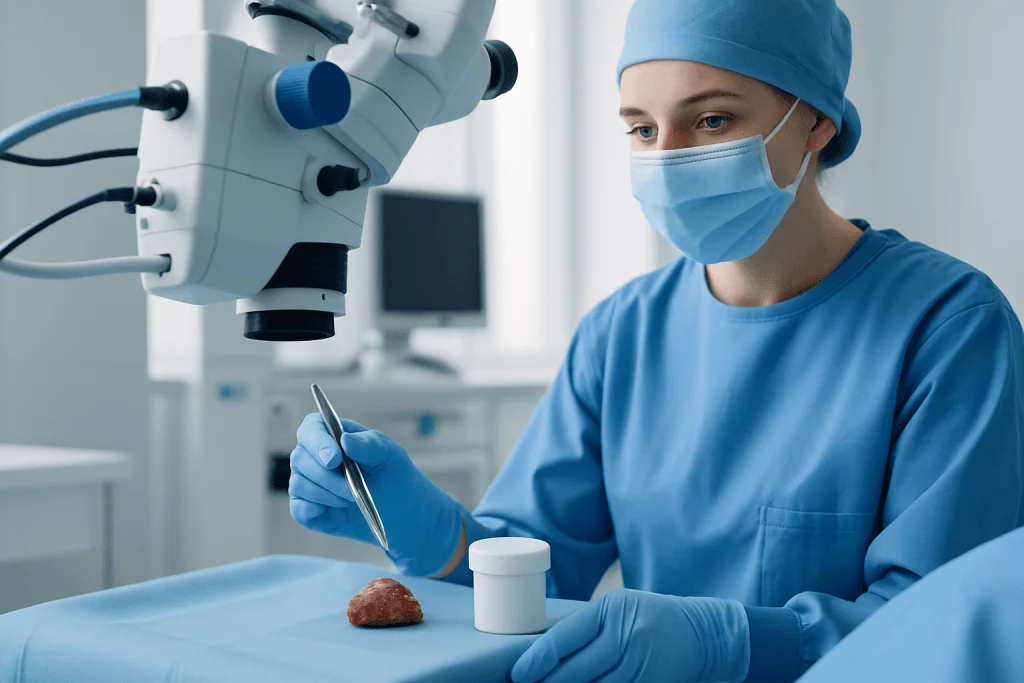
Doctors excise tissue for two main reasons: to diagnose a problem and to treat it. When the cause of a lump, lesion, or abnormal area is unclear, removal allows a pathologist to examine it under a microscope. This can help confirm whether the tissue is benign, inflamed, infected, precancerous, or cancerous.
Excision may also be done because the tissue is causing symptoms or has a risk of getting worse. For example, a doctor may remove a painful cyst, a suspicious mole, an uncomfortable skin growth, a polyp found during an examination, or tissue that keeps becoming infected.
In some situations, excision is performed with the goal of removing the entire abnormal area along with a small rim of nearby normal tissue. This is often described in pathology reports as assessing the “margins.” If the reason for removal is more complex, the doctor may discuss additional treatment such as oncology treatment or a more detailed surgical plan after the pathology results are available.
What patients may notice before and after an excision

Before an excision, patients may have noticed a spot, lump, growth, irritation, bleeding, pain, repeated infection, or a change in the appearance of tissue. In other cases, the abnormal area is found during a routine examination or imaging test and may not cause symptoms at all.
After an excision, the immediate effects are usually related to the procedure itself rather than the final diagnosis. It is common to have mild soreness, swelling, bruising, a small amount of bleeding, or a feeling of tightness around the wound. If stitches were used, the site may need specific care until it closes properly.
Symptoms after the procedure depend on where the tissue was removed. For example, skin excisions may leave a visible scar, while internal excisions may cause temporary discomfort related to the organ involved. The doctor’s instructions usually cover bathing, activity, dressing changes, and when pathology results are expected.
- Mild pain or tenderness for a few days can be normal.
- Small amounts of clear or blood-tinged drainage may occur early on.
- Healing time varies by location, wound size, and a person’s general health.
- Worsening redness, pus, fever, or increasing pain should be assessed.
How excised tissue is tested and what the results mean
When excised tissue is sent to a laboratory, a pathologist examines it carefully. The report usually identifies the tissue type, describes any abnormal changes, and states whether the finding is benign, inflammatory, infectious, precancerous, or malignant. This report is often the most important part of understanding what “excised” means in an individual case.
If the tissue was removed because cancer was suspected, the pathology report may comment on size, depth, type of cells, and whether the edges of the specimen are free of abnormal cells. These edges are called margins. “Clear” or “negative” margins generally mean no abnormal tissue was seen at the outer edges of the removed sample, while “positive” margins may suggest some abnormal tissue remains.
Patients often benefit from asking their doctor to explain the report in plain language. Terms such as dysplasia, atypia, benign, malignant, or inflamed can sound technical but are easier to understand when discussed in context. If the excision involved a suspicious skin lesion, follow-up may include assessment for skin cancer or reassurance that the lesion was noncancerous.
Treatment and follow-up after something is excised
After an excision, treatment may be complete, or further care may be needed. For many benign lesions, no additional treatment is necessary beyond wound care and routine follow-up. The doctor may simply monitor healing and review the pathology results.
If the report shows infection, inflammation, or a chronic condition, treatment may include medicines, lifestyle guidance, or a referral to the appropriate specialist. If the tissue was removed from the digestive tract or another internal organ, the doctor may recommend additional imaging, endoscopy, or monitoring depending on the result.
If the pathology shows precancerous or cancerous changes, care is tailored to the diagnosis. This may involve a wider excision, another procedure, or consultation with surgical and medical specialists. Depending on the organ involved, the care plan may include general surgery or review of related conditions such as colon cancer when a removed polyp or mass raises concern.
For international patients seeking coordinated care, Acibadem International’s multidisciplinary specialists and JCI-accredited hospitals diagnose and treat a wide range of conditions that may require excision, pathology review, and follow-up planning.
Healing, scar care, and self-care after excision
Good aftercare supports healing and lowers the risk of complications. Patients should follow the instructions given for the exact procedure, because skin wounds, oral procedures, and internal surgical sites can have different needs. In general, keeping the area clean, taking medicines as directed, and avoiding activities that stress the wound can help recovery go smoothly.
Scarring after excision varies from person to person. Factors such as wound size, skin type, body location, infection, sun exposure, and tension on the incision all influence how a scar develops. Once the wound has closed, some people are advised to use sun protection and gentle scar care measures recommended by their doctor.
It is also helpful to keep follow-up appointments, especially if stitches need removal or results are pending. Patients should not assume that “excised” means nothing more needs to be done. The final diagnosis and next steps depend on both the procedure and the pathology findings.
- Keep dressings dry or change them exactly as instructed.
- Avoid picking at scabs or pulling at stitches.
- Use only doctor-approved creams or cleansers on the site.
- Protect healing skin from sunlight when advised.
- Ask when normal exercise, swimming, or travel can be resumed.
When to seek medical care
Patients should contact a doctor if the wound becomes increasingly red, swollen, warm, painful, or starts draining pus. Fever, chills, heavy bleeding, a bad smell from the dressing, or wound edges that separate may suggest a complication and should be assessed promptly.
Medical review is also important if the pathology results are unclear, delayed, or difficult to understand. Even when the tissue was removed successfully, a follow-up discussion helps confirm whether any surveillance, repeat excision, or specialist care is needed.
Urgent attention may be needed if the excision involved breathing, swallowing, severe pain, or an area that is rapidly worsening. Patients who had an abnormal growth removed and later notice a new lump, a returning lesion, or unexplained symptoms should arrange a medical evaluation rather than waiting for it to settle on its own.
Frequently asked questions
Does excised mean cancer?
No. Excised only means that tissue was surgically removed. The pathology report is what shows whether the tissue was benign, inflamed, precancerous, or cancerous.
What is the difference between a biopsy and something being excised?
A biopsy is a sample taken for testing, while an excision usually means part or all of the abnormal area was removed. In some cases, an excision also serves as a biopsy because the removed tissue is sent to the lab.
What does it mean if margins are clear after excision?
Clear, or negative, margins generally mean the outer edges of the removed tissue do not show the abnormal cells being checked for. This can suggest the area was fully removed, but the importance depends on the condition and should be explained by the treating doctor.
How long does it take to heal after tissue is excised?
Healing time depends on the size and location of the excision, the type of closure used, and a person’s overall health. Small skin excisions may improve within days to weeks, while deeper or internal procedures can take longer.
Will excised tissue always be sent to a lab?
Often it is, especially if the reason for removal is uncertain or there is a need to confirm a diagnosis. In some routine cases, the doctor may decide laboratory testing is not necessary, but this depends on the tissue and clinical situation.
Can a problem come back after it has been excised?
Sometimes, yes. Recurrence can happen if part of the abnormal tissue remains, if the condition naturally returns, or if a new lesion develops nearby. Follow-up helps detect this early and guides whether more treatment is needed.
This article is for general information only and is not a substitute for professional medical advice. Please consult a qualified doctor about your individual situation.
Explore treatments in Turkey — costs, top hospitals & a free quote
JCI-accredited · board-certified surgeons · reply within 24h
Add us as a Preferred Source to see more of our trusted health content across Google Search, AI Overviews and Discover.

More from the Health Library

Morning Wood — Explained by Medical Evidence, Not Myths

Black Gums: What Patients Need to Know

Soy Formula: A Complete Medical Overview
Autopsy: What Patients Need to Know

Oxalate: What Patients Need to Know