Peutz Jeghers Syndrome: Early Signs, Risk Factors, and How It Is Treated

Peutz jeghers syndrome is usually caused by an inherited change in the STK11 gene. Common early clues include dark spots on the lips, mouth, fingers, or toes and recurring abdominal symptoms.
Key Takeaways
- Peutz jeghers syndrome is usually caused by an inherited change in the STK11 gene.
- Common early clues include dark spots on the lips, mouth, fingers, or toes and recurring abdominal symptoms.
- Polyps can lead to bleeding, anemia, bowel blockage, or intussusception, especially in children and young adults.
- Care focuses on regular surveillance, removal of problematic polyps, and cancer screening over time.
- Family members may benefit from genetic counseling and testing when a diagnosis is confirmed.
Peutz jeghers syndrome is a rare inherited condition that causes characteristic dark pigmented spots and growths called hamartomatous polyps, usually in the digestive tract. It also raises the lifetime risk of several cancers, so early diagnosis, regular screening, and personalized care are central to treatment.
Overview: what Peutz jeghers syndrome means
Peutz jeghers syndrome is a genetic condition that mainly affects the digestive tract and the skin. It is best known for two features: hamartomatous polyps, which are noncancerous growths that often develop in the stomach and intestines, and dark blue-brown or black pigmented spots, especially around the lips, inside the mouth, and sometimes on the fingers, toes, or around the eyes and nose.
Although the polyps themselves are usually benign, they can cause important health problems such as abdominal pain, bleeding, anemia, and bowel obstruction. People with this syndrome also have a higher risk of developing certain cancers over their lifetime, including cancers of the gastrointestinal tract, pancreas, breast, ovaries, cervix, testes, and lungs. This is why the condition needs long-term follow-up rather than one-time treatment.
Peutz jeghers syndrome often begins in childhood or early adulthood, but it can be recognized at different ages. Some people are diagnosed because of visible skin spots, while others come to medical attention after complications from intestinal polyps or because a close family member has already been diagnosed.
Early signs and symptoms

The earliest visible sign may be small dark spots on the lips or around the mouth. These spots can also appear on the gums, inside the cheeks, on the fingers, toes, or around the anus. In some children they are quite noticeable, though they may fade somewhat with age on the skin while remaining inside the mouth.
Symptoms from polyps often develop later and may come and go. A person may have cramping abdominal pain, bloating, nausea, vomiting, constipation, or episodes of rectal bleeding. Ongoing blood loss can lead to iron deficiency anemia, which may cause fatigue, weakness, pale skin, or shortness of breath with activity.
Another important complication is intussusception, when one part of the intestine slides into another. This can happen when a polyp acts as a lead point. It may cause sudden severe abdominal pain, vomiting, and a blocked bowel, and it needs urgent medical assessment. Some people with the condition have no symptoms for years and are diagnosed only through screening because of family history.
- Dark pigmented spots on the lips, mouth, fingers, or toes
- Recurrent abdominal pain or cramping
- Blood in the stool or unexplained anemia
- Nausea, vomiting, or bloating
- Bowel obstruction or intussusception
Causes, inheritance, and risk factors
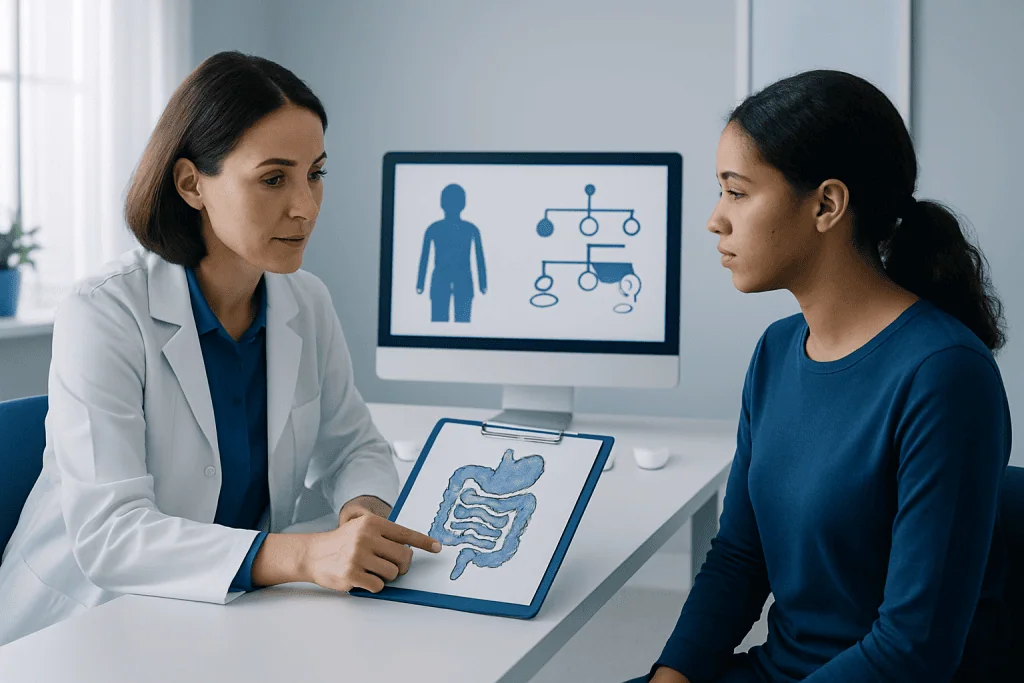
Peutz jeghers syndrome is most commonly caused by a disease-causing change in the STK11 gene, also called LKB1. This gene normally helps regulate cell growth. When it does not work properly, polyps can form and the risk of some cancers increases.
The condition is usually inherited in an autosomal dominant pattern. This means a child can develop the syndrome if they inherit one altered copy of the gene from either parent. A parent with the condition has a 50% chance of passing it on to each child. In some cases, however, the mutation appears for the first time in a person with no previous family history.
The main risk factor is having a parent or close relative with Peutz jeghers syndrome or a confirmed STK11 mutation. A person may also be evaluated if they have typical pigmented spots and characteristic polyps even without known family history. Because this syndrome can overlap with other inherited cancer conditions, doctors may sometimes compare it with related disorders such as familial adenomatous polyposis during assessment.
How doctors diagnose it
Diagnosis is based on a combination of personal history, physical examination, endoscopic findings, pathology, family history, and genetic testing. A doctor may suspect Peutz jeghers syndrome in a person who has characteristic pigmented spots, hamartomatous polyps, repeated bowel obstruction, or relatives with the syndrome.
To look for polyps, doctors may use upper endoscopy, colonoscopy, and imaging or endoscopic tests of the small bowel. Because many polyps in this condition form in the small intestine, specialized assessment is often needed. Tissue removed during a procedure is examined under a microscope to confirm the type of polyp and to look for any concerning changes.
Genetic testing for an STK11 mutation can help confirm the diagnosis and guide family screening. Genetic counseling is valuable before and after testing, because results can affect not only the individual but also parents, siblings, and children. Once the diagnosis is made, the focus shifts from finding the cause to building a lifelong surveillance plan that matches the person’s age, symptoms, and family history.
Treatment options and long-term monitoring
There is no cure that removes the genetic cause of Peutz jeghers syndrome, so treatment aims to prevent complications and detect cancer early. The approach usually includes regular surveillance, endoscopic removal of larger or symptomatic polyps, and surgery when needed for obstruction, intussusception, or polyps that cannot be managed endoscopically.
Many patients need periodic colonoscopy and upper endoscopy to find and remove polyps before they bleed or block the bowel. Small-bowel evaluation may also be recommended at intervals. If a polyp causes severe symptoms or there is concern for a complication, doctors may advise gastrointestinal surgery or another targeted intervention.
Because cancer risk extends beyond the intestines, care often involves more than one specialty. Depending on age and sex, a person may need breast screening, pancreatic surveillance in selected cases, gynecologic follow-up, testicular examination, and other assessments. If cancer is detected, treatment depends on the organ involved and may include options such as oncology care. In complex cases, doctors may also evaluate for overlap with inherited tumor syndromes such as hereditary cancer syndrome.
Management is highly individualized. Children may need closer attention for bowel complications, while adults often require structured cancer surveillance. Near the end of the care pathway, some international patients choose centers such as Acibadem International, where multidisciplinary specialists in JCI-accredited hospitals evaluate inherited gastrointestinal syndromes and coordinate diagnosis, endoscopy, surgery, and long-term follow-up.
Prevention, self-care, and family planning
Peutz jeghers syndrome itself cannot be prevented because it is genetic, but many of its complications can be reduced with regular surveillance and timely treatment. Keeping scheduled endoscopic exams and cancer screening appointments is one of the most important parts of self-care. Missing follow-up can allow polyps to grow unnoticed or delay the detection of an early cancer.
People with the syndrome should tell every new doctor about their diagnosis, especially before treatment for abdominal pain, anemia, or unexplained bleeding. It can also help to keep a personal record of prior scopes, surgeries, pathology results, and genetic testing. This makes long-term care easier when several specialists are involved.
Healthy lifestyle choices cannot remove the inherited risk, but they still support overall health. Avoiding tobacco, limiting alcohol, maintaining a balanced diet, being physically active, and managing weight may help reduce general cancer risk and improve recovery from procedures. Families may also consider genetic counseling before pregnancy or when discussing whether relatives should be tested.
When to seek medical care
Medical advice is important if a person has repeated abdominal pain, blood in the stool, unexplained anemia, dark spots around the lips or inside the mouth, or a strong family history of intestinal polyps or certain cancers. Early evaluation can help clarify whether symptoms are due to Peutz jeghers syndrome or another digestive condition.
Urgent care is needed for sudden severe abdominal pain, repeated vomiting, a swollen abdomen, inability to pass stool or gas, fainting, heavy rectal bleeding, or signs of dehydration. These symptoms may point to bowel obstruction, intussusception, or significant bleeding and should not be ignored.
Anyone already diagnosed with Peutz jeghers syndrome should contact their doctor promptly if symptoms change, if new bleeding develops, or if they are unsure when surveillance is due. Because the condition affects several organs over time, regular communication with a qualified specialist is an important part of safe, reassuring long-term care.
Frequently asked questions
Is Peutz jeghers syndrome cancer?
No. Peutz jeghers syndrome is not a cancer itself. It is an inherited condition that causes polyps and increases the risk of developing certain cancers over time, which is why regular screening is so important.
What are the first signs of Peutz jeghers syndrome?
Early signs often include dark pigmented spots on the lips, inside the mouth, or on the fingers and toes. Some people first notice abdominal pain, bowel symptoms, bleeding, or anemia caused by intestinal polyps.
Can someone have Peutz jeghers syndrome without a family history?
Yes. Although it is usually inherited, some people develop the condition because of a new genetic change that was not present in their parents. In these cases, there may be no known family history at the time of diagnosis.
How is Peutz jeghers syndrome treated?
Treatment focuses on monitoring and managing complications rather than curing the genetic cause. Doctors usually recommend regular endoscopy and imaging, removal of significant polyps, and surgery if there is obstruction, intussusception, or another urgent problem.
At what age does screening begin?
Screening often begins in childhood or adolescence, especially if there is a family history or symptoms appear early. The exact schedule depends on age, symptoms, genetic findings, and specialist guidance.
Do all polyps in Peutz jeghers syndrome turn into cancer?
No. The characteristic hamartomatous polyps are usually benign. However, they can cause bleeding or bowel blockage, and people with the syndrome have a higher overall cancer risk, so surveillance remains essential.
References
- National Cancer Institute
- National Institute of Diabetes and Digestive and Kidney Diseases
- American College of Gastroenterology
- National Organization for Rare Disorders
- GeneReviews
This article is for general information only and is not a substitute for professional medical advice. Please consult a qualified doctor about your individual situation.
Persistent digestive symptoms? Get evaluated in Turkey
JCI-accredited · board-certified surgeons · reply within 24h
Add us as a Preferred Source to see more of our trusted health content across Google Search, AI Overviews and Discover.