Neoplastic: A Complete Medical Overview

Neoplastic means involving a neoplasm, or abnormal tissue growth caused by uncontrolled cell multiplication. A neoplastic growth can be benign, premalignant, or malignant.
Key Takeaways
- Neoplastic means involving a neoplasm, or abnormal tissue growth caused by uncontrolled cell multiplication.
- A neoplastic growth can be benign, premalignant, or malignant.
- Symptoms depend on the organ involved and some neoplasms cause no symptoms at first.
- Diagnosis usually combines a medical history, examination, imaging, laboratory tests, and often a biopsy.
- Treatment may include observation, surgery, medicines, radiation therapy, or combined cancer care.
- Prompt evaluation is important for unexplained lumps, bleeding, weight loss, or persistent symptoms.
Neoplastic refers to abnormal new growth of cells or tissue, called a neoplasm. A neoplastic change may be benign, premalignant, or malignant, so the term itself does not always mean cancer but it does usually require medical assessment.
What does neoplastic mean?
Neoplastic is a medical term used to describe abnormal new growth of cells or tissue. This growth is called a neoplasm. In everyday language, a neoplasm may be referred to as a tumor, mass, lesion, or growth, depending on where it appears and how it behaves.
The word neoplastic does not automatically mean cancer. Some neoplasms are benign, meaning they do not invade nearby tissues or spread to other parts of the body. Others are malignant, which means they are cancerous and can grow into surrounding structures or metastasize. There are also premalignant or precancerous changes, where cells are abnormal and have a higher chance of becoming cancer over time.
This distinction matters because the same term may appear on scans, pathology reports, or clinic notes before a final diagnosis is known. For example, a radiology report may describe a neoplastic process when an imaging finding looks suspicious for abnormal growth but still needs further testing to identify exactly what it is.
How neoplastic conditions differ from cancer
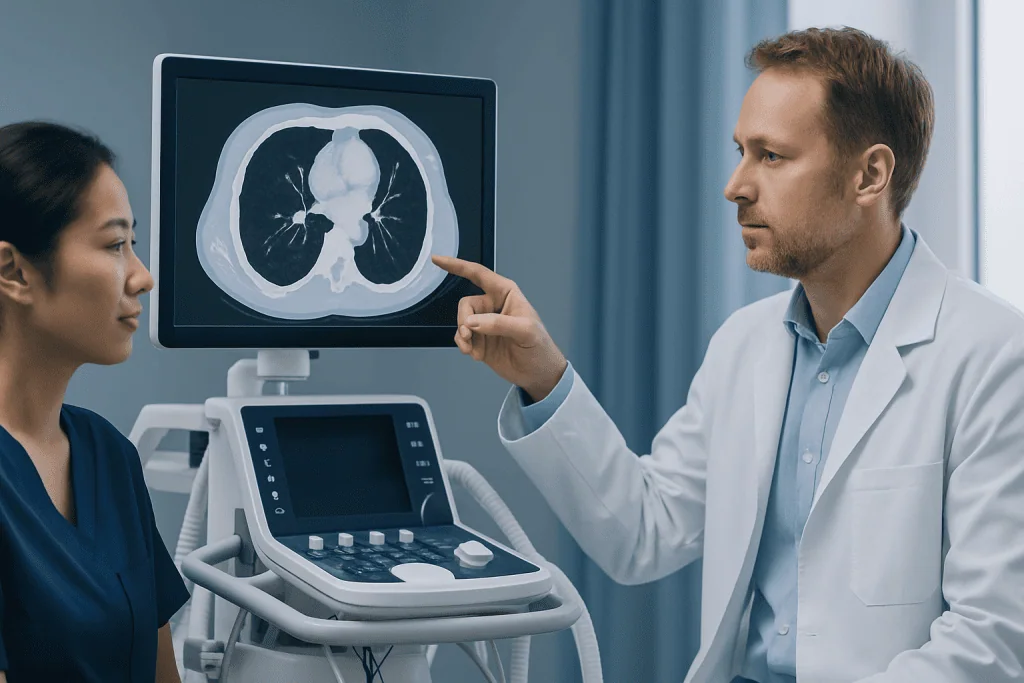
Neoplastic conditions include a wide spectrum of disorders. A benign neoplasm may grow slowly and remain localized, such as some skin growths, uterine fibroids, or noncancerous colon polyps. A malignant neoplasm is cancer and usually requires more urgent and structured treatment.
Doctors often classify neoplastic conditions by behavior, cell type, and organ of origin. For example, epithelial tumors arise from lining tissues, while sarcomas arise from connective tissue, and hematologic neoplasms affect blood-forming cells. A neoplastic lesion in the lung is assessed differently from a neoplastic lesion in the brain or thyroid because each tissue has its own pattern of disease.
Some reports also use related terms such as cancer, tumor, mass, nodule, dysplasia, or neoplasm. These terms are not interchangeable in every situation, but they all point to the need for careful interpretation by a qualified clinician. The final diagnosis usually depends on pathology, which looks at cells or tissue under a microscope.
Symptoms and possible warning signs

Neoplastic conditions do not cause one single set of symptoms. Signs depend on the size of the growth, the organ involved, whether nearby tissues are compressed, and whether the lesion is benign or malignant. Some people have no symptoms at all and a neoplasm is found incidentally during imaging or routine screening.
When symptoms do occur, they may include a new lump, swelling, pain, persistent fatigue, unexplained weight loss, changes in bowel or bladder habits, unusual bleeding, ongoing cough, difficulty swallowing, headaches, or skin changes. In some cases, hormone-producing tumors can lead to symptoms such as palpitations, sweating, blood pressure changes, or metabolic abnormalities.
Symptoms can be subtle and overlap with many non-neoplastic conditions. A persistent breast lump, for instance, may represent a benign cyst, but it still needs evaluation. Similarly, rectal bleeding may result from hemorrhoids, yet it can also be linked to polyps or colon cancer, so medical review is important if symptoms continue.
- Symptoms lasting more than a few weeks deserve attention.
- Rapidly growing masses should be assessed promptly.
- Any unexplained bleeding, persistent pain, or major change from a person’s usual health pattern should be discussed with a doctor.
Causes and risk factors
Neoplastic growth develops when genetic changes in cells disrupt normal controls on cell division, repair, and cell death. These changes may be inherited, acquired over time, or triggered by environmental and lifestyle factors. In many people, no single cause can be identified.
Known risk factors vary by disease type but can include increasing age, tobacco use, alcohol use, obesity, chronic inflammation, certain infections, radiation exposure, long-term ultraviolet exposure, occupational chemicals, and some inherited syndromes. Hormonal influences and immune system suppression can also play a role in particular neoplasms.
Not every person with risk factors develops a neoplastic disease, and some people develop one without any clear risks. This is one reason doctors look at the whole picture rather than relying on a single symptom or exposure. Family history, personal medical history, and the location of the lesion all guide the next steps.
Prevention can reduce risk for some neoplasms, especially those linked to smoking, sun exposure, poor diet, lack of screening, or certain infections. Still, prevention does not eliminate risk completely, so awareness and timely checkups remain important.
How doctors diagnose a neoplastic lesion
Diagnosis usually starts with a medical history and physical examination. A doctor will ask when the symptom began, whether it is changing, and whether there are related symptoms such as fever, bleeding, weight loss, or fatigue. They may also review family history, smoking history, medications, and prior imaging or biopsies.
Imaging tests help define the size, location, and characteristics of a suspected neoplasm. Depending on the body area, this may include ultrasound, mammography, X-ray, CT, MRI, or PET-CT. Blood tests can sometimes support the assessment, but they rarely confirm the exact diagnosis on their own.
In many cases, a biopsy is the key step because it allows tissue examination under a microscope. The sample may be taken with a needle, endoscopy, or surgery. Pathologists determine whether the lesion is benign or malignant and may perform additional molecular or immunohistochemical tests to guide treatment planning.
If cancer is confirmed, doctors may then stage the disease to see whether it is localized or has spread. Staging helps shape treatment and prognosis. This workup may involve additional scans, endoscopic procedures, or specialized pathology review.
Treatment options for neoplastic disease
Treatment depends on the exact diagnosis, location, size, symptoms, and whether the lesion is benign or malignant. Some benign neoplasms can be monitored if they are small and not causing problems. Others are removed because they are growing, causing symptoms, affecting organ function, or have uncertain features.
Surgery is a common treatment for both benign and malignant neoplasms. It may be used to remove the whole lesion, obtain a diagnosis, relieve pressure on nearby structures, or reduce the amount of tumor before other therapies. When appropriate, minimally invasive techniques may be considered.
For malignant neoplastic disease, care often involves a multidisciplinary plan. Depending on the cancer type, treatment may include medical oncology care, radiation therapy, targeted therapy, immunotherapy, hormonal therapy, or surgical oncology. Some patients receive a combination of treatments over time.
Follow-up is an important part of care. Even after successful treatment, doctors may recommend repeat imaging, endoscopy, blood tests, or physical examinations to monitor for recurrence, progression, or treatment effects. For international patients, Acibadem International’s multidisciplinary specialists and JCI-accredited hospitals diagnose and treat neoplastic conditions with coordinated evaluation and follow-up planning.
Prevention, screening, and self-care
There is no universal way to prevent all neoplastic disease, but healthy habits can lower risk for many conditions. Avoiding tobacco, limiting alcohol, staying physically active, maintaining a healthy weight, protecting the skin from excessive sun, and keeping up with recommended vaccines and screenings are practical steps with long-term benefits.
Screening can help detect some neoplasms before symptoms appear or at an earlier stage when treatment may be simpler. Examples include cervical screening, mammography, colorectal screening, skin checks in high-risk people, and monitoring programs for those with inherited cancer syndromes. Screening advice should be personalized based on age, sex, family history, and medical background.
Self-care after a diagnosis also matters. People benefit from keeping follow-up appointments, understanding their pathology report in plain language, asking about warning signs to watch for, and seeking support for nutrition, mental health, pain, or fatigue when needed. Reliable information and good communication with the care team can reduce uncertainty and help with decision-making.
When to seek medical care
Medical care should be sought for any new or changing lump, unexplained bleeding, persistent pain, ongoing fatigue, unexplained weight loss, or symptoms that continue despite routine self-care. Even when a cause turns out to be benign, evaluation helps clarify the diagnosis and avoid delays if treatment is needed.
Urgent assessment is especially important if there is trouble breathing, severe headache with neurological symptoms, vomiting blood, black stools, seizures, rapidly worsening swelling, or sudden weakness. These symptoms do not always mean a neoplastic emergency, but they should not be ignored.
People who already have a known neoplastic condition should contact their doctor if symptoms worsen, new symptoms appear, or treatment side effects become difficult to manage. Early review often makes next steps clearer and may help prevent complications.
Frequently asked questions
Does neoplastic mean cancer?
Not always. Neoplastic means there is abnormal new growth of cells or tissue, but that growth may be benign, premalignant, or malignant. A biopsy or other diagnostic evaluation is often needed to determine exactly what it is.
What is a neoplasm?
A neoplasm is an abnormal mass of tissue formed when cells grow and divide more than they should. It may be noncancerous or cancerous, depending on how the cells behave and what pathology shows.
Can a benign neoplastic lesion become malignant?
Some benign lesions remain harmless and never become cancer. Others, especially certain polyps or precancerous changes, may carry a risk of progression over time. This is why follow-up and, in some cases, removal are recommended.
How is a neoplastic condition confirmed?
Doctors usually begin with symptoms, examination, and imaging tests. In many cases, confirmation requires a biopsy so a pathologist can examine the tissue and identify the exact type of cells involved.
Are all neoplastic tumors treated with surgery?
No. Some are observed safely, especially if they are small, clearly benign, and not causing symptoms. Others may need medicines, radiation, or combined cancer treatment, depending on the diagnosis and the body area involved.
What symptoms should not be ignored?
Persistent lumps, unexplained bleeding, continuing pain, difficulty swallowing, a lasting cough, major weight loss, or changes in bowel habits should be evaluated. Symptoms do not always mean cancer, but they deserve medical attention if they are new, unexplained, or ongoing.
This article is for general information only and is not a substitute for professional medical advice. Please consult a qualified doctor about your individual situation.
Oncology care in Turkey — second opinion and treatment plan
JCI-accredited · board-certified surgeons · reply within 24h
Add us as a Preferred Source to see more of our trusted health content across Google Search, AI Overviews and Discover.
Check your numbers in seconds
BMI, calories, due date, blood pressure and 30+ more clinical calculators — free, instant, doctor-reviewed ranges.

More from the Health Library

Choking: What Patients Need to Know

Low Porosity Hair — Explained by Medical Evidence, Not Myths

Impaired Fasting Glucose: An Evidence-Based Guide for Patients

Carbonated Water: What Patients Need to Know

Parkinsonism — Explained by Medical Evidence, Not Myths