Radial Nerve — Explained by Medical Evidence, Not Myths

The radial nerve runs from the upper arm into the forearm and hand, controlling key movements and sensation. Common problems include compression, trauma, overuse, and injury associated with arm fractures or prolonged pressure.
Key Takeaways
- The radial nerve runs from the upper arm into the forearm and hand, controlling key movements and sensation.
- Common problems include compression, trauma, overuse, and injury associated with arm fractures or prolonged pressure.
- Symptoms may include weakness in wrist or finger extension, numbness on the back of the hand, or wrist drop.
- Diagnosis often involves a physical examination and sometimes nerve studies or imaging to find the site and cause of injury.
- Many cases improve with rest, splinting, therapy, and treatment of the underlying cause, while severe injuries may need surgery.
The radial nerve helps a person straighten the elbow, wrist, and fingers and carries feeling from part of the back of the hand. When the radial nerve is irritated, compressed, or injured, it can cause pain, numbness, tingling, or weakness such as wrist drop, and treatment depends on the cause and severity.
What the radial nerve is and why it matters
The radial nerve is one of the main nerves of the arm. It begins higher in the arm from the brachial plexus, travels down the upper arm, passes around the humerus, then continues into the forearm and hand. Its job is to help control muscles that straighten the elbow, wrist, and fingers, and to carry sensation from part of the back of the hand and thumb-side forearm.
This means the radial nerve is essential for everyday actions such as pushing up from a chair, gripping while keeping the wrist steady, releasing objects, and lifting the fingers. If the nerve is not working properly, even simple tasks like typing, turning a key, or holding a cup can become difficult.
People often search for the term radial nerve when they notice wrist weakness, numbness on the back of the hand, or pain after pressure on the arm. In medical terms, problems affecting this nerve may be called radial neuropathy or radial nerve palsy. These conditions can range from temporary compression to more serious injury.
How the radial nerve works
The radial nerve supplies several muscles in the arm and forearm. Higher up, it helps with elbow extension through the triceps. Lower down, it powers muscles that extend the wrist and fingers and helps rotate the forearm in certain positions. Because of this broad role, the pattern of weakness can help a doctor tell where along the nerve the problem is located.
The nerve also provides feeling to specific skin areas, especially part of the back of the forearm and the back of the hand near the thumb. Sensory changes do not always involve the whole hand. Instead, a person may notice patchy numbness, tingling, or a “pins and needles” feeling in a more defined area.
Doctors often distinguish between different branches of the radial nerve. One branch is mainly involved in sensation, while the posterior interosseous nerve is mainly a motor branch that controls finger and wrist extension. This is why some people have weakness without much numbness, while others mainly notice sensory symptoms.
Symptoms of radial nerve problems

Symptoms depend on where the nerve is irritated or injured and how severe the damage is. A mild compression may cause temporary tingling or numbness, while a more significant injury can lead to weakness. One of the best-known signs is wrist drop, where the wrist cannot be actively lifted into extension.
Common symptoms can include:
- Weakness when straightening the wrist or fingers
- Difficulty gripping because the wrist cannot stay extended
- Numbness or tingling on the back of the hand, especially near the thumb
- Aching or burning pain in the forearm or upper arm
- Reduced ability to straighten the elbow in higher nerve injuries
Symptoms may begin suddenly after sleeping with pressure on the arm, after an injury, or after repeated strain. In other cases they develop gradually, especially when the nerve is compressed over time. If symptoms involve other nerves too, doctors may also consider broader nerve disorders such as peripheral neuropathy.
Causes and risk factors
Radial nerve problems can happen for several reasons. Compression is a common cause, especially when prolonged pressure is placed on the upper arm. This may occur during deep sleep, intoxication, long periods in one position, or use of poorly fitted crutches. Compression near the forearm can also happen with repetitive twisting motions.
Trauma is another important cause. Fractures of the humerus are well known for affecting the radial nerve because the nerve wraps closely around this bone. Dislocations, cuts, penetrating injuries, or severe bruising can also damage it. In some cases, surgery around the arm or elbow may irritate the nerve temporarily or, less commonly, lead to more significant injury.
Overuse and entrapment can affect one of the nerve’s branches, especially near the elbow or forearm. Repetitive wrist and forearm activities, heavy manual work, or sports involving repeated rotation can contribute. Less commonly, tumors, cysts, inflammation, or systemic conditions such as diabetes may increase vulnerability to nerve dysfunction.
Sometimes the radial nerve symptoms are related to a problem higher up, such as the neck or brachial plexus. Because symptoms can overlap with carpal tunnel syndrome or other nerve compression problems, a careful evaluation is important before deciding on treatment.
How doctors diagnose a radial nerve disorder
Diagnosis begins with a detailed history and physical examination. A doctor usually asks when symptoms started, whether there was pressure, injury, surgery, repetitive activity, or neck pain, and whether weakness or numbness is getting worse. During the exam, they may test muscle strength, reflexes, finger and wrist extension, and the exact area of sensory change.
The pattern of weakness often helps localize the site of injury. For example, inability to extend the fingers and wrist suggests involvement of the radial nerve or one of its motor branches. If elbow extension is also weak, the problem may be higher in the arm. If sensation is normal but weakness is present, a branch such as the posterior interosseous nerve may be affected.
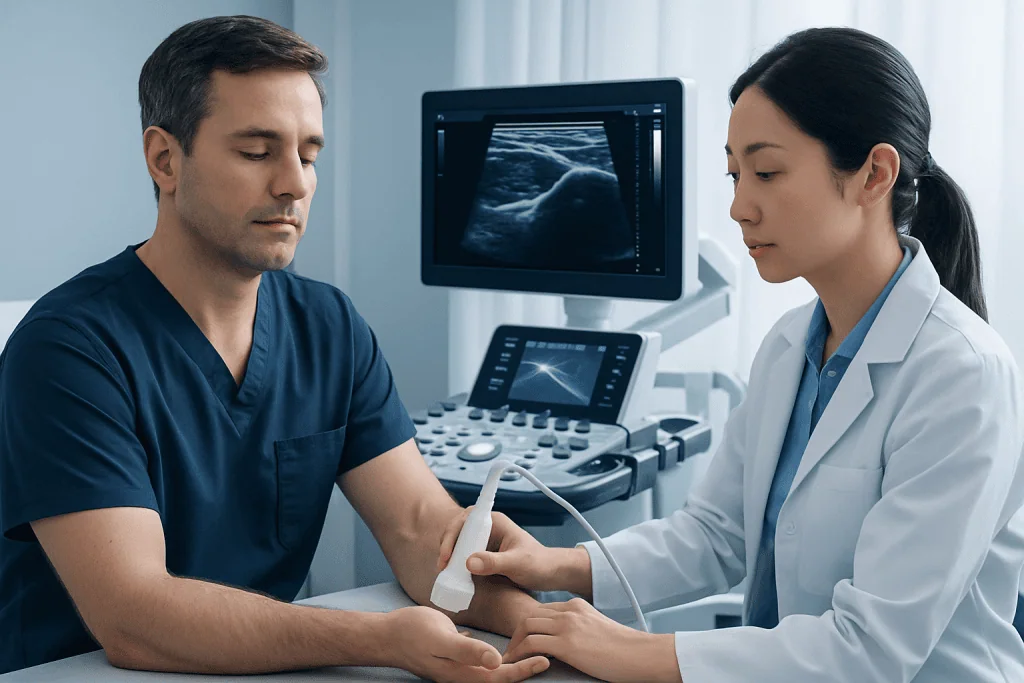
When needed, doctors may recommend nerve conduction studies and electromyography to assess how well the nerve and muscles are functioning. Imaging such as X-ray, ultrasound, or MRI can help identify fractures, masses, inflammation, or compression points. In some situations, especially after trauma, EMG testing can provide useful information about the severity and recovery potential of the nerve.
Treatment options and recovery
Treatment depends on the cause, the location of the problem, and whether the nerve is compressed, stretched, or cut. Many cases caused by pressure or mild irritation improve with time and conservative care. This may include avoiding the provoking position, resting the arm, using a splint to support the wrist, and beginning guided exercises when advised by a clinician.
Medicines may be used to reduce pain or inflammation when appropriate, though they do not directly repair the nerve. Hand therapy or physical therapy is often important to maintain joint motion, prevent stiffness, and strengthen muscles as recovery begins. For some people, a structured physical therapy and rehabilitation plan helps restore daily function and hand use more safely.
If imaging or examination suggests significant entrapment, a structural lesion, or severe traumatic injury, surgery may be considered. Surgical care can involve relieving pressure on the nerve, repairing it, or addressing related injuries such as fractures. In selected cases, peripheral nerve surgery or orthopedic trauma surgery may be part of treatment planning.
Recovery can take weeks to months because nerves heal slowly. Some people improve steadily with conservative treatment, while others need closer follow-up if weakness is pronounced or not improving. Near the end of the care pathway, patients may benefit from multidisciplinary evaluation; Acibadem International’s JCI-accredited hospitals and specialists diagnose and treat nerve conditions for international patients when advanced assessment is needed.
Self-care, prevention, and day-to-day protection
Prevention focuses on reducing avoidable pressure and repetitive strain. People can help protect the radial nerve by avoiding prolonged leaning on the upper arm, taking breaks during repetitive forearm activity, and using ergonomic positions for work and sports. Crutches, casts, or braces should fit properly and be reviewed if they cause numbness or weakness.
When symptoms are mild and a doctor has excluded urgent causes, practical self-care may include resting the arm, avoiding activities that worsen symptoms, and using a prescribed wrist splint if needed. Gentle range-of-motion exercises may be recommended, but forceful stretching or strengthening should not be started without advice when significant weakness is present.
Good overall nerve health also matters. Managing diabetes, avoiding smoking, treating vitamin deficiencies when present, and addressing inflammatory or metabolic conditions can support nerve recovery and lower the risk of further problems. If symptoms recur, repeated self-treatment without evaluation may delay proper diagnosis.
When to seek medical care
Medical evaluation is important if a person develops new wrist drop, cannot straighten the fingers, or notices persistent numbness after an injury or prolonged pressure on the arm. Care is also needed if symptoms are worsening, interfering with daily tasks, or not improving over several days to weeks.
Urgent assessment is especially important after a fracture, deep cut, severe arm pain, or any accident involving possible nerve injury. A person should also seek prompt care if symptoms come with neck pain, widespread weakness, loss of coordination, or signs affecting more than one limb, because these may point to a different neurological problem.
Even when symptoms seem mild, an accurate diagnosis can help prevent stiffness, loss of function, or delayed healing. A qualified doctor can determine whether the problem is a temporary compression, a branch entrapment, or another condition that needs targeted treatment.
Frequently asked questions
What does the radial nerve do?
The radial nerve helps control muscles that straighten the elbow, wrist, and fingers. It also carries feeling from part of the back of the hand and forearm.
What are the signs of radial nerve injury?
Common signs include weakness when lifting the wrist or fingers, numbness on the back of the hand, tingling, and forearm discomfort. In more significant cases, wrist drop can occur, meaning the wrist cannot be actively extended.
Can a radial nerve injury heal on its own?
Some radial nerve injuries do improve on their own, especially if they are caused by temporary pressure or mild stretching. Recovery depends on the cause and severity, so medical follow-up is important if weakness or numbness is significant or persistent.
How is radial nerve damage diagnosed?
Doctors diagnose radial nerve problems using a history, physical examination, and sometimes nerve conduction studies, electromyography, or imaging. These tests help locate the problem and show whether the nerve is compressed, inflamed, or more seriously injured.
Is wrist drop always caused by the radial nerve?
Wrist drop is commonly linked to the radial nerve, but it is not the only possible cause. Problems affecting the brain, spinal cord, or other parts of the peripheral nervous system may produce similar weakness, so proper evaluation matters.
When should someone see a doctor for radial nerve symptoms?
A person should seek medical care if they suddenly cannot extend the wrist or fingers, if numbness persists, or if symptoms follow trauma. Prompt evaluation is also wise when symptoms are getting worse or affecting daily function.
This article is for general information only and is not a substitute for professional medical advice. Please consult a qualified doctor about your individual situation.
Explore treatments in Turkey — costs, top hospitals & a free quote
JCI-accredited · board-certified surgeons · reply within 24h
Add us as a Preferred Source to see more of our trusted health content across Google Search, AI Overviews and Discover.

More from the Health Library

Black Fungus: An Evidence-Based Guide for Patients

Strong Coffee: A Complete Medical Overview

Non Rebreather Mask: A Complete Medical Overview

Sinus Pressure Without Congestion: An Evidence-Based Guide for Patients

Oxalate: What Patients Need to Know