Non Rebreather Mask: A Complete Medical Overview
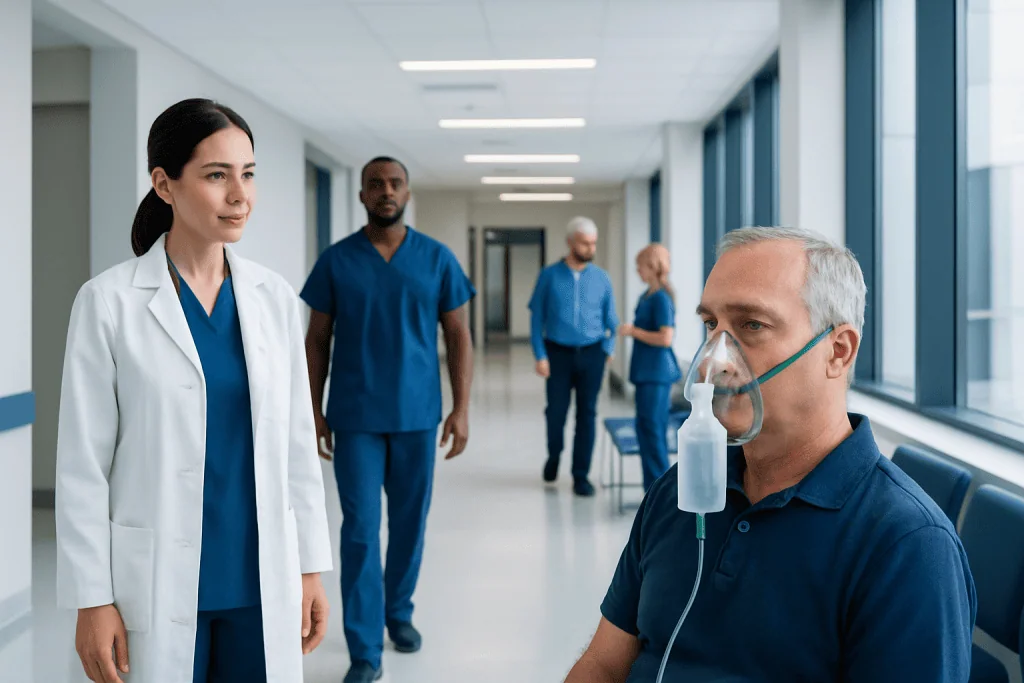
A non rebreather mask can deliver a high concentration of oxygen through a face mask attached to a reservoir bag. It is usually used for short-term care in emergencies, ambulances, emergency departments, and hospital wards.
Key Takeaways
- A non rebreather mask can deliver a high concentration of oxygen through a face mask attached to a reservoir bag.
- It is usually used for short-term care in emergencies, ambulances, emergency departments, and hospital wards.
- The person must generally be able to breathe spontaneously; it is not a substitute for a ventilator.
- Common reasons for use include low blood oxygen, serious breathing distress, trauma, smoke exposure, and some heart or lung emergencies.
- Safe use depends on proper fit, oxygen flow, and close monitoring by trained healthcare professionals.
A non rebreather mask is a medical oxygen device that helps deliver a high concentration of oxygen to people who are breathing on their own but need urgent support. It is commonly used in emergency, hospital, and ambulance settings for short-term treatment while the care team evaluates the cause of low oxygen.
Overview: What a Non Rebreather Mask Is
A non rebreather mask is a face mask used to give a high concentration of oxygen to a person who is still breathing on their own. It connects to an oxygen source and a reservoir bag, allowing the patient to inhale oxygen-rich air with each breath. In practical terms, it is often chosen when standard low-flow oxygen is not enough and rapid oxygen support is needed.
The name can sound technical, but the purpose is straightforward: to help increase the amount of oxygen reaching the lungs and bloodstream during a medical problem. Small one-way valves help reduce the amount of room air that mixes with the oxygen and limit rebreathing of exhaled air. This design allows the mask to deliver more oxygen than devices such as a nasal cannula or a simple face mask.
A non rebreather mask is usually a short-term tool rather than a long-term treatment. It is commonly seen in ambulances, emergency departments, intensive care areas, and hospital wards while clinicians assess the cause of low oxygen levels and decide what further treatment may be needed.
How a Non Rebreather Mask Works
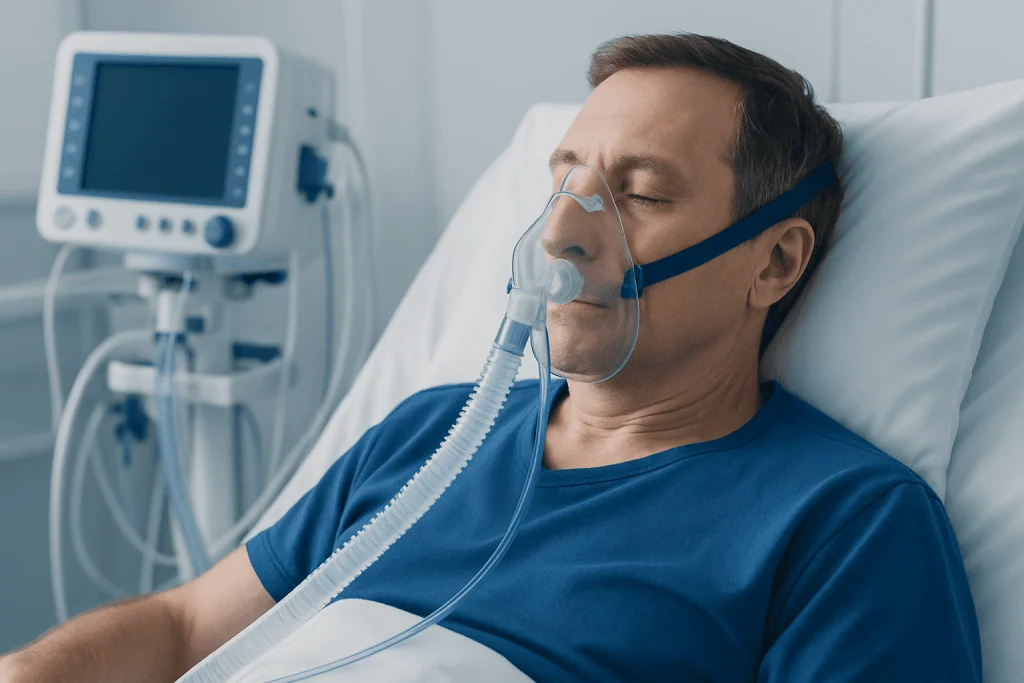
The mask covers the nose and mouth and is connected to a soft reservoir bag. Oxygen flows continuously into the bag from the wall supply or an oxygen cylinder. When the person breathes in, oxygen is drawn from the reservoir and through the mask, helping deliver a higher oxygen concentration than many other basic oxygen devices.
One-way valves are an important part of the system. These valves help keep exhaled air from flowing back into the reservoir bag and also reduce the amount of outside air that enters through the side ports. Because of this setup, the patient can receive oxygen at a relatively high concentration, although the exact amount varies depending on mask fit, breathing pattern, and oxygen flow.
To work properly, the reservoir bag should remain at least partly inflated during breathing. If the bag collapses completely, the oxygen flow may be too low for the person’s needs. This is one reason a non rebreather mask should be applied and monitored by trained professionals who can adjust the setup and assess whether a different form of support is necessary.
When It Is Used and Who May Need It
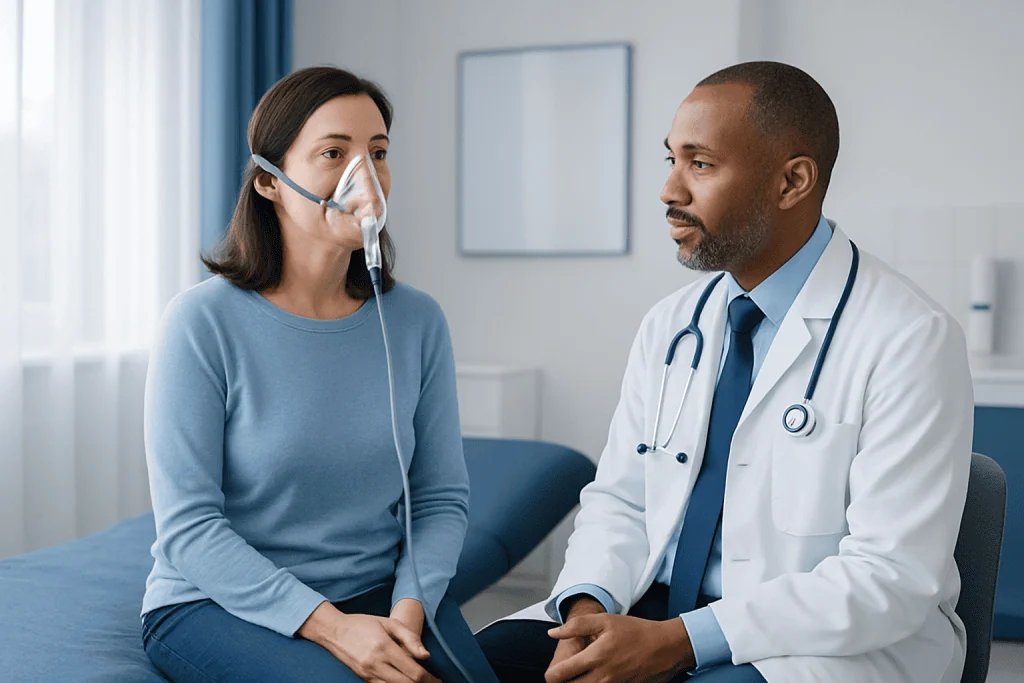
Healthcare teams may use a non rebreather mask when someone has signs of significantly reduced oxygen levels or moderate to severe breathing distress. Examples include pneumonia, severe asthma symptoms, worsening chronic lung disease, chest trauma, major infection, smoke inhalation, shock, or certain heart conditions that reduce oxygen delivery to the body. It may also be used while preparing for further tests or more advanced respiratory support.
The mask is intended for people who are breathing spontaneously. In other words, the person can still take breaths on their own, even if breathing is fast, difficult, or not providing enough oxygen. If breathing becomes too weak or stops, more advanced airway support may be needed, such as bag-mask ventilation or mechanical ventilation.
Because oxygen need can be related to many different illnesses, a non rebreather mask is only one part of care. Clinicians also look for the cause of the problem, which may include conditions such as lung cancer or severe respiratory infection. Depending on the situation, further evaluation may involve blood tests, pulse oximetry, imaging, and specialist care.
Benefits, Limits, and Possible Risks
The main benefit of a non rebreather mask is that it can provide high-concentration oxygen quickly and without invasive procedures. This makes it especially useful during emergency stabilization. It is widely available, simple to apply, and can buy valuable time while doctors treat the underlying medical issue.
However, it also has limitations. It does not breathe for the patient, and it does not guarantee a fixed oxygen percentage in every case. Oxygen delivery can be reduced by a poor mask seal, mouth shape, facial hair, patient movement, or a breathing pattern that is faster or deeper than the oxygen flow can support.
Like any medical device, there are possible risks if it is used incorrectly or without monitoring. These can include discomfort, dryness, skin pressure on the face, anxiety or claustrophobia, and inadequate oxygen delivery if the reservoir bag is not properly inflated. In some people with chronic carbon dioxide retention, oxygen therapy may need especially careful supervision. For this reason, treatment decisions are based on the whole clinical picture, not the mask alone.
- Useful for rapid, short-term oxygen support
- Not a replacement for a ventilator
- Requires proper fit and oxygen flow
- Should be monitored by healthcare professionals
How It Compares With Other Oxygen Devices
A non rebreather mask is one option among several oxygen delivery devices. A nasal cannula is often more comfortable and allows speaking and eating more easily, but it usually provides lower oxygen concentrations. A simple face mask can deliver more oxygen than a nasal cannula, yet generally less than a non rebreather mask.
In some cases, clinicians may choose a Venturi mask, which is designed to deliver a more controlled and predictable oxygen concentration. This can be especially useful when precise oxygen delivery matters. In patients with more serious respiratory failure, a high-flow nasal oxygen system, noninvasive ventilation, or mechanical ventilation may be more appropriate than a non rebreather mask.
The best choice depends on the person’s oxygen level, breathing effort, medical history, and response to treatment. If the cause is thought to involve a structural lung problem, imaging and specialist evaluation may be needed, sometimes with tests such as bronchoscopy or respiratory assessment and treatment.
Monitoring, Diagnosis, and What Happens Next
When a non rebreather mask is applied, the medical team does more than simply place oxygen on the face. They monitor pulse oximetry, respiratory rate, heart rate, blood pressure, and the person’s general level of alertness. If oxygen levels do not improve or symptoms worsen, the team may quickly escalate care.
Finding the cause of low oxygen is an essential part of treatment. Evaluation may include a physical examination, chest X-ray, electrocardiogram, blood tests, and sometimes arterial blood gas analysis. In some cases, a chest medical check-up may lead to broader assessment of the heart, lungs, and circulation.
Treatment after initial oxygen support depends on the diagnosis. A person with infection may need antibiotics, someone with fluid in the lungs may need medications and cardiac assessment, and a person with a blocked airway may need urgent airway management. If a more serious lung disease is suspected, doctors may also assess for pneumonia or other acute respiratory conditions.
When to Seek Medical Care
A non rebreather mask is not a home wellness product for self-directed use in ordinary shortness of breath. It is generally a medical device used in supervised settings. Anyone with sudden or worsening breathing difficulty should seek urgent medical care rather than trying to manage severe symptoms alone.
Immediate medical attention is important if a person has bluish lips, chest pain, confusion, severe wheezing, noisy breathing, fainting, inability to speak full sentences, or signs that breathing is becoming exhausted. Emergency care is also needed after smoke inhalation, significant trauma, or a suspected allergic reaction with breathing symptoms.
If symptoms are milder but recurring, a doctor should still assess them. Ongoing cough, repeated shortness of breath, unexplained fatigue, or low oxygen readings on a home device can have many causes and deserve proper evaluation. Near the end of the care pathway, patients may also benefit from multidisciplinary follow-up; Acibadem International’s specialists in JCI-accredited hospitals diagnose and treat respiratory and related conditions for international patients.
Frequently asked questions
What does a non rebreather mask do?
A non rebreather mask helps deliver a high concentration of oxygen to someone who is breathing on their own but needs urgent oxygen support. It uses a face mask and a reservoir bag to provide oxygen-rich air with each breath.
How much oxygen can a non rebreather mask provide?
It can provide a high concentration of oxygen, but the exact amount varies. Delivery depends on oxygen flow, mask fit, and how the person is breathing, so clinicians monitor the patient closely rather than relying on a single fixed number.
Is a non rebreather mask the same as a ventilator?
No. A non rebreather mask gives oxygen, but it does not mechanically breathe for the patient. If a person cannot breathe adequately on their own, more advanced support such as ventilation may be needed.
Can a non rebreather mask be used at home?
In general, it is mainly used in supervised medical settings such as ambulances, emergency departments, and hospitals. Because it requires the correct oxygen flow and monitoring, it is not typically used for routine unsupervised home care.
What is the difference between a non rebreather mask and a nasal cannula?
A nasal cannula delivers oxygen through small prongs in the nose and is usually used for lower levels of oxygen support. A non rebreather mask covers the nose and mouth and is used when a much higher oxygen concentration is needed quickly.
Are there risks with a non rebreather mask?
Most risks relate to improper fit, insufficient oxygen flow, or lack of monitoring. The mask can also feel uncomfortable or claustrophobic for some people, so healthcare staff check both oxygen levels and overall breathing status during use.
References
- World Health Organization
- American Thoracic Society
- National Heart, Lung, and Blood Institute
- Centers for Disease Control and Prevention
- MedlinePlus
This article is for general information only and is not a substitute for professional medical advice. Please consult a qualified doctor about your individual situation.
Explore treatments in Turkey — costs, top hospitals & a free quote
JCI-accredited · board-certified surgeons · reply within 24h
Add us as a Preferred Source to see more of our trusted health content across Google Search, AI Overviews and Discover.

More from the Health Library

Celestone Injection: An Evidence-Based Guide for Patients

Injectable Fillers for Jawline: An Evidence-Based Guide for Patients

Anxiety Tics: An Evidence-Based Guide for Patients

Lipedema Versus Cellulite: An Evidence-Based Guide for Patients

Hld Medical Abbreviation: What Patients Need to Know