Clock Drawing: A Complete Medical Overview

Clock drawing is a screening tool, not a stand-alone diagnosis. It helps assess attention, planning, visual-spatial skills, and understanding of instructions.
Key Takeaways
- Clock drawing is a screening tool, not a stand-alone diagnosis.
- It helps assess attention, planning, visual-spatial skills, and understanding of instructions.
- Abnormal results can be seen with dementia, stroke, delirium, or other brain and medical conditions.
- Performance may also be affected by poor vision, limited education, language barriers, or hand problems.
- A doctor interprets clock drawing together with history, examination, and sometimes lab tests or brain imaging.
Clock drawing is a simple bedside cognitive screening task in which a person is asked to draw a clock and set the hands to a specific time. It can reveal changes in thinking skills such as attention, planning, visual-spatial ability, and memory, but it is only one part of a full medical assessment.
Overview: What clock drawing is
Clock drawing is a brief cognitive screening task used in clinics, hospitals, and memory evaluations. A healthcare professional may ask a person to draw the face of a clock, place the numbers correctly, and set the hands to a particular time such as “10 past 11.” The task seems simple, but it requires several brain functions to work together.
To complete clock drawing accurately, a person must understand the instruction, remember the request, organize space on the page, plan where numbers belong, and place the hands correctly. Because so many abilities are involved, the test can offer useful clues when doctors are concerned about changes in thinking, confusion, or possible neurological illness.
Clock drawing is popular because it is quick, low-cost, and easy to perform in many settings. It may be used during routine cognitive screening in older adults, after an episode of confusion, or as part of an evaluation for memory complaints. However, it does not by itself confirm or rule out a disease. Instead, it helps guide whether more detailed assessment is needed.
What the test can show
Clock drawing is not just a “memory test.” It reflects several parts of cognition at once. Doctors look at whether the circle is reasonably formed, whether the numbers are present and spaced correctly, whether the hands point to the requested time, and whether the overall drawing suggests organized thinking.
The task can provide information about:
- Attention and concentration
- Ability to understand spoken instructions
- Planning and executive function
- Visual-spatial skills
- Working memory
- Motor execution and coordination
An unusual drawing can sometimes point toward cognitive impairment, but the pattern matters. For example, numbers crowded on one side of the clock may raise concern about spatial problems, while incorrect hand placement may suggest difficulty understanding time concepts or following multistep instructions. Interpretation should always be done by a trained professional who can consider the full clinical picture.
Because performance depends on many abilities, a poor result is not specific to one diagnosis. It may be seen in people with Alzheimer’s disease, vascular cognitive impairment, certain stroke effects, delirium, traumatic brain injury, or other neurological and medical problems. It can also be normal in someone with mild symptoms, especially early in a condition.
How clock drawing is performed and scored

There are different versions of the clock drawing test. In one common approach, the person is given a blank sheet and asked to “draw a clock, put in all the numbers, and set the hands to 11:10.” In another version, the circle is already printed and the person fills in the numbers and hands. Small differences in instructions can change how difficult the task is.
Scoring methods also vary. Some systems use a simple pass-or-fail approach, while others assign points for the circle, number placement, sequencing, and hand position. In practice, many clinicians consider both the numerical score and the overall pattern of errors. A drawing may be informative even when the score looks only mildly abnormal.
The test is often combined with other brief screening tools, such as short memory or orientation questions. If a doctor needs a more complete picture, they may recommend a formal cognitive evaluation, sometimes including neuropsychological testing to examine memory, language, attention, and problem-solving in greater detail.
One important point is that clock drawing should be administered in an appropriate setting. Hearing problems, poor lighting, language mismatch, anxiety, fatigue, or unclear instructions can affect performance. Repeating the task under better conditions may sometimes produce a different result.
When results may be abnormal
An abnormal clock drawing can happen for many reasons, and not all of them mean progressive dementia. Acute confusion from infection, dehydration, medication side effects, or hospitalization can affect attention and thinking. In these situations, the problem may improve once the underlying medical issue is treated.
Neurological disorders can also affect clock drawing. Changes may be seen in degenerative conditions such as Parkinson’s disease with cognitive involvement, Alzheimer’s disease, or other dementias. Problems with number placement or spatial organization may also occur after a stroke or with disorders that affect the right side of the brain.
Some non-neurological factors can reduce performance as well. Examples include poor vision, tremor, arthritis in the hands, low literacy, limited familiarity with analog clocks, depression, severe anxiety, or language barriers. For this reason, doctors do not interpret the drawing in isolation.
Even a normal result does not guarantee that cognition is entirely normal. Very mild or early cognitive changes may not appear on a brief screening task. If symptoms persist despite a normal clock drawing test, further evaluation may still be appropriate.
How doctors evaluate an abnormal clock drawing
If clock drawing raises concern, the next step is usually a fuller medical assessment rather than an immediate conclusion. A clinician will ask about symptoms, when they began, whether they are stable or worsening, and how they affect daily life. Family members or caregivers may provide valuable observations about missed appointments, medication errors, getting lost, or changes in judgment.
The doctor may also review medications, sleep, mood, alcohol use, recent illness, and past medical history. Conditions such as thyroid disease, vitamin deficiencies, infection, depression, and sleep disorders can contribute to cognitive symptoms. A neurological examination helps look for weakness, tremor, balance changes, reflex abnormalities, or other signs that point toward a specific cause.
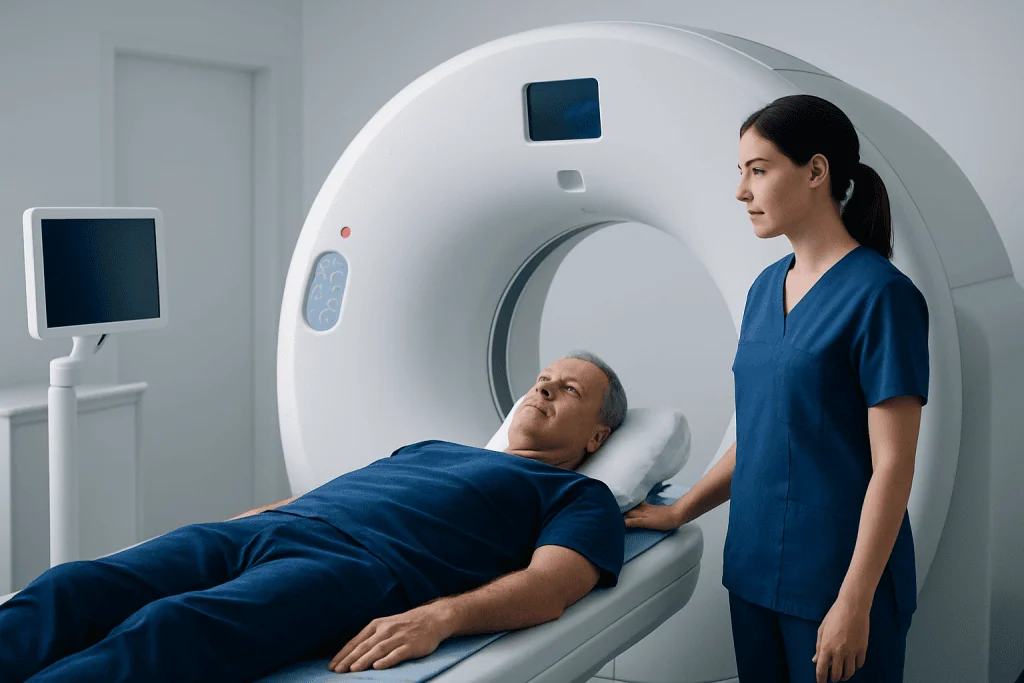
Additional tests may include blood work and, in some cases, MRI or CT scan of the brain. The goal is not simply to label the problem, but to identify whether there is a reversible issue, a vascular cause, a neurodegenerative condition, or another explanation that needs treatment.
When concerns remain, referral to a neurologist, geriatrician, psychiatrist, or memory clinic may be recommended. Some patients benefit from formal cognitive testing because it provides a more detailed profile of strengths and weaknesses than a single screening task can offer.
What happens after the test
What happens after clock drawing depends on the result and the person’s symptoms. If the drawing is normal and there are no other concerning signs, the doctor may simply continue routine monitoring. If symptoms are present, they may repeat screening later or arrange additional evaluation even if the clock looks acceptable.
If the result is abnormal, treatment is directed at the underlying cause rather than the drawing itself. For example, confusion caused by infection or medication side effects is managed differently from cognitive decline caused by a neurodegenerative disorder. A stroke-related problem may lead to rehabilitation, risk-factor control, and specialist follow-up.
Supportive care can also be important. Depending on the diagnosis, this may include medication review, treatment of hearing or vision problems, management of sleep and mood disorders, occupational therapy, physical activity, and practical strategies to support daily function. Families often benefit from clear communication about what changes have been noticed and what steps are recommended next.
For international patients who need comprehensive assessment, Acibadem International’s multidisciplinary specialists and JCI-accredited hospitals evaluate cognitive and neurological symptoms using modern diagnostic approaches and coordinated care.
Prevention, self-care, and when to seek medical care
Clock drawing itself is not something a person can “improve” through self-treatment if a medical condition is causing the problem. Still, general brain health measures may help support cognitive function over time. These include controlling blood pressure, diabetes, and cholesterol; staying physically active; sleeping well; limiting alcohol; avoiding smoking; treating hearing loss when present; and remaining socially and mentally engaged.
It is also helpful to track symptoms in a practical way. Family members may notice repeated questions, trouble managing finances, missed medications, getting lost in familiar places, or changes in language and judgment before the patient does. Writing down examples can help the doctor understand whether there has been meaningful change.
Medical care should be sought promptly if new confusion develops suddenly, especially if it appears over hours or days. Urgent evaluation is also important for confusion accompanied by fever, severe headache, weakness, facial droop, speech trouble, falls, or reduced alertness, because these symptoms can signal a medical emergency.
A non-urgent appointment is appropriate if memory or thinking problems are mild but persistent, or if family members have noticed gradual decline over months. Early assessment can help identify reversible causes, guide treatment, and support planning before symptoms begin to interfere more significantly with daily life.
Frequently asked questions
What is clock drawing used for?
Clock drawing is used as a brief screening tool to look for possible problems with thinking skills. It can help identify changes in planning, attention, visual-spatial ability, and understanding of instructions, but it is not a diagnosis by itself.
Does a failed clock drawing test mean dementia?
No. An abnormal result can happen with dementia, but it can also be caused by delirium, stroke, medication effects, depression, poor vision, or difficulty using the hand. Doctors interpret the test together with symptoms, examination findings, and sometimes further testing.
Can someone have a normal clock drawing test and still have memory problems?
Yes. A person may have early or mild cognitive changes that do not clearly appear on a brief screening task. If memory concerns continue despite a normal result, a clinician may still recommend additional evaluation.
How long does the clock drawing test take?
It usually takes only a few minutes. The exact time depends on the version used and whether it is combined with other short cognitive screening questions.
What kinds of mistakes do doctors look for on clock drawing?
Doctors look at number placement, spacing, sequencing, hand position, and whether the drawing is organized overall. Specific error patterns may suggest difficulty with planning, spatial awareness, comprehension, or memory.
Should a person practice before a clock drawing test?
Routine practice is generally not necessary, because the test is meant to reflect usual cognitive function. If someone has concerns about memory or thinking, it is better to discuss those concerns openly with a qualified doctor than to focus on practicing one screening task.
This article is for general information only and is not a substitute for professional medical advice. Please consult a qualified doctor about your individual situation.
Explore treatments in Turkey — costs, top hospitals & a free quote
JCI-accredited · board-certified surgeons · reply within 24h
Add us as a Preferred Source to see more of our trusted health content across Google Search, AI Overviews and Discover.

More from the Health Library

Taste Buds — Explained by Medical Evidence, Not Myths

Bloody flux: Symptoms, Causes, and Treatment — Complete Patient Guide

Sickness of Liver: What Patients Need to Know

Formula Milk for Reflux: A Complete Medical Overview

Tylenol 3: An Evidence-Based Guide for Patients