Annular Fissure — Explained by Medical Evidence, Not Myths

An annular fissure affects the outer layer of a spinal disc and is also called an annular tear. Some annular fissures cause no symptoms and are found incidentally on imaging.
Key Takeaways
- An annular fissure affects the outer layer of a spinal disc and is also called an annular tear.
- Some annular fissures cause no symptoms and are found incidentally on imaging.
- When symptoms occur, they often include localized back or neck pain and sometimes nerve-related symptoms if nearby structures are irritated.
- Diagnosis relies on a medical history, physical examination, and sometimes MRI when symptoms persist or warning signs are present.
- Most people improve with nonsurgical care such as guided exercise, posture support, and pain management.
- Urgent medical review is important for severe weakness, bowel or bladder changes, fever, or significant trauma.
An annular fissure is a small split or tear in the tough outer ring of an intervertebral disc. It can be painless or cause back or neck pain, and treatment usually begins with activity changes, physical therapy, and other conservative measures rather than surgery.
What an Annular Fissure Means
An annular fissure is a small crack, split, or separation in the annulus fibrosus, the strong outer ring of a spinal disc. Spinal discs sit between the vertebrae and act like cushions that help absorb force and support movement. In many people, an annular fissure is part of disc wear over time rather than a dangerous injury.
The term is often used interchangeably with annular tear. Despite the word “tear,” this finding does not always mean major damage or a need for surgery. Some people have no symptoms at all, while others feel pain because the outer disc layer contains nerve fibers and can become inflamed.
Annular fissures most often affect the lower back, but they can also occur in the neck. Symptoms depend on the size and location of the fissure, whether nearby nerves are irritated, and whether there are other disc changes such as a bulge or herniation. This is why imaging findings alone do not always explain how a person feels.
How It Differs From Other Disc Problems
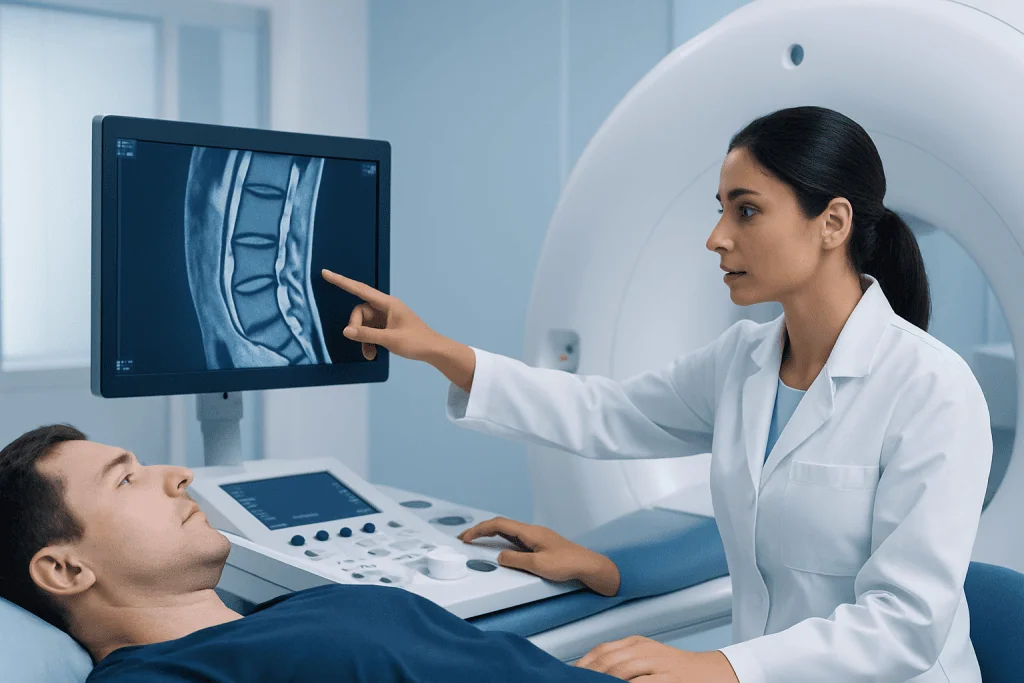
It helps to separate an annular fissure from other common spine terms. A fissure involves the outer disc ring. A disc bulge means the disc extends beyond its usual boundary. A herniated disc usually means inner disc material has pushed outward more clearly and may press on a nerve root.
An annular fissure can exist on its own, or it can appear together with other disc changes. In some cases, a fissure may contribute to inflammation without significant nerve compression. In others, it may be part of the process that leads to a bulging or herniated disc. For related reading, patients may see herniated disc discussed separately.
Radiology reports may also describe the fissure by pattern, such as concentric, radial, or transverse. These terms describe the direction of the split within the annulus. While useful to specialists, they do not always predict symptoms or treatment needs on their own. Clinical evaluation remains more important than terminology alone.
Symptoms and What They Feel Like

Many annular fissures cause no noticeable symptoms. When symptoms do occur, the most common complaint is localized pain in the lower back or neck. Some people describe it as deep, aching, sharp with certain movements, or worse after prolonged sitting, bending, lifting, or twisting.
If inflammation from the fissure irritates nearby nerve tissue, pain may spread into the buttock, leg, shoulder, or arm. Tingling, numbness, or a burning sensation can occur, especially if there is an associated disc bulge or herniation. Muscle stiffness and reduced flexibility are also common, particularly after rest.
Symptoms can vary from day to day. A person may have a flare after overexertion and then improve with rest and careful activity. Because back and neck pain can come from muscles, joints, nerves, or discs, it is important not to assume every pain episode is caused by the annular fissure seen on a scan.
- Localized low back or neck pain
- Pain worsened by sitting, bending, lifting, coughing, or twisting
- Stiffness and reduced range of motion
- Pain radiating into an arm or leg
- Numbness or tingling if a nerve is irritated
Causes and Risk Factors
Annular fissures can develop from normal age-related disc changes, repeated strain, or a single mechanical stress. Over time, discs lose some water content and flexibility. This makes the outer ring more vulnerable to small splits, especially in the lower spine where daily loads are high.
Risk factors include repetitive lifting, twisting, prolonged sitting, poor body mechanics, smoking, excess body weight, and jobs or sports that involve vibration or repeated spinal loading. Sudden strain, such as lifting something heavy with poor form, can trigger symptoms even if the disc has been gradually changing for years.
Not everyone with these risk factors develops symptoms, and symptoms do not always correlate with the size of a fissure. Other causes of back pain may coexist, including muscular strain, joint degeneration, or spinal stenosis. In some people, clinicians also consider scoliosis or other structural factors when pain patterns are persistent or complex.
How Doctors Diagnose an Annular Fissure
Diagnosis starts with a history and physical examination. A doctor asks where the pain is felt, what movements worsen it, whether symptoms travel into the arm or leg, and whether there are warning signs such as weakness, fever, weight loss, or changes in bladder or bowel control. The examination may include posture, range of motion, reflexes, sensation, and muscle strength.
Imaging is not always needed right away, especially if symptoms are mild and there are no red flags. When pain is severe, lasts longer than expected, or includes nerve symptoms, MRI is often the most useful imaging test because it shows discs, nerves, and soft tissues clearly. Sometimes an annular fissure appears as a high-intensity zone on MRI, though findings must be interpreted in context.
X-rays may help assess alignment or other bone-related causes of pain, but they do not show disc fissures directly. CT scans are used less commonly for this purpose. Diagnosis can overlap with related conditions such as spinal stenosis if symptoms suggest nerve narrowing rather than disc pain alone.
Treatment Options and Recovery
Most annular fissures are treated without surgery. Early care often includes relative rest rather than strict bed rest, activity modification, heat or ice, and nonprescription or prescribed pain-relieving medicines when appropriate. Many patients benefit from structured physical therapy focused on posture, core support, mobility, and gradual return to normal activity.
If pain persists or nerve irritation is more prominent, a doctor may consider additional treatments such as supervised rehabilitation, short-term medication strategies, or image-guided injections in selected cases. Patients with ongoing symptoms may be evaluated in a dedicated spine center or may start a tailored physical therapy and rehabilitation program to improve movement and reduce recurrence.
Surgery is usually reserved for specific situations, such as significant nerve compression, progressive weakness, or persistent pain that does not improve with appropriate conservative care. When a fissure is associated with a more advanced disc problem, doctors may discuss herniated disc surgery or other procedures only after careful evaluation. Recovery time varies, but many people improve gradually over weeks to a few months.
Self-Care, Prevention, and Daily Habits
Self-care aims to reduce irritation and help the spine tolerate normal movement again. Gentle walking, avoiding prolonged sitting, and changing positions regularly are often helpful. Once pain begins to settle, exercises that strengthen the trunk, hips, and postural muscles can support recovery and lower the chance of future flare-ups.
Prevention focuses on spine-friendly habits rather than trying to avoid all movement. Useful steps include lifting with the legs instead of rounding the back, keeping loads close to the body, maintaining a healthy weight, not smoking, and building general fitness over time. Workstation adjustments and regular movement breaks can also reduce strain for people who sit for long periods.
Self-management should stay within comfortable limits. Pushing through severe pain, starting intense exercise too early, or relying on prolonged rest may delay recovery. For international patients who need specialist input, Acibadem International’s multidisciplinary teams in JCI-accredited hospitals diagnose and treat spinal conditions with individualized care plans.
When to Seek Medical Care
Medical advice is appropriate if back or neck pain lasts more than a few weeks, keeps returning, interferes with sleep or daily activities, or spreads into an arm or leg. Evaluation is also important if numbness, tingling, or weakness develops, since these symptoms may suggest nerve involvement.
Urgent medical care is needed for certain warning signs. These include new bowel or bladder control problems, numbness around the groin or inner thighs, rapidly worsening weakness, fever, unexplained weight loss, severe pain after a fall or accident, or a history that raises concern for infection or cancer. These symptoms do not always mean a serious problem, but they should be assessed promptly.
A clear diagnosis helps guide treatment and avoid unnecessary worry. Because annular fissure findings can be common on imaging, a clinician can explain whether the scan matches the symptoms and whether additional tests or specialist care are needed.
Frequently asked questions
Is an annular fissure the same as a herniated disc?
No. An annular fissure is a tear or split in the outer layer of the disc, while a herniated disc usually means disc material has pushed outward more significantly. A fissure can exist alone or alongside a disc bulge or herniation.
Can an annular fissure heal on its own?
Many people improve over time with conservative care, and symptoms can settle even if imaging changes remain visible. Healing may involve scar formation and reduced inflammation rather than a disc returning completely to its earlier state.
How long does annular fissure pain last?
The duration varies from person to person. Mild cases may improve within a few weeks, while others take several weeks to months, especially if there is ongoing strain or associated nerve irritation.
Does every annular fissure cause pain?
No. Annular fissures are sometimes found on MRI in people who have no symptoms at all. This is why doctors interpret imaging together with the physical examination and the patient’s symptom pattern.
Will surgery be needed for an annular fissure?
Most cases do not require surgery. Surgery is usually considered only when there is significant nerve compression, progressive neurological symptoms, or pain that does not improve after appropriate nonsurgical treatment.
What activities should be avoided with an annular fissure?
During a painful flare, it is usually sensible to limit heavy lifting, repeated bending, twisting, and prolonged sitting if these make symptoms worse. A doctor or physical therapist can help guide a gradual and safe return to normal activity.
This article is for general information only and is not a substitute for professional medical advice. Please consult a qualified doctor about your individual situation.
Joint and spine care in Turkey — expert assessment & treatment
JCI-accredited · board-certified surgeons · reply within 24h
Add us as a Preferred Source to see more of our trusted health content across Google Search, AI Overviews and Discover.

More from the Health Library

Removing Hair Removal Wax — Explained by Medical Evidence, Not Myths

Tooth Sensitivity After Crown — Explained by Medical Evidence, Not Myths

Efudix Cream for Sun-Damaged and Superficial Skin

Wall Angels: An Evidence-Based Guide for Patients

Hairstyles for Thin Fine Hair — Explained by Medical Evidence, Not Myths