Humidifier for Postnasal Drip: An Evidence-Based Guide for Patients

Humidifiers may help postnasal drip by adding moisture to dry air, which can reduce throat irritation and thin mucus. They are most useful when dryness is part of the problem, not when postnasal drip is caused mainly by infection, allergies, reflux, or structural nasal issues alone.
Key Takeaways
- Humidifiers may help postnasal drip by adding moisture to dry air, which can reduce throat irritation and thin mucus.
- They are most useful when dryness is part of the problem, not when postnasal drip is caused mainly by infection, allergies, reflux, or structural nasal issues alone.
- Clean humidifiers carefully, because dirty devices can spread irritants, mold, or germs into the air.
- Comfort measures such as saline rinses, hydration, and trigger control often work best alongside humidifier use.
- Persistent, severe, or one-sided symptoms should be evaluated by a qualified doctor.
A humidifier for postnasal drip can be helpful when dry indoor air is making mucus thicker and the throat more irritated. It is not a cure for every cause of postnasal drip, but used correctly, it may improve comfort while the underlying trigger is identified and treated.
Overview: Can a Humidifier Help Postnasal Drip?
Yes, a humidifier for postnasal drip can help some people, particularly when dry air is making nasal mucus thicker and the throat more irritated. By increasing moisture in the air, a humidifier may make secretions easier to clear and reduce the scratchy, frequent throat-clearing feeling that often comes with postnasal drip.
However, a humidifier is a supportive measure rather than a stand-alone treatment. Postnasal drip is a symptom, not a disease itself, and it can happen for many reasons, including allergies, viral infections, sinus inflammation, irritants, acid reflux, and certain medications. In some people, too much humidity may even worsen congestion, especially if dust mites or mold are contributing factors.
This means the most evidence-based approach is practical and individualized: use a humidifier when dryness is likely playing a role, but also look at the underlying cause. If symptoms continue, worsen, or keep returning, medical evaluation is important to identify the reason for the drainage and choose the right treatment.
What Postnasal Drip Feels Like

Postnasal drip happens when mucus from the nose and sinuses collects and moves down the back of the throat. Small amounts of mucus are normal and help trap particles and keep nasal passages moist. Problems develop when mucus becomes excessive, too thick, or more noticeable because the throat and nasal lining are irritated.
People often describe a constant need to clear the throat, a sensation of mucus stuck in the throat, cough that is worse at night, hoarseness, or a sore, raw feeling in the throat. Some also notice bad breath, a tickling sensation, or the feeling of having to swallow often. If allergies or sinus inflammation are present, sneezing, congestion, facial pressure, or itchy eyes may occur too.
Because many conditions can cause similar symptoms, postnasal drip can overlap with sinusitis, allergic rhinitis, upper respiratory infections, or laryngopharyngeal reflux. That overlap is one reason symptom relief alone does not always solve the problem, and why persistent symptoms may need a full assessment.
Why Dry Air Matters — and When a Humidifier Makes Sense
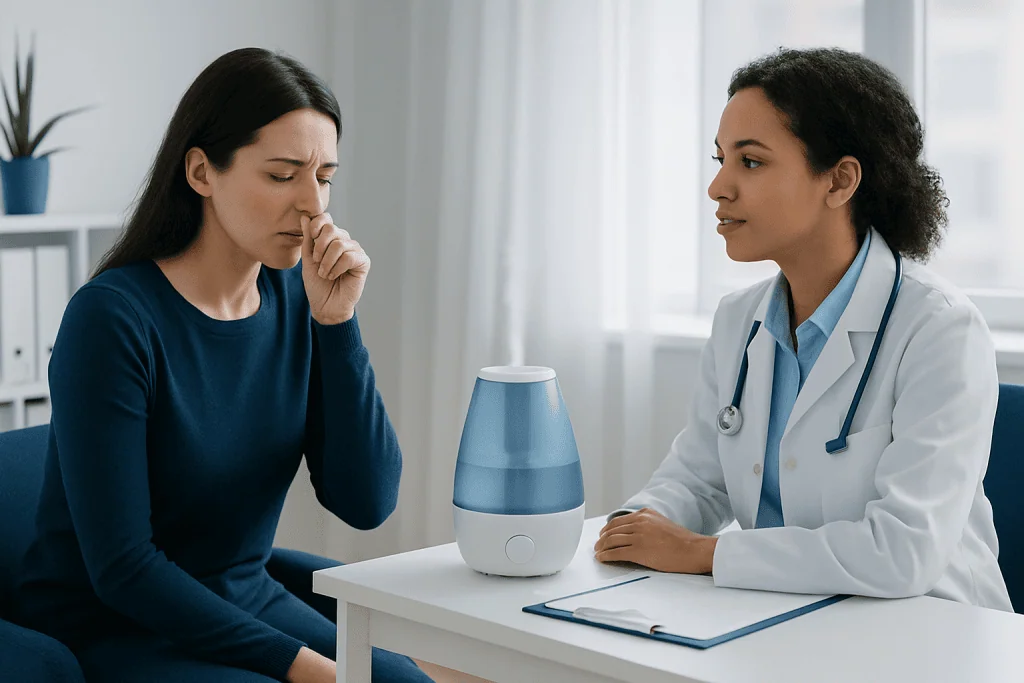
Indoor air often becomes dry in winter, in air-conditioned spaces, or in homes with central heating. Dry air can remove moisture from the lining of the nose and throat. In response, mucus may feel thicker, crusting may increase, and normal mucus clearance can become less efficient. This can make postnasal drip feel more obvious even if the amount of mucus has not changed very much.
In that situation, a humidifier may be useful because it helps keep the nasal passages and throat more comfortable. Many patients notice easier breathing through the nose in the morning, less throat dryness overnight, and less irritation from repeated coughing or throat clearing. Warm steam is not necessary for this effect; the main goal is balanced air moisture rather than overly hot air.
A humidifier is especially reasonable to try when symptoms are worse during sleep, during cold-weather months, or in visibly dry indoor environments. It may be less helpful if postnasal drip is driven mainly by uncontrolled allergies, bacterial sinus infection, significant nasal polyps, or reflux. For some patients, a clinician may also recommend other supportive measures such as ENT evaluation and treatment if symptoms suggest a structural or chronic nasal problem.
Choosing and Using a Humidifier Safely
The benefits of a humidifier depend heavily on how it is used. The aim is moderate humidity, not a damp room. Air that is too humid can encourage dust mites and mold growth, which may worsen nasal symptoms in sensitive people. A device that is not cleaned regularly can release irritants or microorganisms into the air, making symptoms worse rather than better.
Safe use starts with following the manufacturer’s cleaning instructions carefully. Water should be changed frequently, and the tank should not be left sitting with stagnant water. Filters and parts that require replacement should be changed as directed. Distilled or demineralized water may reduce mineral buildup in some devices and can help limit the white dust that certain humidifiers produce.
Placement matters too. The humidifier should be positioned safely, away from direct contact with bedding or walls, and out of reach of children if needed. If a person notices more congestion, musty odors, or visible moisture collecting in the room, the humidity level may be too high. In that case, use should be reduced and the room checked for mold or other irritants.
- Use the device mainly in the room where symptoms are most bothersome, often the bedroom.
- Clean the reservoir and surfaces regularly.
- Do not let water stand for long periods.
- Stop use if symptoms clearly worsen in humid air.
Other Evidence-Based Ways to Relieve Postnasal Drip
Humidifier use is often most effective when combined with simple, evidence-based self-care steps. Drinking enough fluids can help keep mucus from becoming overly thick. Saline nasal sprays or rinses may wash out irritants, loosen secretions, and improve nasal comfort. Avoiding smoke exposure and strong fumes is also important, since these can irritate the nose and throat and increase symptoms.
If allergies are suspected, reducing exposure to pollen, pet dander, dust, or mold may make a bigger difference than humidity alone. For some patients, doctors may recommend allergy-focused treatment or assessment, especially if symptoms are seasonal or linked to environmental triggers. When reflux contributes to throat symptoms, lifestyle changes and medical treatment may be more appropriate than relying on air moisture alone.
Medical treatment depends on the cause. A clinician may consider options such as allergy management, treatment for nasal polyps, reflux care, or evaluation for chronic sinus disease. In selected cases, imaging, nasal endoscopy, or procedures may be needed, and some patients benefit from endoscopic sinus surgery when symptoms are due to ongoing sinus blockage or inflammation that does not respond to standard therapy.
How Doctors Find the Cause
Diagnosis begins with a careful history. A doctor may ask when symptoms started, whether they are seasonal, whether there is nighttime cough, heartburn, facial pressure, fever, or exposure to smoke or allergens. Medication review is also important because some medicines can dry the nose or change mucus consistency.
Physical examination may include looking inside the nose, throat, and ears. In some cases, an ear, nose, and throat specialist may use a small flexible camera to inspect the nasal passages and throat more closely. This can help identify swelling, infection, polyps, structural problems, or signs of reflux-related irritation.
Further testing is not always necessary, but it may be recommended if symptoms are persistent, severe, recurrent, or atypical. Allergy testing, sinus imaging, or specialist consultation may be helpful. If there is concern about long-term nasal obstruction, recurrent sinus infection, or a structural issue, referral for septoplasty or related nasal treatment may be appropriate in carefully selected patients.
When to Seek Medical Care
Most cases of mild postnasal drip improve with time, hydration, trigger control, and supportive care such as saline rinses or a properly maintained humidifier. Still, medical advice is important if symptoms last for several weeks, keep returning, or interfere with sleep, voice, eating, or daily activities.
Prompt medical care is especially important when postnasal drip is accompanied by high fever, severe facial pain, shortness of breath, wheezing, coughing up blood, unexplained weight loss, or trouble swallowing. One-sided nasal blockage, persistent bad-smelling drainage, or recurrent nosebleeds also deserve evaluation because they may point to a problem that needs more than home care.
Children, older adults, and people with chronic lung disease, immune system problems, or complex sinus symptoms should be assessed sooner rather than later. Near the end of the care pathway, patients who need specialist evaluation may be seen by Acibadem International, where multidisciplinary specialists in JCI-accredited hospitals diagnose and treat ENT conditions for international patients.
Frequently asked questions
Can a humidifier make postnasal drip go away completely?
It can reduce discomfort when dry air is part of the problem, but it does not treat every cause of postnasal drip. If symptoms come from allergies, infection, reflux, or nasal structural issues, the underlying condition usually needs separate treatment.
Is a cool-mist or warm-mist humidifier better for postnasal drip?
Either type may help by adding moisture to the air. The more important factors are safe use, regular cleaning, and avoiding excessively high room humidity.
How quickly can a humidifier help?
Some people notice less throat dryness and easier mucus clearance within a few nights, especially if symptoms are worse in dry bedrooms. If there is no clear improvement after a reasonable trial, another cause may be more important.
Can a humidifier worsen symptoms?
Yes, if it is dirty or if the room becomes too humid. Excess moisture can promote mold and dust mites, which may worsen congestion and allergy-related postnasal drip.
What else can help besides a humidifier?
Common supportive measures include drinking fluids, using saline nasal spray or rinses, avoiding smoke and irritants, and managing allergies or reflux when present. A doctor may recommend medications or specialist evaluation depending on the cause.
When should a person worry about postnasal drip?
Medical review is sensible if symptoms persist for weeks, keep returning, or disturb sleep and daily life. Urgent assessment is needed for red-flag symptoms such as high fever, severe facial pain, breathing trouble, swallowing difficulty, or blood in mucus.
This article is for general information only and is not a substitute for professional medical advice. Please consult a qualified doctor about your individual situation.
Explore treatments in Turkey — costs, top hospitals & a free quote
JCI-accredited · board-certified surgeons · reply within 24h
Add us as a Preferred Source to see more of our trusted health content across Google Search, AI Overviews and Discover.

More from the Health Library

Alginate: An Evidence-Based Guide for Patients

Diathesis: A Complete Medical Overview

Indoor Rowing Machine: What Patients Need to Know

Narcissist — Explained by Medical Evidence, Not Myths

Labetalol: A Complete Medical Overview