Joubert Syndrome: Diagnosis, Outlook, and Modern Treatment Approaches

Joubert syndrome is a genetic condition that affects the brain and can also involve the eyes, kidneys, liver, and other organs. Common signs include low muscle tone, developmental delay, abnormal eye movements, poor coordination, and abnormal breathing patterns in infancy.
Key Takeaways
- Joubert syndrome is a genetic condition that affects the brain and can also involve the eyes, kidneys, liver, and other organs.
- Common signs include low muscle tone, developmental delay, abnormal eye movements, poor coordination, and abnormal breathing patterns in infancy.
- Diagnosis often depends on a characteristic MRI finding called the molar tooth sign, along with clinical assessment and genetic testing.
- There is no single cure, but early therapies and specialist follow-up can improve function, safety, and quality of life.
- Outlook varies widely; some children have mild learning and motor challenges, while others need ongoing complex medical support.
Joubert syndrome is a rare genetic disorder that affects brain development, especially areas that coordinate balance, movement, breathing, and eye movements. Diagnosis usually combines clinical examination, brain MRI, and genetic testing, while treatment focuses on supportive, multidisciplinary care tailored to the child’s needs.
Overview: What Joubert Syndrome Is
Joubert syndrome is a rare inherited neurodevelopmental disorder. It develops because certain genes involved in early growth of the brain and body do not work as expected. The condition mainly affects the cerebellum and brainstem, which help control balance, coordination, breathing, and eye movements.
Doctors often recognize joubert syndrome by a distinctive appearance on brain MRI called the molar tooth sign. This imaging pattern reflects differences in how parts of the brain formed before birth. Although the brain finding is central to diagnosis, the condition can also affect other organs, especially the eyes, kidneys, liver, and skeleton.
Joubert syndrome belongs to a broader group of disorders known as ciliopathies. These are conditions linked to problems in tiny cell structures called cilia, which play an important role in signaling during development. Because cilia are active in many organs, symptoms can vary considerably from one person to another.
Some children have relatively mild developmental and coordination difficulties, while others have more significant neurological and medical needs. For that reason, families usually benefit from coordinated care involving pediatrics, neurology, rehabilitation specialists, ophthalmology, nephrology, and genetics.
Symptoms and How It May Present
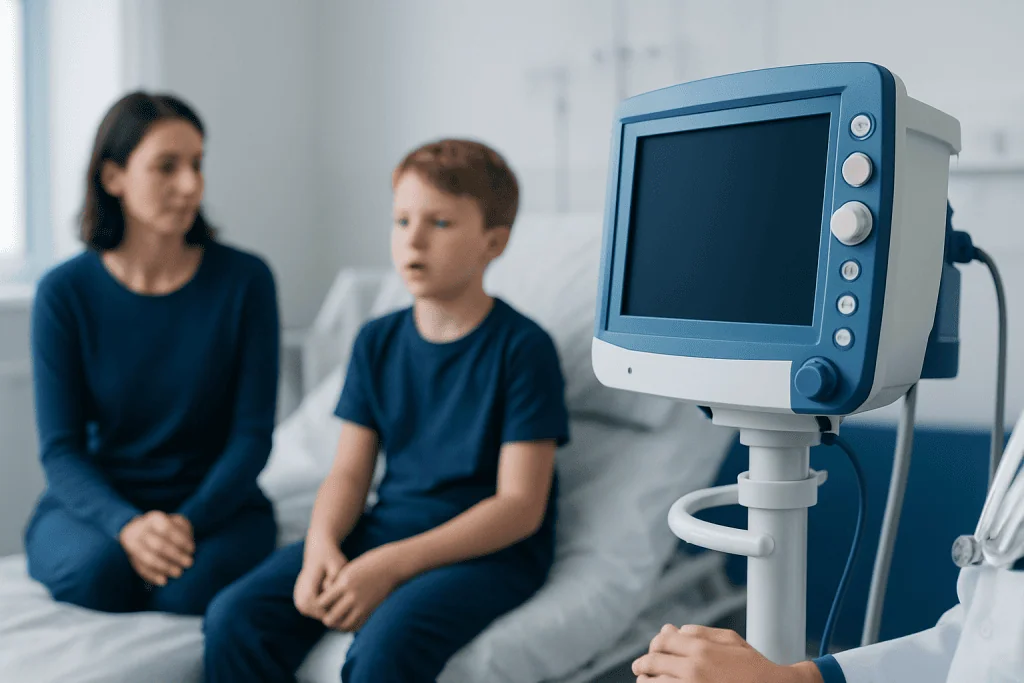
The signs of joubert syndrome often begin in infancy or early childhood. Many babies have low muscle tone, also called hypotonia, which can make them feel floppy and cause delays in head control, sitting, crawling, or walking. Feeding difficulties may also appear early, especially when muscle tone and coordination are reduced.
Another early clue can be unusual breathing patterns, such as episodes of rapid breathing or pauses in breathing, particularly during infancy. Abnormal eye movements are also common. These may include difficulty smoothly tracking objects, quick jerky eye movements, or trouble moving the eyes horizontally.
As children grow, balance and coordination problems may become more noticeable. Speech and language development can be delayed, and learning difficulties may occur. Some children also show behavioral or sensory differences, though these vary widely and are not the same in every child.
Possible features of joubert syndrome include:
- Low muscle tone in infancy
- Delayed motor milestones
- Ataxia, or poor balance and coordination
- Abnormal breathing in early life
- Abnormal eye movements or vision problems
- Developmental delay or intellectual disability
- Facial features that may be subtle but recognizable to specialists
- Kidney, liver, retinal, or skeletal involvement in some patients
Causes, Genetics, and Risk Factors

Joubert syndrome is caused by changes in one of many genes linked to cilia function. In most families, it is inherited in an autosomal recessive pattern. This means a child receives one nonworking copy of the gene from each parent, while the parents themselves usually have no symptoms.
Because many different genes can be involved, the condition can look different from one person to another, even within the same family. Some gene changes are more strongly associated with kidney disease, retinal disease, or liver involvement. This is one reason genetic testing can be helpful beyond confirming the diagnosis.
The main risk factor is family history. Parents who have had one child with joubert syndrome may have a higher chance of having another affected child, depending on the genetic cause. In some communities or families where related parents have children together, recessive conditions may be more likely, but joubert syndrome can occur in any population.
Families sometimes hear joubert syndrome discussed alongside related disorders that affect brain structure and development, such as Dandy-Walker syndrome. These conditions are distinct, but specialists may consider them in the diagnostic process when a child has developmental delay, coordination problems, or abnormal brain imaging.
How Joubert Syndrome Is Diagnosed
Diagnosis begins with a careful medical history and physical examination. Doctors look at muscle tone, reflexes, balance, eye movements, breathing history, and developmental progress. In infants and young children, the pattern of delayed milestones together with abnormal eye or breathing findings may prompt further evaluation.
Brain MRI is a key test because it can show the molar tooth sign, the hallmark imaging feature of joubert syndrome. MRI also helps assess the cerebellum and related brain structures in detail. In many cases, advanced MRI scanning is central to confirming the diagnosis and distinguishing the condition from other neurological disorders.
Genetic testing is commonly recommended after MRI or when clinical suspicion is high. It may identify the specific gene involved, clarify inheritance, and guide screening for kidney, eye, or liver complications. Genetic counseling can help families understand recurrence risk, future pregnancy options, and what the results mean for relatives.
Because other organs may be affected, doctors may also request eye examinations, kidney function tests, liver tests, sleep or breathing assessment, and developmental evaluation. Some children may need review by pediatric neurology if symptoms overlap with cerebral palsy or other developmental movement disorders.
Modern Treatment Approaches and Long-Term Care
There is no single treatment that corrects the underlying genetic cause of joubert syndrome. Care focuses on the child’s symptoms, organ involvement, developmental needs, and safety. The most effective approach is usually multidisciplinary and changes over time as the child grows.
Physical therapy can support posture, balance, strength, and mobility. Occupational therapy helps with fine motor skills and daily activities, while speech and language therapy may assist with communication and feeding. Many families benefit from structured rehabilitation plans that are reviewed regularly according to progress and changing goals.
Additional treatment depends on which body systems are affected. Eye specialists may help monitor retinal disease or visual function. Kidney and liver specialists may be involved if imaging or blood tests show related problems. Some children need support for breathing irregularities, feeding difficulties, or sleep concerns, especially in early life.
Follow-up with pediatric neurology is often important for coordination, developmental monitoring, and planning supportive care. In selected cases, a neurology evaluation helps organize ongoing management, especially if there are seizures, complex movement issues, or diagnostic uncertainty. Near the end of the care pathway, families seeking international treatment may also consider Acibadem International, where multidisciplinary specialists in JCI-accredited hospitals evaluate and manage rare neurological conditions in children.
Outlook, Development, and Daily Life
The outlook for joubert syndrome is variable. Some children learn to walk, speak, and attend school with additional support, while others have more significant motor, cognitive, or medical challenges. Early diagnosis does not change the genetic cause, but it can improve monitoring and access to therapies that support development.
Long-term outcome depends on several factors, including the degree of brain involvement, the presence of kidney or liver disease, vision problems, and how severe breathing or feeding difficulties are in early childhood. Development often progresses more slowly than expected, but progress is still possible over time. Families are often encouraged to focus on functional gains rather than fixed milestones alone.
Educational planning, adaptive equipment, and social support can make a meaningful difference in daily life. Some children benefit from walking aids, communication supports, or individualized learning plans. Others may need more intensive assistance with mobility, self-care, and medical appointments.
Because needs can change with age, regular reassessment is important. Kidney, eye, and liver complications may become more apparent later, even if early symptoms were mainly neurological. Ongoing follow-up helps doctors respond promptly and support quality of life at each stage.
Prevention, Family Planning, and Self-Care
Joubert syndrome cannot usually be prevented once the genetic changes are present, but genetic counseling can help families understand risk before future pregnancies. If a specific disease-causing gene has been found in a child, parents may be offered testing and discussion of reproductive options. This can be especially helpful for families planning additional children.
At home, day-to-day care often centers on routine, therapy practice, safety, and monitoring. Parents may work with therapists on exercises that support movement, communication, feeding, or coordination. A predictable environment and close communication with schools and therapists can help a child build skills more confidently.
General self-care priorities include protecting vision, supporting nutrition, attending regular developmental reviews, and keeping specialist follow-up appointments. If a child has kidney or liver involvement, doctors may recommend specific monitoring schedules. Families should avoid making major changes to therapy or medication plans without medical advice.
It can also help to connect with support groups or rare disease organizations. Families often find reassurance in sharing practical experiences with others facing similar challenges. Emotional support for parents and caregivers is an important part of long-term care.
When to Seek Medical Care
Medical review is important if a baby has poor muscle tone, delayed milestones, unusual breathing episodes, feeding difficulty, or abnormal eye movements. These signs do not always mean joubert syndrome, but they deserve timely assessment by a qualified doctor. Early evaluation can help clarify the cause and organize appropriate support.
Families should seek prompt care if a child develops pauses in breathing, worsening feeding problems, dehydration, reduced alertness, or new seizures. Vision changes, reduced urine output, swelling, or concerns about growth should also be discussed with a doctor, since some children with joubert syndrome have kidney or eye involvement.
Parents who already have a child diagnosed with joubert syndrome may also wish to seek medical advice before another pregnancy. Genetic counseling can explain inheritance patterns, testing options, and what information may be available for family planning.
If symptoms are changing or the diagnosis is uncertain, referral to a pediatric neurologist, geneticist, or developmental specialist can be helpful. When needed, further evaluation may include imaging, genetic testing, and specialist review to guide the next steps.
Frequently asked questions
Is joubert syndrome a form of autism or cerebral palsy?
No. Joubert syndrome is a distinct genetic brain development disorder. Some children may have developmental, behavioral, or movement features that overlap with other conditions, but the diagnosis is different and is usually supported by MRI and genetic testing.
What is the molar tooth sign in joubert syndrome?
The molar tooth sign is a characteristic pattern seen on brain MRI. It reflects how certain parts of the cerebellum and brainstem developed. This finding is one of the key clues doctors use when diagnosing joubert syndrome.
Can joubert syndrome be cured?
There is currently no cure that reverses the genetic cause of joubert syndrome. Treatment focuses on symptoms, development, organ monitoring, and supportive therapies. Many children benefit from long-term care plans tailored to their individual needs.
Does every child with joubert syndrome have the same symptoms?
No. Joubert syndrome can vary widely in severity and in the organs it affects. Some children mainly have coordination and developmental challenges, while others also have kidney, eye, liver, or breathing problems.
How is joubert syndrome inherited?
In most cases, joubert syndrome is inherited in an autosomal recessive pattern. This means both parents usually carry one changed gene copy without having symptoms themselves. A genetics specialist can explain recurrence risk for future pregnancies.
Can adults have joubert syndrome?
Yes. Joubert syndrome is present from birth, but some people are diagnosed later, especially if symptoms are mild. Adults may continue to need follow-up for coordination issues, vision concerns, kidney disease, or other related complications.
References
- National Institute of Neurological Disorders and Stroke
- National Organization for Rare Disorders
- Genetics Home Reference at MedlinePlus
- National Human Genome Research Institute
- American Academy of Pediatrics
This article is for general information only and is not a substitute for professional medical advice. Please consult a qualified doctor about your individual situation.
Explore treatments in Turkey — costs, top hospitals & a free quote
JCI-accredited · board-certified surgeons · reply within 24h
Add us as a Preferred Source to see more of our trusted health content across Google Search, AI Overviews and Discover.