Tick Eggs: A Complete Medical Overview

Tick eggs are usually found in clusters outdoors rather than on people. Most health risks come from tick bites after eggs hatch into larvae, nymphs, and adult ticks.
Key Takeaways
- Tick eggs are usually found in clusters outdoors rather than on people.
- Most health risks come from tick bites after eggs hatch into larvae, nymphs, and adult ticks.
- Safe removal focuses on cleaning the area and avoiding direct contact with eggs or ticks.
- Preventive steps such as protective clothing, repellents, and body checks reduce tick exposure.
- Medical advice is important after a tick bite if symptoms develop or if tick-borne infection is a concern.
Tick eggs are tiny, oval eggs usually laid in clusters in protected outdoor environments such as leaf litter, soil, or vegetation. They do not typically remain attached to human skin, but understanding tick eggs can help people reduce exposure to ticks and lower the risk of tick-borne illness.
Overview: what tick eggs are and why they matter
Tick eggs are the earliest stage in the tick life cycle. They are usually very small, oval, and laid in clusters by an adult female tick in sheltered outdoor places such as leaf litter, tall grass, wood piles, brush, cracks in stone walls, or soil near animal resting areas. For most people, the main concern is not the eggs themselves, but the ticks that hatch from them and later seek a blood meal.
A common misunderstanding is that tick eggs are often found attached to human skin or hair. In reality, ticks typically feed on a host and then drop off to continue their life cycle, and egg-laying usually happens off the body in the environment. If a person notices a cluster of tiny round or oval structures indoors or on a pet bed, correct identification matters because many insect eggs can look similar.
Understanding tick eggs is useful because it helps people focus on practical prevention. Removing eggs from outdoor or household environments, checking pets, and reducing habitats where ticks thrive can lower future contact with larval and adult ticks. It also helps explain why tick control often needs an environmental approach rather than attention to a single bite alone.
What do tick eggs look like?

Tick eggs are typically very small, often compared with poppy seeds or even smaller depending on the species. They may appear translucent, pale yellow, brownish, or reddish-brown, and are usually laid in tightly packed clusters rather than as single scattered eggs. Their appearance can change slightly as they mature.
Because they are so small, tick eggs can be mistaken for spider eggs, mite eggs, plant seeds, or debris. They are often found in moist, shaded, protected spaces rather than in open, sunny areas. A cluster may look like a tiny mass of beads or caviar-like dots stuck together.
People sometimes worry that any small cluster on the skin is a group of tick eggs. This is uncommon. Small bumps, blisters, scabs, or other skin changes are much more likely to be related to irritation, infection, or another skin condition than to tick egg-laying. When a skin finding is unclear, a qualified clinician or dermatologist can help with diagnosis.
- Usually laid in clusters
- Very small and oval
- Common in leaf litter, soil, wood, and brush
- Not usually attached to human skin
Tick life cycle and the real health risk
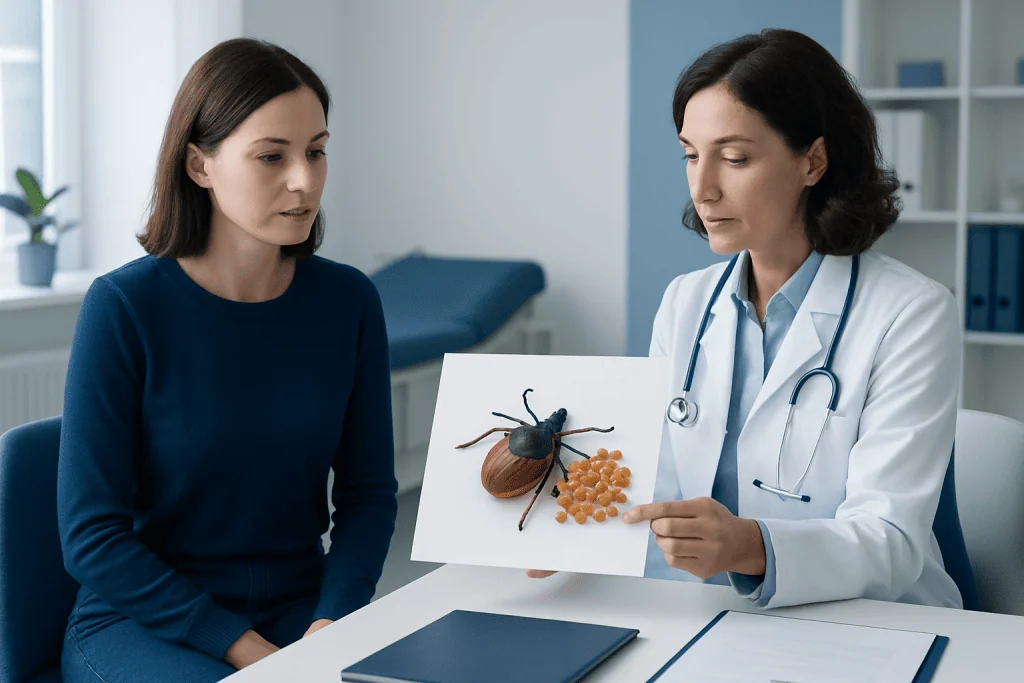
Ticks develop through several stages: egg, larva, nymph, and adult. After eggs hatch, larvae seek a host, feed, and then progress through later stages. Nymphs and adults are often the stages most associated with human bites, although larvae can bite as well. The exact timing depends on the species, weather, and local environment.
From a medical perspective, the main issue is that some ticks can carry infectious organisms. These may include bacteria, viruses, or parasites that cause tick-borne diseases. The risk depends on the region, the type of tick, how long it was attached, and whether it was carrying a pathogen. Eggs themselves are not generally the direct source of skin infestation in people.
Tick bites are often painless, so many people do not notice them right away. A bite can sometimes lead to redness, itching, or a small local reaction. In some cases, ticks may transmit infections linked with fever, rash, fatigue, headaches, muscle aches, or other symptoms. Related conditions that people may hear about include Lyme disease and tick-borne diseases, although risk varies by geography and tick species.
Where tick eggs are found and who is more likely to encounter them
Tick eggs are most often found outdoors in humid, shaded places where adult female ticks can remain protected. Common environments include forest edges, overgrown gardens, tall grass, piles of leaves, mulch, and areas frequented by wildlife or pets. They may also appear around dog houses, kennels, sheds, or outdoor storage areas if ticks are present in the surroundings.
People who spend time hiking, gardening, hunting, camping, landscaping, or working outdoors are more likely to encounter tick habitats. Children and pet owners may also have more exposure because pets can bring ticks into the home after walking through grass or wooded areas.
Indoor egg clusters are less common but can occur if a fed tick drops off a pet and lays eggs in a hidden place. If this happens, it may signal a broader tick problem involving the home, yard, or animals. In such situations, environmental cleaning and veterinary advice for pets can be important parts of control.
How to remove tick eggs and clean the area safely
If suspected tick eggs are found, it is best not to handle them with bare hands. Wearing gloves, carefully collecting the material, and sealing it in a bag or container can reduce direct contact. Surfaces can then be cleaned thoroughly according to the material involved. Vacuuming indoor areas and washing washable fabrics on an appropriate hot cycle may help if eggs or ticks are suspected indoors.
In outdoor spaces, removing leaf litter, trimming tall grass, clearing brush, and reducing rodent or wildlife harborage can make the area less favorable for ticks. If a larger infestation is suspected, local pest control or public health guidance may be useful. Chemical products should be used carefully and according to official instructions.
If a live tick is found attached to the skin, the priority is proper tick removal rather than concern about eggs. Fine-tipped tweezers are commonly used to grasp the tick close to the skin and pull upward steadily. After removal, the area should be cleaned and observed. If a person develops symptoms or has questions about infection risk, medical review is appropriate, and in selected situations evaluation may include blood tests.
Diagnosis after a tick bite or suspected exposure
Tick eggs themselves usually do not require a medical diagnosis unless there is uncertainty about what has been found or concern about associated bites, rash, or infection. Diagnosis after tick exposure is based mainly on history, symptoms, physical examination, and sometimes identification of the tick if it is available. Doctors may ask where the exposure happened, how long the tick was attached, and whether symptoms have appeared.
Testing is not always needed immediately after every tick bite. Laboratory tests may be considered when symptoms suggest a tick-borne infection or when a clinician thinks follow-up is necessary based on local disease patterns. In some cases, additional evaluation may include infectious disease assessment or imaging if symptoms point to complications rather than to the bite itself.
If skin changes are unusual, severe, or difficult to identify, a doctor may consider whether another condition is present. In selected cases, skin assessment or dermatology evaluation can help distinguish tick-related irritation from allergies, bites by other insects, or unrelated skin disorders. The goal is to avoid unnecessary worry while recognizing signs that need attention.
Prevention and self-care
The best way to reduce risk from tick eggs is to reduce exposure to ticks overall. Protective steps include wearing long sleeves and long pants in grassy or wooded areas, using appropriate insect repellents, and checking the body carefully after time outdoors. Showering soon after outdoor activity may help wash away unattached ticks and makes it easier to inspect the skin.
Pets should also be part of prevention. Regular grooming, veterinary-approved tick prevention, and checking fur after walks can reduce the chance that ticks enter the home. Outdoor maintenance such as mowing grass, removing leaf piles, and creating barriers between lawns and wooded areas may further lower tick activity around living spaces.
Self-care after a tick bite includes cleaning the area, noting the date and location of exposure, and monitoring for symptoms over the following days to weeks. People should avoid crushing ticks with bare fingers and should not use methods such as burning the tick or applying petroleum jelly to force detachment. If symptoms appear, prompt medical advice is safer than self-diagnosis.
For people who need broader assessment of persistent fever, rash, joint symptoms, or other concerns after a bite, clinicians may coordinate care that includes infectious diseases evaluation or other specialty input when appropriate.
When to seek medical care
Medical care is advisable if a person develops fever, expanding rash, marked fatigue, headache, muscle or joint pain, swollen lymph nodes, or new neurologic symptoms after a tick bite or outdoor exposure. Care is also important if part of the tick appears to remain embedded, if there is significant skin infection at the bite site, or if the person is pregnant, immunocompromised, or caring for a very young child with concerning symptoms.
People do not usually need urgent care simply because they found tick eggs in the environment. The more important question is whether there has been a tick bite and whether symptoms suggest possible tick-borne illness. A clinician can advise whether observation is enough or whether testing and treatment should be considered.
Near the end of the care pathway, some patients may benefit from coordinated evaluation by specialists. Acibadem International’s multidisciplinary teams in JCI-accredited hospitals diagnose and treat tick-related concerns for international patients when further assessment is needed.
Frequently asked questions
Can tick eggs be found on human skin?
This is uncommon. Ticks usually lay eggs in protected outdoor environments after leaving the host, so clusters on human skin are more likely to be something else. Any uncertain skin finding should be checked by a healthcare professional.
What should a person do if they find tick eggs in the house?
They should avoid touching the eggs with bare hands, collect or vacuum the material carefully, and clean the area thoroughly. Pets should be checked for ticks, and bedding or fabrics may need washing. If the problem seems ongoing, veterinary or pest-control advice may help.
Are tick eggs dangerous by themselves?
Tick eggs are not usually the direct medical threat. The main concern is that they hatch into larvae and later life stages that may bite humans or animals. Preventing tick exposure is the most important step.
How can someone tell if a cluster is really tick eggs?
It can be difficult because many insect eggs and small debris look similar. Tick eggs are tiny, oval, and usually arranged in a compact cluster in a sheltered place. If identification matters for health or pest control, a professional can help confirm what they are.
Should someone get tested after every tick bite?
Not always. Many tick bites do not lead to infection, and testing immediately after a bite may not be useful. A doctor usually decides about testing based on symptoms, the type of exposure, local disease patterns, and how long the tick may have been attached.
What symptoms after a tick bite should not be ignored?
Symptoms such as fever, spreading rash, headache, unusual tiredness, muscle aches, joint pain, or neurologic changes deserve medical attention. These do not always mean a serious illness is present, but they should be assessed promptly. Early advice can help guide appropriate care.
This article is for general information only and is not a substitute for professional medical advice. Please consult a qualified doctor about your individual situation.
Explore treatments in Turkey — costs, top hospitals & a free quote
JCI-accredited · board-certified surgeons · reply within 24h
Add us as a Preferred Source to see more of our trusted health content across Google Search, AI Overviews and Discover.

More from the Health Library

How to boost immune system quickly? A Doctor-Reviewed Answer

Marginal Cord Insertion: What Patients Need to Know

Medical Glue: A Complete Medical Overview

Jackfruit: What Patients Need to Know

COVID Guidelines 2025: What Patients Need to Know