

Blood From a Miscarriage: What Patients Need to Know

Blood from a miscarriage may be light or heavy and may contain clots or tissue. Bleeding alone does not confirm a miscarriage; ultrasound, blood tests, and an exam may be needed.
Key Takeaways
- Blood from a miscarriage may be light or heavy and may contain clots or tissue.
- Bleeding alone does not confirm a miscarriage; ultrasound, blood tests, and an exam may be needed.
- Very heavy bleeding, severe pain, fever, fainting, or a bad-smelling discharge need prompt medical care.
- Treatment depends on how far the pregnancy has progressed, symptoms, and whether tissue remains in the uterus.
- Emotional recovery is also important, and follow-up care can help support both physical and mental health.
Blood from a miscarriage can look different from person to person, ranging from spotting to heavier bleeding with tissue or clots. Knowing what may be expected, what needs medical attention, and how doctors evaluate bleeding can help patients seek timely, appropriate care.
Overview: What blood from a miscarriage can mean
Blood from a miscarriage can vary widely in color, amount, and duration. Some patients notice only light spotting at first, while others have bleeding that becomes similar to or heavier than a menstrual period. The blood may be bright red, dark red, or brown, and some people also pass clots or tissue. Because bleeding in early pregnancy has more than one possible cause, bleeding does not always mean a miscarriage has happened.
A miscarriage, also called early pregnancy loss or spontaneous pregnancy loss, occurs when a pregnancy ends on its own before the fetus can survive outside the uterus. In many cases, the first noticeable sign is vaginal bleeding. However, doctors consider the full picture, including pain, pregnancy symptoms, examination findings, ultrasound results, and hormone blood tests, before confirming what is happening.
Patients often want to know whether the amount of blood can show how serious the situation is. The amount matters, but it is not the only factor. Some miscarriages begin with very little bleeding, and some non-miscarriage causes of pregnancy bleeding can be heavy. That is why any bleeding in pregnancy should be discussed with a qualified clinician, especially if it is getting heavier or comes with pain or dizziness.
How miscarriage bleeding may look and feel
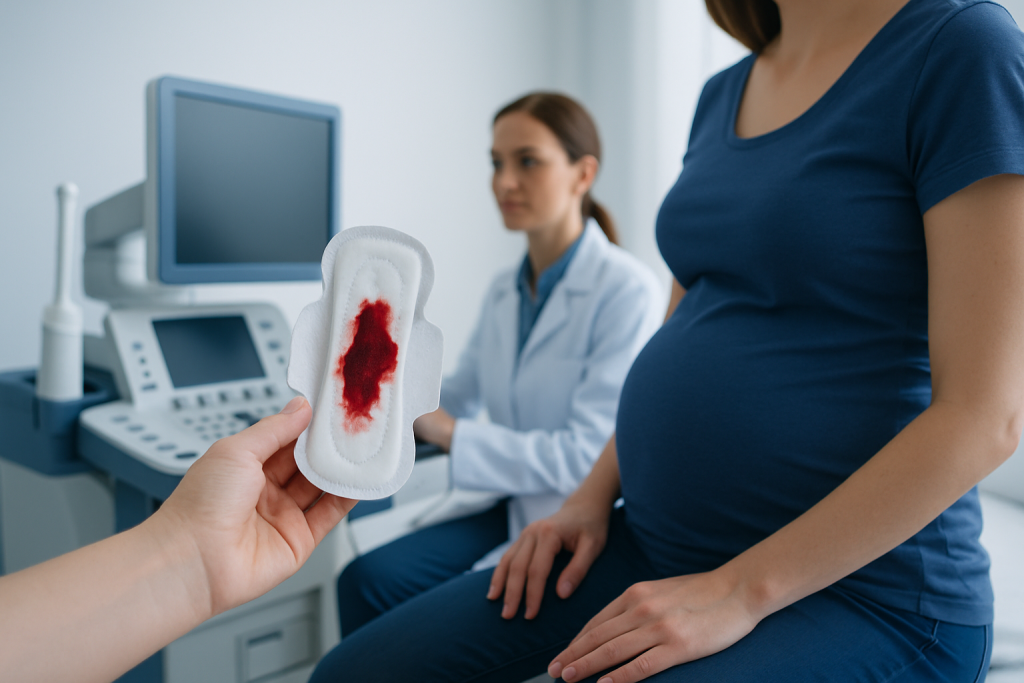
Miscarriage bleeding often starts as spotting or light bleeding and may become heavier over hours or days. Some patients describe it as stronger than a usual period, with cramping that can come in waves. Others may pass small or large clots. In some cases, grayish or pink tissue may also pass from the vagina. As the uterus empties, the bleeding may be heaviest for a short time and then slowly decrease.
The color of blood can change over time. Fresh bleeding is usually bright red. Older blood may look dark red, brown, or almost black. Brown discharge can happen at the beginning or end of bleeding and does not always signal an emergency by itself. What matters more is the overall pattern, the amount of blood loss, and whether other symptoms are present.
Cramping is common because the uterus contracts as it passes blood and tissue. The cramps may feel similar to menstrual cramps or much stronger. Lower back pain, pelvic pressure, and a sudden decrease in pregnancy symptoms may also occur. Even so, symptoms differ from person to person, and some miscarriages are found on ultrasound before any heavy bleeding begins.
- Light spotting may be the first sign.
- Heavier bleeding can follow and may exceed a normal period.
- Clots and tissue may pass.
- Cramping often accompanies bleeding.
- Bleeding may last days to a few weeks, depending on the situation and treatment.
Other causes of bleeding in early pregnancy

Not all bleeding in pregnancy is caused by miscarriage. Light bleeding or spotting can happen with implantation, after sexual intercourse, or because of irritation of the cervix. A small collection of blood next to the pregnancy sac, sometimes called a subchorionic hematoma, may also cause bleeding and may or may not affect the pregnancy. Because these causes can overlap in appearance, it is not possible to tell the reason from bleeding alone.
Doctors also consider conditions that need urgent attention, such as an ectopic pregnancy, where the pregnancy develops outside the uterus. This can cause vaginal bleeding along with one-sided pelvic pain, shoulder pain, weakness, or fainting. Another possibility is a molar pregnancy, which is uncommon but also requires specialist evaluation.
For this reason, patients should avoid assuming that every pregnancy bleed is either harmless or definitely a miscarriage. A careful assessment helps distinguish a threatened miscarriage, a completed miscarriage, an incomplete miscarriage, or another condition entirely. If pain is severe, bleeding is heavy, or there are signs of collapse, urgent medical assessment is important.
Why miscarriage happens and who may be at higher risk
Most miscarriages in the first trimester happen because the embryo or fetus is not developing normally, often due to chromosome changes that occur by chance. In these cases, normal daily activities, exercise, work, stress, or sex are usually not the cause. This can be important for patients to hear, because many people blame themselves after a pregnancy loss when they did nothing to cause it.
Some health factors can increase the likelihood of miscarriage. These include older maternal age, certain uterine abnormalities, uncontrolled thyroid disease, poorly controlled diabetes, some hormonal conditions, certain infections, antiphospholipid syndrome, smoking, heavy alcohol use, and use of some substances. Repeated pregnancy loss may prompt a more detailed workup for underlying causes.
Bleeding pattern by itself does not identify the cause of the miscarriage. However, knowing the medical context can help guide testing and follow-up. In patients with prior pregnancy loss, fertility concerns, or risk factors, clinicians may recommend close monitoring and referral to specialists in fertility and IVF or reproductive medicine when appropriate.
How doctors diagnose the cause of bleeding
Evaluation usually begins with a discussion of symptoms, the amount of bleeding, the timing in pregnancy, and whether tissue has passed. A doctor may ask how often pads are being soaked, whether there is severe pain, and whether there are symptoms such as fever, dizziness, or shoulder pain. A pelvic exam may help assess the cervix, the amount of bleeding, and whether tissue is present.
Ultrasound is one of the main tools used to understand what is happening. It can help confirm whether the pregnancy is in the uterus, whether there is a heartbeat when expected, and whether any tissue remains in the uterus. Blood tests may include pregnancy hormone levels, often measured over time, and a blood count if bleeding is heavy. In some situations, blood type is checked to determine whether anti-D immunoglobulin may be needed.
Sometimes the answer is not clear from a single visit, especially very early in pregnancy. In those cases, repeat ultrasound or repeat blood tests may be needed after a short interval. This period of uncertainty can be emotionally difficult, but careful follow-up helps prevent incorrect diagnosis and supports safer treatment planning.
Treatment options and what recovery may involve
Treatment depends on the diagnosis, how far the pregnancy has progressed, the severity of symptoms, and patient preference when medically appropriate. If a miscarriage is confirmed and the body appears likely to pass the pregnancy tissue on its own, doctors may recommend expectant management. This means watching and waiting with clear guidance about pain control, bleeding, and follow-up.
Another option is medication to help the uterus empty. This may shorten the process and reduce the need for a procedure in some cases. If there is heavy bleeding, infection, persistent retained tissue, or patient preference for quicker completion, a procedure may be recommended to remove tissue from the uterus. This may be discussed as dilation and curettage or another uterine evacuation method, depending on the clinical situation.
Recovery differs from person to person. Bleeding often continues for several days and may taper to spotting. Cramping usually improves once the uterus has emptied. Doctors may advise avoiding tampons, intercourse, or swimming for a period of time to reduce infection risk, depending on the situation. If bleeding remains heavy, fever develops, or pain worsens instead of improving, follow-up is important. Some patients may also need care from specialists in obstetrics and gynecology for diagnosis, treatment, and recovery planning.
Self-care after miscarriage bleeding
Physical recovery includes rest, hydration, and monitoring the amount of bleeding. Many clinicians advise using pads rather than tampons during active bleeding so the amount can be tracked more easily. Over-the-counter pain relief may be appropriate for cramping if a clinician confirms it is safe. Patients should follow the guidance they receive about activity, bathing, and when to resume sexual activity.
Emotional recovery is equally important. Miscarriage can bring grief, numbness, anger, guilt, or relief, and there is no single right response. Support from a partner, family member, trusted friend, counselor, or support group can be helpful. Patients who feel overwhelmed, persistently depressed, or unable to cope should let a healthcare professional know.
Questions about future pregnancy are common. Many people go on to have healthy pregnancies after a miscarriage. A follow-up visit can help review possible causes, whether testing is needed, and when it may be medically reasonable to try to conceive again. In selected cases, further evaluation for recurrent pregnancy loss may be appropriate if miscarriages happen more than once.
When to seek medical care
Patients should seek prompt medical care if they are bleeding in pregnancy and have severe pain, feel faint, or are soaking through pads quickly. Fever, chills, a foul-smelling vaginal discharge, or symptoms that suggest significant blood loss also need urgent assessment. These signs can point to heavy bleeding, infection, ectopic pregnancy, or retained pregnancy tissue.
It is also important to contact a clinician if bleeding lasts longer than expected, becomes heavier again after improving, or if there are unanswered questions about whether a miscarriage has occurred. Even when symptoms seem mild, an evaluation may help confirm that the pregnancy is in the uterus and that the bleeding is being managed safely.
For international patients who need assessment or treatment, Acibadem International’s multidisciplinary specialists in JCI-accredited hospitals provide care for pregnancy-related bleeding and miscarriage evaluation. The priority is accurate diagnosis, supportive treatment, and careful follow-up based on each patient’s needs.
- Seek urgent care for very heavy bleeding, fainting, or severe one-sided pain.
- Contact a doctor for fever, chills, or bad-smelling discharge.
- Arrange follow-up if bleeding continues, changes, or if the diagnosis is unclear.
- Bring details such as pad use, pain level, and pregnancy dates to the appointment if possible.
Frequently asked questions
Is blood from a miscarriage always heavy?
No. Blood from a miscarriage can be as light as spotting or as heavy as bleeding that is stronger than a menstrual period. Some patients also pass clots or tissue, while others have only mild bleeding at first.
Can a person miscarry without seeing much blood?
Yes, in some cases bleeding is limited or starts later. A miscarriage may also be diagnosed on ultrasound before heavy bleeding occurs, especially in very early pregnancy.
How long does miscarriage bleeding usually last?
The heaviest bleeding often happens over hours to a few days, but lighter bleeding or spotting can continue longer. The exact timeline depends on whether the miscarriage completes naturally, with medication, or with a procedure.
What does tissue from a miscarriage look like?
Passed tissue may look different depending on how far the pregnancy has progressed. It may appear as clots, pink or gray tissue, or material mixed with blood, but appearance alone cannot confirm the diagnosis.
When is bleeding after a miscarriage an emergency?
Emergency care is important for very heavy bleeding, fainting, severe abdominal pain, shoulder pain, fever, or a foul-smelling discharge. These symptoms can suggest significant blood loss, infection, or an ectopic pregnancy.
Does bleeding in early pregnancy always mean miscarriage?
No. Early pregnancy bleeding can happen for several reasons, including cervical irritation, subchorionic bleeding, or other conditions unrelated to miscarriage. Medical assessment is the safest way to determine the cause.
This article is for general information only and is not a substitute for professional medical advice. Please consult a qualified doctor about your individual situation.
Explore treatments in Turkey — costs, top hospitals & a free quote
JCI-accredited · board-certified surgeons · reply within 24h
Add us as a Preferred Source to see more of our trusted health content across Google Search, AI Overviews and Discover.

More from the Health Library

Weight Loss Soup — Explained by Medical Evidence, Not Myths

Oil of Oregano — Explained by Medical Evidence, Not Myths

Infected Toe: An Evidence-Based Guide for Patients

Pyoderma Gangrenosum: What Patients Need to Know

Veins — Explained by Medical Evidence, Not Myths

Blinatumomab: A Complete Medical Overview
Gynecology & Obstetrics Specialists at Acibadem

Dr. C. Elif Erol
Gynecology & Obstetrics
Dr. Çağlar Yazıcıoğlu
Gynecology & Obstetrics
Dr. Canan Genim Erdem
Gynecology & Obstetrics
Dr. Cavide Ali
Gynecology & Obstetrics