Pregnant Stomach Cramping: What Is Normal, What Is Not, and When to Seek Care

Mild pregnant stomach cramping can be a normal part of pregnancy, especially early on and later as the uterus grows. Common non-dangerous causes include gas, constipation, round ligament pain, and Braxton Hicks contractions.
Key Takeaways
- Mild pregnant stomach cramping can be a normal part of pregnancy, especially early on and later as the uterus grows.
- Common non-dangerous causes include gas, constipation, round ligament pain, and Braxton Hicks contractions.
- Warning signs include heavy bleeding, severe or one-sided pain, fever, fainting, painful urination, or fluid leakage.
- The meaning of cramps can differ by trimester, so timing and associated symptoms matter.
- Medical evaluation may include history, examination, urine tests, blood tests, and ultrasound.
Pregnant stomach cramping is common and is often related to normal changes such as uterine growth, ligament stretching, constipation, or Braxton Hicks contractions. However, cramping that is severe, one-sided, persistent, or linked with bleeding, fever, or reduced fetal movement should be assessed by a doctor promptly.
Overview: what pregnant stomach cramping usually means
Pregnant stomach cramping is often normal, especially when it is mild, brief, and not accompanied by other concerning symptoms. Many pregnant people notice occasional cramps as the uterus expands, the supporting ligaments stretch, digestion slows, or practice contractions begin later in pregnancy.
At the same time, not every cramp should be ignored. Pain that becomes strong, constant, rhythmic before term, or associated with bleeding, fever, dizziness, shoulder pain, fluid leakage, or reduced fetal movement can signal a problem that needs prompt medical attention.
A useful way to think about cramping in pregnancy is to look at three things together: how strong the pain is, where it is felt, and what other symptoms are present. Mild generalized lower abdominal tightening after activity may be harmless, while sharp one-sided pain or cramping with vaginal bleeding may need urgent assessment.
Because pregnancy changes many body systems at once, cramps can come from the uterus, bowels, bladder, muscles, or other organs. A qualified clinician can help tell the difference and decide whether reassurance, testing, or treatment is needed.
What kinds of cramps can be normal in pregnancy
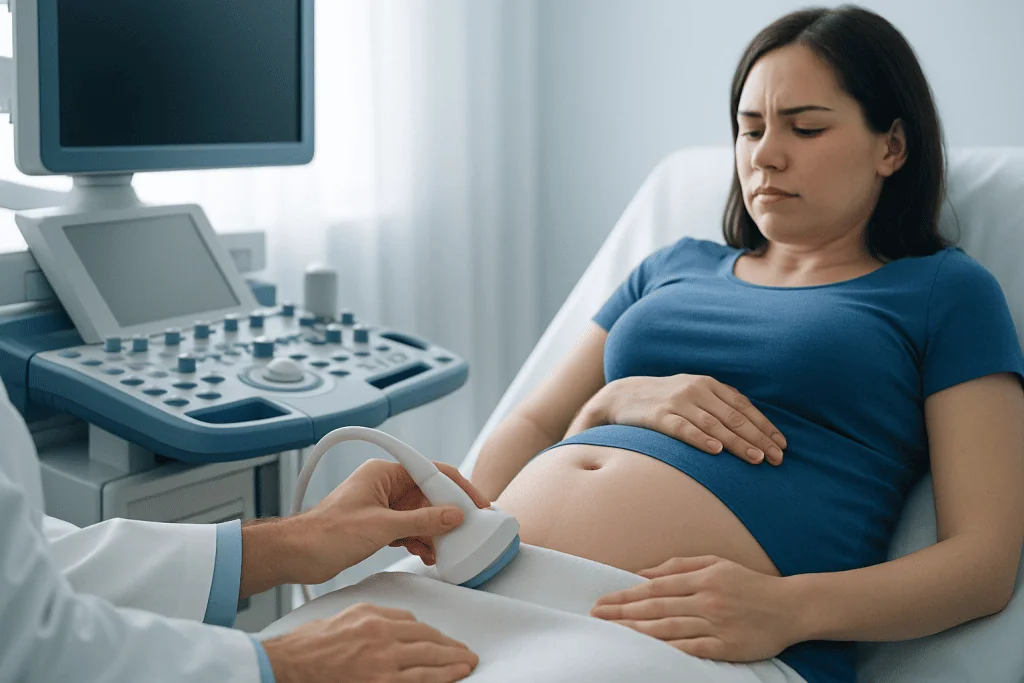
Normal pregnancy-related cramping often feels mild to moderate, comes and goes, and improves with rest, hydration, or changing position. In early pregnancy, some people notice light cramping around the time the embryo implants or as the uterus begins to grow. This can feel similar to menstrual cramps but is usually not severe.
As pregnancy progresses, round ligament pain becomes common. This is a stretching discomfort from the ligaments that support the uterus, often felt as a sharp or pulling pain on one or both sides of the lower abdomen, especially when standing quickly, coughing, or turning in bed. It can be uncomfortable, but it is usually brief.
Digestive causes are also very common. Pregnancy hormones can slow the bowels, leading to bloating, gas, and constipation, which may cause crampy abdominal discomfort. Pressure from the growing uterus can add to this, especially in the second and third trimesters.
Later in pregnancy, Braxton Hicks contractions may cause the belly to tighten or harden for short periods. These practice contractions are usually irregular, not progressively stronger, and often settle with hydration or rest. They are different from true labor, which becomes more regular, more intense, and more frequent over time.
How cramping can differ by trimester
In the first trimester, pregnant stomach cramping is commonly linked to implantation, hormonal changes, bowel symptoms, or early uterine growth. However, this is also the time when miscarriage and ectopic pregnancy may first present, so bleeding, severe pain, or one-sided pain deserve urgent review. If there is concern about a pregnancy outside the uterus, doctors may evaluate for ectopic pregnancy.
In the second trimester, round ligament pain and constipation are frequent causes of cramps. Some people also begin to notice occasional uterine tightening. Although many second-trimester cramps are harmless, persistent pain, pelvic pressure, vaginal discharge changes, or regular tightening can sometimes suggest cervical changes or preterm labor risk.
In the third trimester, Braxton Hicks contractions, fetal movement, muscle strain, and pressure on the pelvis become more noticeable. Still, cramping that becomes regular and progressive before 37 weeks may indicate preterm labor, and sudden abdominal pain can signal conditions that need prompt care.
The location of pain also matters in every trimester. Lower central cramping may come from the uterus or bladder, one-sided pain may suggest ligament strain or a more urgent gynecologic issue, and upper abdominal pain may have causes unrelated to the pregnancy itself, such as digestive or gallbladder problems.
When cramps may signal a medical problem
Doctors become more concerned when pregnant stomach cramping is severe, persistent, or associated with other symptoms. Vaginal bleeding is one of the most important warning signs, especially if it is heavy, accompanied by tissue passage, or linked with strong cramps. In early pregnancy, this can be seen with miscarriage, although light spotting does not always mean pregnancy loss.
One-sided pelvic or abdominal pain, especially with dizziness, fainting, shoulder pain, or bleeding, needs urgent assessment because it can point to an ectopic pregnancy. Fever, chills, or burning with urination may suggest an infection, while nausea and vomiting with worsening pain can raise concern for appendicitis or other abdominal conditions.
In later pregnancy, regular painful contractions, low back pain, pelvic pressure, and fluid leakage can indicate preterm labor or rupture of membranes. Cramping with headache, vision changes, or swelling should also be taken seriously, particularly if upper abdominal pain is present.
Other possible causes of abdominal pain in pregnancy include urinary tract infection, kidney stones, ovarian cyst problems, placental issues, and bowel conditions. The goal is not to assume the worst, but to recognize that severe or unusual pain should be assessed rather than self-diagnosed.
How doctors diagnose the cause of pregnancy cramps
Diagnosis starts with careful questions about the pain: when it began, where it is located, how severe it feels, whether it comes in waves, and what makes it better or worse. Doctors also ask about bleeding, discharge, urinary symptoms, bowel changes, fever, sexual activity, prior pregnancy history, and gestational age.
A physical examination may include checking the abdomen for tenderness, guarding, or uterine tightening, along with vital signs such as temperature, pulse, and blood pressure. Depending on the situation, a pelvic exam may be recommended to assess bleeding, cervical changes, or signs of infection.
Tests are chosen based on the symptoms and stage of pregnancy. These may include urine testing for infection, blood tests, and ultrasound to confirm the location and well-being of the pregnancy or to assess the placenta, cervix, and baby. If symptoms suggest labor or placental concerns, fetal monitoring may also be used in later pregnancy.
When imaging is needed, ultrasound is usually the first step because it is widely used in pregnancy and does not use ionizing radiation. If symptoms suggest a non-obstetric abdominal emergency, specialists may sometimes recommend additional imaging or consultation to clarify the diagnosis safely.
Treatment and safe relief options
Treatment depends on the cause. Mild, normal pregnancy cramps often improve with rest, gentle movement, hydration, and avoiding sudden position changes. For bowel-related cramps, doctors may suggest increasing fluids, fiber, and pregnancy-safe activity, while reviewing which constipation remedies are appropriate.
If discomfort appears related to muscle or ligament strain, supportive measures such as changing posture, using a maternity support garment, or doing pregnancy-safe stretching may help. Some people benefit from warm, not hot, compresses on the area for short periods, though any severe or unexplained pain should be checked before being managed at home.
When an underlying condition is found, treatment is directed at that problem. Examples can include antibiotics for a urinary infection, monitoring for preterm contractions, or specialist care for surgical or obstetric causes. In some situations, clinicians may recommend ultrasound evaluation or inpatient observation if symptoms are more concerning.
People should avoid taking over-the-counter pain medicines, herbal products, or laxatives without medical advice during pregnancy. If cramping is frequent or distressing, discussing it with an obstetrician can help identify safe relief options and rule out conditions needing treatment. If surgery becomes necessary for a pregnancy-related emergency, some centers may coordinate gynecologic care and obstetric assessment together.
Prevention and self-care during pregnancy
Not all pregnant stomach cramping can be prevented, because much of it is caused by normal growth and hormonal changes. Still, a few habits may reduce everyday discomfort. Drinking enough water, eating regular balanced meals, and including fiber-rich foods can help decrease constipation and bowel-related cramping.
Gentle physical activity, if approved by a doctor, may support digestion and ease muscle tension. Many pregnant people also find that moving more slowly when standing up, turning in bed carefully, and resting after exertion can lessen round ligament and muscular discomfort.
Keeping track of symptoms can also be helpful. Noting when cramps happen, how long they last, and whether they are linked to meals, activity, bowel movements, or contractions can make patterns easier to recognize and easier to describe at a medical visit.
Routine prenatal care plays an important preventive role as well. Regular appointments allow the care team to monitor the pregnancy, discuss new symptoms, and address concerns early. For international patients who need specialist evaluation, Acibadem International’s multidisciplinary teams at JCI-accredited hospitals diagnose and treat pregnancy-related conditions with coordinated care.
When to seek medical care
A doctor should be contacted promptly if pregnant stomach cramping is more than mild, keeps returning, or does not improve with rest and hydration. Medical advice is especially important if the pain is one-sided, sudden, severe, or different from prior pregnancy discomfort.
Urgent assessment is needed for cramping with any of the following:
- Heavy vaginal bleeding or passage of clots or tissue
- Fever, chills, or feeling faint
- Shoulder pain, dizziness, or collapse
- Painful urination or inability to pass urine
- Fluid leakage from the vagina
- Regular contractions before 37 weeks
- Reduced fetal movement later in pregnancy
- Severe headache, vision changes, or swelling with upper abdominal pain
It is reasonable to seek advice even when symptoms seem uncertain. Pregnancy symptoms can overlap, and timely evaluation may provide reassurance or allow earlier treatment. If there is concern for labor, bleeding, rupture of membranes, or severe pain, emergency care should not be delayed.
For some patients, recurrent symptoms may lead to referral for further assessment with maternal-fetal medicine support or related specialists, depending on the stage of pregnancy and the suspected cause.
Frequently asked questions
Is pregnant stomach cramping normal?
Yes, mild cramping can be normal in pregnancy. It often happens because the uterus is growing, ligaments are stretching, or digestion is slower. Cramping is more concerning if it is severe, persistent, or comes with bleeding, fever, or dizziness.
What does normal pregnancy cramping feel like?
Normal cramping is often mild to moderate, brief, and may feel like menstrual cramps, pulling, or occasional tightening. It may improve with rest, hydration, or changing position. It should not steadily worsen or be associated with alarming symptoms.
When should a pregnant person worry about cramps?
Medical review is important if cramps are strong, one-sided, continuous, or happen with vaginal bleeding, fainting, fever, fluid leakage, or painful urination. In later pregnancy, regular contractions or reduced fetal movement also need prompt assessment. If symptoms feel severe or unusual, it is safest to contact a doctor.
Can constipation cause cramping during pregnancy?
Yes, constipation is a very common cause of abdominal cramping in pregnancy. Hormonal changes can slow the intestines, and the growing uterus can add pressure. Gas and bloating may make the discomfort feel sharper or more widespread.
Are Braxton Hicks contractions the same as cramps?
Not exactly, but they can feel similar. Braxton Hicks contractions are episodes of uterine tightening, usually irregular and not progressively stronger. True labor tends to become more regular, more painful, and closer together over time.
Can early pregnancy cramps happen without bleeding?
Yes, early pregnancy cramps can occur without bleeding and may still be normal. Uterine changes, implantation-related discomfort, and digestive symptoms can all cause mild cramping. Still, severe or one-sided pain should always be assessed.
References
- American College of Obstetricians and Gynecologists
- National Health Service
- Mayo Clinic
- Merck Manual Consumer Version
- World Health Organization
This article is for general information only and is not a substitute for professional medical advice. Please consult a qualified doctor about your individual situation.
Persistent digestive symptoms? Get evaluated in Turkey
JCI-accredited · board-certified surgeons · reply within 24h
Add us as a Preferred Source to see more of our trusted health content across Google Search, AI Overviews and Discover.