Sle Rashes Images: Common Causes, Related Conditions, and When to See a Doctor

SLE skin rashes can look different from person to person and are not diagnosed by images alone. Common lupus-related patterns include a butterfly rash, sun-sensitive patches, and scaly disc-shaped lesions.
Key Takeaways
- SLE skin rashes can look different from person to person and are not diagnosed by images alone.
- Common lupus-related patterns include a butterfly rash, sun-sensitive patches, and scaly disc-shaped lesions.
- Several non-lupus conditions can mimic SLE rashes, including rosacea, eczema, contact dermatitis, and dermatomyositis.
- Doctors diagnose the cause through medical history, skin examination, blood tests, and sometimes a skin biopsy.
- Prompt medical care is important if a rash occurs with fever, joint pain, mouth sores, chest symptoms, or kidney-related symptoms.
SLE rashes images commonly show a butterfly-shaped facial rash, sun-sensitive red patches, or ring-shaped lesions, but similar-looking skin changes can happen with many other conditions. A careful medical evaluation helps tell lupus-related rashes from eczema, rosacea, infections, allergic reactions, and other causes.
Overview: what SLE rashes images can and cannot show
People searching for sle rashes images usually want to know whether a rash could be related to systemic lupus erythematosus, often called SLE. Images can help people recognize broad patterns, such as a butterfly-shaped rash across the cheeks and nose or red, sun-sensitive patches on exposed skin. However, photos alone cannot confirm lupus, because many common skin conditions can look similar.
SLE is an autoimmune disease that may affect the skin, joints, kidneys, blood cells, lungs, heart, or nervous system. In some people, skin findings appear early. In others, a rash develops only during disease flares or after sun exposure. The appearance can vary with skin tone, skin type, and whether the rash is new, healing, or has been present for some time.
Some rashes linked to lupus are part of systemic disease, while others are forms of cutaneous lupus that mainly affect the skin. Distinguishing these types matters because the evaluation and follow-up may differ. This is why clinicians do not rely on online image comparisons alone, even when a rash seems to match familiar lupus pictures.
What lupus-related rashes may look like
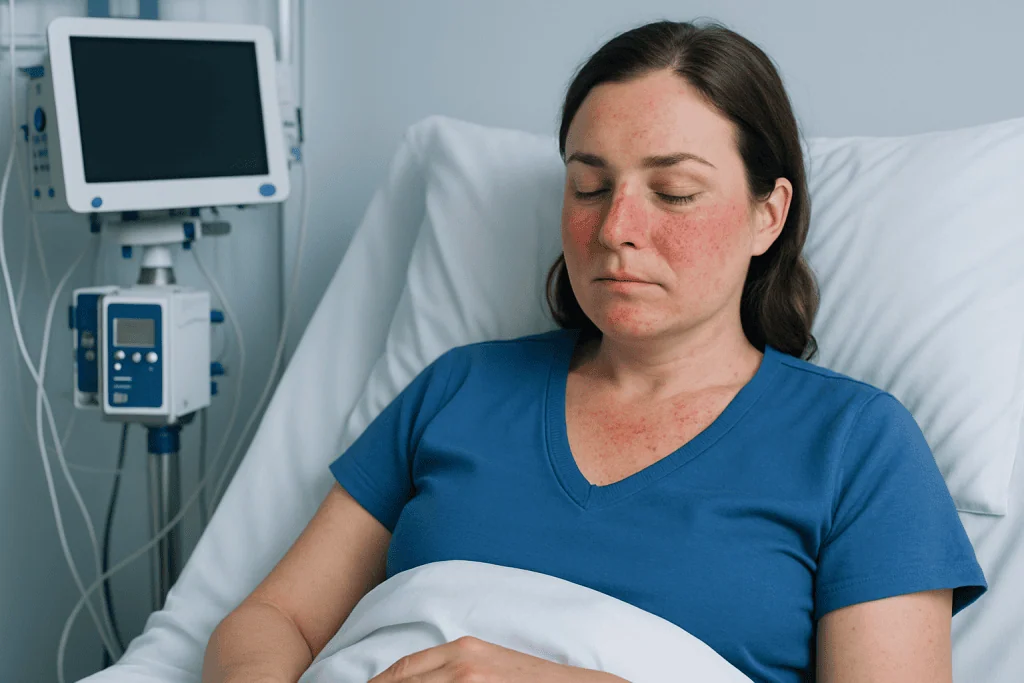
When people look at SLE rashes images, the most recognized pattern is the malar or butterfly rash. This often appears as redness or a slightly raised rash over both cheeks and across the bridge of the nose. It typically spares the folds beside the nose, which can help doctors tell it apart from some other facial rashes.
Another pattern is a photosensitive rash, meaning the skin becomes red or irritated after sun or ultraviolet exposure. These changes may develop on the face, neck, upper chest, shoulders, or arms. In some people, the rash looks bright red; in others, especially with deeper skin tones, it may appear darker, purple-brown, or as patches of uneven pigmentation.
Discoid lesions are thicker, more defined, scaly patches that may leave color change or scarring as they heal. They can occur on the scalp, ears, or other sun-exposed areas and may be part of lupus affecting the skin. Hair loss can occur if scalp lesions scar the hair follicles.
Some people develop ring-shaped or psoriasiform lesions seen in subacute cutaneous lupus, while others have mouth or nose ulcers, small-vessel rash, or temporary hives-like changes. A single image rarely captures this full range, which is why rash description, timing, and associated symptoms are so important during a medical visit.
Common causes and conditions that can mimic SLE rashes

Not every facial or sun-related rash is caused by lupus. Very common conditions such as rosacea can create persistent redness across the nose and cheeks, sometimes with visible blood vessels or acne-like bumps. Eczema and contact dermatitis may cause itchy, inflamed, flaky skin and can be triggered by skin products, fragrances, plants, or metals.
Seborrheic dermatitis can affect the eyebrows, sides of the nose, scalp, and central face with redness and scaling. Psoriasis may produce thick, sharply bordered plaques. Fungal infections, viral rashes, and drug eruptions can also resemble autoimmune skin disease, especially when the rash is widespread or appears soon after starting a new medication.
Other autoimmune conditions may also overlap in appearance. For example, dermatomyositis can cause a violaceous rash around the eyes or over the knuckles, while some forms of vasculitis may create purplish spots or ulcers. Because symptoms and immune findings can overlap, doctors sometimes evaluate both the skin and the rest of the body when considering rheumatologic conditions.
For this reason, a useful way to view SLE rashes images is as a visual guide to possible patterns, not as a diagnosis tool. If a rash keeps returning, worsens with sunlight, or comes with fatigue, joint pain, mouth sores, or unexplained fever, professional assessment is more reliable than self-comparison with online photographs.
Related symptoms that may suggest lupus
A skin rash is more suggestive of SLE when it appears alongside symptoms in other parts of the body. These can include joint pain or swelling, unusual fatigue, low-grade fever, mouth or nose ulcers, chest pain with deep breathing, swollen glands, or color changes in the fingers in cold temperatures. Some people notice symptoms coming and going in flares.
Hair thinning, especially if it is patchy or associated with scalp lesions, may also occur. Sun sensitivity is another clue, particularly when ultraviolet exposure seems to trigger or worsen both the rash and general symptoms. In some cases, there may be swelling in the legs, frothy urine, headaches, or shortness of breath, which can indicate organ involvement and need timely assessment.
Still, these symptoms are not unique to lupus. Many viral illnesses, inflammatory diseases, and medication reactions can produce overlapping signs. A doctor looks at the overall pattern rather than any one symptom in isolation.
If clinicians suspect a systemic autoimmune illness, they may coordinate care between dermatology and rheumatology. In selected cases, imaging or organ-specific tests are arranged if symptoms point beyond the skin. This broader approach is often more helpful than focusing on the rash alone.
How doctors diagnose the cause of a suspicious rash
Diagnosis begins with a detailed history and skin examination. A doctor will ask when the rash began, whether sunlight triggers it, what skin products or medications are being used, whether it itches or burns, and whether symptoms such as joint pain or fatigue are present. Photos taken over time may be useful, especially if the rash fades before the appointment.
During the examination, clinicians look at the rash distribution, shape, scale, color, and whether there is scarring or pigment change. They may examine the scalp, nails, mouth, and other sun-exposed areas. This helps narrow the possibilities between lupus, dermatitis, infection, rosacea, psoriasis, and other causes.
Blood tests may include antinuclear antibodies and other markers when lupus is suspected, but blood work alone does not diagnose every case. Some people with skin-limited disease have different test patterns than those with systemic involvement. Urine tests and other lab tests may be done if there are signs that the kidneys or blood cells could be affected.
Sometimes a skin biopsy is the clearest next step. In a biopsy, a small sample of skin is examined under the microscope, and special studies may be added. If needed, doctors may also use a skin biopsy or arrange a dermatology evaluation to clarify the diagnosis and guide treatment safely.
Treatment options and self-care for lupus-related rashes
Treatment depends on the cause. If the rash is linked to SLE or cutaneous lupus, the plan often includes strict sun protection, gentle skin care, and medications tailored to how severe and widespread the rash is. Doctors may prescribe topical corticosteroids or other anti-inflammatory creams, and some patients need oral medicines that help control autoimmune inflammation.
When rashes are triggered or worsened by ultraviolet exposure, daily sunscreen and protective clothing are a central part of care. Broad-spectrum sunscreen, wide-brimmed hats, shade, and avoidance of intense midday sun can reduce flares. It also helps to avoid irritating skin products and to use bland moisturizers if the skin is dry or sensitive.
If the rash is caused by something other than lupus, treatment may be very different. Rosacea, seborrheic dermatitis, eczema, fungal infections, and allergic reactions each have their own management approaches. This is one reason self-treating based only on online images can delay the right care.
For people with confirmed lupus, treatment may involve a larger care team if other organs are affected. Depending on symptoms, doctors may consider rheumatology care alongside skin treatment. Near the end of the evaluation pathway, patients seeking coordinated international care may also learn that Acibadem International’s multidisciplinary specialists in JCI-accredited hospitals diagnose and treat lupus-related conditions.
When to seek medical care
Medical advice is appropriate if a rash is new, keeps returning, leaves scars, or gets worse after sun exposure. A prompt appointment is especially important if the rash appears together with joint pain, unusual tiredness, fever, chest discomfort, shortness of breath, leg swelling, dark or foamy urine, or sores in the mouth or nose.
Urgent assessment is needed if a rash is rapidly spreading, painful, blistering, associated with swelling of the lips or tongue, or follows a new medication. Emergency care is also important for trouble breathing, severe chest pain, confusion, or signs of dehydration or infection.
Before the visit, it can help to note when the rash started, where it appears, recent sun exposure, new medications, skin products, and any accompanying symptoms. Clear photos taken in natural light may also help a doctor understand how the rash changes over time.
Even when symptoms seem mild, a professional evaluation can offer reassurance and reduce unnecessary worry. Early assessment is helpful because lupus and other look-alike conditions are often easier to manage when identified promptly and followed consistently.
Frequently asked questions
Can SLE be diagnosed just by looking at rash images?
No. Images can suggest patterns that are seen in lupus, but they cannot confirm the diagnosis. Doctors usually consider the skin findings together with symptoms, examination, blood tests, and sometimes a skin biopsy.
What does a lupus butterfly rash usually look like?
It often appears as redness across both cheeks and the bridge of the nose. It may be flat or slightly raised and often becomes more noticeable after sun exposure, but it can look different depending on skin tone and the stage of the rash.
Are lupus rashes always itchy or painful?
Not always. Some lupus rashes burn or feel sensitive, while others cause little discomfort. A rash that is not itchy can still be important, especially if it recurs or appears with other symptoms.
Can other conditions look like lupus on the face?
Yes. Rosacea, eczema, seborrheic dermatitis, contact dermatitis, psoriasis, and some medication reactions can resemble lupus rashes. That is why doctors usually do not diagnose lupus based on appearance alone.
Does sunlight make lupus rashes worse?
For many people, yes. Ultraviolet light can trigger or worsen lupus-related skin changes and may also contribute to broader disease flares in some patients. Daily sun protection is often an important part of management.
When should a person worry about a rash and possible lupus?
It is wise to seek medical advice if a rash keeps coming back, is clearly triggered by sunlight, causes scarring, or appears with symptoms such as joint pain, mouth sores, fatigue, fever, chest pain, or swelling. Urgent care is needed for severe reactions, breathing problems, or a rapidly spreading blistering rash.
References
- American Academy of Dermatology
- National Institute of Arthritis and Musculoskeletal and Skin Diseases
- Centers for Disease Control and Prevention
- Mayo Clinic
- Lupus Foundation of America
This article is for general information only and is not a substitute for professional medical advice. Please consult a qualified doctor about your individual situation.
Explore treatments in Turkey — costs, top hospitals & a free quote
JCI-accredited · board-certified surgeons · reply within 24h
Add us as a Preferred Source to see more of our trusted health content across Google Search, AI Overviews and Discover.