Face Yoga: An Evidence-Based Guide for Patients
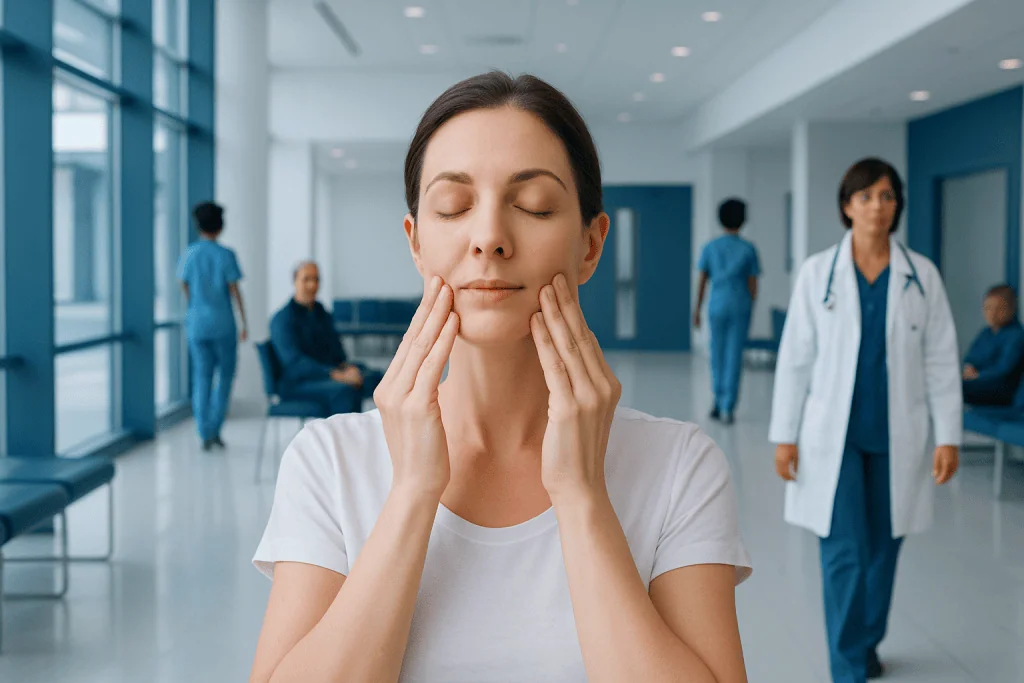
Face yoga involves repeated facial movements, stretching, and massage of the face and neck. Research on face yoga is limited, and claims about major anti-aging results are not strongly proven.
Key Takeaways
- Face yoga involves repeated facial movements, stretching, and massage of the face and neck.
- Research on face yoga is limited, and claims about major anti-aging results are not strongly proven.
- It may help some people notice and reduce facial tension, but results vary widely.
- Incorrect or forceful technique can irritate the skin, worsen jaw tension, or aggravate some conditions.
- Persistent facial weakness, pain, asymmetry, rash, or sudden changes should be assessed by a doctor.
Face yoga is a set of facial exercises and massage techniques intended to tone facial muscles, improve relaxation, and support skin appearance. Current evidence suggests it may help some people feel more aware of facial tension, but it should not be viewed as a proven medical treatment for aging, facial asymmetry, or skin disease.
What Is Face Yoga and Does It Work?
Face yoga refers to a group of repeated facial movements, stretching routines, breathing exercises, and self-massage techniques designed to work the muscles of the face and neck. People often use it with the hope of improving muscle tone, reducing tension, and making the face look firmer or more refreshed. It is commonly promoted as a noninvasive wellness practice rather than a medical therapy.
The short answer is that face yoga may help some people become more aware of facial tension and posture, but scientific evidence for clear, lasting cosmetic benefits remains limited. A few small studies have suggested modest changes in perceived fullness or facial appearance after regular practice, yet the research base is still small, methods vary, and findings are not strong enough to support broad claims.
That means face yoga can be approached as a personal self-care habit, but not as a substitute for evidence-based treatment of skin aging, facial pain, facial weakness, or neurological conditions. Patients who are curious about it can try gentle routines with realistic expectations, paying attention to comfort and skin health.
How Face Yoga Is Thought to Affect the Face
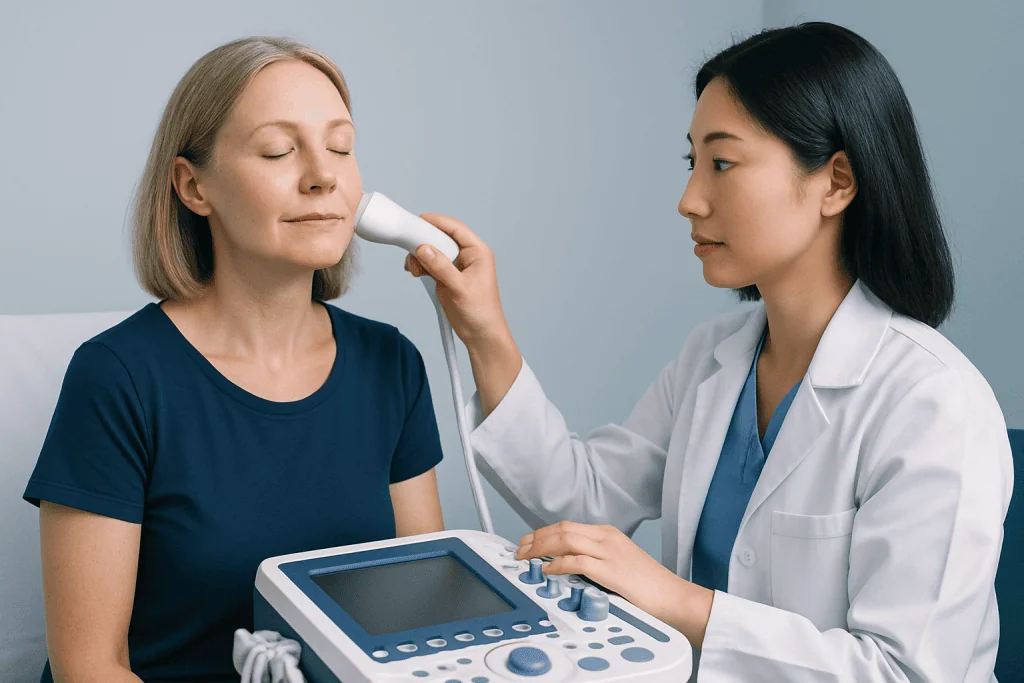
The face contains many small muscles that help with expression, speech, chewing, and eye closure. Face yoga aims to repeatedly activate selected muscles while also relaxing others. In theory, this may influence muscle awareness, tension patterns, and how a person holds the face at rest.
Supporters often suggest that strengthening certain facial muscles may create a fuller or more lifted appearance. However, facial aging is influenced by much more than muscle tone alone. Skin quality, collagen loss, bone structure, fat distribution, sun exposure, genetics, smoking, sleep, and overall health all play important roles.
Massage components of face yoga may temporarily improve comfort by encouraging relaxation and increasing circulation to the skin surface. For some people, this can create a short-term sense of freshness. Still, temporary effects should not be confused with proven structural change or medical improvement.
- Muscle awareness may improve with practice.
- Jaw, brow, or forehead tension may feel reduced in some people.
- Visible cosmetic changes, if any, are usually subtle and variable.
- Face yoga does not reverse skin disease, nerve injury, or significant tissue laxity.
Possible Benefits and Realistic Expectations

For patients interested in low-risk, at-home wellness practices, face yoga may offer practical benefits unrelated to anti-aging claims. Some people find that a brief daily routine encourages mindfulness, improves awareness of habitual jaw clenching, and reminds them to soften the forehead or relax the eyes. This may be especially helpful for those who hold stress in their facial muscles.
Another possible benefit is self-observation. During face yoga, a person may notice dryness, irritation, uneven movement, tenderness, or tension that had gone unrecognized. That awareness can support healthier habits such as better skin care, stress reduction, or evaluation of teeth grinding and posture.
It is important to keep expectations grounded. Face yoga is unlikely to produce dramatic lifting, erase deep wrinkles, or replace treatments used for significant skin laxity or cosmetic goals. Patients seeking expert guidance on skin aging or facial rejuvenation may benefit from a dermatology or aesthetic consultation, and in selected cases options such as facial aesthetic evaluation or plastic and reconstructive surgery may be discussed when concerns are structural rather than exercise-related.
Risks, Limitations, and Who Should Be Cautious
Face yoga is generally low risk when done gently, but it is not risk free. Repetitive, forceful movements may irritate sensitive skin, worsen redness, or increase discomfort in people with acne, rosacea, eczema, or recent cosmetic procedures. Pulling strongly on the skin can also be uncomfortable and may lead to temporary irritation.
People with jaw problems may need particular caution. Exaggerated mouth movements or clenching-based exercises can aggravate temporomandibular joint symptoms, facial pain, headaches, or muscle fatigue. If a person already has jaw clicking, locking, tooth grinding, or pain with chewing, it is best to seek professional advice before starting a routine.
Face yoga should also not be used to manage facial drooping, weakness, numbness, or sudden asymmetry without medical assessment. These symptoms can have important causes, including Bell’s palsy or stroke-related conditions, and prompt evaluation matters. Likewise, persistent facial pain may warrant assessment for trigeminal neuralgia or other nerve-related disorders rather than self-treatment alone.
What the Research Says
Research on face yoga is still developing. A small number of clinical studies and observational reports have explored whether regular facial exercise programs can improve perceived facial fullness or signs of aging. Some findings have been promising, but most studies have important limitations such as small sample sizes, lack of control groups, short follow-up, or subjective outcome measures.
Because of these limitations, current evidence does not support strong medical claims that face yoga can reliably lift the face, remove wrinkles, or create durable structural changes for everyone. It is more accurate to say that face yoga may offer modest benefits for some individuals, especially in terms of facial awareness, relaxation, and satisfaction with self-care routines.
Patients should be cautious with online before-and-after images and bold marketing claims. Lighting, posture, makeup, weight changes, skin care, camera angle, and natural day-to-day variation can all affect appearance. An evidence-based approach focuses on what has been studied, what remains uncertain, and what symptoms require proper medical evaluation.
How to Practice Face Yoga More Safely
Anyone who wants to try face yoga should begin with a gentle, simple routine rather than aggressive or prolonged exercises. Clean hands, light pressure, and comfortable movements are important. It is better to stop if an exercise causes pain, jaw strain, skin pulling, headache, dizziness, or eye irritation.
Practical steps can reduce the chance of problems. Patients should use a light moisturizer if friction on the skin causes tugging, avoid routines immediately after skin procedures unless cleared by a clinician, and be careful around the eyes where skin is delicate. Breathing normally and avoiding forceful grimacing also helps keep the practice comfortable.
- Start with short sessions a few times per week.
- Focus on relaxation and posture, not maximum effort.
- Avoid repetitive clenching or painful stretching.
- Stop and seek advice if symptoms worsen.
Face yoga works best when viewed as one small part of broader skin and wellness care. Sun protection, sleep, smoking avoidance, hydration, stress management, and treatment of underlying skin conditions usually have a more meaningful impact on long-term facial health than exercise alone.
Medical Alternatives for Facial Concerns
When facial concerns are driven by skin disease, anatomical change, nerve dysfunction, or major cosmetic goals, a medical assessment is often more helpful than self-directed exercises. For example, persistent redness, pigmentation changes, or acne may need dermatologic care, while facial weakness or numbness may require neurological evaluation. A doctor can help determine whether symptoms are cosmetic, musculoskeletal, dental, dermatologic, or neurological in origin.
For people mainly concerned about aging changes, treatment options vary widely and should be personalized. Depending on the issue, medical skin care, dermatologic procedures, or selected surgical approaches may be discussed. Problems related to breathing, structure, or nasal appearance may sometimes overlap with broader facial concerns, and in appropriate cases septoplasty or rhinoplasty may be relevant after specialist assessment.
Near the end of the care pathway, patients who need multidisciplinary evaluation can be seen by teams that include dermatologists, plastic surgeons, neurologists, dentists, and rehabilitation specialists. Acibadem International’s multidisciplinary specialists and JCI-accredited hospitals diagnose and treat a wide range of facial, neurological, and reconstructive conditions for international patients.
When to Seek Medical Care
Face yoga should not delay medical care when symptoms suggest an underlying condition. A patient should seek prompt medical advice for sudden facial drooping, inability to close one eye, new facial numbness, weakness, trouble speaking, severe headache, or facial changes that develop quickly. These symptoms may need urgent assessment.
Non-urgent but important evaluation is also recommended for recurring jaw pain, clicking or locking of the jaw, frequent tension headaches, chronic facial asymmetry, skin rash, pain around the eyes, or symptoms that worsen during facial exercises. A clinician can identify whether the problem is related to joints, nerves, muscles, skin, or another cause.
If face yoga is being considered after facial surgery, injectable treatments, dental work, or a diagnosis such as Bell’s palsy, it is wise to ask the treating clinician first. Professional guidance helps ensure that exercises, if used, are appropriate, gentle, and timed safely within the recovery plan.
Frequently asked questions
Can face yoga really reduce wrinkles?
Face yoga may help some people feel more relaxed in the forehead, jaw, or around the eyes, but it is not a proven way to remove wrinkles. Research is limited, and any visible improvement is usually subtle and variable.
How long does it take to see results from face yoga?
There is no reliable timeline that applies to everyone. Some people notice better awareness of facial tension within days or weeks, while visible cosmetic changes, if they occur, tend to be modest and may take longer.
Is face yoga safe for everyone?
It is generally safe when practiced gently, but it may not be suitable for everyone. People with jaw disorders, recent facial procedures, active skin irritation, facial pain, or sudden asymmetry should speak with a healthcare professional before starting.
Can face yoga help Bell’s palsy or facial weakness?
Face yoga should not be used as a substitute for medical evaluation of facial weakness. Bell’s palsy and other causes of facial asymmetry need proper diagnosis, and any rehabilitation exercises should be guided by a qualified clinician.
Can face yoga make wrinkles or tension worse?
It can if movements are repetitive, forceful, or uncomfortable. Overworking the jaw or repeatedly creasing the skin may worsen tension or irritation in some people, so a gentle approach is important.
What is a better evidence-based approach to facial aging?
Long-term facial health is more strongly influenced by sun protection, smoking avoidance, good skin care, sleep, and management of medical skin conditions. For specific cosmetic concerns, a dermatologist or plastic surgeon can explain evidence-based options tailored to the individual.
References
- American Academy of Dermatology
- National Institute on Aging
- National Center for Complementary and Integrative Health
- American Academy of Neurology
- Mayo Clinic
This article is for general information only and is not a substitute for professional medical advice. Please consult a qualified doctor about your individual situation.
Explore treatments in Turkey — costs, top hospitals & a free quote
JCI-accredited · board-certified surgeons · reply within 24h
Add us as a Preferred Source to see more of our trusted health content across Google Search, AI Overviews and Discover.

More from the Health Library

Botoxon: Procedure, Recovery and Results

Third Degree Heart Block — Explained by Medical Evidence, Not Myths

Intermittent Claudication: A Complete Medical Overview

Separation Anxiety: What Patients Need to Know

Perforated Septum: An Evidence-Based Guide for Patients