Bell Palsy
Bell Palsy causes sudden facial weakness. Learn symptoms, diagnosis, treatment options, eye care, recovery, and when to seek medical help.

Quick answer
Bell palsy is a sudden weakness or paralysis of the muscles on one side of the face, usually caused by inflammation affecting the facial nerve. Treatment focuses on confirming the diagnosis, protecting the eye, and supporting nerve recovery with medication and follow-up care tailored to the patient’s symptoms.
Bell Palsy is a sudden weakness or paralysis of the muscles on one side of the face, usually caused by inflammation of the facial nerve. It is often temporary, and many people improve with timely medical assessment, eye protection, and appropriate treatment.
Overview
Bell Palsy is an acute condition in which the facial nerve, also called the seventh cranial nerve, stops working properly on one side of the face. This nerve controls the muscles used for smiling, blinking, closing the eye, raising the eyebrow, and making facial expressions. When the nerve becomes inflamed or compressed, the face may suddenly droop or feel weak.
The condition is called peripheral facial nerve palsy because it affects the nerve after it has left the brain, rather than the brain itself. Bell Palsy is usually idiopathic, meaning no single definite cause is found. However, it is commonly linked to swelling of the facial nerve, sometimes after a viral infection or another trigger that irritates the nerve.
Bell Palsy can be unsettling because it changes facial appearance quickly. In many cases, symptoms improve over weeks to months, especially when the eye is protected and medical care is started early when appropriate. A prompt evaluation is important because other conditions, including stroke, infections, ear disease, tumors, or inflammatory disorders, can also cause facial weakness and may require different treatment.
Symptoms
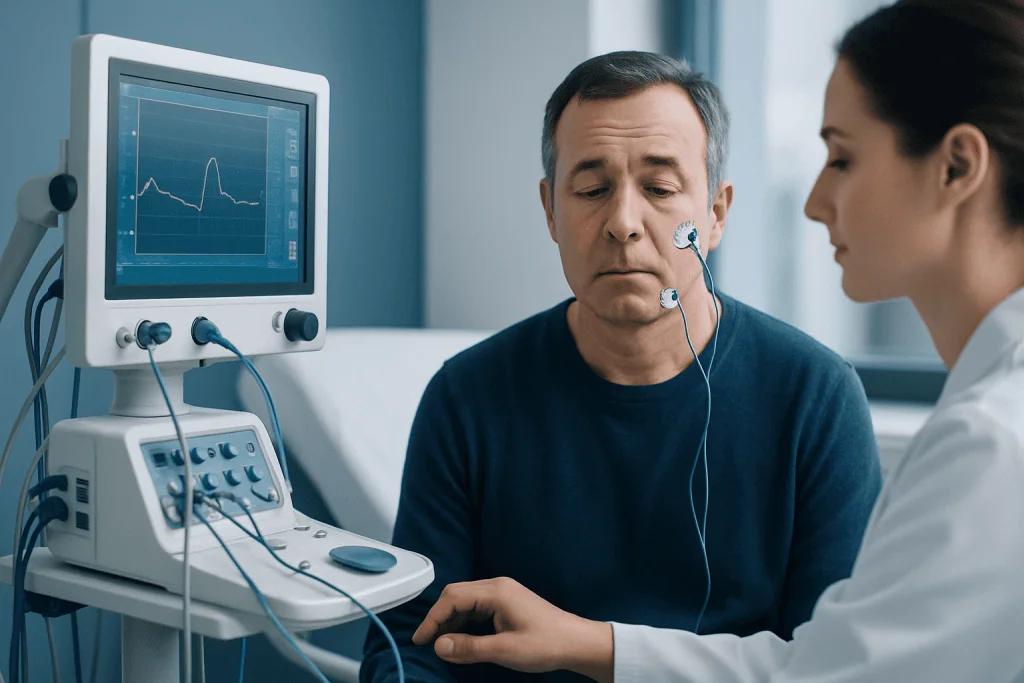
Bell Palsy symptoms usually begin suddenly and often reach their maximum within 24 to 72 hours. The main symptom is weakness or paralysis of one side of the face. A person may notice that the mouth pulls to one side, smiling becomes uneven, the eyebrow does not lift normally, or the eye on the affected side cannot close fully.
Symptoms can range from mild weakness to complete loss of movement on one side of the face. Because the facial nerve also contributes to tear production, taste, and sound sensitivity, symptoms may involve more than appearance or muscle movement.
- Drooping of one side of the face or mouth
- Difficulty closing the eyelid or blinking
- Dryness, watering, redness, or irritation of the affected eye
- Drooling or difficulty keeping liquids in the mouth
- Reduced ability to smile, frown, whistle, or puff out the cheek
- Pain or discomfort around the ear, jaw, or behind the ear
- Changes in taste, especially on the front part of the tongue
- Increased sensitivity to sound in one ear
Bell Palsy typically affects only one side of the face. Facial weakness with arm or leg weakness, confusion, severe dizziness, difficulty speaking, vision loss, or sudden severe headache is not typical and needs urgent emergency assessment.
Causes & Risk Factors
The exact cause of Bell Palsy is often not identified. The leading explanation is that inflammation causes swelling of the facial nerve as it passes through a narrow bony canal in the skull. When the nerve swells in this tight space, its blood supply and signal transmission may be affected, leading to temporary weakness or paralysis of the facial muscles.
Viral infections are considered possible triggers in some cases. Reactivation of viruses that remain dormant in the body may irritate the facial nerve. Other infections or inflammatory conditions can also cause facial nerve palsy that resembles Bell Palsy, which is why a medical assessment is important before assuming the diagnosis.
Certain factors may increase the chance of developing Bell Palsy or a similar facial nerve weakness. These include recent upper respiratory infection, diabetes, pregnancy, high blood pressure, immune system changes, and a previous episode of facial palsy. In areas where tick-borne illness occurs, Lyme disease can also cause facial nerve weakness and may affect one or both sides of the face.
Bell Palsy is not usually caused by stress alone, although stress, fatigue, or illness may be present before symptoms appear. It is not considered contagious, but an infection that may have acted as a trigger could be contagious depending on the cause. A specialist can help distinguish Bell Palsy from other facial nerve disorders.
Diagnosis
Bell Palsy is usually diagnosed through a clinical examination. The doctor asks when symptoms started, how quickly they progressed, whether there is pain, rash, hearing change, recent infection, tick exposure, injury, or previous facial weakness. The pattern of facial movement is important because Bell Palsy usually affects both the upper and lower parts of one side of the face, including the forehead and eye closure.
The examination may include checking facial movements, eye closure, speech, swallowing, hearing, balance, skin around the ear, and the rest of the nervous system. A normal strength and sensation examination in the arms and legs supports a peripheral facial nerve problem, while additional neurological signs may suggest another diagnosis.
Many people do not need extensive testing if the history and examination are typical. Tests may be recommended when symptoms are unusual, slowly progressive, recurrent, bilateral, associated with other neurological signs, or do not improve as expected. Depending on the situation, tests may include blood tests, imaging such as MRI or CT, hearing evaluation, or electrical studies of the facial nerve.
Diagnosis also involves ruling out conditions that can mimic Bell Palsy. These include stroke, Ramsay Hunt syndrome, Lyme disease, middle ear infection, trauma, tumors affecting the facial nerve, autoimmune disease, and other neurological disorders. This is why sudden facial weakness should be evaluated by a qualified doctor rather than self-diagnosed.
Treatment Options
Treatment for Bell Palsy depends on symptom severity, timing, eye involvement, medical history, and whether another cause is suspected. The right approach is decided by a specialist after assessment. The goals are to reduce nerve inflammation when appropriate, protect the eye, support facial function, and monitor recovery.
Medication may be recommended for some patients, especially early in the course of symptoms. Anti-inflammatory steroid medication is commonly considered because it may improve the chance of recovery when started promptly in suitable patients. Antiviral medication may be considered in selected cases, particularly when a viral nerve irritation is suspected, but it is not appropriate for everyone and should be decided by a doctor.
Eye care is a central part of treatment when the eyelid does not close fully. The cornea can become dry or irritated if blinking is reduced. Protective measures may include lubricating drops or ointment, taping or covering the eye during sleep, wearing protective glasses, and ophthalmology review if there is redness, pain, blurred vision, or persistent dryness.
Supportive therapy may include facial exercises, physiotherapy, massage, and guidance on safe movement patterns, especially when weakness persists. Most cases do not require surgery. Surgical or reconstructive procedures are reserved for selected situations such as long-term facial weakness, eyelid closure problems, or facial synkinesis, and are considered only after specialist evaluation.
Living With / Prognosis
Many people with Bell Palsy recover fully or have major improvement, but recovery speed varies. Some people begin to notice movement returning within a few weeks, while others improve more gradually over several months. The outlook is generally better when weakness is partial rather than complete, when treatment is started early if appropriate, and when the eye is well protected.
During recovery, daily care focuses on comfort, eye safety, nutrition, speech clarity, and emotional well-being. Eating slowly, choosing softer foods if chewing is difficult, drinking carefully, and cleaning around the mouth can help reduce dribbling or irritation. If the eye does not close completely, consistent lubrication and protection are important until blinking returns.
A small number of people may have longer-lasting effects such as facial tightness, involuntary movements, eye watering during eating, or synkinesis, where one facial movement triggers another unintentionally. Rehabilitation with clinicians experienced in facial nerve recovery can help manage these symptoms. Follow-up is especially important if there is no improvement, symptoms worsen, or facial weakness returns.
For international patients seeking evaluation, Acibadem International provides access to multidisciplinary specialists in JCI-accredited hospitals for diagnosis and treatment of facial nerve conditions such as Bell Palsy. Care is individualized after neurological assessment and, when needed, input from ophthalmology, ear-nose-throat, rehabilitation, and reconstructive specialists.
When to See a Doctor
Anyone with sudden facial weakness should seek medical assessment promptly, even if Bell Palsy seems likely. Early evaluation helps confirm whether the problem is peripheral facial nerve palsy and helps rule out conditions that need urgent care. It also allows eye protection and other treatment decisions to begin without unnecessary delay.
Emergency medical care is needed if facial drooping occurs with weakness or numbness in the arm or leg, difficulty speaking, confusion, loss of balance, double vision, sudden vision loss, severe headache, chest pain, or fainting. These symptoms may suggest stroke or another urgent condition and should not be watched at home.
A doctor should also be contacted if the eye becomes painful, red, very dry, sensitive to light, or vision becomes blurred. Follow-up is important if facial weakness is worsening after several days, affects both sides of the face, comes with a blistering ear rash or severe ear pain, occurs after injury, or does not begin to improve within the expected timeframe.
Frequently asked questions
What is Bell Palsy?
Bell Palsy is a sudden weakness or paralysis of the muscles on one side of the face caused by dysfunction of the facial nerve. It is usually related to inflammation or swelling of the nerve and often develops over hours. Most cases are temporary, but medical assessment is important to confirm the diagnosis.
Is Bell Palsy the same as a stroke?
No. Bell Palsy affects the facial nerve outside the brain, while a stroke is caused by a problem with blood flow in the brain. However, both can cause facial drooping, so sudden facial weakness should be checked urgently, especially if there are speech problems, arm or leg weakness, confusion, or balance changes.
How long does Bell Palsy take to recover?
Recovery time varies from person to person. Some people notice improvement within weeks, while others recover gradually over several months. Follow-up is recommended if symptoms are severe, recovery is slow, or there are persistent eye or facial movement problems.
Can Bell Palsy affect the eye?
Yes. If the eyelid cannot close fully, the eye may become dry, irritated, red, or vulnerable to corneal damage. Eye lubrication, protection during sleep, and prompt review for pain or blurred vision are important parts of care.
What causes Bell Palsy?
The exact cause is often unknown. It is thought to involve inflammation and swelling of the facial nerve, sometimes triggered by viral reactivation or recent infection. Other conditions can also cause facial nerve weakness, so a doctor should evaluate the symptoms.
Is Bell Palsy contagious?
Bell Palsy itself is not considered contagious. If a recent viral infection acted as a trigger, that infection may have been contagious depending on the virus. The facial weakness is a nerve problem, not something that spreads from person to person.
What treatment is used for Bell Palsy?
Treatment may include anti-inflammatory medication, selected antiviral treatment, eye protection, and facial rehabilitation depending on the individual case. The best plan depends on timing, severity, eye closure, medical history, and whether another cause is suspected. A qualified doctor or specialist should decide the appropriate approach after assessment.
References
- National Institute of Neurological Disorders and Stroke
- American Academy of Otolaryngology-Head and Neck Surgery
- Mayo Clinic
- NHS
- BMJ Best Practice
This article is for general information only and is not a substitute for professional medical advice. Please consult a qualified doctor about your individual situation.
Treatments for This Condition
Doctors Who Treat This Condition

Prof. Dr. Cihan Aksoy
Physical Medicine & Rehabilitation
Prof. Dr. Ece Aydoğ
Physical Medicine & Rehabilitation
Prof. Dr. Emel Özcan
Physical Medicine & Rehabilitation
Prof. Dr. Ferda Özdemir
Physical Medicine & Rehabilitation
Dr. Sema Çetin
Physical Medicine & Rehabilitation
Dr. Ufuk Güngör
Physical Medicine & Rehabilitation
Fzt. Osman Karaoğlan
Physical Medicine and Rehabilitation
Fzt. Perihan Yıldız
Physical Medicine and Rehabilitation
Fzt. Sabit Kılıç
Physical Medicine and Rehabilitation
Fzt. Semih Kızıltan
Physical Medicine and Rehabilitation
Fzt. Sena Durmaz
Physical Medicine and Rehabilitation
Fzt. Serkan Başkurt
Physical Medicine and RehabilitationRelated Articles

Nerve Compression Symptoms: When Peripheral Nerve Treatment May Help

Unexplained Fainting: When Heart Rhythm and Neurology Tests Are Both Needed

Swallowing Problems in Neurological Disease: When Dysphagia Needs Specialist Care

When Dizziness Is Neurological: Signs You May Need a Neuro-Otology Assessment

Motor Neuron Disease: When Speech or Swallowing Problems Are the First Clues

Tourette Syndrome in Children and Adults: Symptoms and Treatment Options

Swallowing Problems in Motor Neuron Disease: Early Warning Signs and Supportive Care

Narcolepsy Testing: How to Prepare for an MSLT and Sleep Lab Evaluation

What Is a Neuro-Ophthalmology Exam? Step by Step for Patients With Vision and Nerve Symptoms

Pediatric Epilepsy Surgery: Who May Be a Candidate and How Evaluation Works

Cerebral Angiography vs MR Angiography: Which Brain Vessel Test Is Right?