Foamy Faeces: An Evidence-Based Guide for Patients

Foamy faeces is often caused by trapped gas, diet changes, or a brief stomach upset. Persistent foam, greasy stool, pale color, or a foul smell can suggest fat malabsorption.
Key Takeaways
- Foamy faeces is often caused by trapped gas, diet changes, or a brief stomach upset.
- Persistent foam, greasy stool, pale color, or a foul smell can suggest fat malabsorption.
- Associated symptoms such as diarrhea, abdominal pain, fever, or weight loss deserve medical attention.
- Doctors may use stool tests, blood tests, and sometimes imaging or endoscopy to find the cause.
- Treatment depends on the underlying reason and may include diet changes, treating infection, or managing digestive disease.
Foamy faeces usually happens when stool contains extra gas or moves quickly through the bowel, and it is often short-lived. If it keeps happening, looks oily or pale, or comes with weight loss, pain, fever, or diarrhea, a medical assessment is sensible to check for digestion or bowel problems.
What foamy faeces usually means
Foamy faeces means stool that looks bubbly, frothy, or full of small air pockets in the toilet bowl. In many cases, this happens because gas is mixed into the stool, especially after diet changes, temporary indigestion, or a short episode of diarrhea. On its own, a single episode is not usually a sign of a serious problem.
What matters most is the pattern. If foamy faeces keeps returning, looks greasy, floats regularly, appears unusually pale, or leaves an oily film, it may suggest that the body is not absorbing fats properly. This is called malabsorption and can happen with conditions affecting the pancreas, liver, bile ducts, or small intestine.
Foamy stool is a description rather than a diagnosis. Doctors look at the whole picture, including bowel habits, abdominal symptoms, appetite, weight changes, recent infections, medicines, and diet. That broader view helps separate harmless short-term changes from conditions that need treatment.
How stool appearance can change
Healthy stool varies from person to person. Color, texture, smell, and how often someone opens their bowels can all change with hydration, food choices, stress, and routine. Because of this, an unusual bowel movement once in a while does not necessarily mean disease.
Foam can appear when stool passes quickly through the gut and traps air, or when fermentation in the intestines creates more gas. Some people notice this after eating large amounts of certain carbohydrates, artificial sweeteners, or foods that are hard for them to digest. A mild viral stomach illness can also temporarily change stool texture.
However, persistent changes are more important. Greasy, difficult-to-flush stool can point to excess fat. Mucus may suggest irritation or inflammation in the bowel. Black, red, or clay-colored stool should not be ignored, as these changes can have different medical causes and may require prompt assessment.
Common causes and possible risk factors

The most common explanation for foamy faeces is excess gas in the stool. This can occur after a brief digestive upset, swallowing air, eating quickly, or consuming foods that increase fermentation in the bowel. Examples include beans, carbonated drinks, some high-fiber foods, and ingredients that are poorly tolerated by the individual.
Diarrhea is another common reason. When stool moves through the intestines too quickly, it may not have time to form normally, and gas can become mixed in. Infections, food poisoning, antibiotics, and stress-related bowel changes can all lead to loose or frothy bowel movements.
Sometimes foamy faeces suggests malabsorption, especially if the stool is bulky, oily, foul-smelling, or floating. Possible causes include celiac disease, chronic pancreatitis, bile acid problems, small intestinal disorders, or inflammatory bowel conditions such as Crohn’s disease. People may also notice bloating, tiredness, vitamin deficiency symptoms, or unplanned weight loss.
Other risk factors include a history of digestive disease, previous intestinal surgery, known food intolerance, heavy alcohol use, recent travel, or a family history of bowel conditions. Persistent symptoms should be discussed with a qualified doctor rather than self-diagnosed based on stool appearance alone.
Symptoms that can help identify the cause
Foamy faeces is more meaningful when it comes with other symptoms. Bloating, excessive wind, cramping, nausea, and loose stools often point to short-term digestive irritation or difficulty digesting certain foods. These symptoms may settle with time, hydration, and a return to a simple diet.
If the underlying issue is fat malabsorption, stool may look pale, bulky, greasy, or difficult to flush. Some people describe an oily sheen on the water or stool that sticks to the toilet bowl. They may also develop weight loss, tiredness, muscle weakness, or signs of poor absorption of vitamins and nutrients.
Inflammatory or chronic bowel conditions may cause diarrhea lasting more than a few days, abdominal pain, urgency, mucus, or blood. In these situations, further assessment may be needed to look for conditions such as ulcerative colitis or other forms of bowel inflammation. Keeping a brief symptom diary can help a doctor see patterns linked to meals, stress, or medication use.
How doctors assess foamy faeces
Assessment usually starts with a careful history. A doctor may ask when the foam began, how often it happens, whether the stool is greasy or pale, and whether there are symptoms such as pain, diarrhea, fever, weight loss, or blood. They may also ask about recent travel, infections, antibiotics, alcohol, family history, and foods that seem to trigger symptoms.
A physical examination may be followed by basic tests. Blood tests can look for anemia, inflammation, infection, liver function changes, nutritional deficiencies, or signs of celiac disease. Stool tests may check for infection, hidden blood, inflammation, or evidence of poor fat absorption.
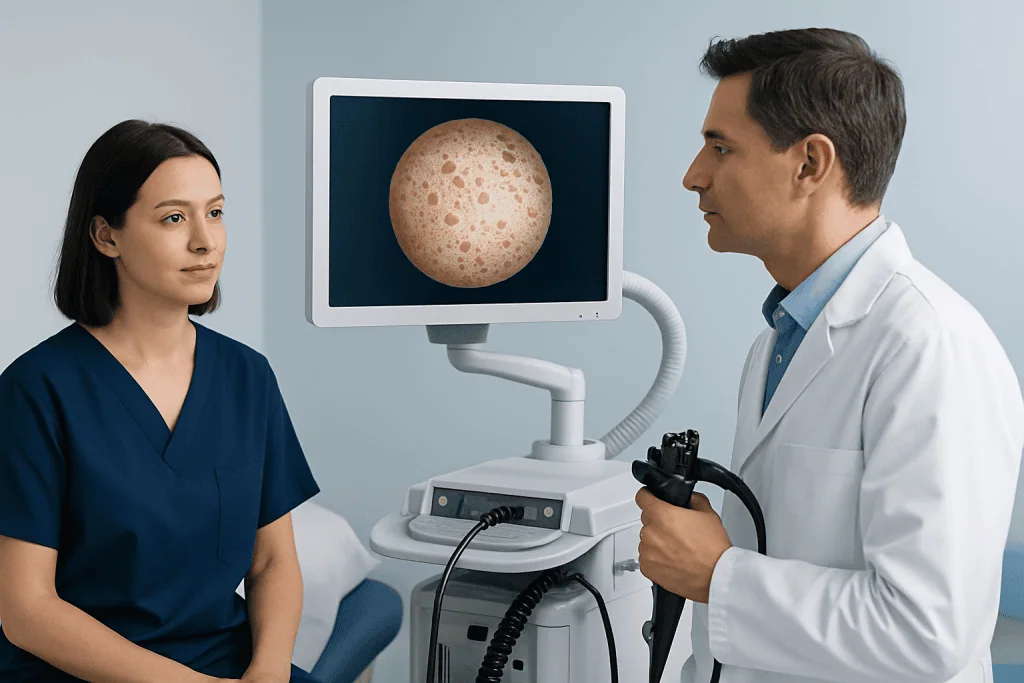
If symptoms continue or suggest a more complex digestive problem, further evaluation may be needed. Depending on the situation, this can include endoscopy to examine the upper digestive tract, colonoscopy to assess the large bowel, or MRI scan and other imaging to evaluate abdominal organs. The choice of test depends on the person’s age, symptoms, and likely diagnosis.
Treatment options and self-care
Treatment for foamy faeces depends on the cause. If it is related to a temporary stomach bug or diet change, symptoms often improve with time, adequate fluids, and a gentle return to regular eating. Avoiding foods that clearly worsen bloating or diarrhea may help while the gut settles.
When a doctor identifies a specific trigger, treatment is aimed at that condition. This may include managing food intolerances, treating an infection, addressing malabsorption, or supporting chronic digestive conditions with longer-term care. If symptoms suggest pancreatic, liver, or bowel disease, specialist review is often useful.
General self-care steps may include eating more slowly, limiting excess alcohol, staying hydrated, and keeping track of foods that trigger symptoms. People should avoid restrictive diets unless guided by a clinician or dietitian, because unnecessary food elimination can make nutrition less balanced.
For patients who need specialist digestive care, Acibadem International’s multidisciplinary teams in JCI-accredited hospitals assess bowel symptoms for international patients and can arrange investigations such as gastroenterology evaluation when appropriate.
When to seek medical care
Medical advice is sensible if foamy faeces lasts more than a few days, happens repeatedly, or is accompanied by diarrhea that does not improve. A doctor should also be consulted if stool is greasy, very pale, black, red, or mixed with mucus, or if it smells unusually foul on an ongoing basis.
Prompt assessment is important if there is severe abdominal pain, fever, dehydration, vomiting, unplanned weight loss, weakness, or signs of poor nutrition. These features do not automatically mean a serious illness, but they do suggest that the cause should be checked properly.
Parents should seek advice sooner for babies, young children, older adults, and people with weakened immunity, since dehydration and infections can affect these groups more quickly. If there is heavy rectal bleeding, fainting, confusion, or severe ongoing pain, urgent medical care is needed.
Frequently asked questions
Is foamy faeces always a sign of illness?
No. Foamy faeces can happen temporarily when stool contains extra gas or during a short episode of diarrhea. If it happens once or twice and then settles, it is often not a cause for concern.
Can certain foods cause foamy faeces?
Yes. Foods that increase gas or are harder for someone to digest can make stool look bubbly or frothy. Common examples include carbonated drinks, beans, some high-fiber foods, and foods linked to a personal intolerance.
What is the difference between foamy stool and fatty stool?
Foamy stool mainly describes a bubbly or frothy appearance, often related to gas. Fatty stool is more likely to look greasy, pale, bulky, or oily and may suggest poor fat absorption, especially if it keeps happening.
Should I worry if foamy faeces also floats?
Not always. Stool can float simply because it contains more gas, but regular floating together with grease, bad odor, weight loss, or diarrhea may suggest malabsorption. Persistent symptoms should be reviewed by a doctor.
How do doctors test for the cause of foamy faeces?
Doctors usually begin with questions about symptoms, diet, medicines, and bowel habits. They may then arrange blood tests, stool tests, and sometimes imaging or endoscopy if they suspect an underlying digestive condition.
Can stress cause foamy faeces?
Stress can affect bowel movement patterns and may worsen bloating, diarrhea, or symptoms in people with sensitive bowels. While stress alone is not the only explanation, it can contribute to temporary stool changes in some individuals.
References
- National Institute of Diabetes and Digestive and Kidney Diseases
- Mayo Clinic
- NHS
- American College of Gastroenterology
- World Gastroenterology Organisation
This article is for general information only and is not a substitute for professional medical advice. Please consult a qualified doctor about your individual situation.
Medical weight-loss options in Turkey — costs & eligibility
JCI-accredited · board-certified surgeons · reply within 24h
Add us as a Preferred Source to see more of our trusted health content across Google Search, AI Overviews and Discover.

More from the Health Library

C E P H a L E X — Explained by Medical Evidence, Not Myths

Diarrhea Puking and Chills: A Complete Medical Overview

Back Extensions: A Complete Medical Overview

Avena: A Complete Medical Overview

Lysine — Explained by Medical Evidence, Not Myths