Sinus Anatomy — Explained by Medical Evidence, Not Myths
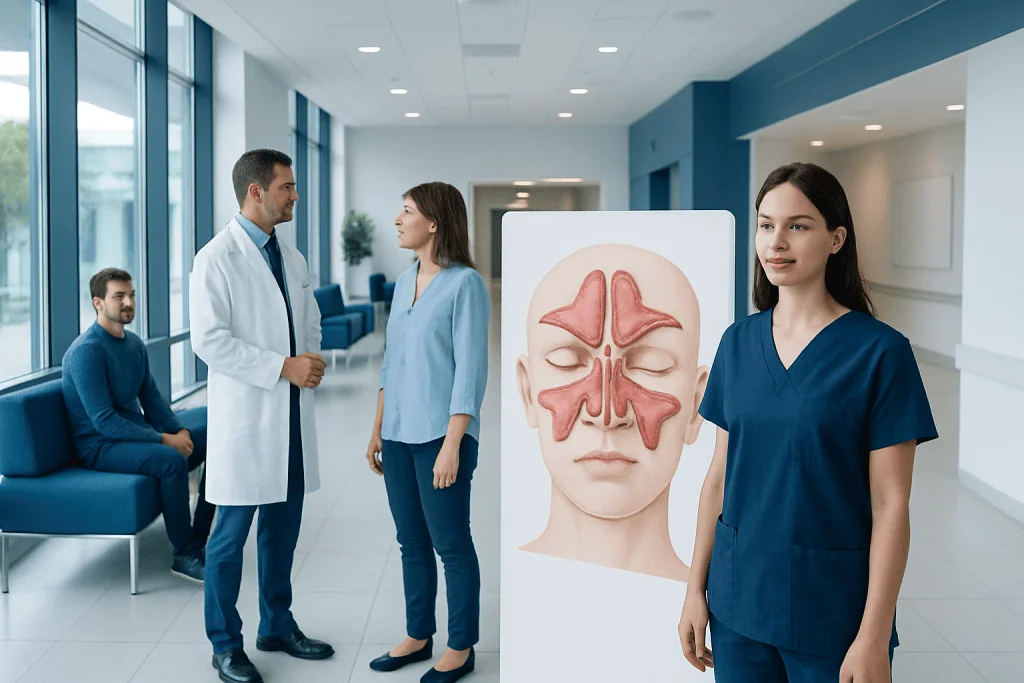
The paranasal sinuses are four paired cavities: maxillary, ethmoid, frontal, and sphenoid. Healthy sinuses depend on open drainage pathways and normal movement of mucus by tiny cilia.
Key Takeaways
- The paranasal sinuses are four paired cavities: maxillary, ethmoid, frontal, and sphenoid.
- Healthy sinuses depend on open drainage pathways and normal movement of mucus by tiny cilia.
- Many symptoms blamed on “the sinuses” can also come from allergies, viral infections, migraine, or structural nasal problems.
- Blocked drainage can lead to pressure, congestion, facial discomfort, and sinus infection.
- Persistent, severe, or recurrent symptoms should be assessed by a qualified clinician.
Sinus anatomy describes the four paired, air-filled spaces in the bones around the nose and eyes: the maxillary, ethmoid, frontal, and sphenoid sinuses. These structures are lined with mucosa and connect to the nasal cavity, where they help warm and humidify inhaled air, support mucus clearance, and contribute to voice resonance.
Overview: what sinus anatomy actually means
Sinus anatomy refers to the layout of the paranasal sinuses, which are small, air-filled spaces within the bones of the face and skull around the nose. There are four pairs: maxillary sinuses in the cheeks, ethmoid sinuses between the eyes, frontal sinuses in the forehead, and sphenoid sinuses deeper behind the nose. Each sinus is lined with a thin mucous membrane and connected to the nasal cavity through narrow channels.
These spaces are not empty “pockets of infection” by design, and they do not normally fill with harmful material. In a healthy state, the sinuses make mucus, move it with tiny hair-like structures called cilia, and drain it into the nose. This drainage system matters as much as the size or shape of the sinuses themselves.
Understanding sinus anatomy helps explain why people feel pressure in different parts of the face, why colds can affect breathing and drainage, and why swelling inside the nose may trigger symptoms even when the sinus cavities are structurally normal. It also shows why not every headache or facial ache is caused by the sinuses.
The four sinus groups and where they are located
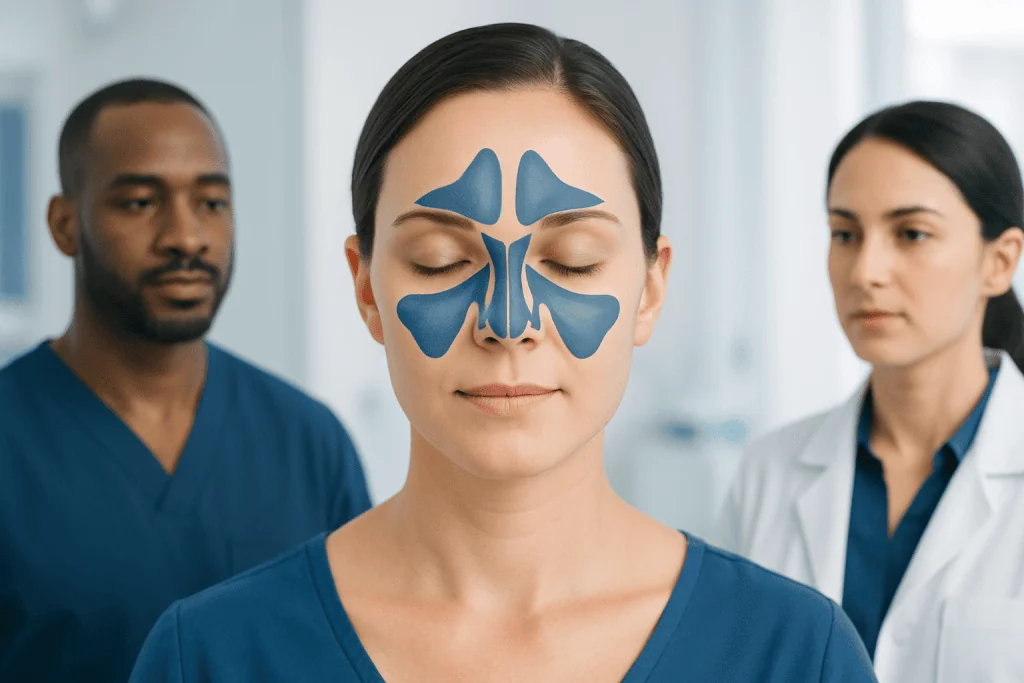
The maxillary sinuses are the largest sinuses. They sit in the cheekbones on either side of the nose and drain upward into the nasal cavity through relatively narrow openings. Because their drainage pathway is not at the lowest point of the cavity, swelling can interfere with clearance and contribute to symptoms.
The ethmoid sinuses are a collection of many small air cells located between the eyes. They form a central drainage area for several sinus pathways and are especially important in sinus disease because even mild swelling here may affect ventilation and mucus flow.
The frontal sinuses are found in the forehead, above the eyes. Not everyone has frontal sinuses of the same size, and some people have very small ones or none at all on one side. The sphenoid sinuses lie deeper in the skull, behind the nasal cavity. Although less commonly discussed, they are close to important structures such as the optic nerves and pituitary region, which is one reason deeper sinus symptoms should be assessed carefully.
- Maxillary: in the cheeks
- Ethmoid: between the eyes
- Frontal: in the forehead
- Sphenoid: deep behind the nose
How the sinuses work in everyday health
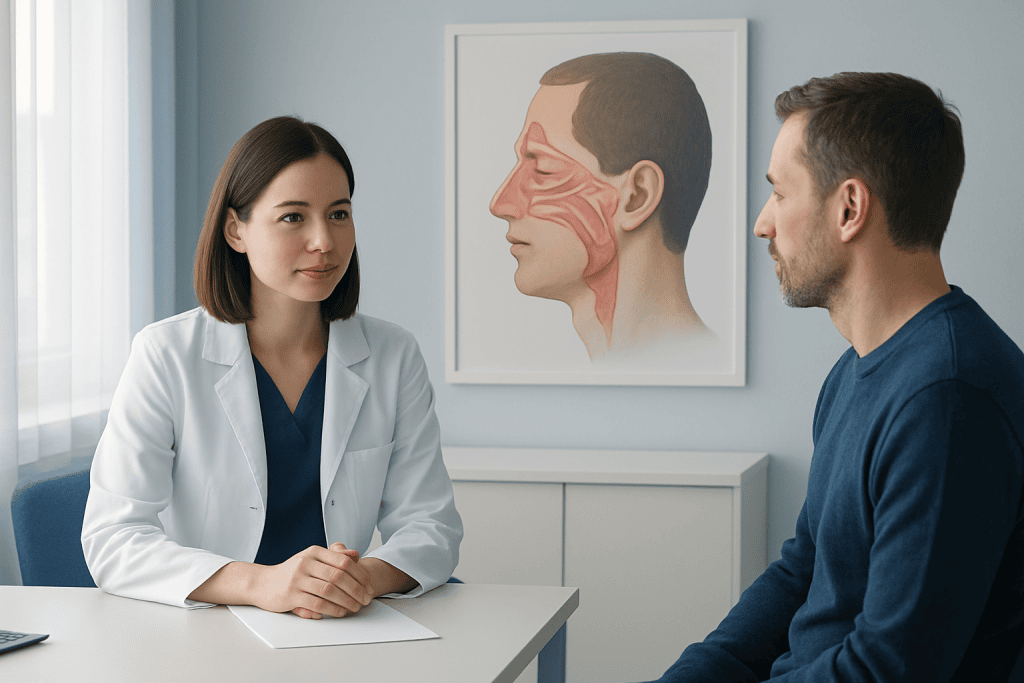
The sinuses help condition inhaled air by contributing to warming and humidifying it before it reaches the lower airways. Their lining produces mucus, which traps dust, irritants, and microorganisms. Cilia then move this mucus toward the sinus openings and into the nose, where it can be swallowed without notice or cleared naturally.
The sinuses also play a role in voice resonance, which means they influence how the voice sounds. They may help reduce the overall weight of the skull as well, though their most clinically important role is maintaining normal mucus clearance and ventilation.
When the lining becomes inflamed from a cold, allergy, smoke exposure, or irritation, the narrow drainage channels can swell shut. This may create pressure changes, mucus buildup, and the familiar feeling of congestion or heaviness in the face. In this way, symptoms often arise less from the bony cavities themselves and more from what is happening in the mucosal lining and drainage pathways.
Why sinus anatomy varies from person to person
Sinus anatomy is not identical in every person. The size and shape of the sinus cavities, the angle of their drainage pathways, and the structure of nearby nasal tissues can all vary. These differences are common and often normal. A variation seen on a scan does not automatically mean disease or a need for treatment.
Examples of anatomical differences include a deviated nasal septum, enlarged turbinates, narrow drainage channels, or certain ethmoid air cell patterns. In some people, these features may contribute to repeated blockage or make symptoms worse during allergies or viral illness. In others, the same variation causes no problems at all.
This is one reason medical evaluation focuses on symptoms, examination findings, and sometimes imaging together rather than relying on anatomy alone. A person with significant discomfort may have modest scan changes, while another person may have incidental anatomical findings and feel completely well. If structural issues are contributing to repeated inflammation, an ENT specialist may evaluate related conditions such as sinusitis.
Common symptoms linked to sinus problems
Symptoms often attributed to the sinuses include nasal congestion, facial pressure, reduced sense of smell, thick nasal discharge, and postnasal drip. Some people also report ear pressure, cough, bad breath, or discomfort that worsens when bending forward. These symptoms are common during colds, allergies, and sinus infections.
However, symptoms do not always point to a sinus disorder. Facial pain can also occur with migraine, tension headache, dental problems, or jaw disorders. Nasal blockage may result from allergic rhinitis, nasal polyps, or structural narrowing. For this reason, symptom patterns and duration matter.
Acute symptoms lasting a short time are often related to a viral upper respiratory infection. Symptoms that persist for many weeks, keep returning, or are associated with nasal polyps may suggest chronic inflammation rather than a simple cold. When symptoms are ongoing, evaluation may include nasal endoscopy or imaging, and treatment may involve approaches used for endoscopic sinus surgery in selected cases after medical therapy has been considered.
How doctors assess sinus anatomy and diagnose problems
Assessment usually begins with a history and physical examination. A clinician asks about congestion, discharge, smell changes, facial pressure, fever, allergies, asthma, prior infections, and how long symptoms have been present. The pattern helps distinguish a viral illness from allergic inflammation, bacterial infection, or chronic sinus disease.
Examination of the nose may be performed with a lighted instrument or a small endoscope. Nasal endoscopy allows the doctor to look for swelling, drainage, polyps, crusting, or blockage near the sinus openings. This can provide more useful information than symptoms alone.
Imaging is not needed for every blocked nose or cold. When symptoms are persistent, recurrent, complicated, or unclear, a CT scan of the sinuses may be recommended to show sinus anatomy in detail. CT is especially helpful for mapping drainage pathways and identifying inflammation, polyps, or structural variation. MRI may be used in selected situations, but CT is generally the main imaging test for sinus anatomy. Some patients also need evaluation for related causes of obstruction, including deviated septum.
Treatment and self-care: from symptom relief to procedures
Treatment depends on the cause. Viral colds usually improve with time, fluids, rest, and supportive care. Allergy-related symptoms may respond to allergen avoidance and clinician-guided medicines such as nasal sprays. When bacterial sinus infection is suspected, treatment is based on the overall clinical picture rather than mucus color alone.
General self-care may include saline nasal irrigation, using medications exactly as prescribed, avoiding tobacco smoke, and managing allergies or asthma if present. These measures can help support the sinus lining and improve drainage. People should avoid overusing decongestant sprays unless specifically instructed, because rebound congestion can occur.
If symptoms continue despite appropriate medical treatment, or if there are structural problems, recurrent infections, or polyps, procedural options may be discussed. Depending on the situation, these can include septoplasty for septal deviation or nasal polyp surgery when polyps are a major cause of blockage. Near the end of the care pathway, Acibadem International’s multidisciplinary specialists and JCI-accredited hospitals diagnose and treat sinus conditions for international patients when specialist evaluation is needed.
When to seek medical care
Medical review is appropriate if nasal blockage, facial pressure, or thick drainage lasts longer than expected, keeps coming back, or affects sleep, smell, work, or daily activities. Care is also important if symptoms do not improve with basic self-care or if a person has frequent episodes that suggest an underlying structural or inflammatory problem.
Prompt assessment is recommended for high fever, swelling around the eyes, changes in vision, severe headache, confusion, significant facial swelling, or symptoms after facial trauma. These features are not typical of an uncomplicated cold and deserve timely attention.
Children, older adults, people with weakened immune systems, and those with significant asthma or other chronic illnesses may need earlier medical advice. A qualified doctor can determine whether symptoms are due to sinus disease, a nasal condition, or another cause entirely, and can suggest the safest next steps.
Frequently asked questions
What are the sinuses in the human body?
The sinuses are four paired, air-filled spaces in the bones around the nose: maxillary, ethmoid, frontal, and sphenoid. They are lined with mucosa and connect to the nasal cavity through small openings that allow mucus to drain.
What is the main function of the sinuses?
The sinuses help humidify and warm inhaled air, support mucus clearance, and contribute to voice resonance. Their normal function depends on healthy lining tissue, open drainage pathways, and cilia that move mucus toward the nose.
Can sinus anatomy cause chronic symptoms by itself?
Anatomical variations can contribute to symptoms, but they do not always cause disease on their own. Problems usually happen when structure and inflammation interact, such as swelling from allergies or infection narrowing an already tight drainage pathway.
Why does sinus pressure seem worse in the cheeks or forehead?
The location of pressure often reflects which sinus region is affected. Maxillary sinus issues may be felt in the cheeks, while frontal sinus problems may be felt in the forehead, although symptom location alone cannot confirm the diagnosis.
Do colored nasal secretions always mean a bacterial sinus infection?
No. Thick yellow or green mucus can occur with viral infections and inflammation as well as bacterial infection. Doctors usually consider the full symptom pattern, severity, and duration rather than mucus color alone.
When is a CT scan needed for sinus problems?
A CT scan is usually reserved for persistent, recurrent, complicated, or unclear sinus symptoms, or when a procedure is being considered. It shows sinus anatomy and drainage pathways in detail, but it is not necessary for every simple cold or short-term congestion.
References
- American Academy of Otolaryngology–Head and Neck Surgery
- National Institute of Allergy and Infectious Diseases
- National Library of Medicine
- Mayo Clinic
- Cleveland Clinic
This article is for general information only and is not a substitute for professional medical advice. Please consult a qualified doctor about your individual situation.
Explore treatments in Turkey — costs, top hospitals & a free quote
JCI-accredited · board-certified surgeons · reply within 24h