Spinal Stroke: A Complete Medical Overview

A spinal stroke happens when the spinal cord does not get enough blood and oxygen. Symptoms often begin suddenly and may include back pain, leg weakness, numbness, and trouble walking.
Key Takeaways
- A spinal stroke happens when the spinal cord does not get enough blood and oxygen.
- Symptoms often begin suddenly and may include back pain, leg weakness, numbness, and trouble walking.
- Early medical evaluation is important because several other emergencies can look similar.
- Treatment focuses on the cause, stabilizing the person, preventing complications, and rehabilitation.
- Recovery varies widely and may continue over months with physical and occupational therapy.
A spinal stroke is a rare but serious condition in which blood flow to part of the spinal cord is reduced or blocked, damaging nerve tissue. It can cause sudden weakness, numbness, severe back pain, and bladder or bowel changes, and prompt diagnosis and treatment are important.
Overview
A spinal stroke is a rare type of stroke that affects the spinal cord rather than the brain. It usually happens when blood flow through an artery supplying the spinal cord is reduced or blocked, causing injury to the nerve tissue. Doctors may also call this a spinal cord infarction or spinal cord ischemia.
The spinal cord carries signals between the brain and the rest of the body, so reduced blood supply can affect movement, sensation, and automatic body functions such as bladder and bowel control. Symptoms often begin suddenly, although in some people they may progress over hours. Because it is uncommon, spinal stroke may not be recognized immediately, but it is a medical emergency that needs urgent assessment.
Spinal stroke is different from the more familiar brain stroke, even though both involve interrupted blood flow. It is also different from common back problems such as a slipped disc, nerve compression, or muscle strain. The symptoms may overlap, which is why careful medical evaluation and imaging are essential.
How a Spinal Stroke Affects the Body
The spinal cord depends on a delicate network of blood vessels to bring oxygen and nutrients. If a major artery becomes blocked or blood flow drops sharply, the spinal cord cells in that area can stop working properly. Depending on which part of the cord is affected, a person may lose strength, sensation, or coordination below the level of the injury.
Many spinal strokes involve the front part of the spinal cord, an area supplied mainly by the anterior spinal artery. This can lead to weakness or paralysis and changes in pain and temperature sensation, while other forms of touch may be less affected. In other cases, the pattern can be different, especially if a smaller branch artery is involved.
The spinal cord also helps regulate bladder, bowel, and sexual function. For that reason, a spinal stroke can cause urinary retention, incontinence, constipation, or other autonomic symptoms. These effects can be distressing, but specialized rehabilitation and follow-up care can often help people regain function and adapt safely.
Symptoms

Symptoms of a spinal stroke usually start suddenly. A common early sign is severe neck or back pain, sometimes described as sharp or burning, followed by weakness, heaviness, or loss of feeling in the legs. If the upper spinal cord is affected, the arms may also be involved.
Other symptoms may include trouble walking, imbalance, numbness, tingling, or a band-like sensation around the body. Some people notice reduced ability to feel heat or pain while still being able to feel vibration or position. Bladder or bowel symptoms may appear early or develop soon afterward.
- Sudden severe back or neck pain
- Weakness in one or both legs, or sometimes the arms and legs
- Numbness, tingling, or loss of sensation
- Difficulty walking or standing
- Bladder or bowel dysfunction
- Sexual dysfunction
These symptoms are not unique to spinal stroke. Other urgent conditions, such as spinal cord compression, bleeding around the spinal cord, infection, inflammation, or disorders such as multiple sclerosis, can sometimes cause similar problems. That is why new neurologic symptoms should never be ignored.
Causes and Risk Factors
Spinal stroke can happen for several reasons. In some cases, a blood clot or narrowing in an artery reduces blood flow to the spinal cord. In others, blood pressure drops sharply during a serious illness or major procedure, leaving the spinal cord without enough oxygen. Conditions involving the aorta, the body’s main artery, are a well-known cause because some spinal arteries arise from it.
Risk may be higher in people with atherosclerosis, high blood pressure, diabetes, smoking history, high cholesterol, or heart and vascular disease. Spinal stroke can also be linked to aortic surgery or repair, aortic dissection, inflammation of blood vessels, blood-clotting disorders, and rarely trauma or an embolus. Sometimes no clear cause is found even after thorough testing.
Doctors also consider other explanations for sudden spinal cord symptoms. These include a herniated disc pressing on the cord, tumors, abscesses, bleeding, transverse myelitis, and other neurologic disorders that may affect movement in different ways. The goal of evaluation is not only to confirm a spinal stroke but also to rule out these conditions quickly, because some need different urgent treatment.
Diagnosis
Diagnosis begins with a careful review of symptoms, timing, medical history, and a neurological examination. The pattern of weakness and sensory loss can give important clues about which part of the spinal cord is affected. Because spinal stroke is uncommon and other conditions can mimic it, testing is usually needed right away.
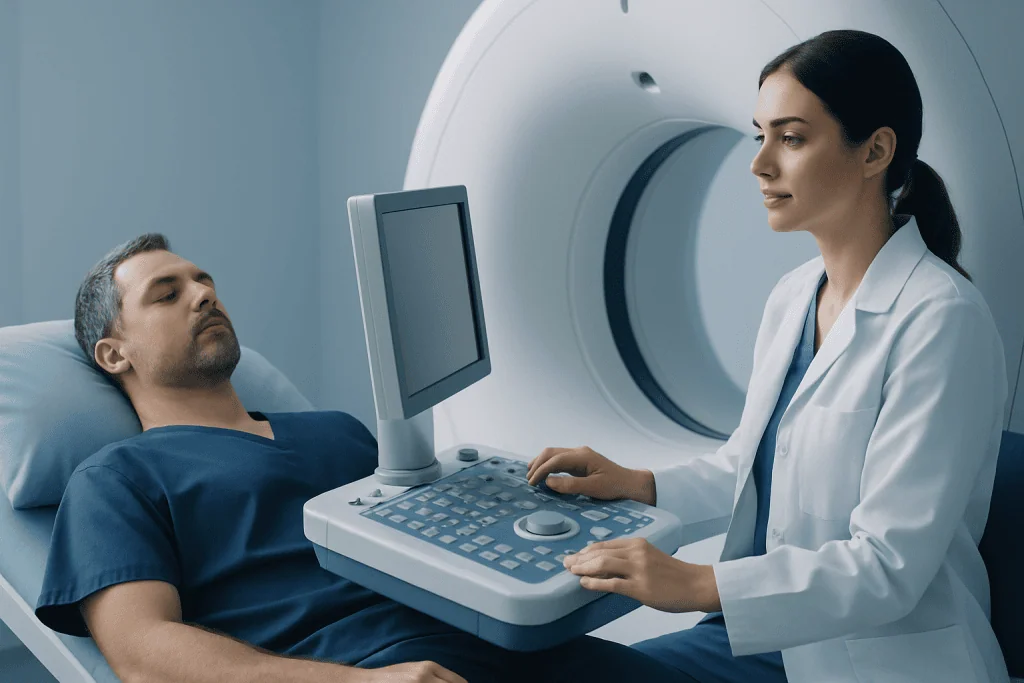
MRI of the spine is the main imaging test used to look for changes in the spinal cord and to exclude compression, bleeding, infection, or inflammation. In some situations, doctors may order vascular imaging to study the aorta and blood vessels, along with blood tests, heart evaluation, or other studies to search for the cause. If symptoms could also involve the brain or circulation, brain imaging may be considered as well.
Prompt and accurate imaging is central to care, especially when doctors must quickly distinguish spinal stroke from emergencies that may need surgery. Evaluation may include advanced MRI imaging and, when needed, CT scanning to assess related structures and possible causes. A neurologist, spine specialist, vascular specialist, or rehabilitation physician may all be involved depending on the person’s condition.
Treatment Options
Treatment for spinal stroke depends on the cause, the severity of symptoms, and how quickly the person reaches medical care. The first priorities are to stabilize breathing, blood pressure, and circulation, protect the spinal cord from further injury, and identify any treatable underlying problem. Hospital care is often necessary, especially in the early phase.
If a blood vessel disorder, clotting problem, or aortic condition is found, treatment is directed at that cause. This may include medications to reduce clotting risk in selected situations, careful blood pressure support, and management of cardiovascular risk factors. If doctors discover that the symptoms are due to compression or another structural problem rather than stroke, treatment may shift toward urgent spinal intervention such as spine surgery.
Rehabilitation is a major part of recovery. Physical therapy helps improve strength, balance, transfers, and walking. Occupational therapy focuses on daily activities and independence, while bladder, bowel, pain, and skin care are addressed as needed. Some people also benefit from structured physical therapy and rehabilitation programs after the acute phase. Recovery can continue over time, and the pace differs from person to person.
Prevention, Self-care, and Recovery
Because spinal stroke is often linked to vascular health, prevention focuses on lowering overall circulatory risk. Managing blood pressure, cholesterol, diabetes, and heart disease; avoiding smoking; staying physically active; and following a balanced diet all support healthier blood vessels. People with known aortic or vascular disease should keep regular follow-up appointments and follow their specialist’s advice closely.
After a spinal stroke, self-care centers on safety, consistency, and emotional adjustment. Assistive devices, home modifications, and bladder or bowel routines may make daily life easier. Skin protection, pressure relief, and fall prevention are also important, especially if weakness or numbness remains.
Recovery is not always predictable. Some people improve significantly, while others may have long-term weakness, sensory changes, spasticity, pain, or bladder problems. Setting realistic goals with the care team and attending rehabilitation regularly can make a meaningful difference. Near the end of recovery planning, some international patients choose evaluation at centers such as Acibadem International, where multidisciplinary specialists in JCI-accredited hospitals diagnose and treat complex spinal and neurologic conditions.
When to Seek Medical Care
Immediate medical care is needed if a person develops sudden leg weakness, inability to walk, new numbness, sudden severe back or neck pain, or loss of bladder or bowel control. These symptoms may point to a spinal stroke or another spinal emergency, and fast assessment is important. It is safer to treat them as urgent rather than wait to see if they improve.
Ongoing follow-up is also important after diagnosis. A doctor should review any new or worsening weakness, repeated falls, severe pain, fever, skin sores, urinary problems, or difficulty coping at home. People in recovery may need coordinated care from neurology, rehabilitation, spine specialists, pain specialists, and primary care.
Even when the condition is not life-threatening at the moment, sudden neurologic symptoms should not be self-diagnosed as a simple back problem. Early evaluation increases the chance of identifying the correct cause and starting the most appropriate treatment and rehabilitation plan.
Frequently asked questions
Is a spinal stroke the same as a regular stroke?
No. A spinal stroke affects the spinal cord, while a regular stroke usually affects the brain. Both involve disrupted blood flow, but the symptoms and affected body functions can be different.
What are the first signs of a spinal stroke?
Early signs often include sudden severe back or neck pain, leg weakness, numbness, and trouble walking. Some people also quickly develop bladder or bowel changes. The exact pattern depends on which part of the spinal cord is affected.
Can a spinal stroke be mistaken for a back problem?
Yes. Conditions such as a herniated disc, spinal cord compression, bleeding, infection, or inflammation can cause similar symptoms. That is why urgent medical assessment and imaging are important when weakness or numbness starts suddenly.
Can people recover from a spinal stroke?
Many people do improve, but recovery varies widely. Some regain walking and independence, while others may have lasting weakness, numbness, pain, or bladder problems. Rehabilitation often plays a central role in recovery over weeks to months.
How is a spinal stroke diagnosed?
Doctors use the history of symptoms, a neurological examination, and imaging tests, especially MRI of the spine. Additional blood vessel studies, blood tests, or heart evaluation may be needed to find the cause and rule out other emergencies.
Is spinal stroke preventable?
Not every case can be prevented, but reducing vascular risk can help. Managing blood pressure, cholesterol, diabetes, and heart disease, avoiding smoking, and staying active all support healthier circulation. People with aortic or vascular disease should follow their specialist’s advice carefully.
This article is for general information only and is not a substitute for professional medical advice. Please consult a qualified doctor about your individual situation.
Persistent digestive symptoms? Get evaluated in Turkey
JCI-accredited · board-certified surgeons · reply within 24h
Add us as a Preferred Source to see more of our trusted health content across Google Search, AI Overviews and Discover.
Check your numbers in seconds
BMI, calories, due date, blood pressure and 30+ more clinical calculators — free, instant, doctor-reviewed ranges.

More from the Health Library

Polyhydramnios: An Evidence-Based Guide for Patients

Yellow 5: A Complete Medical Overview

Essential Oils for Hair Growth: A Complete Medical Overview

Dental Bridge: An Evidence-Based Guide for Patients

Types of Smiles: A Complete Medical Overview