Jaw Ache on Left Side: Possible Causes and When to Seek Care

Left-sided jaw ache often comes from the jaw joint, chewing muscles, teeth, gums, or nearby structures such as the ear or sinuses. Pain that worsens with chewing, yawning, or clenching can suggest temporomandibular joint dysfunction or muscle strain.
Key Takeaways
- Left-sided jaw ache often comes from the jaw joint, chewing muscles, teeth, gums, or nearby structures such as the ear or sinuses.
- Pain that worsens with chewing, yawning, or clenching can suggest temporomandibular joint dysfunction or muscle strain.
- Dental infection, an abscess, or an impacted tooth may cause one-sided jaw pain and usually need prompt dental care.
- Jaw pain with chest pressure, sweating, nausea, or shortness of breath requires urgent medical evaluation.
- Self-care may help mild cases, but persistent, severe, or unexplained symptoms should be assessed by a qualified clinician.
Jaw ache on left side is commonly caused by temporomandibular joint strain, teeth grinding, dental disease, muscle tension, or nearby ear and sinus problems. Most cases are not emergencies, but sudden jaw pain with chest discomfort, shortness of breath, fever, swelling, or trouble opening the mouth should be assessed promptly.
Overview: what a jaw ache on the left side can mean
A jaw ache on left side can come from several different structures, not only the jawbone itself. Common sources include the temporomandibular joint (TMJ), the chewing muscles, the teeth and gums, and nearby areas such as the ear, throat, and sinuses. Because these areas share nerves and work closely together, pain may feel as if it is coming from one place even when the cause starts elsewhere.
In many people, left-sided jaw discomfort is related to clenching, teeth grinding during sleep, stress-related muscle tension, or a TMJ problem. Dental cavities, gum infection, an abscess, or problems with a wisdom tooth can also lead to one-sided aching. Less often, arthritis, injury, nerve pain, or referred pain from the neck may be involved.
It is also important to know that jaw pain can occasionally be a warning sign of a heart problem, especially when it appears with chest pressure, breathlessness, sweating, dizziness, or nausea. For that reason, the context of the pain matters. The location alone does not confirm the cause, so symptoms, timing, triggers, and associated signs help guide the next steps.
How jaw pain may feel and what patterns can suggest
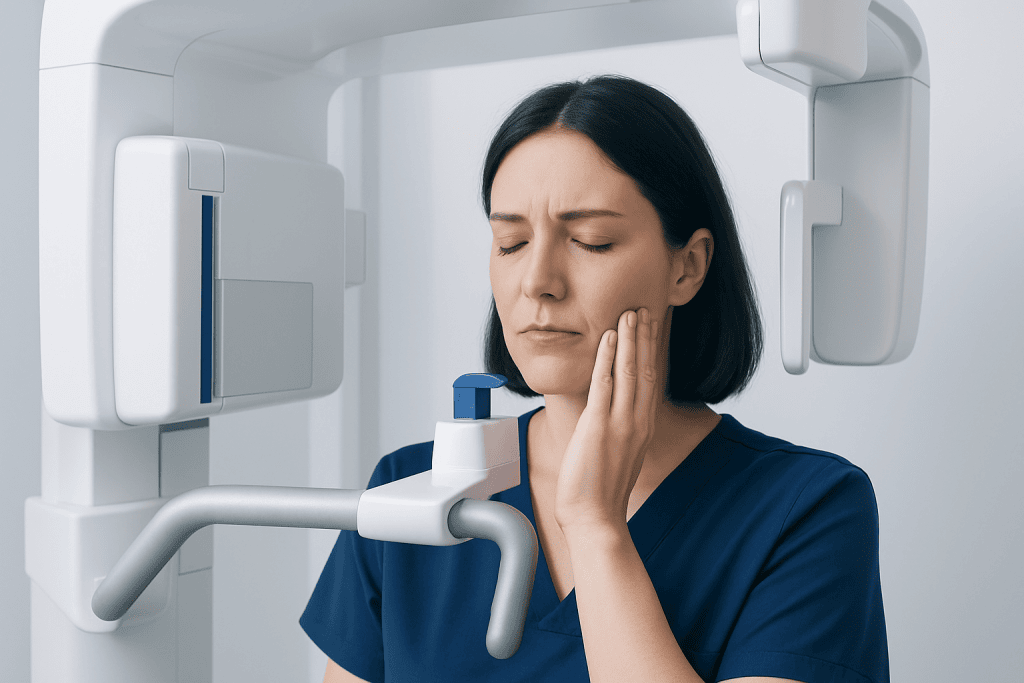
The sensation of a jaw ache can vary. Some people feel a dull, steady soreness near the joint just in front of the ear. Others notice sharp pain when biting, chewing, speaking for a long time, or yawning. There may also be clicking, popping, stiffness, or a feeling that the jaw is tired or not moving smoothly.
Symptoms that often point toward a jaw joint or muscle cause include pain that is worse in the morning, tenderness when pressing on the jaw muscles, headaches around the temples, and a history of clenching or grinding. If the jaw locks, shifts, or makes noises during movement, TMJ disorder may be part of the problem.
Features that may suggest a dental cause include tooth sensitivity, pain when biting down, swollen gums, bad taste in the mouth, facial swelling, or pain centered around one tooth. Sinus-related pain may come with nasal congestion, pressure around the cheeks, or worsening discomfort when bending forward. Ear-related pain may be linked to muffled hearing, ear fullness, or recent infection.
- Dull ache with chewing: often muscle strain or TMJ irritation
- Throbbing pain with swelling: may suggest infection
- Clicking or limited opening: may suggest joint dysfunction
- Burning or electric-shock pain: may suggest nerve irritation
Common causes of a jaw ache on the left side

One of the most common causes is overuse or irritation of the jaw joint and chewing muscles. This may happen from nighttime teeth grinding, daytime clenching, chewing gum frequently, prolonged dental procedures, or eating very hard foods. Stress can make these habits more likely and may increase muscle tension in the face and neck.
Dental problems are another frequent reason. A cavity, cracked tooth, gum disease, tooth root infection, or impacted wisdom tooth can all cause pain that is felt mainly on one side. Dental pain may travel to the jaw, ear, or temple, which can make the original source less obvious.
Inflammation and infection near the jaw can also lead to left-sided discomfort. Examples include sinus infection, salivary gland inflammation, sore throat, or an ear infection. In some cases, swollen lymph nodes under the jaw contribute to tenderness. Joint conditions such as osteoarthritis and inflammatory arthritis may affect jaw movement and comfort, especially in older adults or those with known joint disease.
Less common causes include trauma, dislocation, nerve pain disorders, and referred pain from the neck or upper back. Rarely, jaw pain may accompany heart-related symptoms. If a person has sudden unexplained jaw pain along with chest pain or shortness of breath, emergency evaluation is important.
Risk factors that make jaw ache more likely
Several habits and health factors can increase the chance of developing jaw pain on one side. Teeth grinding and clenching are major contributors, especially during sleep. Emotional stress, anxiety, poor sleep quality, and stimulant use may make these behaviors more frequent, even when a person is unaware of them.
Bite alignment problems, previous jaw injury, arthritis, and connective tissue conditions can also affect how the jaw joint functions. People who chew gum often, sing or speak for long periods, or regularly eat tough foods may overload the chewing muscles and joint. Holding the phone between the shoulder and jaw or maintaining poor neck posture for long periods may add strain as well.
Oral health is another key factor. Delayed dental care, untreated cavities, gum disease, and impacted teeth can all lead to one-sided jaw pain. In some people, symptoms overlap. For example, dental pain may trigger muscle guarding, while clenching may worsen an already sensitive joint.
How doctors and dentists find the cause
Assessment usually starts with a careful history. A clinician will ask where the pain is felt, when it started, whether chewing or opening the mouth makes it worse, and whether there are related symptoms such as fever, swelling, headache, tooth pain, ear symptoms, or chest discomfort. Even small details can help separate joint, muscle, dental, sinus, nerve, and heart-related causes.
The physical exam may include checking how wide the mouth opens, whether the jaw moves evenly, and whether there is tenderness over the joint or chewing muscles. The teeth and gums may be examined for signs of infection, damage, or bite problems. If needed, the doctor may also check the ears, nose, throat, neck, and nearby lymph nodes.
Imaging or tests are selected based on the suspected cause rather than used in every case. Dental X-rays can help identify tooth and gum problems. In persistent or complex cases, clinicians may use advanced MRI scanning or CT imaging to evaluate the joint, soft tissues, or nearby structures. If symptoms raise concern for a cardiac cause, urgent heart assessment may also be recommended. In some situations, a broader medical check-up helps identify contributing conditions such as arthritis, sleep-related teeth grinding, or chronic sinus disease.
Treatment options and what may help
Treatment depends on the cause. For mild TMJ or muscle-related pain, clinicians often recommend resting the jaw for a short time, choosing softer foods, avoiding very wide mouth opening, and reducing gum chewing. Warm compresses, stress management, and physical therapy exercises may also help. If teeth grinding is suspected, a dentist may suggest strategies to protect the teeth and reduce joint strain.
When a dental condition is responsible, treatment may involve repairing a tooth, treating gum disease, or managing infection. If swelling, fever, or an abscess is present, prompt dental or medical care is important. Ear, sinus, or throat conditions are treated according to the underlying diagnosis.
Persistent joint symptoms may need more targeted care, especially if there is locking, significant clicking with pain, or limitation in opening the mouth. Depending on the findings, specialist evaluation may include arthrocentesis for selected TMJ problems or referral to dental, maxillofacial, ENT, pain, or physical medicine specialists. In complex cases, multidisciplinary teams at Acibadem International’s JCI-accredited hospitals evaluate and treat jaw-related conditions for international patients.
Self-treatment should not replace professional assessment when symptoms are severe, worsening, or unclear. The safest approach is to match treatment to the actual cause, because jaw pain from infection, joint disease, and referred heart pain require very different care.
Self-care and prevention
Simple daily measures can reduce strain on the jaw and may prevent recurring symptoms. Eating softer foods for a few days, cutting food into smaller pieces, and avoiding chewing ice, hard candy, or large crusty foods can give irritated tissues time to settle. It also helps to avoid frequent gum chewing and to try not to open the mouth excessively during yawning.
Stress reduction can be valuable because many people clench their teeth without noticing. Relaxation exercises, regular sleep, mindful jaw posture, and limiting habits such as resting the chin on the hand may help. Good posture matters too, since neck and shoulder tension often contributes to facial muscle pain.
Regular dental visits support prevention by identifying cavities, gum disease, bite issues, and signs of grinding early. Oral hygiene, including brushing and flossing as advised by a dental professional, lowers the risk of infection-related jaw pain. If symptoms keep returning, professional review is worthwhile rather than relying only on home measures.
When to seek medical care
A person should seek prompt medical or dental care if a jaw ache on the left side lasts more than a few days, keeps returning, or interferes with chewing, speaking, or sleep. Swelling of the face or gums, fever, pus, a bad taste in the mouth, trouble opening the mouth, or worsening pain can suggest infection or a more significant joint problem that needs professional attention.
Urgent evaluation is especially important if the pain starts suddenly and is accompanied by chest pressure, shortness of breath, sweating, faintness, nausea, or pain spreading to the arm, shoulder, neck, or back. These symptoms can occur with a heart problem and should not be ignored. Jaw pain after trauma, or pain with significant deformity or inability to close the mouth, also needs urgent assessment.
If symptoms are milder but ongoing, a dentist, primary care doctor, ENT specialist, or maxillofacial specialist can help identify the cause and guide treatment. Early evaluation often makes management simpler and can help prevent chronic discomfort.
Frequently asked questions
Is jaw ache on left side usually serious?
Often, it is not serious and is commonly related to TMJ irritation, muscle tension, clenching, or a dental problem. However, severity depends on the cause, so persistent pain, swelling, fever, or sudden pain with chest symptoms should be evaluated promptly.
Can stress cause pain only on one side of the jaw?
Yes. Stress can lead to clenching or grinding that overworks the chewing muscles or irritates the jaw joint, sometimes more on one side than the other. People may also develop one-sided pain if they tend to chew more on one side or have an uneven bite.
How can someone tell if the pain is from a tooth or the jaw joint?
Tooth-related pain is more likely when there is sensitivity to hot, cold, or biting, a visible dental problem, gum swelling, or a bad taste in the mouth. Jaw joint pain is more often linked to clicking, limited opening, soreness near the ear, and worsening with chewing or yawning, but a professional exam is often needed to confirm the source.
Can sinus problems cause a left-sided jaw ache?
Yes. Sinus inflammation can create pressure in the cheeks and upper jaw, sometimes more on one side. This is more likely if the person also has congestion, facial pressure, postnasal symptoms, or pain that changes with head position.
When should jaw pain be treated as an emergency?
Emergency care is needed if jaw pain occurs with chest pain, shortness of breath, sweating, faintness, nausea, or pain spreading to the arm or back. It also needs urgent assessment if there is facial swelling with fever, severe trauma, or inability to open or close the mouth normally.
What can help mild jaw ache at home?
Short-term self-care may include resting the jaw, choosing softer foods, avoiding gum chewing and very wide mouth opening, and using warm compresses if they feel soothing. Because home care is not appropriate for every cause, symptoms that persist or worsen should be reviewed by a qualified clinician or dentist.
References
- American Dental Association
- National Institute of Dental and Craniofacial Research
- Mayo Clinic
- National Health Service
- American Heart Association
This article is for general information only and is not a substitute for professional medical advice. Please consult a qualified doctor about your individual situation.
Joint and spine care in Turkey — expert assessment & treatment
JCI-accredited · board-certified surgeons · reply within 24h
Add us as a Preferred Source to see more of our trusted health content across Google Search, AI Overviews and Discover.