Shingle in the Mouth: An Evidence-Based Guide for Patients

Shingle in the mouth is typically oral shingles caused by reactivation of the chickenpox virus. Symptoms may include burning pain, mouth sores, difficulty eating, and a rash or pain on one side of the face.
Key Takeaways
- Shingle in the mouth is typically oral shingles caused by reactivation of the chickenpox virus.
- Symptoms may include burning pain, mouth sores, difficulty eating, and a rash or pain on one side of the face.
- Prompt diagnosis and antiviral treatment are most helpful when started early.
- Older age, a weakened immune system, and stress or illness can increase risk.
- Medical review is important if symptoms affect the eye, severe pain develops, or swallowing becomes difficult.
Shingle in the mouth usually refers to oral shingles, a form of herpes zoster caused by reactivation of the varicella-zoster virus. It can cause painful blisters or ulcers inside the mouth, often with burning, tingling, or one-sided facial pain, and early medical care may help shorten the illness and reduce complications.
Overview: what shingle in the mouth means
Shingle in the mouth usually means oral shingles, also called herpes zoster affecting the mouth or facial nerves. It happens when the varicella-zoster virus, the same virus that causes chickenpox, becomes active again later in life. Instead of causing a widespread childhood illness, the reactivated virus travels along a nerve and creates pain, tingling, and a localized rash or sores.
When shingles involves the mouth, symptoms may affect the tongue, gums, inner cheek, roof of the mouth, or throat. It often appears on one side only, because the virus typically follows a single nerve pathway. Some people have visible blisters or ulcers, while others notice severe burning, altered taste, or facial sensitivity before the sores appear.
Because mouth ulcers can happen for many reasons, oral shingles is not always recognized right away. It can sometimes be confused with canker sores, dental infections, trauma from biting, or other viral conditions. A careful history and examination help doctors tell the difference and guide treatment.
Symptoms and how oral shingles may feel
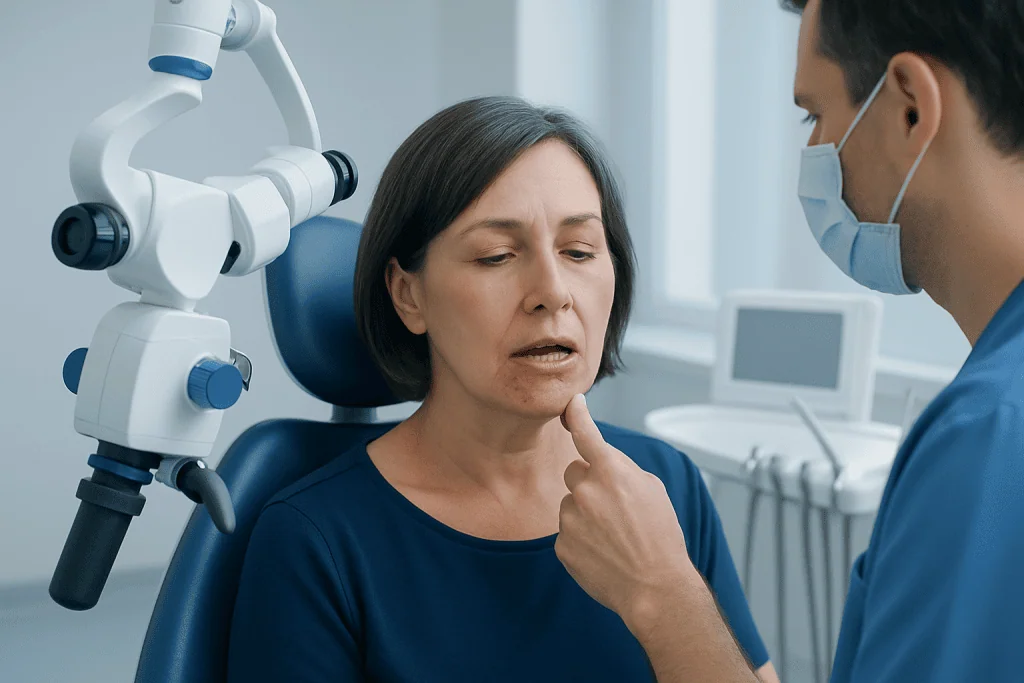
The symptoms of shingle in the mouth often begin with unusual sensations before any sores are visible. A person may notice burning, tingling, stabbing pain, or sensitivity in part of the mouth, jaw, ear, or face. This early phase may last a short time before blisters or ulcers appear.
Once the illness is fully active, oral symptoms can include painful blisters, shallow ulcers, redness, swelling, and discomfort when chewing or swallowing. Some people also develop dry mouth, bad taste, difficulty speaking clearly, or pain that seems to radiate to the teeth. Because the affected nerve may supply both the skin and the mouth, a facial rash can occur at the same time.
Common features include:
- Pain or burning on one side of the mouth or face
- Blisters or ulcers on the gums, tongue, inner cheek, palate, or throat
- Difficulty eating, drinking, or swallowing
- Fever, tiredness, or headache in some cases
- Tooth pain without a clear dental cause
- Altered taste or increased sensitivity to hot, cold, or spicy foods
Some patients may also have symptoms linked to nerve irritation outside the mouth. These can include ear pain, facial tenderness, or a skin rash on the lips, chin, or cheek. If shingles involves areas near the eye, urgent assessment is needed because vision can be at risk. Related forms of the condition may overlap with shingles elsewhere on the body.
Causes and risk factors

Oral shingles is caused by reactivation of the varicella-zoster virus after a past chickenpox infection. After chickenpox clears, the virus does not leave the body completely. Instead, it remains inactive in nerve tissue and may reactivate years later, especially when immune control becomes less effective.
Doctors do not always find a single trigger, but the chance of shingles rises with age. It is also more common in people whose immune system is weakened by illness, medicines, cancer treatment, or organ transplantation. Physical stress, major illness, and emotional strain may also play a role in some people, although they are not the sole cause.
Risk factors can include:
- Older age, especially over 50
- Immune suppression from disease or treatment
- Recent serious illness or surgery
- High levels of physical or emotional stress
- A history of chickenpox or prior varicella-zoster infection
Shingles itself is not caught from another person in the same way as a cold. However, fluid from shingles blisters can spread varicella-zoster virus to someone who has never had chickenpox or has not been vaccinated, causing chickenpox rather than shingles. Good hygiene and avoiding close contact with vulnerable people while active lesions are present can reduce this risk.
Diagnosis: how doctors confirm it
Diagnosis usually begins with a medical and dental history and a close examination of the mouth, face, and skin. Doctors look for the typical one-sided pattern, nerve-related pain, and grouped blisters or ulcers. They will also ask when the symptoms started, whether there was a chickenpox infection in the past, and whether there are immune-related health conditions.
In many cases, the appearance and symptom pattern are enough to make the diagnosis. If the presentation is unclear, testing may be helpful. A swab from a lesion may be sent for laboratory analysis, such as PCR testing for varicella-zoster virus, especially in complex cases or in people with weakened immune systems.
Oral shingles may need to be distinguished from other conditions, including recurrent herpes simplex, canker sores, fungal infections, contact irritation, and some dental problems. In patients with severe mouth pain and facial symptoms, imaging or specialist review may occasionally be needed to exclude other causes. Depending on the symptom pattern, care may involve specialists in dentistry or ear, nose, and throat care.
Treatment options and symptom relief
Treatment for shingle in the mouth usually focuses on antiviral medicine, pain control, hydration, and protection of the oral tissues while healing takes place. Antiviral treatment is often most effective when started early, ideally within the first few days of rash or pain onset. It may shorten the course of the illness and lower the chance of longer-lasting nerve pain.
Doctors may also recommend pain-relieving medicines and supportive oral care. The exact plan depends on the person’s age, medical history, severity of pain, and whether swallowing is difficult. In some cases, topical soothing measures or prescription rinses may be used to help improve comfort and allow eating and drinking.
General treatment approaches may include:
- Prescription antiviral medication
- Pain relief suited to symptom severity
- Soft, cool foods and good fluid intake
- Avoiding acidic, spicy, rough, or very hot foods
- Gentle oral hygiene to reduce secondary irritation
- Specialist care if the eye, ear, or throat is involved
More severe cases may need hospital-based assessment, especially if there is dehydration, immune suppression, or concern about complications. If nerve-related pain continues after the sores heal, doctors may evaluate for postherpetic neuralgia and discuss longer-term symptom management, sometimes with input from neurology specialists.
Prevention and self-care during recovery
There is no way to guarantee that shingles will never occur, but vaccination can reduce the risk in eligible adults and may lower the chance of severe disease or complications. A doctor can advise whether shingles vaccination is appropriate based on age, health conditions, and local recommendations. Vaccination is an important preventive measure, especially in older adults.
During recovery, the main goals are to keep the mouth comfortable, maintain nutrition, and avoid dehydration. Soft foods such as yogurt, soups that are not too hot, mashed vegetables, smoothies, and scrambled eggs may be easier to tolerate. Sipping water regularly can help if eating feels difficult.
Helpful self-care measures include:
- Choosing bland, soft foods until sores begin to heal
- Avoiding tobacco and alcohol, which can irritate the mouth
- Brushing gently with a soft toothbrush
- Resting and pacing daily activities if fatigue is present
- Washing hands after touching the face or applying oral care products
People with active blisters should be careful around newborns, pregnant individuals without immunity, and anyone with a weakened immune system. Near the end of care, some patients may benefit from multidisciplinary follow-up if symptoms are persistent. Acibadem International’s multidisciplinary specialists in JCI-accredited hospitals diagnose and treat conditions such as oral shingles for international patients.
When to seek medical care
Medical review is a good idea whenever a person suspects shingle in the mouth, because early treatment can matter. This is especially true if pain is significant, lesions are spreading, or eating and drinking are becoming difficult. Mouth symptoms are not always simple ulcers, so a professional assessment helps confirm the cause.
Urgent medical attention is important if symptoms involve the eye, vision changes, severe facial weakness, confusion, trouble breathing, or inability to swallow fluids. People with cancer, HIV, organ transplants, or other causes of immune suppression should seek prompt care because the infection can be more severe.
A doctor should also be consulted if symptoms do not improve, if there is a high fever, or if pain continues after the sores heal. Persistent nerve pain after shingles may need separate treatment and should not simply be ignored. If swallowing problems or throat symptoms are prominent, doctors may coordinate evaluation with gastroenterology or other specialists when appropriate.
Frequently asked questions
Can shingles really happen inside the mouth?
Yes. Shingle in the mouth usually refers to oral shingles, which happens when the varicella-zoster virus reactivates along a nerve serving the mouth or face. It can cause painful sores, burning, and one-sided facial symptoms.
What does shingle in the mouth look like?
It may look like clusters of small blisters that break down into shallow ulcers, often on just one side of the mouth. The gums, tongue, inner cheek, roof of the mouth, or throat can be affected, and the area is usually painful or sensitive.
How is oral shingles different from a canker sore?
Canker sores are usually isolated ulcers not linked to a nerve pattern and do not usually cause a one-sided facial rash or nerve pain. Oral shingles is more likely to cause burning, tingling, and grouped lesions on one side, sometimes with skin involvement as well.
Is shingle in the mouth contagious?
A person cannot generally give someone else shingles directly. However, fluid from active shingles blisters can spread varicella-zoster virus to someone who has never had chickenpox or has not been vaccinated, causing chickenpox.
How long does oral shingles last?
The active phase often lasts a few weeks, although pain may start before sores appear and may continue after they heal. Recovery time varies, and some people develop lingering nerve pain that needs further medical management.
Should a person see a dentist or a medical doctor?
Either may be a useful first contact, depending on the main symptoms. A dentist can assess mouth sores and rule out dental causes, while a physician can evaluate shingles, prescribe antiviral treatment, and coordinate specialist care if needed.
This article is for general information only and is not a substitute for professional medical advice. Please consult a qualified doctor about your individual situation.
Persistent digestive symptoms? Get evaluated in Turkey
JCI-accredited · board-certified surgeons · reply within 24h
Add us as a Preferred Source to see more of our trusted health content across Google Search, AI Overviews and Discover.

More from the Health Library

Alpha Antagonist Bph: A Complete Medical Overview

Tinnitus — Explained by Medical Evidence, Not Myths

Apple Cider Vinegar and Turmeric: An Evidence-Based Guide for Patients

Ascites: A Complete Medical Overview

Stress Ulcer: A Complete Medical Overview