Understanding Contrast Therapy: A Complete Patient Guide

Contrast therapy alternates warm and cold exposure, often using baths, packs, or supervised rehabilitation methods. It may help some people manage pain, stiffness, swelling, and post-exercise soreness.
Key Takeaways
- Contrast therapy alternates warm and cold exposure, often using baths, packs, or supervised rehabilitation methods.
- It may help some people manage pain, stiffness, swelling, and post-exercise soreness.
- It is not suitable for every condition, especially when there is poor circulation, nerve damage, skin injury, or certain heart and vascular problems.
- A proper diagnosis matters because heat and cold can affect injuries differently depending on the stage of healing.
- Medical advice is important if symptoms are intense, persistent, worsening, or linked to numbness, color changes, fever, or loss of function.
Contrast therapy is a technique that alternates heat and cold to support pain relief, swelling control, and recovery after some injuries or strenuous activity. It is not right for everyone, so the safest approach is to use it with guidance from a qualified clinician, especially when symptoms are severe, circulation is poor, or the diagnosis is unclear.
What contrast therapy is
Contrast therapy is the planned use of alternating heat and cold on a part of the body, or sometimes the whole body, to support recovery and symptom relief. It is commonly used in rehabilitation, sports medicine, and home care for selected injuries or muscle soreness. A person may hear it called hot and cold therapy or contrast bath therapy.
The basic idea is simple: warmth may help tissues feel looser and more comfortable, while cold may help reduce pain and limit swelling. By alternating the two, clinicians aim to combine these effects in a controlled way. Methods can include warm and cold water immersion, compresses, gel packs, or supervised recovery tools used in physical therapy.
Contrast therapy is not a cure by itself. It is best understood as one part of a broader care plan that may also include rest, activity modification, stretching, targeted exercise, bracing, medication advice, or a formal rehabilitation program. For some conditions, a doctor may recommend physical therapy and rehabilitation to address the underlying cause rather than relying on heat and cold alone.
How contrast therapy may help the body
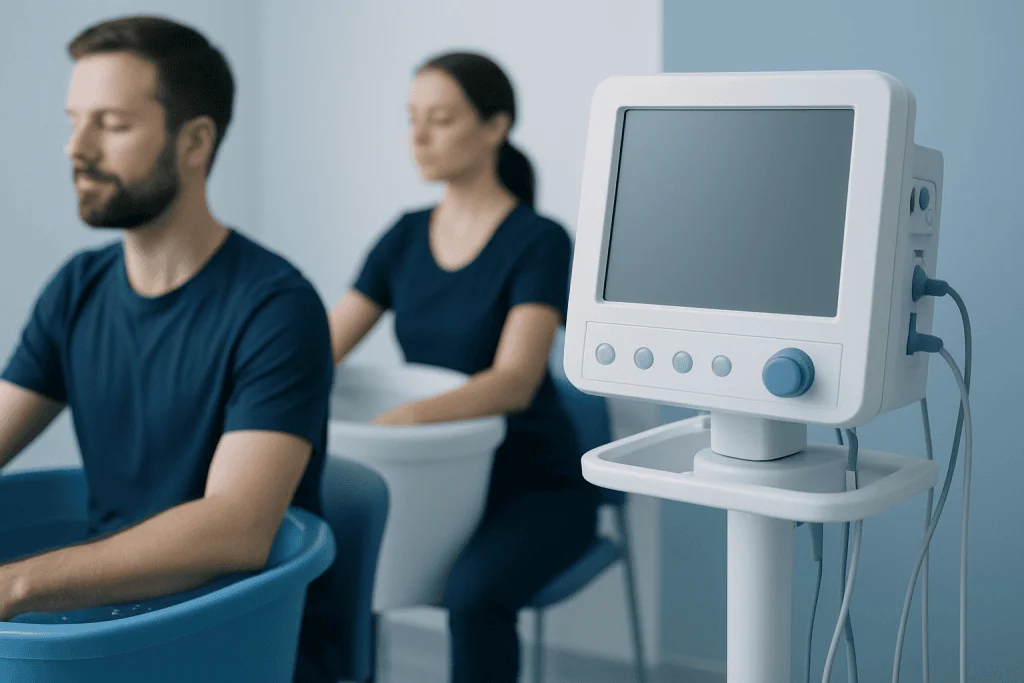
Heat and cold affect the body in different ways. Heat often brings a sense of comfort, may reduce muscle tightness, and can make movement feel easier. Cold can numb pain, slow local inflammatory activity, and may help limit swelling soon after minor strain or overuse. Alternating the two is thought to create a pumping effect in superficial blood vessels, although the exact benefit can vary by condition and person.
In practical terms, people often use contrast therapy for sore muscles after exercise, mild soft-tissue injuries, joint stiffness, or lingering swelling during recovery. Some also find it helpful before or after rehabilitation exercises because it can make movement more comfortable. However, the scientific evidence is mixed, and results are not identical for every injury.
That is why contrast therapy should be matched to the problem being treated. For example, a recently injured ankle that is hot and swollen may need a different approach from a stiff joint during later recovery. If symptoms appear related to a more complex issue such as arthritis, the treatment plan should be guided by a clinician rather than self-treatment alone.
Common uses and who may benefit

Contrast therapy is often used for mild to moderate muscle soreness, overuse discomfort, exercise recovery, and selected sprains or strains after the earliest acute phase has been assessed. It may also be considered during rehabilitation for some tendon, joint, or soft-tissue problems when a clinician believes alternating heat and cold is appropriate.
People recovering from intense training sometimes use contrast baths to reduce discomfort and feel less stiff. Others may use it for hands, feet, elbows, or knees that become achy with repetitive activity. In supervised settings, it can support the transition back to movement by making exercises easier to tolerate.
It is important to remember that similar symptoms can have different causes. Persistent back pain, recurrent knee swelling, or numbness in a hand or foot should not automatically be treated as simple overuse. Conditions such as herniated disc or nerve irritation may need medical evaluation, imaging, and a more specific care plan.
- Post-exercise muscle soreness
- Mild strains and sprains after assessment
- Joint stiffness during recovery
- Localized swelling in selected cases
- Supportive care during rehabilitation
Who should avoid contrast therapy or use caution
Contrast therapy is not suitable for everyone. People with reduced sensation may not be able to tell if heat or cold is too intense, which increases the risk of burns or cold injury. This can happen with diabetes-related nerve damage, some neurological conditions, or after certain injuries. Open wounds, active skin infections, and severe bruising also require caution.
Circulation problems are another important concern. People with peripheral vascular disease, certain heart conditions, a history of blood clots, severe varicose vein symptoms, or pronounced color changes in fingers and toes should speak to a doctor before using heat and cold. Sudden swelling in one limb, calf pain, or unexplained redness should be assessed promptly rather than treated at home.
Contrast therapy may also be unsuitable when the diagnosis is uncertain. Severe pain, obvious deformity, inability to bear weight, suspected fracture, or major ligament injury needs medical evaluation first. If blood flow problems are suspected, a doctor may recommend assessment by specialists in cardiovascular care or vascular medicine rather than home treatment.
How it is usually done safely
There is no single universal protocol for contrast therapy, and the exact timing, temperature, and number of cycles can vary. In general, it involves short periods of warmth followed by shorter periods of cold, repeated in cycles. The goal is to stay within comfortable, safe ranges rather than using extreme temperatures. Skin should be checked regularly during treatment.
At home, people may use two basins for a hand or foot, or alternate warm and cold packs on a small area. A barrier such as a towel should be used to protect the skin, and treatment should stop if there is burning, sharp pain, dizziness, worsening numbness, marked discoloration, or any feeling that the area is reacting poorly.
Because the right method depends on the injury and stage of healing, many patients benefit from professional guidance. A clinician or rehabilitation specialist can explain whether heat first, cold first, or a different approach is more appropriate. Some patients also benefit from a broader pain-management or recovery plan, including pain management when symptoms are persistent or affecting daily life.
How doctors assess symptoms before recommending it
A clinician usually starts by identifying the cause of pain, swelling, or stiffness before advising contrast therapy. This includes asking when symptoms began, whether there was a specific injury, what makes the problem worse, and whether there are warning signs such as fever, numbness, weakness, or color changes. A physical examination helps assess swelling, movement, tenderness, circulation, and nerve function.
Sometimes no further testing is needed, especially when symptoms clearly fit a minor soft-tissue issue. In other cases, imaging or laboratory tests may be appropriate to rule out fracture, tendon tear, infection, inflammatory disease, or a vascular problem. This matters because using heat on some conditions may aggravate symptoms, while excessive cold may be unsafe in others.
When pain is prolonged or keeps returning, clinicians often look beyond symptom relief alone. They may assess posture, footwear, training load, work ergonomics, joint alignment, or underlying inflammatory conditions. That broader view helps determine whether contrast therapy should be used temporarily, combined with exercise therapy, or avoided altogether.
Other treatment options and self-care measures
Contrast therapy is only one option among many. Depending on the diagnosis, a doctor may suggest rest from aggravating activity, gradual return to movement, stretching, strengthening exercises, supportive footwear, bracing, or medication for pain and inflammation. For some injuries, cold alone in the early stage or heat alone later may be more appropriate than alternating both.
Self-care works best when it is practical and consistent. Gentle movement within comfortable limits can help prevent stiffness, while repeated strain too soon may delay recovery. Good sleep, hydration, and gradual progression of activity can also support healing after exercise or minor injury.
If symptoms are linked to an underlying condition such as osteoarthritis, inflammatory joint disease, or persistent tendon pain, treatment usually needs a long-term strategy rather than temporary symptom control. Near the end of the care pathway, some patients may be referred for specialist evaluation. Acibadem International’s multidisciplinary specialists in JCI-accredited hospitals diagnose and treat musculoskeletal and pain-related conditions for international patients when further assessment is needed.
When to seek medical care
Medical care is important if pain is severe, swelling is rapidly increasing, or a person cannot use the affected limb normally. A doctor should also assess symptoms after a fall, sports injury with a popping sensation, visible deformity, or inability to bear weight. These features can suggest a more significant injury that needs targeted treatment.
Urgent assessment is also needed for numbness, weakness, bluish or very pale skin, severe coldness of a limb, chest pain, shortness of breath, fever, or redness that is spreading. These symptoms are not typical reasons to continue home contrast therapy and may indicate a circulation problem, infection, or another condition requiring prompt evaluation.
If symptoms last more than a few days without improvement, keep returning, or interfere with work, sleep, exercise, or daily activities, it is sensible to book a medical review. A qualified clinician can confirm the diagnosis, explain whether contrast therapy is appropriate, and suggest the safest next steps.
Frequently asked questions
What is contrast therapy used for?
Contrast therapy is used to alternate heat and cold in order to support relief from pain, stiffness, swelling, and muscle soreness in selected situations. It is often used in rehabilitation or after exercise, but its usefulness depends on the cause of the symptoms.
Is contrast therapy good for swelling?
It may help some people with lingering or mild localized swelling, especially during recovery, but it is not the right choice for every type of swelling. Sudden, severe, or unexplained swelling should be assessed by a doctor before home treatment is tried.
When should contrast therapy not be used?
It should be avoided or used only with medical guidance in people with poor circulation, numbness, nerve damage, open wounds, skin infection, or uncertain injury diagnosis. It is also not appropriate when there is severe pain, suspected fracture, major injury, or signs of a blood clot.
Is heat or cold better than contrast therapy?
Sometimes one is better than the other, depending on the stage of healing and the underlying problem. Cold is often preferred early after a minor injury, while heat may be more helpful later for stiffness and muscle tightness; a clinician can advise which is more suitable.
Can contrast therapy help after exercise?
Some people use it after intense exercise to reduce soreness and feel less stiff. The benefit varies, and it should be considered a supportive recovery tool rather than a substitute for good training habits, rest, hydration, and gradual progression.
How long should a person use contrast therapy?
There is no single standard schedule that suits everyone. The safest approach is to follow professional advice, use moderate temperatures, monitor the skin closely, and stop if symptoms worsen or the area becomes unusually painful, numb, or discolored.
References
- National Institute of Arthritis and Musculoskeletal and Skin Diseases
- American Academy of Orthopaedic Surgeons
- American Physical Therapy Association
- National Health Service
- Mayo Clinic
This article is for general information only and is not a substitute for professional medical advice. Please consult a qualified doctor about your individual situation.
Explore treatments in Turkey — costs, top hospitals & a free quote
JCI-accredited · board-certified surgeons · reply within 24h
Add us as a Preferred Source to see more of our trusted health content across Google Search, AI Overviews and Discover.

More from the Health Library

Related Specialists

Dr. Ezgi Darıcı
Gynecology & Obstetrics
Dr. Özkan Uysal
Internal Medicine
Prof. Dr. Mehmet Veli Karaaltın
Aesthetic Plastic & Reconstructive Surgery
Asst. Prof. Dr. M. Erkan Ekicibaşı
Cardiology