Pigeon Stretch: An Evidence-Based Guide for Patients

Pigeon stretch mainly targets the outer hip, buttock muscles, and tissues around the hip joint. A mild to moderate stretch sensation is expected, but sharp pain, joint pinching, or numbness is not.
Key Takeaways
- Pigeon stretch mainly targets the outer hip, buttock muscles, and tissues around the hip joint.
- A mild to moderate stretch sensation is expected, but sharp pain, joint pinching, or numbness is not.
- Many people benefit from modified versions using props, a chair, or a lying figure-four position.
- The stretch is not suitable for every cause of hip or back pain, especially after injury or surgery without medical advice.
- Consistency and correct technique matter more than forcing the body into a deep position.
Pigeon stretch is a hip-opening exercise commonly used to lengthen the gluteal muscles and tissues around the outer hip. It can support flexibility and comfort when performed with careful alignment, gradual progression, and attention to pain signals.
What is the pigeon stretch?
Pigeon stretch is a floor-based hip-opening position often used in yoga, rehabilitation, and mobility routines. It places one leg bent in front of the body and the other leg extended behind, which creates a stretch across the buttock, outer hip, and surrounding soft tissues of the front leg. For many people, it can help improve comfort and mobility in the hips when practiced gently and with good control.
The movement is popular because modern daily habits, especially prolonged sitting, can leave the hips feeling stiff. However, pigeon stretch is not simply a flexibility challenge. It is best understood as a controlled mobility exercise that should match a person’s anatomy, pain level, and medical history rather than an idealized pose seen in photos.
Not everyone needs the classic version. Some people feel better and safer with a supported variation, such as placing a cushion under the hip or using a lying figure-four stretch instead. In clinical practice, the safest approach is the one that creates a tolerable stretch without twisting the knee or compressing the front of the hip.
What muscles and joints does it target?
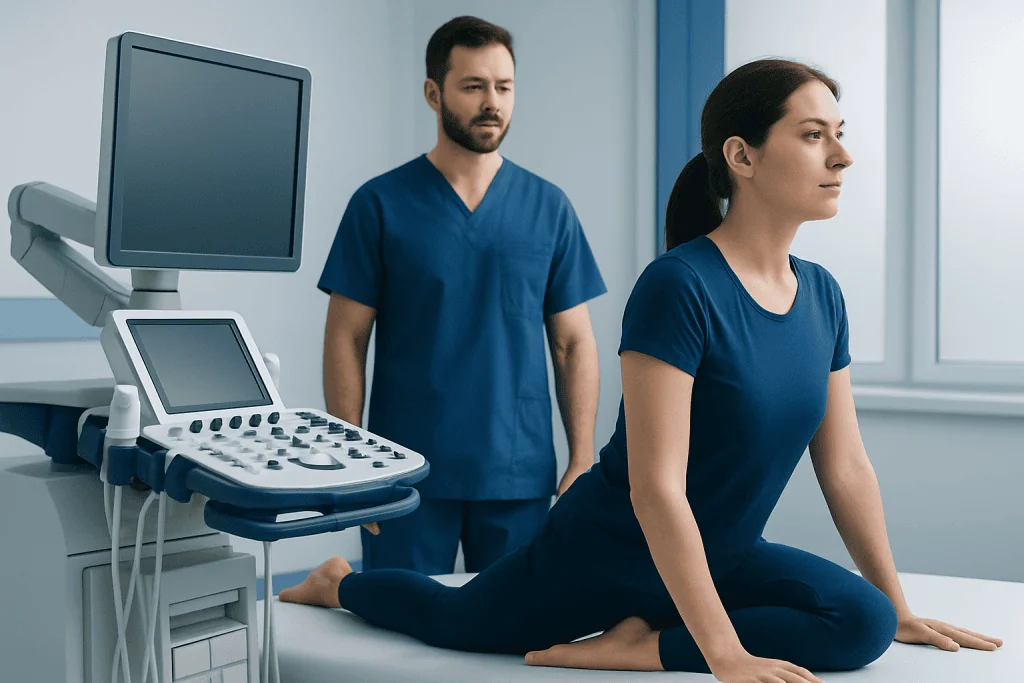
Pigeon stretch primarily affects the gluteal muscles, especially the gluteus maximus and deep external rotator muscles in the buttock region. Depending on body position, it may also stretch tissues around the piriformis area, the outer hip capsule, and parts of the hip flexors in the back leg. Many people describe the main sensation in the buttock of the front leg rather than in the groin or lower back.
The exercise also involves the hip joint itself. The front hip moves into flexion and external rotation, while the back hip moves toward extension. Because of these combined positions, the stretch may feel quite different from one person to another. Bone shape, muscle tension, previous injury, and joint mobility all influence the experience.
It is important to know that pigeon stretch does not diagnose or directly treat a specific disorder on its own. For example, buttock pain can sometimes relate to sciatica or other spine and nerve conditions rather than simple muscle tightness. In such cases, a stretch may help some symptoms, worsen others, or be inappropriate until a clinician identifies the cause.
Potential benefits of pigeon stretch

When used appropriately, pigeon stretch may help improve perceived hip flexibility, reduce the feeling of tightness after long periods of sitting, and support movement quality during walking, exercise, or sport. Some people also find that regular hip mobility work makes squatting, climbing stairs, or changing positions more comfortable. The benefit often comes from a combination of gentle tissue loading, breathing, and improved tolerance to movement.
It can also be part of a broader program for people with muscular tightness around the hips and buttocks. In rehabilitation, clinicians may combine hip stretches with strengthening, balance work, and posture or movement retraining. This matters because flexibility alone is rarely the full answer if weakness, poor control, or joint irritation is also present.
There are limits to what the stretch can do. It does not “realign” the pelvis, remove all sources of hip pain, or cure structural problems. People with persistent pain, limited range of motion, or suspected joint disease may need a full assessment and sometimes physical therapy and rehabilitation rather than self-stretching alone.
How to do pigeon stretch safely
To enter the classic version, a person typically starts on hands and knees. One knee is brought forward toward the same-side hand, with the shin angled comfortably rather than forced parallel to the front of the mat. The other leg extends behind the body. The pelvis should remain as level as possible, and a folded towel or cushion may be placed under the front-side buttock if it does not reach the floor.
From there, the spine can stay upright or lean slightly forward if that feels comfortable. Breathing should remain steady. The goal is a gradual stretch sensation in the outer hip or buttock of the front leg, not pain in the knee. Many people hold the position for a short period, then repeat on the other side.
Helpful technique points include:
- Keep the front foot closer to the pelvis if the knee feels strained.
- Avoid forcing the front shin into a 90-degree angle.
- Use support under the hip to reduce twisting and improve pelvic balance.
- Stop if there is sharp pain, pinching in the front of the hip, numbness, or tingling.
- Move in and out slowly rather than dropping into the pose.
For people who cannot tolerate floor positions, a lying figure-four stretch or chair-based hip stretch is often a better starting point. These options can place less stress on the knee and make it easier to control the stretch. In rehabilitation settings, clinicians sometimes introduce these modifications before progressing to deeper positions.
Who should be cautious or avoid it?
Pigeon stretch may not be suitable for everyone. People with recent hip, knee, pelvic, or lower back injuries should be cautious, especially if a diagnosis has not yet been made. The position can place stress on the front knee and can also irritate the hip joint if there is significant inflammation or structural limitation.
Those with known hip joint problems, such as labral irritation, osteoarthritis, or femoroacetabular impingement, may find that deep flexion and rotation provoke symptoms. Others with spinal or nerve-related pain may notice reproduction of tingling, burning, or radiating discomfort. When these features are present, it is safer to seek evaluation before continuing self-directed stretching. Depending on the cause, care may involve orthopedic rehabilitation or a different treatment plan.
Extra caution is also reasonable after surgery, during pregnancy, or in people with hypermobility, osteoporosis, or balance limitations. A modified stretch may still be possible, but it should be individualized. If pain is significant or symptoms are worsening, assessment for conditions such as herniated disc or hip pathology may be more important than trying to stretch through the problem.
Common mistakes and better alternatives
A common mistake is forcing depth too early. The deepest version is not automatically the most effective one. When a person pushes the front shin too far forward or allows the pelvis to twist heavily, the stretch may shift from a controlled hip opening to an uncomfortable joint position. Another frequent error is holding the breath, which can increase muscular guarding and make the stretch feel harsher.
Pain location offers useful clues. A broad stretch in the buttock is often acceptable, while sharp knee pain, deep pinching in the groin, or electric sensations down the leg are warning signs. If these occur, the exercise should be stopped and replaced with a gentler option. Stretching should not be a test of tolerance.
Safer alternatives can include a lying figure-four stretch, a seated glute stretch, a kneeling hip flexor stretch, or guided mobility work as part of a structured program. If symptoms are linked to a musculoskeletal condition, an individualized approach may be more helpful than repeating one pose. In some cases, clinicians may recommend pain management strategies alongside exercise to support function and comfort.
When to seek medical care
Medical assessment is appropriate if pigeon stretch repeatedly causes sharp pain, joint locking, marked weakness, or symptoms that travel below the buttock into the leg. Evaluation is also important if hip or back pain began after a fall, sports injury, or sudden twisting movement. A stretch should never be used to delay care for an injury that may need imaging or specialist review.
People should also seek advice if symptoms persist for more than a few weeks, disturb sleep, or interfere with walking, work, or exercise. Swelling, fever, inability to bear weight, or pain that is steadily worsening deserve prompt medical attention. These features suggest that the issue may be more than simple tightness.
A clinician may assess joint mobility, muscle strength, gait, and neurologic signs to determine whether the problem is muscular, spinal, or joint-related. If needed, care may involve exercise guidance, medication review, imaging, or referral to a specialist. Acibadem International’s multidisciplinary specialists and JCI-accredited hospitals diagnose and treat musculoskeletal and nerve-related causes of hip and buttock pain for international patients.
Frequently asked questions
What does the pigeon stretch help with?
Pigeon stretch is commonly used to improve flexibility and comfort in the outer hip and buttock region. It may help some people who feel stiff after sitting or exercise, but it is not a cure for every source of hip or back pain.
Should pigeon stretch hurt?
A mild to moderate stretching sensation is normal, especially in the gluteal area of the front leg. Sharp pain, knee strain, groin pinching, numbness, or tingling are not expected and are reasons to stop.
How long should a person hold pigeon stretch?
Many people hold the position briefly and repeat it on both sides, focusing on steady breathing and comfort rather than a fixed time goal. The exact duration depends on mobility, symptoms, and whether a clinician has given individualized guidance.
Is pigeon stretch good for sciatica?
It may help some people when buttock tightness contributes to symptoms, but true sciatica can have several causes, including nerve irritation in the lower spine. If leg pain, tingling, or weakness is present, medical assessment is a better first step than repeated stretching.
Can beginners do pigeon stretch?
Yes, but beginners often do better with modifications such as a cushion under the hip or a lying figure-four stretch. These options can reduce stress on the knee and make the exercise easier to control.
Who should avoid pigeon stretch?
People with recent hip, knee, pelvic, or back injuries, recent surgery, or significant nerve symptoms should be cautious. It may also aggravate certain hip joint conditions, so persistent or severe pain should be evaluated by a qualified doctor or physical therapist.
This article is for general information only and is not a substitute for professional medical advice. Please consult a qualified doctor about your individual situation.
Explore treatments in Turkey — costs, top hospitals & a free quote
JCI-accredited · board-certified surgeons · reply within 24h
Add us as a Preferred Source to see more of our trusted health content across Google Search, AI Overviews and Discover.

More from the Health Library

Limonene: What Patients Need to Know

Alginate: An Evidence-Based Guide for Patients

Fordyce: An Evidence-Based Guide for Patients

Baby Oil As Lube: A Complete Medical Overview

Endometritious — Explained by Medical Evidence, Not Myths