Tmj Pain Explained: Common Triggers and Red Flags

TMJ pain commonly affects the jaw joint, chewing muscles, and nearby areas such as the ear, temple, and neck. Frequent triggers include clenching, teeth grinding, stress, jaw overuse, arthritis, and injury.
Key Takeaways
- TMJ pain commonly affects the jaw joint, chewing muscles, and nearby areas such as the ear, temple, and neck.
- Frequent triggers include clenching, teeth grinding, stress, jaw overuse, arthritis, and injury.
- Most cases improve with conservative care such as rest, soft foods, heat or ice, and guided treatment.
- Red flags include severe swelling, fever, jaw locking, significant bite changes, or pain after trauma.
- Diagnosis may involve a physical exam, dental assessment, and imaging when symptoms are persistent or complex.
TMJ pain refers to pain in the jaw joint and the muscles that move the jaw. It is often linked to clenching, teeth grinding, stress, bite strain, or inflammation, but persistent pain, locking, swelling, or trouble opening the mouth should be assessed by a healthcare professional.
Overview: what TMJ pain means
TMJ pain is pain related to the temporomandibular joint, the hinge-like joint that connects the lower jaw to the skull. This joint works together with several muscles and ligaments to allow speaking, chewing, swallowing, and yawning. When the joint or surrounding muscles become irritated, overworked, inflamed, or injured, a person may feel pain in the jaw, face, temple, or ear area.
Although many people describe this simply as “jaw pain,” TMJ pain can involve more than one structure. The discomfort may come mainly from the chewing muscles, from the joint itself, or from both at the same time. Some people notice clicking or popping without pain, while others develop soreness, stiffness, headaches, or difficulty opening the mouth fully.
TMJ pain is common and often improves with practical self-care and professional guidance. Still, it is important to recognize that not all pain near the jaw is caused by the temporomandibular joint. Dental infections, sinus problems, ear conditions, certain nerve disorders, and arthritis can all cause similar symptoms. That is why a careful evaluation matters when pain is persistent, worsening, or affecting daily function.
How TMJ pain feels and where it can spread
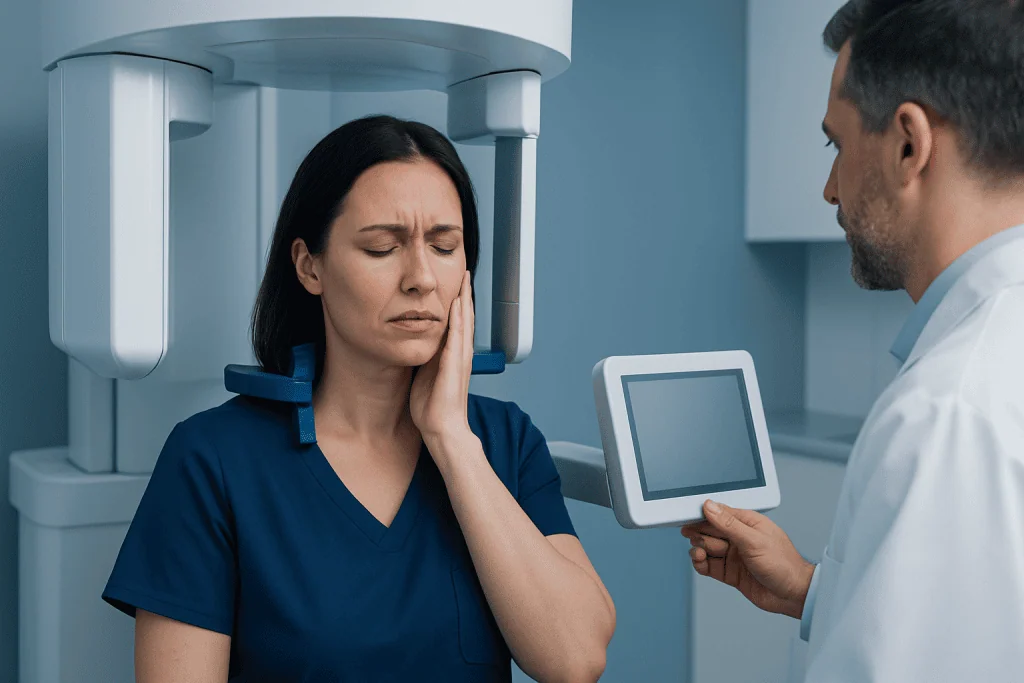
People experience TMJ pain in different ways. The pain may be dull and aching, sharp with jaw movement, or feel like pressure around the joint just in front of the ear. Some notice symptoms only when chewing or yawning, while others feel discomfort even at rest, especially after a stressful day or after sleeping with the jaw clenched.
Because the jaw joint and muscles are closely connected to the face, head, and neck, the pain may spread beyond the jaw itself. It can be felt in the temples, cheeks, teeth, ears, or neck. A person may also describe a tired jaw, morning tightness, or headaches that seem to start in the temples.
- Pain or tenderness in the jaw joint area
- Aching in the face, temple, or around the ear
- Pain when chewing, biting, or talking for long periods
- Clicking, popping, or grinding sensations with jaw movement
- Jaw stiffness or reduced ability to open the mouth wide
- A feeling that the bite has changed or the teeth do not meet normally
Clicking alone does not always mean disease, and many harmless joint sounds need no treatment if there is no pain or limitation. However, pain together with locking, reduced movement, or swelling usually deserves medical or dental assessment.
Common triggers and why they matter

One of the most common triggers for TMJ pain is overuse of the jaw muscles. This can happen with teeth grinding or clenching, chewing gum often, biting nails, holding the phone between the shoulder and jaw, or regularly eating very hard or chewy foods. Stress can make these habits worse, especially during sleep, which is why some people wake with jaw soreness in the morning.
Another major factor is strain within the joint itself. The small cushioning disc inside the joint can become irritated or displaced, and the tissues around the joint can become inflamed. Arthritis, previous jaw injury, and some connective tissue conditions may also affect how smoothly the joint moves. In some people, the problem is mainly muscular; in others, the joint surfaces are more involved.
TMJ pain can also be linked to nearby conditions that either trigger it or mimic it. Dental problems, such as a cracked tooth or infection, may cause pain during biting. Certain headache conditions and neck muscle tension can refer pain to the jaw. Some patients who are evaluated for persistent facial pain may also need assessment for related issues such as trigeminal neuralgia or chronic migraine if the pattern suggests another cause.
Risk tends to increase when several factors overlap. For example, stress-related clenching, poor sleep, a recent dental procedure requiring prolonged mouth opening, and underlying arthritis may all contribute at once. Understanding triggers is helpful because treatment often focuses on reducing the mechanical strain that keeps symptoms active.
How doctors diagnose TMJ pain
Diagnosis usually begins with a detailed history. A doctor or dentist may ask when the pain started, whether it is linked to chewing or waking in the morning, and whether there has been trauma, recent dental work, headaches, jaw locking, or teeth grinding. They will also ask about joint sounds, stress, sleep, and symptoms such as fever or swelling that could suggest another problem.
The physical examination often includes feeling the jaw muscles and the joint, listening for clicks, checking how wide the mouth opens, and seeing whether the jaw moves evenly. The bite may be assessed, and the clinician may look for signs of tooth wear from grinding. Depending on the symptoms, the ears, teeth, throat, and neck may also be examined to rule out other causes of pain.
Imaging is not needed for every case, but it can be useful when symptoms are prolonged, severe, or unclear. A panoramic dental X-ray may show teeth and jawbone issues. More detailed imaging such as MRI may help evaluate the joint disc and soft tissues, while CT scan can show bony changes more clearly in selected cases.
Because jaw pain can overlap with dental, ear, neurologic, and musculoskeletal problems, diagnosis sometimes involves more than one specialist. The goal is to confirm whether the pain comes from the TMJ system itself and to identify any contributing factors that can be treated.
Treatment options and what usually helps
For many people, the first step in treatment is conservative care. This often includes resting the jaw, eating softer foods for a period, avoiding very wide mouth opening, and stopping habits such as gum chewing or nail biting. Some people benefit from brief use of cold or warm compresses, depending on whether the pain feels more inflamed or more muscle-related.
Clinicians may also recommend exercises, posture work, and physical therapy to relax and retrain the jaw and neck muscles. When stress-related clenching is a major factor, treatment may include stress management, sleep support, and behavior changes to reduce daytime jaw tension. A dental professional may advise a night guard in selected cases, especially when tooth grinding is contributing to symptoms.
Medication choices depend on the pattern of pain and should be guided by a qualified clinician. Some people may benefit from short-term pain-relief medicines or anti-inflammatory treatment, while others need a plan that addresses muscle spasm, joint inflammation, or an underlying condition such as arthritis. When a structural problem in the joint is suspected, specialist care may be needed to discuss whether additional procedures are appropriate.
If symptoms persist or there are complex contributing factors, doctors may coordinate care across specialties. In appropriate patients, assessment by physical therapy and rehabilitation specialists can be useful, especially when jaw pain is linked with neck tension, posture, or broader muscle imbalance. Surgery is not the first-line treatment for most TMJ pain, but it may be considered in uncommon, carefully selected situations.
Self-care, prevention, and daily habits
Preventing flare-ups often depends on reducing repeated strain on the jaw. Small daily changes can make a meaningful difference. For example, keeping the tongue gently at the roof of the mouth, allowing the teeth to stay slightly apart when not eating, and relaxing the shoulders may help reduce jaw clenching during the day.
Diet and movement also matter during recovery. Softer foods can lessen joint stress for a short time, while cutting food into smaller pieces may make chewing easier. It can also help to avoid opening the mouth very wide for large bites, prolonged dental self-examination, or forceful yawning. Good sleep habits and stress reduction may reduce nighttime grinding in some people.
- Choose softer foods during painful periods
- Avoid chewing gum, ice, or very hard foods
- Notice and reduce daytime clenching
- Use supportive posture during desk work and phone use
- Apply heat or ice as advised by a clinician
- Follow prescribed exercises consistently, but gently
Self-care is helpful, but it should not replace proper evaluation when symptoms are strong, long-lasting, or associated with other warning signs. If the pain keeps returning, it is worth discussing the pattern with a healthcare professional so treatment can be tailored to the likely cause.
When to seek medical care
TMJ pain should be assessed if it lasts more than a few weeks, keeps coming back, or interferes with eating, speaking, sleep, or daily comfort. Medical or dental evaluation is also important if the jaw gets stuck open or closed, if the mouth opening becomes increasingly limited, or if the bite suddenly feels different.
Prompt assessment is especially important after facial trauma, or when pain is accompanied by fever, visible swelling, redness, drainage, numbness, or unexplained weight loss. These features can suggest infection, fracture, inflammatory disease, or another condition that needs targeted care rather than simple home treatment.
People should also seek urgent care for chest pain, shortness of breath, or pain spreading to the arm or neck, since not all jaw pain comes from the jaw joint. In some cases, jaw discomfort may be referred from another serious condition. Careful evaluation helps rule out these possibilities and ensures the right treatment plan.
For international patients who need further assessment, Acibadem International’s multidisciplinary specialists and JCI-accredited hospitals diagnose and treat jaw, facial, neurologic, and musculoskeletal conditions using coordinated care and advanced imaging when needed.
Frequently asked questions
Can TMJ pain go away on its own?
Yes, mild TMJ pain often improves with rest, a softer diet, and avoiding overuse of the jaw. However, pain that persists, keeps returning, or limits mouth opening should be professionally evaluated.
Is clicking in the jaw always a sign of a TMJ disorder?
No. Some people have harmless clicking or popping without pain or loss of function. Clicking becomes more important when it happens with pain, locking, or difficulty chewing.
Can stress make TMJ pain worse?
Yes, stress can contribute to clenching and grinding, which overworks the jaw muscles and joints. Reducing stress and becoming aware of daytime jaw tension can help lessen flare-ups.
Should a person use heat or ice for TMJ pain?
Either may help, depending on the type of discomfort. Ice may be more soothing for recent irritation or swelling, while gentle heat can help tight muscles; a clinician can advise what is most appropriate.
Who treats TMJ pain?
TMJ pain may be evaluated by a dentist, oral and maxillofacial specialist, primary care doctor, ENT specialist, neurologist, or physical therapist, depending on the symptoms. The best approach often depends on whether the problem is mainly muscular, dental, joint-related, or due to another cause.
Can TMJ pain cause ear pain or headaches?
Yes, TMJ pain can be felt near the ear and may contribute to temple headaches because the jaw muscles and joint are close to these areas. Still, ear infections, migraine, and other conditions can cause similar symptoms, so persistent pain deserves assessment.
References
- National Institute of Dental and Craniofacial Research
- American Dental Association
- Mayo Clinic
- Merck Manual Professional Edition
- National Health Service
This article is for general information only and is not a substitute for professional medical advice. Please consult a qualified doctor about your individual situation.
Joint and spine care in Turkey — expert assessment & treatment
JCI-accredited · board-certified surgeons · reply within 24h
Add us as a Preferred Source to see more of our trusted health content across Google Search, AI Overviews and Discover.