Lissencephaly — Explained by Medical Evidence, Not Myths

Lissencephaly is a congenital brain malformation linked to abnormal neuronal migration before birth. Symptoms often include developmental delay, low muscle tone, feeding difficulties, and seizures, but severity differs from child to child.
Key Takeaways
- Lissencephaly is a congenital brain malformation linked to abnormal neuronal migration before birth.
- Symptoms often include developmental delay, low muscle tone, feeding difficulties, and seizures, but severity differs from child to child.
- Diagnosis usually combines clinical evaluation with brain imaging, especially MRI, and often genetic testing.
- There is no cure that reverses the brain malformation, but treatment can help manage seizures, nutrition, breathing, mobility, and development.
- Early, coordinated care from pediatric neurology, rehabilitation, nutrition, and other specialists can improve daily function and support families.
Lissencephaly is a rare brain development disorder in which the brain surface has fewer or no normal folds because nerve cells did not move into place as expected during pregnancy. It is not a myth or a single disease pattern, but a group of conditions that vary in severity, causes, symptoms, and long-term care needs.
Overview: what lissencephaly means
Lissencephaly is a rare condition present from birth in which the brain has a smoother-than-usual surface. Normally, the outer part of the brain develops folds and grooves as a baby grows during pregnancy. In lissencephaly, those folds are reduced or absent because brain cells, called neurons, did not migrate to their expected positions at the right time in early development.
The term literally means “smooth brain,” but the condition exists on a spectrum. Some children have complete absence of normal folds, while others have broader, fewer folds than expected, sometimes described as pachygyria. Doctors may also classify lissencephaly by the brain pattern seen on MRI and by the underlying genetic or developmental cause.
This is not an infection that spreads from person to person, and it is not caused by parenting choices after birth. Families often want clear answers, but the outlook depends on how extensive the brain differences are, whether seizures occur, whether feeding and breathing are affected, and whether a specific genetic change is identified.
How the condition affects the brain and development
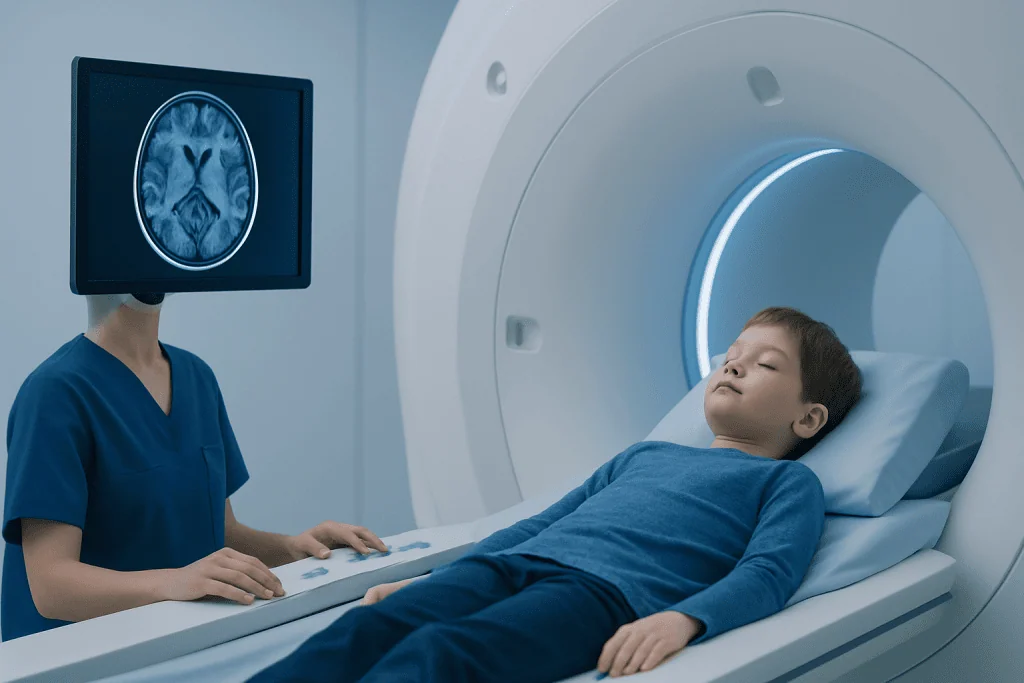
During normal fetal development, neurons are formed deep in the brain and then move outward to build the cerebral cortex in an organized way. In lissencephaly, that migration is disrupted. As a result, the cortex may be unusually thick, the normal layering of brain tissue may be altered, and the surface may look smooth or partly smooth on imaging.
Because the cortex plays a major role in movement, learning, sensation, and seizure control, children with lissencephaly can have a wide range of developmental and neurological challenges. Some have profound delays from early infancy, while others achieve more milestones than expected. The condition can overlap with other brain differences, including hydrocephalus in some cases or structural abnormalities in nearby brain regions.
It is important to understand that lissencephaly is an anatomical diagnosis, but day-to-day care focuses on function. Families and clinicians usually work together on feeding safety, seizure management, physical comfort, communication, and developmental support rather than on the brain appearance alone.
Symptoms and signs families may notice

Symptoms often begin in infancy, although the exact timing varies. Early signs may include poor head control, unusual floppiness or stiffness, feeding difficulties, weak sucking, slower-than-expected development, or trouble gaining weight. Many babies are referred for evaluation because they are not meeting milestones such as smiling, rolling, sitting, or tracking as expected.
Seizures are common in many forms of lissencephaly and may appear as brief jerks, staring spells, stiffening episodes, or more obvious convulsions. Some children develop infantile spasms, a seizure type that needs urgent neurological attention. Other possible signs include swallowing problems, repeated chest infections related to aspiration, abnormal muscle tone, movement difficulties, and irritability.
Over time, some children develop significant intellectual disability, communication challenges, or vision-related difficulties. Others may have smaller head size than expected, known as microcephaly, especially if brain growth is also affected. The pattern can differ depending on the underlying cause, so parents should not assume that one child’s course predicts another’s.
- Developmental delay
- Seizures or infantile spasms
- Low muscle tone or stiffness
- Feeding and swallowing problems
- Breathing issues or repeated aspiration
- Growth and mobility challenges
Causes and risk factors
Lissencephaly most often results from changes that affect how the brain develops before birth. Several genes are known to be involved, including LIS1, DCX, TUBA1A, RELN, and others. In some families, the change is inherited; in others, it happens for the first time in the child. Genetic counseling can help explain recurrence risk and what the results may mean for future pregnancies.
Not all cases are genetic in the same way. Some are linked to chromosome abnormalities, while others may occur as part of broader syndromes. Rarely, severe problems during pregnancy that affect the developing brain, including certain infections or reduced blood flow, may contribute to a lissencephaly-like pattern. A careful medical history and testing help doctors sort through these possibilities.
Parents should know that nothing in routine infant care causes lissencephaly after birth. The condition develops during pregnancy, often very early, before anyone could have recognized symptoms. When lissencephaly is part of a broader neurological picture, specialists may also evaluate for related conditions such as epilepsy or other structural brain disorders.
How lissencephaly is diagnosed
Diagnosis usually begins with a pediatric, neurological, and developmental assessment. Doctors ask about pregnancy history, birth history, feeding, tone, seizures, and developmental milestones. The most important test is brain imaging, especially MRI, which shows the pattern of folds, cortical thickness, and any associated abnormalities in much more detail than ultrasound or CT.
If a baby has seizures, an electroencephalogram may be used to record brain activity and help classify seizure type. Because feeding and swallowing can be affected, some children also need a swallowing study, nutrition assessment, or respiratory evaluation. Vision and hearing checks may be recommended to better understand the child’s overall function.
Genetic testing is often a key part of the workup. Depending on the clinical picture, doctors may use chromosomal microarray, targeted gene panels, or broader sequencing. Imaging performed through MRI evaluation can provide the structural diagnosis, while genetic results may clarify the cause, guide counseling, and sometimes suggest what complications to monitor over time.
Treatment and long-term care
There is no treatment that can make the brain develop normal folds after birth, so care focuses on managing symptoms and supporting development. Treatment plans are individualized and may include seizure medicines, feeding support, physical therapy, occupational therapy, speech and language therapy, and respiratory care. The goal is to improve comfort, safety, and day-to-day function.
Seizure control is often a major part of care. Some children respond well to standard anti-seizure treatment, while others have more difficult-to-control epilepsy and need ongoing follow-up with a pediatric neurologist. For families learning about seizure disorders in this context, epilepsy treatment may be part of the broader care pathway.
Feeding problems may require thickened feeds, careful positioning, swallowing therapy, or tube feeding when oral intake is unsafe or insufficient. Mobility challenges can be addressed with stretching, braces, adaptive seating, and rehabilitation support. When a child develops marked stiffness or movement complications, specialists in neurology care and rehabilitation can help coordinate symptom management.
For international patients who need coordinated evaluation, Acibadem International’s multidisciplinary specialists in JCI-accredited hospitals diagnose and treat complex neurological conditions, including children who may need imaging, genetics, and supportive therapies in one care plan.
Daily support, family planning, and outlook
Life with lissencephaly often involves ongoing medical appointments and home-based care routines. Families may need practical support with feeding schedules, seizure observation, positioning, skin care, respiratory hygiene, and assistive equipment. Early intervention services can help children build communication, movement, and self-care skills to the fullest extent possible.
The outlook varies widely. Some children have severe medical needs from infancy, while others live longer with stable supportive care and gradual developmental progress. Prognosis depends on the extent of brain involvement, seizure burden, feeding and breathing safety, and whether there are additional organ or genetic issues.
Families often benefit from meeting with a genetic counselor after diagnosis. Counseling may explain inheritance, future pregnancy options, and whether prenatal imaging or testing could be considered later. Emotional support matters as much as medical management, and parents should feel comfortable asking for social work, palliative care, or counseling support when needed.
When to seek medical care
Medical review is important any time a baby or child shows developmental delay, unusual stiffness or floppiness, feeding difficulty, repeated choking, poor weight gain, or suspected seizures. A child should be assessed promptly if there are clusters of sudden jerking movements, episodes of unresponsiveness, blue color change, breathing pauses, or signs of aspiration such as coughing during feeds and recurrent chest infections.
Urgent care is needed for a first seizure, a seizure lasting more than a few minutes, repeated seizures without full recovery between them, significant breathing trouble, or dehydration from poor feeding. Parents should also seek care if a child seems increasingly sleepy, less responsive, or has a sudden change from their usual baseline.
Even when symptoms are not urgent, early specialist assessment can be valuable. Pediatric neurology, developmental pediatrics, nutrition, rehabilitation, and, when appropriate, genetic testing can help clarify the diagnosis and guide a safer, more coordinated care plan.
Frequently asked questions
What is lissencephaly in simple terms?
Lissencephaly is a rare disorder in which a baby’s brain develops with too few normal folds or grooves before birth. Because those folds are important for brain function, the condition can affect movement, learning, feeding, and seizure control.
Is lissencephaly genetic?
Often, yes. Many cases are linked to gene changes or chromosome abnormalities, although the exact cause is not found in every child. Genetic testing and counseling can help explain whether the condition may be inherited and what that means for the family.
Can lissencephaly be cured?
There is no cure that reverses the brain malformation itself. Treatment is supportive and focuses on seizures, feeding, breathing, development, and comfort. Many children benefit from long-term follow-up with several specialists.
Does lissencephaly always cause seizures?
Not always, but seizures are common. The type and severity vary, and some children develop infantile spasms or other hard-to-control seizure disorders. Any suspected seizure should be discussed with a doctor promptly.
How is lissencephaly diagnosed?
Doctors usually diagnose it with brain MRI, which shows the smooth or abnormally folded brain surface. The evaluation often also includes neurological assessment, EEG if seizures are suspected, and genetic testing to look for an underlying cause.
What is the life expectancy for someone with lissencephaly?
Life expectancy varies widely and depends on the severity of brain involvement and complications such as seizures, feeding problems, aspiration, and breathing issues. Some children have very complex medical needs, while others live longer with supportive care. A treating specialist can give the most appropriate guidance for an individual child.
This article is for general information only and is not a substitute for professional medical advice. Please consult a qualified doctor about your individual situation.
Explore treatments in Turkey — costs, top hospitals & a free quote
JCI-accredited · board-certified surgeons · reply within 24h
Add us as a Preferred Source to see more of our trusted health content across Google Search, AI Overviews and Discover.

More from the Health Library

P Shot: An Evidence-Based Guide for Patients

Momo Twins: An Evidence-Based Guide for Patients

Head Cold Stiff Neck: A Complete Medical Overview

Inflamed Occipital Lymph Nodes: An Evidence-Based Guide for Patients

Warm Water with Lemon Honey: A Complete Medical Overview