

Laser Hair Therapy
Laser hair therapy is a non-surgical treatment that uses low-level laser light to stimulate hair follicles and support thicker, healthier hair growth in suitable patients.
Quick answer
Laser hair therapy is a non-surgical treatment that uses low-level laser light to stimulate hair follicles and support thicker, healthier hair growth in suitable patients. At Acibadem in Turkey, it is performed after an individualized assessment and may be used alone or alongside other hair-loss treatments as part of a tailored care plan.
Considering Laser Hair Therapy When Hair Thinning Begins to Affect Daily Life
Hair loss is rarely only a cosmetic concern. For many people, it is a visible reminder of aging, hormonal change, illness, stress, genetics, or a period of physical strain. It can affect how a person feels in photographs, at work, in social settings, and even in private moments such as looking in the mirror or washing their hair. International patients often seek care after trying shampoos, supplements, topical medications, or home devices without knowing whether their hair follicles are still active enough to respond.
Laser hair therapy, also known as low-level laser therapy or photobiomodulation for hair loss, is a non-surgical option designed to support healthier hair growth in selected patients. It does not involve incisions, anesthesia, or transplantation of hair follicles. Instead, carefully delivered low-level light energy is used to stimulate biological activity within hair follicles that are weakened but still capable of producing hair.
The decision to begin treatment often comes with understandable questions: Is this hair loss temporary or progressive? Are the follicles still alive? Will laser treatment be enough, or should it be combined with medication, platelet-rich plasma, mesotherapy, nutritional correction, or hair transplantation? How long will it take to see a change? At Acibadem, these questions are approached through medical evaluation rather than assumptions. Hair loss is assessed as a health condition with multiple possible causes, and treatment is planned according to diagnosis, hair density, scalp findings, medical history, expectations, and long-term maintenance needs.
What Is Laser Hair Therapy?
Laser hair therapy is a non-invasive treatment that uses low-level red or near-infrared light to stimulate hair follicles and support the hair growth cycle. The light energy is delivered to the scalp through a medical laser or light-emitting system designed for hair restoration. Unlike surgical lasers that cut or remove tissue, low-level laser therapy works at a lower energy intensity and does not heat or damage the scalp.
The scientific principle behind laser hair therapy is photobiomodulation. When certain wavelengths of light reach the cells around the hair follicle, they may improve cellular energy production, microcirculation, and signaling pathways involved in hair growth. In suitable patients, this can help shift hair follicles from a resting phase into an active growth phase, prolong the growth phase of the hair cycle, and support thicker hair shafts over time.
Hair grows in cycles. The active growth phase is called anagen, the transition phase is catagen, and the resting or shedding phase is telogen. In common forms of hair loss, particularly androgenetic alopecia, hair follicles gradually miniaturize. This means they produce finer, shorter, less pigmented hairs. Laser hair therapy aims to support these miniaturized follicles before they become permanently inactive.
It is important to understand what laser hair therapy can and cannot do. It may improve hair density, hair thickness, and scalp coverage in properly selected patients, especially when hair thinning is mild to moderate and follicles remain viable. It cannot create new follicles where follicles have been destroyed, and it is not a substitute for hair transplantation when bald areas have no meaningful follicular activity. For many patients, laser hair therapy is most effective as part of a broader medical hair restoration plan.
Who May Need Laser Hair Therapy?
Laser hair therapy may be considered for men and women who notice progressive thinning, reduced hair volume, increased shedding, or widening of the part line. It is commonly discussed with patients who have early to moderate pattern hair loss and want a non-surgical treatment option. It may also be used as supportive care after hair transplantation or alongside medical treatments when a physician believes the follicles can still respond.
Typical symptoms that lead patients to consultation include a receding hairline, thinning at the crown, diffuse thinning across the top of the scalp, less ponytail volume, more visible scalp under bright light, or increased hair on the pillow, shower drain, or brush. Some patients also report that their hair grows more slowly or feels finer than before.
Diagnosis begins with a detailed medical history and scalp examination. The physician may ask about family history, recent illness, surgery, weight loss, childbirth, menopause, thyroid disease, anemia, autoimmune conditions, medications, stress, and hair care practices. In many cases, dermoscopic scalp examination or digital hair analysis is used to evaluate hair shaft diversity, miniaturization, follicular density, inflammation, and scalp health. Blood tests may be recommended when nutritional deficiency, thyroid imbalance, hormonal changes, or systemic illness may be contributing to hair loss.
Laser hair therapy may be appropriate when the main problem is follicular weakening rather than complete follicle loss. It is generally most useful in patients whose hair thinning has been identified early, who can commit to repeated sessions, and who understand that results appear gradually. Patients with advanced baldness, extensive scarring alopecia, untreated scalp disease, or unrealistic expectations may need a different treatment strategy.
For international patients, a careful diagnosis is especially important before traveling for treatment. Hair loss patterns can look similar even when the underlying causes are different. A patient with iron deficiency, thyroid disease, inflammatory scalp disease, or medication-related shedding may not benefit from laser therapy alone. At Acibadem, treatment planning may involve dermatology, hair restoration specialists, and related medical disciplines when needed, so the visible symptom of hair loss is considered together with the patient’s overall health.
Conditions and Indications Laser Hair Therapy May Address
Laser hair therapy is most often used for androgenetic alopecia, also called male or female pattern hair loss. In men, this may appear as recession at the temples, thinning at the crown, or both. In women, it more often appears as diffuse thinning over the central scalp with preservation of the frontal hairline, although patterns vary. Because androgenetic alopecia is progressive, ongoing management is often needed to maintain improvement.
It may also be considered for diffuse thinning when follicles are still active and when underlying triggers are being addressed. For example, after a period of telogen effluvium caused by stress, illness, childbirth, nutritional deficiency, or surgery, laser therapy may be discussed as part of a supportive plan once the medical trigger is identified and treated. In such cases, the aim is not simply to stimulate growth but to help the scalp recover in a medically appropriate environment.
Laser hair therapy may be used after hair transplantation to support scalp healing and improve the environment for existing non-transplanted hairs. It does not replace the surgical placement of follicles, but it may be part of a maintenance plan designed to preserve surrounding native hair and support overall density.
Some patients seek laser therapy when they cannot tolerate or do not wish to use certain medications. Others choose it as an adjunct to topical or oral treatments prescribed by their physician. It may be combined with other evidence-based therapies when appropriate, but combinations should be planned carefully to avoid unnecessary treatment burden or overlapping irritation of the scalp.
Laser hair therapy is not usually the primary treatment for scarring alopecias, active inflammatory scalp disease, fungal infection, untreated psoriasis affecting the scalp, or alopecia areata in its active autoimmune phase unless a specialist determines that it has a specific supportive role. In these conditions, treating inflammation or the underlying disease is the priority. A proper diagnosis protects patients from spending time and resources on a treatment that does not match the cause of their hair loss.
How Laser Hair Therapy Is Performed
Preparation Before Treatment
The process begins with consultation and assessment. The physician evaluates the pattern, duration, and severity of hair loss, reviews medical history, and examines the scalp. Photographs may be taken under standardized lighting to document baseline density and allow future comparison. In some patients, digital scalp imaging helps assess miniaturization and density more precisely. Laboratory testing may be recommended if symptoms suggest nutritional, hormonal, thyroid, autoimmune, or inflammatory contributors.
Before a session, the scalp should usually be clean and free of heavy styling products, oils, powders, or sprays that may block light penetration. Patients may be advised to avoid irritating chemical treatments or aggressive scalp procedures shortly before laser therapy. If a patient uses topical medication, the timing may be adjusted so the scalp is not wet or irritated during treatment.
Because laser hair therapy does not require anesthesia, fasting is not needed. Most patients can arrive, complete the session, and return to normal daily activities immediately. For international patients, the treatment plan is discussed in advance so expectations about visit frequency, duration of stay, and follow-up are clear.
During the Procedure
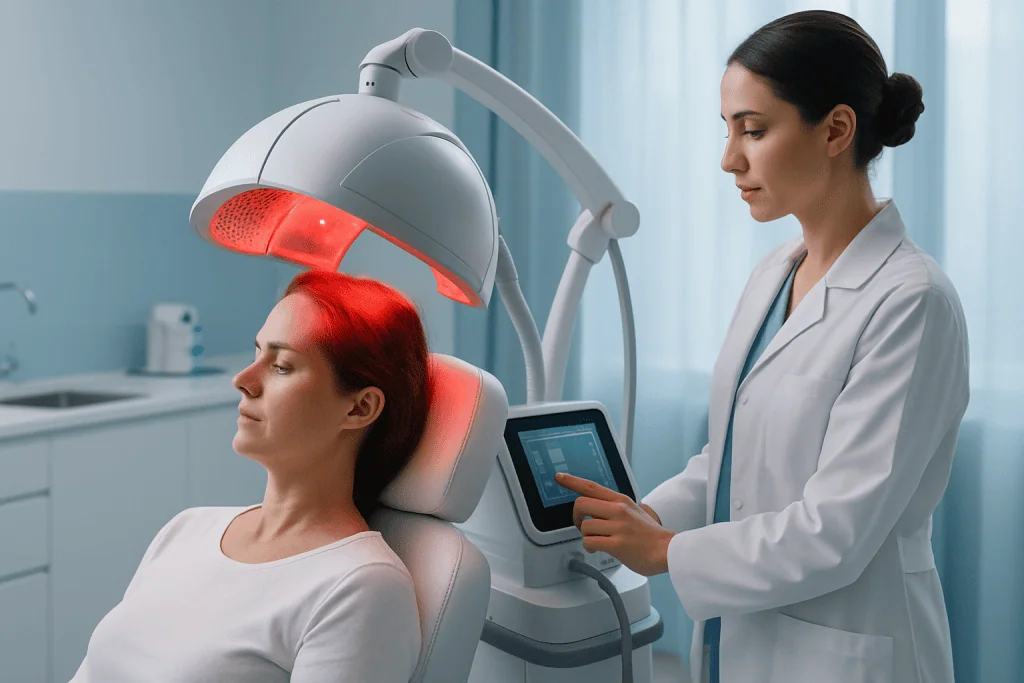
During laser hair therapy, the patient is seated comfortably while the device is positioned over or around the scalp. Protective eyewear may be used depending on the system and treatment setup. The device delivers controlled low-level light to areas of thinning. The treatment is typically painless. Patients may feel gentle warmth or no sensation at all.
Session length varies depending on the area being treated and the technology used, but many sessions are completed within a short clinic visit. The physician or trained clinical team follows a protocol based on the patient’s diagnosis, scalp condition, and treatment goals. The light must reach the target areas consistently, so positioning and exposure time matter. Overly aggressive treatment does not necessarily improve results; the therapy depends on appropriate dosing and repetition over time.
The types of technology used may include clinical laser panels, caps, hoods, or light-based systems designed to distribute low-level red or near-infrared energy across the scalp. The goal is uniform exposure of thinning areas without damaging the skin. In a medical setting, the advantage is not simply access to equipment, but appropriate diagnosis, protocol selection, monitoring, and integration with other treatments when necessary.
After the Session
There is typically no downtime after laser hair therapy. Patients can return to work, travel, social activities, and most daily routines immediately. The scalp should not feel burned or injured. Mild temporary warmth or sensitivity is possible, but significant pain, blistering, or persistent irritation is not expected and should be reported.
Hair washing and styling can usually continue as normal unless the physician gives specific instructions. If the patient is using topical medications or other scalp treatments, the care team will explain when to apply them. Consistency is central to laser hair therapy. A single session is not expected to produce visible change. Most treatment programs involve multiple sessions over several months, followed by maintenance when improvement is achieved.
Typical Treatment Duration and Course
Laser hair therapy requires patience because hair grows slowly. Early changes may include reduced shedding or improved hair texture, but visible density typically takes longer to assess. Many patients are monitored over a period of several months with clinical photographs and scalp evaluation. Treatment frequency depends on the protocol, the severity of thinning, and whether laser therapy is being used alone or with other treatments.
When hair loss is ongoing, maintenance may be needed. This is especially true for androgenetic alopecia, where genetic and hormonal influences continue over time. The physician may adjust the plan if progress is limited, if shedding increases, or if another cause of hair loss becomes apparent. The goal is to create a realistic, medically supervised program rather than a one-time cosmetic intervention.
Why Acting Early Matters
Hair loss treatment is often more successful when follicles are still active. In many progressive conditions, hair follicles do not disappear immediately. They miniaturize gradually, producing thinner and shorter hairs before eventually becoming inactive. Laser hair therapy is designed to support follicles during this vulnerable stage. Waiting until large areas are completely bald may limit non-surgical options.
Acting early also allows physicians to identify treatable medical causes. Iron deficiency, thyroid disease, vitamin deficiencies, hormonal changes, medication effects, inflammatory scalp disorders, and high levels of physical or emotional stress can all contribute to shedding. If these factors are not addressed, hair loss may continue despite cosmetic or device-based treatments.
Delay can also lead to a wider gap between expectations and what non-surgical therapy can achieve. Patients with mild or moderate thinning may be able to improve density or slow visible progression with a combined plan. Patients with advanced follicle loss may need hair transplantation or may have limited options if donor hair is insufficient. Early evaluation helps clarify the range of realistic choices before the condition becomes more difficult to manage.
There is also an emotional reason to seek timely care. Many patients spend months or years trying unverified products while feeling increasingly anxious. A structured medical assessment can reduce uncertainty. Even when laser hair therapy is not the right choice, a clear diagnosis and treatment pathway can help patients make informed decisions.
Benefits of Laser Hair Therapy
For suitable patients, laser hair therapy offers several practical and medical advantages as part of a supervised hair restoration plan.
| Benefit | What It Means for You |
|---|---|
| Non-surgical treatment | No incisions, stitches, or donor area harvesting are required, making it an option for patients who are not ready for surgery or do not need transplantation. |
| Minimal interruption to daily life | Most patients return to work, travel, and normal routines immediately after each session. |
| Support for active follicles | The treatment is designed to stimulate weakened but viable hair follicles and may help improve hair thickness and density over time. |
| Compatible with broader treatment plans | When appropriate, laser therapy may be combined with medical treatments, nutritional correction, platelet-based therapies, or post-transplant maintenance. |
| Comfortable treatment experience | Sessions are typically painless and do not require anesthesia, sedation, or a recovery room stay. |
| Objective monitoring | Clinical photographs and scalp assessment can help track whether the treatment is producing meaningful changes. |
Recovery Timeline After Laser Hair Therapy
Laser hair therapy has little to no physical recovery period, but the biological response develops gradually as the hair cycle changes.
| Time Period | What Patients Can Expect |
|---|---|
| Day 1 | The session is usually comfortable, and normal activities can typically resume immediately. The scalp should not appear injured. |
| First Week | Patients continue their usual hair care unless instructed otherwise. No visible growth is expected this early, and consistency with scheduled sessions is important. |
| First Month | Some patients may notice less shedding or improved hair feel, although many do not see visible change yet. The care team may review adherence and scalp tolerance. |
| Several Months | Visible improvements, when they occur, generally become easier to evaluate after repeated sessions. Standardized photographs may help compare density and coverage. |
| Longer Term | Maintenance may be recommended, particularly for progressive conditions such as androgenetic alopecia. The plan may be adjusted based on response and ongoing hair loss activity. |
What Influences Results and a Good Outcome?
Results from laser hair therapy vary because hair loss is influenced by biology, genetics, hormones, scalp health, age, medications, nutrition, and consistency of treatment. A good outcome begins with the right diagnosis. Patients with early or moderate thinning and active follicles are generally better candidates than patients with long-standing bald areas where follicles are no longer functioning.
The type of hair loss matters. Androgenetic alopecia may respond when follicles are miniaturized but still present, especially if treatment begins early. Telogen effluvium may improve when the underlying trigger is resolved, with laser therapy serving as supportive care in selected cases. Scarring alopecia requires specialist management because follicle destruction and inflammation can permanently reduce the potential for regrowth.
Consistency is another major factor. Laser therapy depends on repeated exposure over time. Missing sessions or stopping early may reduce the chance of seeing benefit. At the same time, more treatment is not always better. Protocols should be medically appropriate and monitored, rather than intensified without reason.
Combination treatment may improve outcomes for some patients. Depending on the diagnosis, the physician may recommend topical or oral medications, correction of iron or vitamin deficiencies, management of thyroid or hormonal conditions, platelet-rich plasma, scalp treatments, or hair transplantation. Laser hair therapy may be one component of a plan rather than the entire solution.
Scalp health also affects response. Inflammation, seborrheic dermatitis, psoriasis, infection, or irritation from harsh hair practices may interfere with growth and comfort. Treating the scalp environment can be as important as stimulating the follicles. Patients should also be honest about styling habits, chemical treatments, tight hairstyles, and heat exposure, as these can contribute to breakage or traction-related loss.
Expectations must be realistic. Laser hair therapy is not expected to restore a teenage hairline or completely reverse advanced hair loss. The aim is often to reduce shedding, improve hair caliber, increase density modestly, slow progression, or support other treatments. For many patients, a good result is measured not only by new growth but by stabilization and improved confidence in a manageable long-term plan.
Why International Patients Choose Acibadem for Laser Hair Therapy
For patients traveling abroad for hair restoration, the quality of evaluation is as important as the treatment itself. Hair loss can be approached superficially, or it can be assessed medically. Acibadem’s model emphasizes diagnosis, appropriate candidacy, and personalized planning, helping patients understand whether laser hair therapy is likely to be useful for their specific pattern of hair loss.
Acibadem hospitals are JCI-accredited, reflecting international standards for patient safety, clinical processes, and quality systems. For an international patient, this matters because treatment abroad involves more than the procedure. It involves medical documentation, infection control standards, communication, coordination, follow-up, and the ability to access related specialties if needed.
Care is provided by experienced physicians and clinical teams familiar with both medical hair loss and aesthetic expectations. Depending on the patient’s needs, dermatology, hair restoration, endocrinology, nutrition, and other specialties may contribute to evaluation. Specialist boards and multidisciplinary discussions are part of the broader Acibadem approach in complex medical care, and the same principle applies to hair loss when underlying health factors require coordinated assessment.
Modern diagnostic pathways may include scalp examination, dermoscopic evaluation, standardized photography, laboratory testing, and review of prior treatments. These tools help distinguish between pattern hair loss, shedding disorders, inflammatory scalp disease, nutritional deficiency, and other causes. This is especially valuable for patients who have already tried multiple treatments without clear explanation.
Advanced technology supports treatment planning and delivery. In laser hair therapy, the technology is used to provide controlled low-level light exposure to thinning areas of the scalp. Imaging and documentation tools help physicians monitor change over time. The purpose of technology is not to replace clinical judgment, but to make diagnosis, treatment delivery, and follow-up more precise.
International patient services are an important part of the experience. Acibadem International supports patients from initial inquiry through appointment coordination, medical record review, translation and interpretation in more than 20 languages, travel-related guidance, and communication with care teams. Patients traveling from the United States, Europe, the Middle East, Africa, or other regions often need clarity before they fly: what evaluation is needed, how many sessions may be recommended during the visit, whether additional treatments should be considered, and what follow-up can be arranged after returning home.
Personalized treatment planning is central. Some patients may be suitable for laser therapy alone. Others may benefit more from a combined plan, medical therapy, correction of deficiencies, or hair transplantation. In some cases, the most valuable consultation is learning that laser therapy is not the right primary treatment. Ethical care includes explaining limitations as clearly as possibilities.
Patients also choose Acibadem because hair restoration can be connected with broader health evaluation when appropriate. Hair loss may be the first visible sign of another condition. Access to hospital-based specialties and diagnostic services allows patients to receive a more complete assessment when medical clues suggest a systemic cause.
A Thoughtful Next Step for Hair Thinning
Laser hair therapy can be a valuable non-surgical option for patients with suitable forms of hair thinning, particularly when follicles are weakened but still active. It is comfortable, requires little interruption to daily life, and may support thicker, healthier hair growth over time. Its success depends on correct diagnosis, appropriate timing, realistic expectations, and consistent treatment.
If you are noticing progressive thinning, increased shedding, or loss of hair density, an expert evaluation can help determine whether laser hair therapy is appropriate for you. At Acibadem, international patients can request a consultation or second opinion to review their hair loss pattern, previous treatments, medical history, and possible treatment options before making travel decisions.
This information is intended for general educational purposes and is not a substitute for professional medical advice, diagnosis, or treatment. A qualified physician should evaluate your individual condition and recommend the most appropriate care plan.
Preparation
- A specialist evaluates the scalp, hair loss pattern, medical history, and current medications before treatment. The scalp should be clean and free of styling products on the day of the session. Patients may be advised to avoid harsh chemical hair treatments before therapy.
Aftercare
- Patients can usually resume normal activities immediately after each session. Follow the treatment schedule recommended by the specialist, as results typically require repeated sessions over several months. Continue prescribed hair care or medical treatments if advised.
Turkey vs UK, Germany & USA
Laser hair therapy is commonly compared across destinations because overall value depends on the clinical plan, care setting, travel arrangements and follow-up support. Costs can vary because treatment is usually planned as a course rather than a single standard procedure.
The comparison below highlights cost and patient-experience factors for international patients considering laser hair therapy.
| Factor | Turkey | UK | Germany | USA |
|---|---|---|---|---|
| Price drivers | Private clinic pricing, diagnostic assessment, session plan, device type and any combined hair treatments influence the quote. | Private aesthetic or dermatology clinic pricing is common; location, consultant involvement and follow-up affect cost. | Clinic setting, medical consultation, technology used and whether laser therapy is combined with other treatments affect pricing. | Provider fees, facility type, device platform, local market and add-on treatments can strongly influence final cost. |
| Hospital and specialist factors | Care may be coordinated through hospitals or specialist hair clinics, with international patient teams supporting scheduling and logistics. | Treatment is often provided in private dermatology, trichology or aesthetic clinics; specialist access may depend on clinic pathway. | Dermatology and aesthetic medicine clinics commonly provide assessment-led plans, often with structured documentation. | Treatment may be delivered through dermatology, hair restoration or aesthetic practices with wide variation in provider models. |
| Accreditation and quality | International patients may choose hospitals with recognised accreditation such as JCI, plus device protocols and medical oversight. | Quality expectations depend on provider registration, clinical governance and device safety procedures. | Regulated healthcare settings and medical documentation are important considerations when comparing clinics. | Quality varies by provider; patients often review physician credentials, facility standards and device approvals. |
| Waiting times | Private scheduling for international patients is often coordinated in advance, subject to specialist availability. | Private appointments may be available, while public pathways are usually not the typical route for cosmetic hair concerns. | Appointments are generally planned through private or specialist clinics, depending on availability. | Private scheduling is common, with timing depending on location, clinic demand and specialist availability. |
| Travel and language logistics | International departments may assist with translation, appointments, transfers and hotel coordination. | Travel is straightforward for English-speaking patients, though accommodation and transport are usually arranged separately. | Language support may be available in larger centres; patients should confirm translation and travel assistance. | English communication is standard, but travel distance, accommodation and insurance arrangements may add complexity. |
| Typical package contents | Packages may include specialist consultation, scalp assessment, treatment planning, laser sessions and follow-up guidance. | Packages are often clinic-based and may separate consultation, treatment sessions and follow-up. | Plans may include medical assessment, scheduled laser sessions and progress reviews, depending on provider. | Packages vary widely and may separate consultation, imaging, treatment sessions and maintenance products. |
What affects your final cost
- Cause and stage of hair thinning assessed by the specialist.
- Recommended treatment course and maintenance plan.
- Type of laser device and whether treatment is clinic-based or supported by home care.
- Whether laser therapy is combined with medication, scalp treatments, PRP or hair transplantation planning.
- Clinic or hospital setting, specialist experience and accreditation standards.
- Travel, accommodation, translation and follow-up arrangements for international patients.
Compare your options
Laser hair therapy may be used alone or as part of a broader hair restoration plan. Suitability is decided by a specialist after assessing the scalp, hair loss pattern, medical history and expectations.
| Option | What it is | Typical use | Key considerations |
|---|---|---|---|
| In-clinic laser hair therapy | Low level laser light delivered with professional devices in a clinical setting. | Often considered for suitable patients with thinning hair who want a non-surgical supportive treatment. | Requires repeated visits and realistic expectations; results depend on diagnosis, consistency and individual response. |
| Home laser device plan | Laser caps, combs or helmets used at home under guidance. | May support maintenance or convenience for selected patients after specialist advice. | Device quality, correct use and adherence are important; it should not replace medical assessment. |
| Medical hair loss treatment | Prescription or non-prescription therapies recommended according to the cause of hair loss. | May be used alongside laser therapy for pattern hair loss or other diagnosed conditions. | Possible side effects, contraindications and long-term commitment should be reviewed by a clinician. |
| PRP or regenerative scalp treatments | Injection-based treatments using a patient-derived preparation or other supportive approaches. | Sometimes combined with laser therapy when the specialist considers it appropriate. | Involves injections and clinical protocols; evidence and suitability vary by condition and patient profile. |
| Hair transplantation planning | Surgical redistribution of hair follicles from donor areas to thinning or bald areas. | Considered when hair loss pattern, donor area and expectations are suitable for surgery. | Laser therapy may be discussed as supportive care, but transplantation has different planning, recovery and cost factors. |
Trusted care for international patients
General information only — not medical or financial advice. Final costs depend on the factors above and your individual case; request a free, personalised quote.
Medical Units
Available at These Hospitals



Guides for This Treatment
Frequently Asked Questions
What affects the cost of laser hair therapy?
The final cost depends on the diagnosis, treatment course, device type, clinic setting, specialist involvement, follow-up needs and whether laser therapy is combined with other hair restoration treatments.
How can I get a personalised quote?
A personalised quote is prepared after reviewing your medical history, hair loss pattern, scalp findings and goals. Acibadem International can arrange a free consultation to help define the most suitable plan.
Is laser hair therapy usually included in a package?
Packages vary by provider. They may include consultation, scalp assessment, treatment planning, scheduled laser sessions and follow-up guidance, while travel or accommodation support may be arranged separately.
Will I need additional treatments?
Some patients may benefit from laser therapy alone, while others may require medication, PRP, scalp care or hair transplantation planning. A specialist decides suitability after assessment.
Is this information medical or financial advice?
No. This is general educational information. Treatment choice and cost should be confirmed through a specialist consultation and an individual quote.