Glottis — Explained by Medical Evidence, Not Myths

The glottis includes the vocal cords and the space between them inside the larynx. It helps control airflow, create sound, and protect the lungs during swallowing.
Key Takeaways
- The glottis includes the vocal cords and the space between them inside the larynx.
- It helps control airflow, create sound, and protect the lungs during swallowing.
- Common glottis-related problems include inflammation, vocal cord nodules, paralysis, and growths.
- Hoarseness lasting more than a few weeks should be assessed by a doctor, especially in smokers or people with breathing difficulty.
- Evaluation often involves a throat examination and laryngoscopy to look directly at the vocal cords.
The glottis is the part of the larynx, or voice box, that includes the vocal cords and the opening between them. It plays a central role in breathing, speaking, and protecting the airway, so problems affecting the glottis can cause voice changes, throat discomfort, or trouble breathing.
What the Glottis Is and Why It Matters
The glottis is the part of the voice box that contains the vocal cords and the opening between them. In simple terms, it is a working gateway in the throat that helps air move in and out, allows the voice to be produced, and closes in a coordinated way to reduce the risk of food or liquid entering the lungs.
People often use the words “larynx,” “vocal cords,” and “glottis” interchangeably, but they are not exactly the same. The larynx is the larger structure in the neck, sometimes called the voice box. Within it, the glottis refers specifically to the true vocal folds and the gap between them, which changes shape constantly during breathing, speaking, coughing, and swallowing.
Because the glottis is involved in several essential functions at once, even a small problem can be noticeable. Inflammation, irritation, weakness of the vocal cords, or a growth on the cords may lead to hoarseness, vocal fatigue, throat clearing, or a sense that breathing is not normal. Understanding the glottis helps explain why symptoms involving the voice should not be ignored when they persist.
How the Glottis Works in Breathing, Voice, and Swallowing
During quiet breathing, the vocal cords sit apart so air can pass freely through the glottic opening into the windpipe and lungs. During exercise or deeper breathing, this opening widens further to allow greater airflow. This is one reason disorders affecting the glottis can sometimes cause noisy breathing or shortness of breath, especially during exertion.
When a person speaks, the vocal cords move closer together. Air coming up from the lungs passes between them and makes them vibrate, creating sound. The pitch and quality of the voice depend on how the cords come together, how tense they are, and how smoothly they vibrate. If the lining becomes swollen or irritated, the voice may sound rough, breathy, strained, or weak.
The glottis also contributes to airway protection. During swallowing, the structures of the throat work together so that food and drink are directed toward the esophagus rather than the lungs. The vocal cords close as part of this protective mechanism. Coughing is another protective reflex linked to the glottis, helping clear material from the airway if it enters the wrong passage.
Common Glottis Problems and Their Symptoms

Glottis-related symptoms are often voice-related, but not always. Common complaints include hoarseness, a breathy or weak voice, voice breaks, throat discomfort, frequent throat clearing, a feeling of strain while speaking, or reduced vocal endurance. Some people notice that they cannot reach high notes, project their voice, or speak for long periods without fatigue.
Different conditions can affect this area. Acute irritation from a viral infection or heavy voice use can inflame the vocal cords. Longer-term irritation may occur with smoking, acid reflux, exposure to dry air, or repeated shouting. Benign lesions such as nodules, polyps, or cysts may develop on the vocal cords. Doctors may also consider conditions such as vocal cord nodules when ongoing hoarseness is linked to vocal overuse.
Problems can also involve movement of the cords rather than their surface. Vocal cord weakness or paralysis may follow surgery, viral illness, nerve injury, or other neurologic conditions. Less commonly, narrowing of the airway, noncancerous tumors, or cancer can affect the glottis. Warning symptoms that deserve timely evaluation include persistent hoarseness, trouble swallowing, coughing up blood, unexplained ear pain, weight loss, or breathing difficulty.
- Hoarseness or voice change
- Pain or discomfort with speaking
- Noisy breathing or shortness of breath
- Chronic cough or throat clearing
- Feeling that something is stuck in the throat
- Difficulty swallowing or choking episodes
Causes and Risk Factors
Many glottis problems have everyday causes. Viral upper respiratory infections, seasonal allergies, dehydration, and temporary voice strain can all affect the vocal cords. People who speak, sing, teach, coach, or work in noisy settings may place heavy demands on the glottis, especially if they use poor vocal technique or do not allow the voice enough rest.
Other important risk factors include smoking, secondhand smoke exposure, acid reflux reaching the throat, chronic sinus drainage, and environmental irritants such as dust or chemical fumes. Repeated coughing can also traumatize the cords. In children and adults alike, overuse plus irritation can lead to swelling or small benign lesions.
Age, prior surgery in the neck or chest, intubation, and neurologic disease can increase the risk of vocal cord movement disorders. Although most voice problems are not caused by cancer, persistent symptoms should be checked carefully in people with tobacco or heavy alcohol exposure. Depending on the findings, an ENT specialist may evaluate for conditions affecting the larynx, including laryngeal cancer when clinically appropriate.
How Doctors Diagnose Glottis Conditions
Diagnosis begins with a careful history. A doctor will usually ask when symptoms started, whether they appeared after an infection or heavy voice use, and whether there are associated problems such as reflux, cough, swallowing difficulty, or breathing changes. Voice demands at work, smoking history, and previous surgery are also important because they can point toward likely causes.
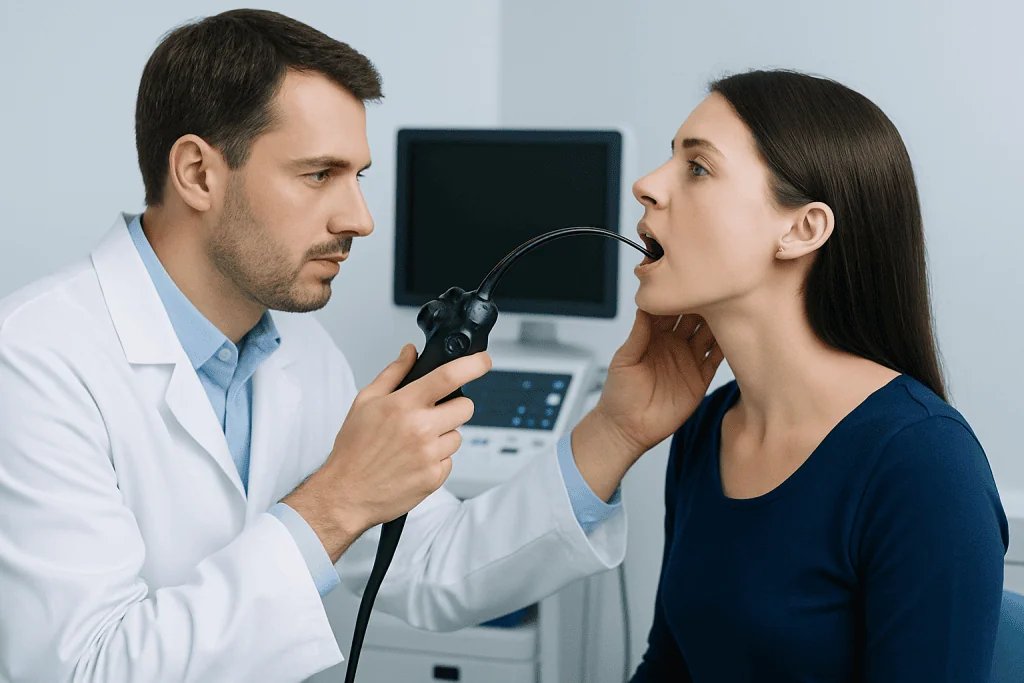
A physical examination may include assessment of the mouth, throat, neck, and quality of the voice. However, the glottis cannot be fully judged from the outside. Direct visualization is often needed, usually with laryngoscopy. In this exam, a specialist uses a small flexible or rigid camera to look at the vocal cords while the patient breathes and speaks. This can show swelling, lesions, abnormal movement, or incomplete closure of the cords.
Some people may need additional testing. Stroboscopy can provide a more detailed view of vocal cord vibration. Imaging such as CT or MRI may be considered if there is concern about deeper structures or nerve-related problems. If a suspicious lesion is seen, the doctor may recommend biopsy or a procedure such as laryngoscopy under controlled conditions to confirm the diagnosis and guide treatment.
Treatment Options for Glottis Disorders
Treatment depends on the cause rather than the symptom alone. Many mild cases improve with voice rest, hydration, humidified air, and avoiding smoke or other irritants. If reflux, allergies, or infection are contributing, treating those conditions can help the vocal cords recover. People should avoid repeated whispering or forceful throat clearing, as both can place extra strain on the glottis.
Voice therapy is often a key part of care. A speech-language pathologist can teach strategies to reduce harmful vocal habits, improve breath support, and use the voice more efficiently. This is especially helpful for vocal overuse, muscle tension, some benign lesions, and recovery after certain injuries. In selected cases, specialists may recommend speech therapy and rehabilitation to improve vocal function and daily comfort.
Procedures may be needed when symptoms persist, the airway is affected, or a lesion needs removal or biopsy. Examples include microsurgical treatment of nodules, polyps, or cysts, management of scar tissue, or treatment for vocal cord paralysis. If structural disease is found, an ENT surgeon may discuss options such as ENT surgery. Near the end of a patient’s pathway, multidisciplinary teams at Acibadem International’s JCI-accredited hospitals also evaluate and treat glottis-related conditions for international patients when specialist care is needed.
Prevention and Everyday Self-care
Good vocal habits can help protect the glottis. Drinking enough water, resting the voice after heavy use, and using amplification when speaking to large groups may reduce strain. It is also helpful to avoid smoking and to limit exposure to dry, dusty, or smoky environments whenever possible. For many people, these simple steps make a noticeable difference in comfort and voice quality.
Managing conditions that irritate the throat is equally important. Reflux control, allergy treatment, and nasal symptom management may reduce ongoing inflammation around the larynx. Gentle voice warm-ups can help people who rely on their voice professionally, but pushing through pain or hoarseness is not a good idea. A voice that feels tired needs recovery time.
Self-care should not replace medical assessment when symptoms persist. A common mistake is trying repeated home remedies while hoarseness continues for weeks. Because some glottis problems are best treated early, persistent or worsening symptoms deserve proper examination rather than prolonged self-treatment alone.
When to Seek Medical Care
A doctor should assess hoarseness or other voice changes that last more than two to three weeks, especially when there is no clear sign of recovery. Evaluation is also important sooner if symptoms begin after neck or chest surgery, if the person has significant voice demands for work, or if there is known smoking exposure. Early assessment can identify whether the issue is simple irritation, a benign lesion, or a more serious condition.
Urgent medical care is needed for breathing difficulty, noisy breathing that is getting worse, choking episodes, or inability to swallow fluids. Coughing up blood, a neck mass, unexplained weight loss, or persistent ear pain along with hoarseness should also be evaluated promptly. These symptoms do not always mean a serious disease, but they warrant timely medical attention.
If symptoms are ongoing, an ENT specialist is often the most appropriate doctor to examine the glottis directly. A clear diagnosis is the best way to choose the right treatment and protect both voice and airway function.
Frequently asked questions
What is the glottis in simple terms?
The glottis is the part of the voice box that includes the vocal cords and the opening between them. It helps air move during breathing, creates sound for speaking, and helps protect the airway during swallowing.
Is the glottis the same as the larynx?
No. The larynx is the full voice box, while the glottis is one important part inside it. The glottis specifically refers to the true vocal cords and the space between them.
What symptoms can happen when the glottis is affected?
Common symptoms include hoarseness, a weak or breathy voice, throat discomfort, and vocal fatigue. Some people also develop trouble swallowing, chronic throat clearing, cough, or breathing changes if the airway is involved.
Can glottis problems go away on their own?
Some do, especially if they are caused by a cold, temporary irritation, or short-term voice strain. However, symptoms that last more than a few weeks should be checked by a doctor to rule out lesions, nerve problems, or other conditions.
How do doctors look at the glottis?
Doctors usually examine the glottis with laryngoscopy, a test that uses a small camera to view the vocal cords. It is commonly done by an ENT specialist and helps show swelling, growths, or movement problems.
Does hoarseness always mean something serious?
No, hoarseness is often caused by irritation, infection, or voice overuse. Still, persistent hoarseness should not be ignored, especially in smokers or in anyone with breathing difficulty, swallowing problems, or a neck lump.
This article is for general information only and is not a substitute for professional medical advice. Please consult a qualified doctor about your individual situation.
Explore treatments in Turkey — costs, top hospitals & a free quote
JCI-accredited · board-certified surgeons · reply within 24h
Add us as a Preferred Source to see more of our trusted health content across Google Search, AI Overviews and Discover.

More from the Health Library

Black Vgina: A Complete Medical Overview

Cedar Point Dragster Height: What Patients Need to Know

Itching of Throat and Ears: A Complete Medical Overview

Toothache Plant: A Complete Medical Overview

Fluttering in Ear: What Patients Need to Know