Pain in Ladies Groin Explained: Common Triggers and Red Flags

Groin pain in women has many possible causes, including muscle strain, hip disease, hernia, urinary problems, and gynecologic conditions. The location, timing, and triggers of pain help doctors narrow the cause.
Key Takeaways
- Groin pain in women has many possible causes, including muscle strain, hip disease, hernia, urinary problems, and gynecologic conditions.
- The location, timing, and triggers of pain help doctors narrow the cause.
- Red flags include sudden severe pain, fever, a lump, vomiting, inability to bear weight, or pain during pregnancy.
- Diagnosis may involve a physical exam, urine tests, blood tests, and imaging such as ultrasound or MRI.
- Treatment depends on the cause and may range from rest and physiotherapy to antibiotics or surgery.
Pain in ladies groin can come from muscles, joints, nerves, the urinary tract, or reproductive organs, so the cause is not always the groin itself. Mild pain may improve with rest, but new, persistent, severe, or one-sided pain should be assessed to rule out conditions that need treatment.
Overview: what pain in ladies groin can mean
Pain in ladies groin usually refers to discomfort where the lower abdomen meets the upper inner thigh. It may feel sharp, dull, burning, aching, or like pulling pressure, and it can come from nearby muscles and joints or from organs in the pelvis and lower urinary tract.
This symptom is common and does not always point to one specific disease. In some people it starts after exercise or a sudden twist. In others it appears gradually with walking, coughing, urinating, periods, or sexual activity. Because several body systems meet in this area, a careful history and examination are important.
A practical way to think about groin pain is by source: musculoskeletal causes such as strain or hip irritation; abdominal wall causes such as hernia; urinary causes such as infection or stones; and gynecologic causes such as ovarian cysts, endometriosis, or pelvic infection. Nerve irritation can also cause pain or burning into the groin.
How the pain may feel and what patterns matter
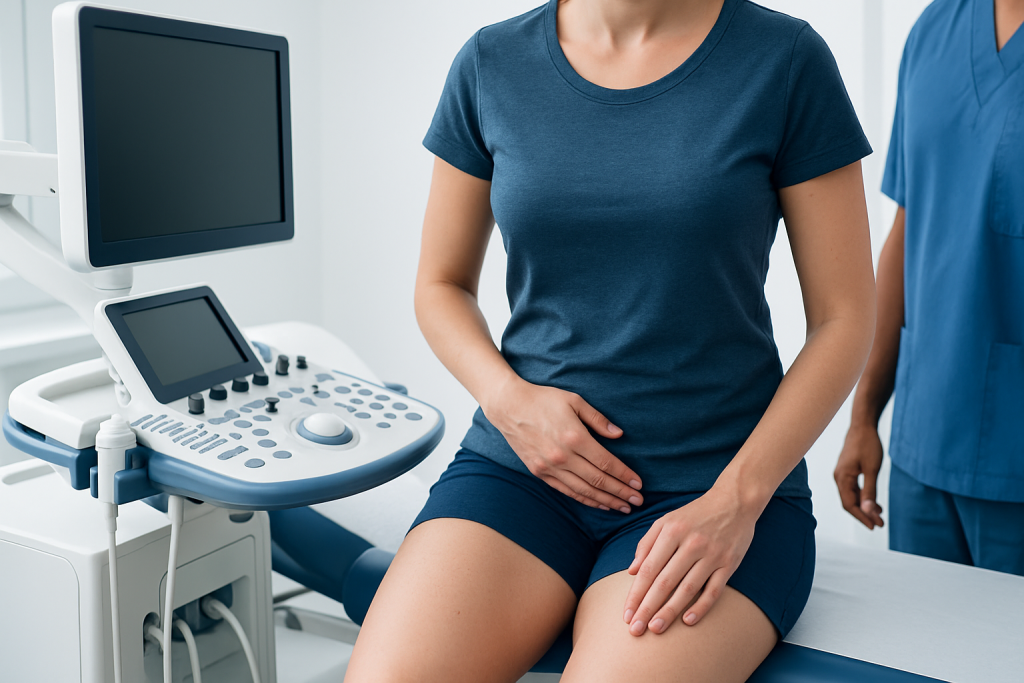
The way groin pain behaves often gives useful clues. Pain that begins after sports, lifting, or a sudden movement may suggest a strained muscle or tendon. Pain that worsens with walking, climbing stairs, or getting out of a car may point more toward a hip joint problem.
Cramping pain that comes with periods may suggest a gynecologic source. Burning pain with urination can suggest a urinary tract infection, while wave-like severe pain that travels from the side or back toward the groin can occur with a kidney stone. A visible or tender bulge may suggest a hernia.
Doctors also ask whether the pain is one-sided or on both sides, constant or intermittent, and whether it spreads to the thigh, buttock, lower abdomen, or back. Other symptoms matter too, including fever, nausea, vaginal bleeding, discharge, urinary symptoms, numbness, or difficulty standing and walking.
- Sharp pain: can occur with strain, cyst rupture, stones, or sudden joint irritation
- Dull ache: may occur with overuse, arthritis, or chronic pelvic conditions
- Burning or tingling: may suggest nerve involvement
- Pressure or heaviness: may be linked to hernia or pelvic floor dysfunction
Common musculoskeletal and joint causes
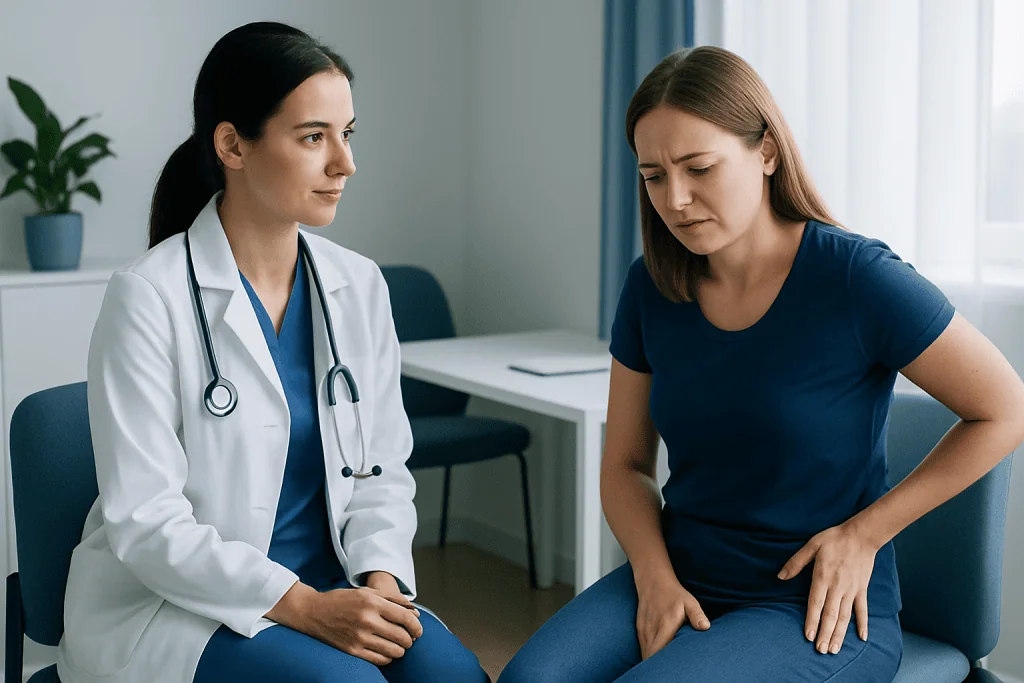
Muscle and tendon problems are among the most common reasons for pain in ladies groin. The adductor muscles of the inner thigh, hip flexors, and lower abdominal muscles can be strained during exercise, sudden changes in direction, heavy lifting, or even an awkward step. The pain may increase when bringing the legs together, rising from a chair, or climbing stairs.
The hip joint can also refer pain to the groin. Conditions such as labral tears, hip impingement, bursitis, and osteoarthritis may cause deep aching in the groin with stiffness or reduced range of motion. People sometimes notice pain while walking, standing up after sitting, or rotating the leg inward.
Less commonly, stress fractures of the pelvis or upper femur can cause groin pain, especially in runners or people with low bone density. Pubic bone irritation, often called osteitis pubis, can also lead to tenderness in the central groin region. If joint disease is suspected, further assessment for osteoarthritis or related hip conditions may be helpful.
Urinary, digestive, and hernia-related causes
Not all groin pain starts in muscles or joints. A urinary tract infection may cause lower pelvic discomfort along with burning urination, urgency, or frequent urination. Kidney stones can cause intense pain that often starts in the side or back and moves toward the lower abdomen or groin, sometimes with nausea or blood in the urine.
Hernias are another important cause. Inguinal and femoral hernias occur when tissue pushes through a weak spot in the lower abdominal wall. They may cause an ache, dragging sensation, or a small lump that becomes more noticeable with coughing, lifting, or prolonged standing. Some hernias are subtle and not obvious without examination.
Digestive causes can also be involved. Constipation, bowel spasm, or inflammation in the lower abdomen can occasionally be felt in the groin, although these usually come with other bowel symptoms. When a hernia is suspected, a clinician may recommend imaging and, if needed, hernia repair to prevent complications.
Gynecologic causes of groin pain in women
In women, the ovaries, fallopian tubes, uterus, and surrounding tissues can all contribute to groin pain. Ovulation can briefly cause one-sided lower abdominal or groin discomfort. Ovarian cysts may cause intermittent aching, pressure, or sudden pain if they rupture or twist. Endometriosis can cause cyclical pain, often worsening around periods and sometimes during bowel movements or sex.
Pelvic inflammatory disease is an infection of the upper reproductive tract that can cause pelvic or groin pain, fever, unusual discharge, and pain during sex. Fibroids may create pressure, though they more often cause heavy periods or pelvic fullness than isolated groin pain. Pregnancy-related stretching or pelvic girdle strain can also lead to discomfort in the groin region.
One of the most important emergencies to exclude is ectopic pregnancy, where a pregnancy grows outside the uterus. This can cause one-sided pelvic or groin pain, especially with bleeding, dizziness, or shoulder pain. Persistent or severe pelvic pain may also warrant evaluation for endometriosis or an ovarian problem.
How doctors diagnose the cause
Diagnosis starts with a detailed conversation about where the pain is felt, when it began, and what makes it better or worse. Doctors ask about exercise, injuries, menstrual history, pregnancy possibility, urinary symptoms, bowel changes, fever, and whether there is a lump or swelling. This history often narrows the list of causes significantly.
The physical exam may include checking the abdomen, groin, hip motion, inner thigh muscles, lower back, and sometimes a pelvic examination when gynecologic causes are possible. Urine testing can help detect infection or blood from stones. Blood tests may be used if there are signs of infection, inflammation, anemia, or pregnancy.
Imaging depends on the suspected cause. Ultrasound is often used for pelvic organs, pregnancy-related concerns, cysts, and some hernias. X-rays can help assess bones and arthritis, while MRI is useful for muscle injuries, stress fractures, labral tears, and some chronic pelvic causes. In selected cases, clinicians may refer patients for MRI or other targeted imaging to clarify the diagnosis.
Treatment options and self-care
Treatment depends entirely on the cause. For a mild muscle strain, rest from aggravating activity, gradual return to movement, ice or heat, and guided exercises may be enough. Hip-related pain may improve with activity modification, physiotherapy, and treatment directed at the underlying joint problem. Some people benefit from structured physical therapy and rehabilitation to restore strength, flexibility, and walking mechanics.
Urinary infections usually require medical assessment and often prescription treatment. Kidney stones may pass on their own or need procedures depending on their size and location. Hernias do not improve with exercise alone and may need surgical repair if they cause symptoms or become trapped.
Gynecologic treatment varies widely. Hormonal management may help some cyclical conditions such as endometriosis, while ovarian torsion, ectopic pregnancy, or severe pelvic infection need urgent care. Self-care should stay general and safe: avoiding heavy lifting during painful flares, staying hydrated, and seeking professional advice if symptoms do not clearly improve within a short time.
When to seek medical care
Many cases of mild groin pain improve, but certain features mean prompt medical evaluation is important. Medical care is recommended for pain that is sudden, severe, one-sided, or linked to injury; pain with a fever; pain with vomiting; or pain with a lump that cannot be pushed back in. Care is also important if there is new difficulty walking, weakness, numbness, or pain that continues beyond several days without a clear explanation.
Urgent assessment is especially important during pregnancy or if pregnancy is possible. Vaginal bleeding, faintness, shoulder pain, or severe pelvic pain should never be ignored. Likewise, blood in the urine, inability to pass urine, or severe flank-to-groin pain may need urgent evaluation.
For ongoing symptoms, specialist input may be useful because groin pain often crosses more than one field, including orthopedics, gynecology, urology, and general surgery. Acibadem International’s multidisciplinary specialists and JCI-accredited hospitals evaluate and treat these conditions for international patients when advanced assessment is needed.
Frequently asked questions
Is pain in ladies groin usually serious?
Often it is not serious and may be caused by a muscle strain or minor overuse problem. However, sudden severe pain, fever, a groin lump, urinary symptoms, or pain during pregnancy should be assessed promptly.
Can hip problems cause groin pain in women?
Yes. The hip joint commonly refers pain to the groin, especially with arthritis, labral injury, or hip impingement. Pain often increases with walking, twisting, or getting up from a seated position.
What gynecologic conditions can cause groin pain?
Possible causes include ovulation pain, ovarian cysts, endometriosis, pelvic inflammatory disease, and pregnancy-related problems. A doctor considers the pattern of pain, menstrual history, and any associated bleeding or discharge.
How do doctors tell whether groin pain is from a muscle or an internal organ?
They look at the story of the pain, associated symptoms, and the findings on physical examination. Muscle pain is often linked to movement or activity, while urinary or gynecologic causes may come with burning urination, bleeding, fever, or cyclical symptoms.
What tests might be needed for female groin pain?
Common tests include a urine test, pregnancy test when relevant, blood tests, ultrasound, and sometimes X-ray or MRI. The exact tests depend on whether the doctor suspects a musculoskeletal, urinary, digestive, or gynecologic cause.
Can groin pain go away on its own?
Yes, mild strain-related pain may improve with rest and a gradual return to activity. If pain persists, keeps returning, or is accompanied by warning signs, a medical review is the safest next step.
References
- American College of Obstetricians and Gynecologists
- American Academy of Orthopaedic Surgeons
- National Health Service
- National Institute of Diabetes and Digestive and Kidney Diseases
- American College of Radiology
This article is for general information only and is not a substitute for professional medical advice. Please consult a qualified doctor about your individual situation.
Joint and spine care in Turkey — expert assessment & treatment
JCI-accredited · board-certified surgeons · reply within 24h