

Double Jointed Elbows — Explained by Medical Evidence, Not Myths
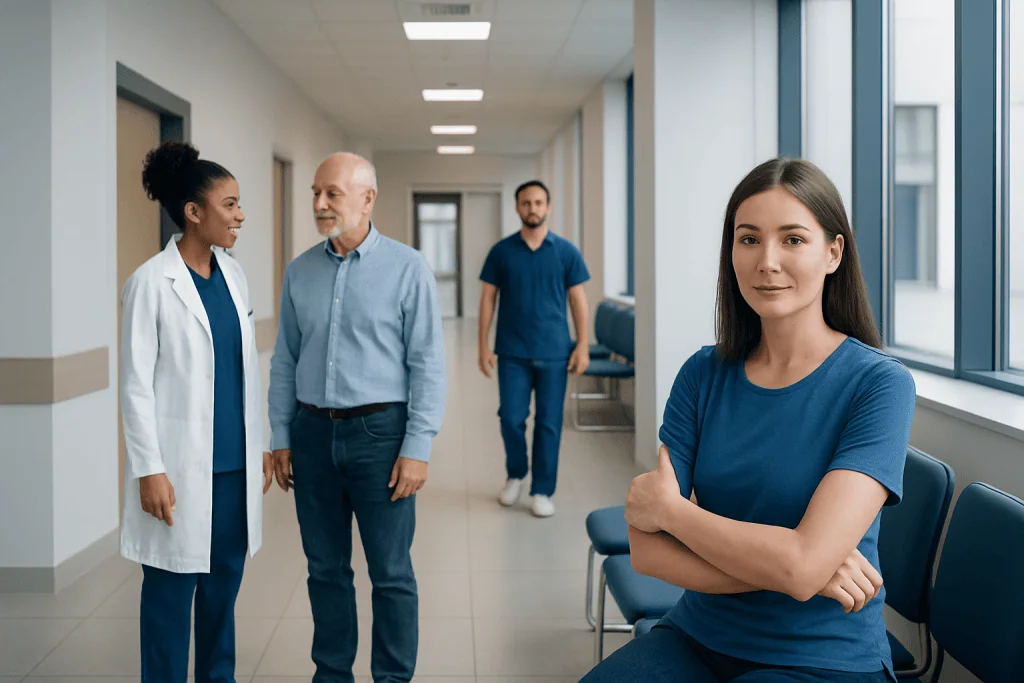
“Double jointed” is a common term for joint hypermobility, not a second elbow joint. Many people with double jointed elbows have no symptoms and do not need treatment.
Key Takeaways
- “Double jointed” is a common term for joint hypermobility, not a second elbow joint.
- Many people with double jointed elbows have no symptoms and do not need treatment.
- Pain, repeated sprains, clicking, weakness, or a feeling that the elbow may give way can suggest a problem worth assessing.
- Evaluation may include a physical exam, hypermobility scoring, and imaging when injury or structural problems are suspected.
- Treatment focuses on symptom relief, strengthening, activity modification, and protecting the joint from overuse or injury.
Double jointed elbows usually do not mean an extra joint. The term commonly describes elbow hypermobility, where the joint moves beyond the typical range because of naturally looser ligaments or connective tissue differences.
What double jointed elbows really mean
Double jointed elbows usually refer to joint hypermobility, not to having two elbow joints. In practical terms, the elbow extends or bends beyond the range seen in most people. This can create the appearance of an unusually straight or even slightly backward-bending elbow.
Medical evidence shows that hypermobility is often related to differences in ligaments, connective tissues, and joint structure rather than a separate anatomical joint. For many people, it is simply a normal body variation. Some notice it only when stretching, doing sports, or comparing their movement with others.
That said, hypermobility exists on a spectrum. Some people are flexible without any discomfort. Others may develop pain, fatigue around the joint, repeated minor injuries, or a sense of looseness. The main question is usually not whether the elbow is “double jointed,” but whether it is causing symptoms or affecting daily life.
How the elbow works and why some elbows look hypermobile
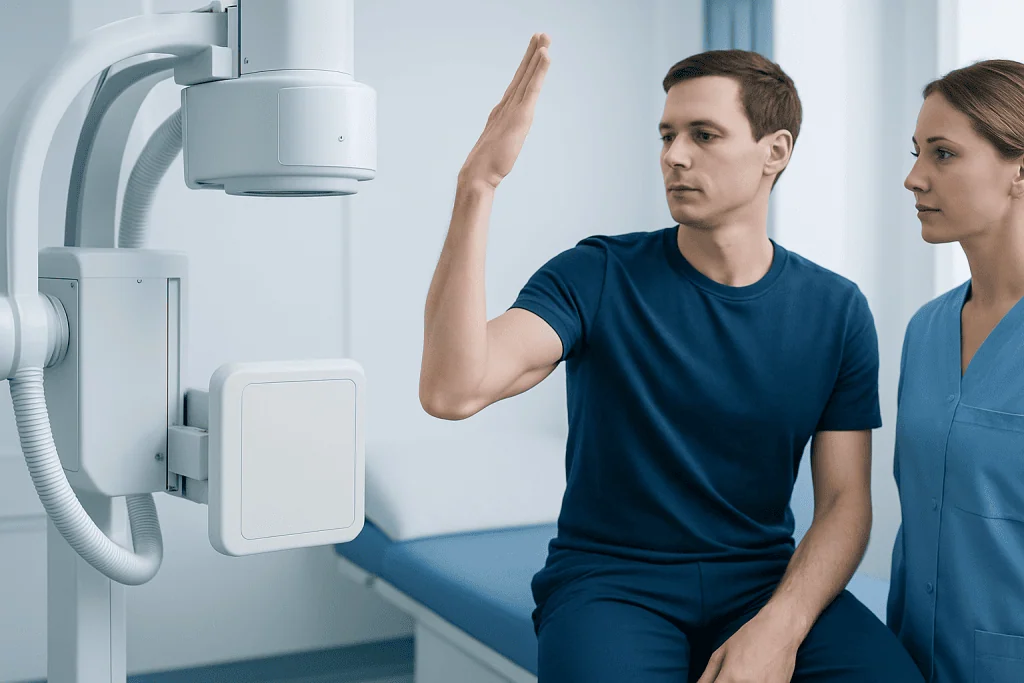
The elbow is a complex joint made up of the humerus, radius, and ulna. It allows bending and straightening, while nearby forearm joints support rotation of the hand and wrist. Ligaments, tendons, muscles, and the joint capsule help keep movement smooth and stable.
In a hypermobile elbow, the supporting tissues may allow more motion than average. Some people can extend the elbow farther than expected, which may make the arm look as if it bends backward. This appearance can be normal for that person, especially if it occurs on both sides and has been present for many years.
It is also important to distinguish hypermobility from other elbow concerns. Pain after an injury, a sudden change in shape, swelling, or loss of function is not explained by harmless flexibility alone. In those cases, doctors may evaluate for strains, ligament injury, overuse conditions, or other problems such as tennis elbow.
Signs, symptoms, and possible effects
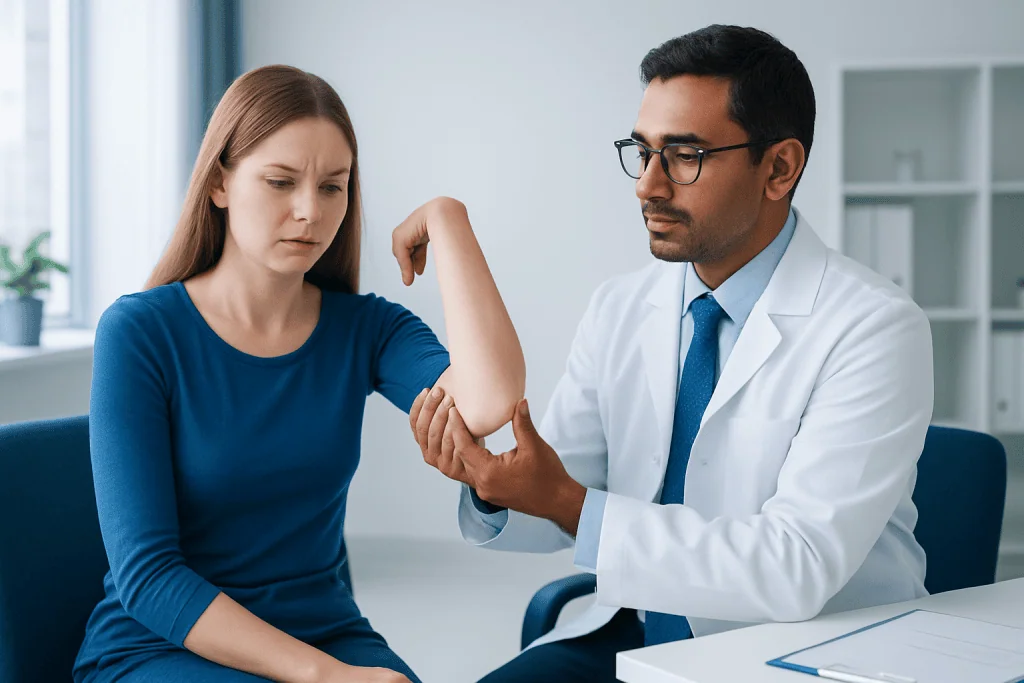
Many people with double jointed elbows have no symptoms at all. They may simply notice an unusual range of motion during exercise, dance, gymnastics, yoga, or everyday movements. If there is no pain, weakness, or repeated injury, hypermobility may not require any medical treatment.
When symptoms do occur, they can include aching around the elbow, clicking, a sense of instability, muscle fatigue, or discomfort after prolonged activity. Some people also describe difficulty with weight-bearing through the arms, such as during push-ups or certain sports movements. Symptoms may be mild and occasional or more persistent depending on activity level and the degree of laxity.
In some cases, hypermobility affects more than one joint. A person may also be flexible in the fingers, knees, shoulders, or spine. Generalized hypermobility can be part of a broader pattern that may deserve evaluation, especially if it is associated with frequent sprains, easy bruising, recurrent dislocations, or chronic pain.
- Often harmless and symptom-free
- May cause elbow pain or soreness after use
- Can contribute to instability or overuse injuries
- Sometimes occurs as part of generalized joint hypermobility
Causes and risk factors
The most common reason for double jointed elbows is inherited joint flexibility. In other words, some people are naturally more flexible because their connective tissues are looser or more elastic. Age also matters: children and younger adults often have greater range of motion than older adults, and flexibility may decrease over time.
Sex, body structure, and training history can also influence elbow mobility. People involved in activities that reward flexibility or repetitive upper-limb movement may become more aware of it, although training itself does not usually create true generalized hypermobility. Repeated strain, however, may make a hypermobile joint more likely to become painful.
Less commonly, significant hypermobility may be associated with connective tissue conditions. A doctor may consider this possibility if there are symptoms affecting multiple body systems, recurrent joint dislocations, very soft or fragile skin, or a strong family history. The goal of evaluation is not to label every flexible person with a disorder, but to identify the smaller group who may benefit from more specialized care.
How doctors evaluate double jointed elbows
Assessment usually begins with a medical history and physical examination. The clinician asks when the unusual elbow motion was first noticed, whether it causes pain, and whether there have been injuries, swelling, locking, or repeated episodes of the joint feeling unstable. They may also ask about other flexible joints and family history.
During the exam, the doctor checks range of motion, strength, tenderness, ligament stability, and the position of the elbow during extension. Sometimes a broader hypermobility assessment is used, such as a Beighton score, to see whether flexibility affects other joints as well. This helps distinguish isolated elbow hypermobility from generalized joint hypermobility.
Imaging is not always needed. X-rays may be used if there has been trauma, deformity, or concern about bone alignment. Ultrasound or MRI can help when a ligament, tendon, cartilage, or soft-tissue injury is suspected. If symptoms are persistent, clinicians may evaluate for related conditions and, when appropriate, recommend MRI imaging or orthopedic assessment.
Treatment and long-term management
Treatment depends on symptoms rather than on flexibility alone. If the elbow is hypermobile but painless and stable, no active treatment may be needed. Education, awareness of joint position, and avoiding repeated overstretching are often enough.
When symptoms are present, treatment usually focuses on improving support around the joint. A tailored exercise program can strengthen the muscles that help stabilize the elbow, shoulder, and forearm. Physical therapy may also work on posture, movement patterns, and proprioception, which is the body’s ability to sense joint position. This can reduce strain during sports, work, or daily tasks.
For some people, temporary bracing or taping can provide support during activity. Activity modification may also help, especially if certain movements repeatedly trigger pain. If there is a specific injury or chronic overuse problem, treatment is directed toward that condition; this may include physical therapy and rehabilitation and, less commonly, further procedures guided by an orthopedic specialist. Surgery is not used for simple asymptomatic hypermobility but may be considered in selected cases of significant instability or structural damage.
Self-care and prevention tips
People with double jointed elbows often do best when they protect the joint without becoming fearful of movement. Regular, controlled strengthening is generally more helpful than repeatedly stretching a joint that already moves beyond the usual range. Good technique during exercise, sports, and lifting can reduce unnecessary stress.
Paying attention to fatigue is also useful. Tired muscles provide less support to a hypermobile joint, which may increase soreness or the feeling of looseness. Building strength gradually, warming up before activity, and taking breaks during repetitive tasks can help manage symptoms.
- Avoid forcing the elbow into its end range repeatedly
- Strengthen the arm, shoulder, and upper back muscles
- Use ergonomic positioning for work and sports
- Stop and seek advice if pain, swelling, or instability develops
If symptoms involve several joints or affect quality of life, professional guidance can be valuable. Specialists may also look for broader hypermobility syndromes or associated pain conditions and design a plan that fits the person’s needs.
When to seek medical care
Medical review is sensible if double jointed elbows are accompanied by pain, repeated sprains, swelling, weakness, numbness, or a feeling that the elbow may slip out of place. Care is also important after a fall, sports injury, or sudden change in the shape or function of the joint. These features suggest something more than harmless flexibility.
People should also seek evaluation if they have hypermobility in many joints along with chronic pain, frequent dislocations, skin fragility, or other unusual symptoms. A clinician can determine whether the pattern is benign joint hypermobility or part of a connective tissue condition that needs broader assessment.
For international patients who need assessment, Acibadem International’s multidisciplinary specialists in JCI-accredited hospitals evaluate joint hypermobility, sports injuries, and related orthopedic concerns. Depending on the findings, doctors may coordinate imaging, rehabilitation, or referral for arthroscopic treatment when a specific structural problem is identified.
Frequently asked questions
Are double jointed elbows a real medical condition?
The phrase is common, but it does not mean a person has an extra elbow joint. It usually describes elbow hypermobility, which means the joint moves beyond the typical range. This can be a normal body variation or part of a broader hypermobility pattern.
Are double jointed elbows dangerous?
Not usually. Many people have hypermobile elbows without pain or limitations. It becomes more important to assess when there is pain, repeated injury, swelling, weakness, or a feeling of instability.
Can double jointed elbows cause pain?
Yes, they can, especially if the joint is repeatedly pushed to its end range or used in activities that place high stress on the elbow. Pain may also come from related issues such as tendon strain, ligament laxity, or overuse injuries. A medical assessment can help identify the cause.
How are double jointed elbows diagnosed?
Doctors usually diagnose elbow hypermobility through a history and physical examination. They assess range of motion, joint stability, symptoms, and whether other joints are also unusually flexible. Imaging may be added if there has been trauma or if a structural injury is suspected.
Can exercises help hypermobile elbows?
Yes, in many cases. Strengthening the muscles around the elbow, shoulder, and forearm can improve support and reduce symptoms. Exercise plans are usually most effective when guided by a clinician or physical therapist who understands hypermobility.
Do double jointed elbows mean someone has a connective tissue disorder?
Not necessarily. Many people are naturally flexible and do not have an underlying disorder. A connective tissue condition is more likely to be considered when hypermobility is widespread and accompanied by features such as recurrent dislocations, chronic pain, or skin changes.
This article is for general information only and is not a substitute for professional medical advice. Please consult a qualified doctor about your individual situation.
Joint and spine care in Turkey — expert assessment & treatment
JCI-accredited · board-certified surgeons · reply within 24h
Add us as a Preferred Source to see more of our trusted health content across Google Search, AI Overviews and Discover.

More from the Health Library

D Mannose: An Evidence-Based Guide for Patients

Pennis Swelling — Explained by Medical Evidence, Not Myths

Glial Cells: An Evidence-Based Guide for Patients

And Arteries: What Patients Need to Know

Surgical Technologist: What Patients Need to Know

Tonsil Stones: A Complete Medical Overview
Physical Medicine & Rehabilitation Specialists at Acibadem
Fzt. Atahan Vardı
Physical Medicine & Rehabilitation
Fzt. Atilla Murat Ünver
Physical Medicine & Rehabilitation
Dr. Atiye Ayral
Physical Medicine & Rehabilitation
Prof. Dr. Ayhan Aşkın
Physical Medicine & Rehabilitation